August 16, 2012
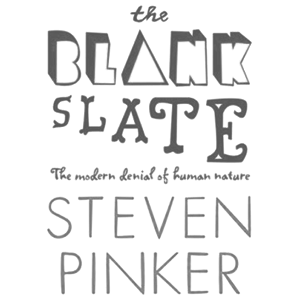
Tabula rasa [tab-yuh-luh rah-suh] (Latin: ‘blank slate’) is the theory that individuals are born without built-in mental content and that their knowledge comes from experience and perception.
The theory was discussed by Aristotle, but popularized by John Locke (the father of liberalism) in the 17th century: ‘Let us then suppose the mind to be, as we say, white paper void of all characters, without any ideas. How comes it to be furnished? … To this I answer, in one word, from EXPERIENCE.’ Locke thought all knowledge came from sense data (smells, sights, sounds, pain, etc.), and that the mind is empty at birth. Locke’s idea was immediately picked up by others.
read more »
Posted in Education, Philosophy, Science |
Leave a Comment »
August 9, 2012
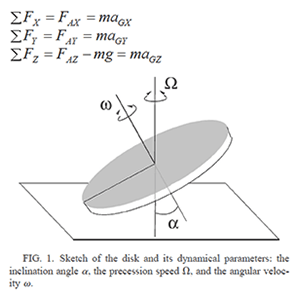
Euler’s [oi-lers] disc is a scientific educational toy, used to illustrate and study the dynamic system of a spinning disk on a flat surface (such as a spinning coin).
This phenomenon was first noted by Swiss physicist Leonhard Euler in the 18th century, hence the name.
read more »
Posted in Education, Games, Science |
1 Comment »
August 6, 2012

The Two Cultures is the title of an influential 1959 Rede Lecture by British scientist and novelist C. P. Snow. Its thesis was that ‘the intellectual life of the whole of western society’ was split into the titular two cultures — namely the sciences and the humanities — and that this was a major hindrance to solving the world’s problems. Snow’s Rede Lecture condemned the British educational system as having, since the Victorian period, over-rewarded the humanities (especially Latin and Greek) at the expense of scientific and engineering education, despite such achievements having been so decisive in winning the Second World War for the Allies.
This in practice deprived British elites (in politics, administration, and industry) of adequate preparation to manage the modern scientific world. By contrast, Snow said, German and American schools sought to prepare their citizens equally in the sciences and humanities, and better scientific teaching enabled these countries’ rulers to compete more effectively in a scientific age. Later discussion of ‘The Two Cultures’ tended to obscure Snow’s initial focus on differences between British systems (of both schooling and social class) and those of competing countries.
read more »
Posted in Education, Philosophy, Science |
1 Comment »
July 30, 2012
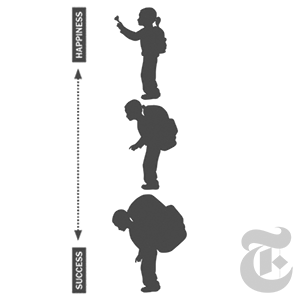
Madeline Levine, Ph. D., is a practicing psychologist in Marin County, California. She is the author of several non-fiction books: ‘Viewing Violence’ published in 1996, ‘See No Evil: A Guide to Protecting Our Children from Media Violence’ published in 1998, and ‘The Price of Privilege: how parental pressure and material advantage are creating a generation of disconnected and unhappy kids’ published in 2006. The first two books represent an analysis of the negative effects of media violence on child development.
Her third book is a study of the psychological ailments plaguing teens from affluent families. ‘The Price of Privilege’ is based not only on her 25 years of experience in treating such teens within Marin County (an affluent community within the San Francisco Bay Area) but also on her consultations with colleagues around the United States—particularly research psychologist Suniya S. Luthar — as well as her review of the contemporary psychological research on the subject. Her latest book is ‘Teach Your Children Well: Parenting for Authentic Success.’
Posted in Education, Health, Language |
Leave a Comment »
July 16, 2012

Slow parenting is a parenting style in which few activities are organized for children. Instead, they are allowed to explore the world at their own pace. It is a response to concerted cultivation and the widespread trend for parents to schedule activities and classes after school; to solve problems on behalf of the children, and to buy services from commercial suppliers rather than letting nature take its course.
The philosophy, part of the ‘Slow Movement,’ makes recommendations in play, toys, access to nature, watching television, and scheduled activities. The opposing view is that such children are disadvantaged because their parents do not provide as many learning opportunities.
read more »
Posted in Education, Games, Philosophy |
Leave a Comment »
July 16, 2012

Concerted cultivation is a style of parenting that is marked by a parent’s attempts to foster their child’s talents by incorporating organized activities in their children’s lives.
This parenting style is commonly exhibited in middle and upper class American families, and is also characterized by consciously developing language use and ability to interact with social institutions. Many have attributed cultural benefits to this form of child-rearing due to the style’s use in higher income families, conversely affecting the social habitus (socially learned dispositions) of children raised in such a manner.
read more »
Posted in Education, Language, Money |
Leave a Comment »
July 9, 2012
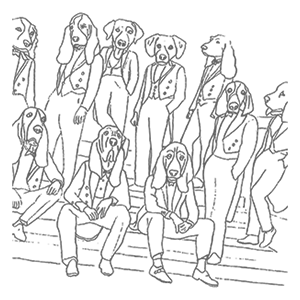
The Bullingdon Club is a secret society dining club for exclusive students at Oxford University. The club has no permanent rooms and is notorious for its members’ wealth and destructive binges. Membership is by invitation only, and prohibitively expensive for most, given the need to pay for the uniform, dinners, and damages. The club was founded over 200 years ago. Originally it was a hunting and cricket club. This foundational sporting purpose is attested to in the Club’s symbol.
‘The Wisden Cricketer’ reports that the Bullingdon is ‘ostensibly one of the two original Oxford University cricket teams but it actually used cricket merely as a respectable front for the mischievous, destructive, or self-indulgent tendencies of its members.’ By the late 19th century, the present emphasis on dining within the Club began to emerge. ‘The Bullingdon Club dinners were the occasion of a great display of exuberant spirits, accompanied by a considerable consumption of the good things of life, which often made the drive back to Oxford an experience of exceptional nature.’
read more »
Posted in Education, Games, Money |
Leave a Comment »
June 10, 2012

Josef Albers (1888 – 1976) was a German-born American artist and educator whose work formed the basis of some of the most influential and far-reaching art education programs of the 20th century. Accomplished as a designer, photographer, typographer, printmaker, and poet, Albers is best remembered for his work as an abstract painter and theorist. He favored a very disciplined approach to composition. Most famous of all are the hundreds of paintings and prints that make up the series ‘Homage to the Square.’ In this rigorous series, begun in 1949, Albers explored chromatic interactions with nested squares.
Painting usually on Masonite (an engineered wood product), he used a palette knife with oil colors and often recorded colors used on the back of his works. Albers’s work represents a transition between traditional European art and the new American art. It incorporated European influences from the constructivists and the Bauhaus movement, and its intensity and smallness of scale were typically European. But his influence fell heavily on American artists of the late 1950s and the 1960s. ‘Hard-edge’ abstract painters drew on his use of patterns and intense colors, while Op artists and conceptual artists further explored his interest in perception.
read more »
Posted in Art, Education |
Leave a Comment »
May 31, 2012

‘Teach the Controversy‘ is the name of a campaign by the Discovery Institute (a conservative Christian think tank based in Seattle) to promote a variant of traditional creationism, intelligent design, while attempting to discredit evolution in US public high school science courses.
The central claim is that fairness and equal time requires educating students with a ‘critical analysis of evolution’ where ‘the full range of scientific views,’ evolution’s ‘unresolved issues,’ and the ‘scientific weaknesses of evolutionary theory’ will be presented and evaluated alongside intelligent design concepts like irreducible complexity. The overall goal of the movement is to ‘defeat [the] materialist world view’ represented by the theory of evolution and replace it with ‘a science consonant with Christian and theistic convictions.’
read more »
Posted in Education, Philosophy, Science |
Leave a Comment »
May 31, 2012
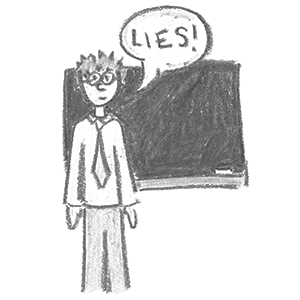
‘Lies My Teacher Told Me: Everything Your American History Textbook Got Wrong’ is a 1995 book by sociologist James Loewen. It critically examines twelve American history textbooks and concludes that textbook authors propagate factually false, Eurocentric, and mythologized views of history. In addition to critiquing the dominant historical themes presented in textbooks, Loewen presents a number of his own historical themes that he says are ignored by traditional history textbooks. A revised and updated edition was released in 2008.
Loewen criticizes modern American history textbooks for containing inaccurate depictions of historical figures such as Christopher Columbus. He further criticizes the texts for a tendency to avoid controversy and for their ‘bland’ and simplistic style. He proposes that when American history textbooks elevate American historical figures to the status of heroes, they unintentionally give students the impression that these figures are part of an unattainable past. In other words, the history-as-myth method teaches students that America’s greatest days have already passed. Loewen asserts that the muting of past clashes and tragedies makes history boring to students, especially groups excluded from the positive histories.
Posted in Education, Language, Politics |
Leave a Comment »
May 30, 2012


A government simulation is a game that attempts to simulate the government and politics of all or part of a nation. These games may include geopolitical situations (involving the formation and execution of foreign policy), the creation of domestic political policies, or the simulation of political campaigns. They differ from the genre of classical wargames due to their discouragement or abstraction of military or action elements.
Beyond entertainment, these games have practical applications in training and education of government personnel. Training simulations have been created for subjects such as managing law enforcement policies (such as racial profiling), the simulation of a military officer’s career, and hospital responses to emergency situations.
read more »
Posted in Education, Games, Politics |
Leave a Comment »
May 28, 2012
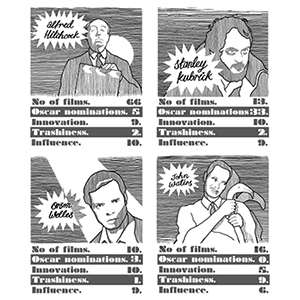
Top Trumps is a card game. Each card contains a list of numerical data, and the aim of the game is to compare these values in order to try to trump and win an opponent’s card. Each pack of Top Trumps is based on a theme, such as cars, aircraft, dinosaurs, or characters from a popular film or television series.
Each card in the pack shows a list of numerical data about the item. For example, in a pack based on cars, each card shows a different model of car, and the stats and data may include its engine size, its weight, its length, and its top speed. If the theme is about a TV series or film, the cards include characters and the data varying from things like strength and bravery to fashion and looks, depending on the criteria.
read more »
Posted in Education, Games |
1 Comment »


 The Daily Omnivore