December 30, 2012

Neophobia [nee-oh-foh-bee-uh] is the fear of new things or experiences. It is also called cainophobia. In psychology, neophobia is defined as the persistent and abnormal fear of anything new. In its milder form, it can manifest as the unwillingness to try new things or break from routine.
Mild manifestations are often present in young children (who want the small portion of the world that they ‘know’ to remain constant) and elderly people (who often cope using long established habits and don’t want to learn ‘new tricks’).
read more »
Posted in Food, Health, Language |
3 Comments »
December 21, 2012

Brominated [broh-muh-neyt-ed] vegetable oil (BVO) is vegetable oil that has had atoms of the element bromine bonded to it. Oil treated this way is used as an emulsifier in citrus-flavored soft drinks to help natural fat-soluble citrus flavors stay suspended in the drink and to produce a cloudy appearance. BVO has been used by the soft drink industry since 1931.
The addition of bromine increases the density of the oil, and the amount of bromine is carefully controlled to achieve a density that is the same as the water in the drink. As a result, the BVO remains suspended in the water instead of forming separate layers. Only small quantities, concentrations of 8 ppm, are needed to achieve this effect.
read more »
Posted in Food, Health |
Leave a Comment »
December 11, 2012
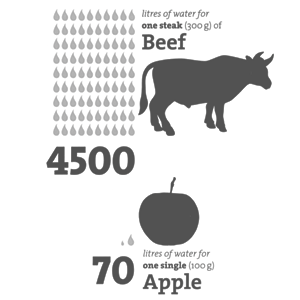
Virtual water (also known as embedded or embodied water) refers to the hidden flow of water if food or other commodities are traded from one place to another. For instance, it takes 1,600 cubic meters of water on average to produce one metric ton of wheat.
The precise volume can be more or less depending on climatic conditions and agricultural practice. Hoekstra and Chapagain have defined the virtual-water content of a product (a commodity, good or service) as ‘the volume of freshwater used to produce the product, measured at the place where the product was actually produced.’
read more »
Posted in Food, Money, Politics |
Leave a Comment »
November 30, 2012

The moka pot, also known as a stove top espresso machine, is a coffee maker which produces coffee by passing hot water pressurized by steam through ground coffee. It was first patented by inventor Luigi De Ponti for Alfonso Bialetti in 1933. Bialetti Industrie continues to produce the same model under the name ‘Moka Express.’
The moka pot is most commonly used in Europe and in Latin America. It has become an iconic design, displayed in modern industrial art and design museums.
read more »
Posted in Food, Technology |
Leave a Comment »
November 9, 2012
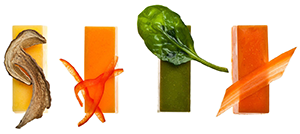
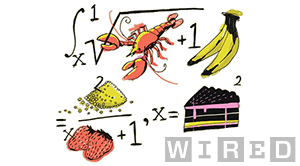
Molecular gastronomy [ga-stron-uh-mee] is a subdiscipline of food science that seeks to investigate, explain and make practical use of the physical and chemical transformations of ingredients that occur while cooking, as well as the social, artistic and technical components of culinary and gastronomic phenomena in general. Molecular gastronomy is a modern style of cooking, which is practiced by both scientists and food professionals in many professional kitchens and labs and takes advantage of many technical innovations from the scientific disciplines.
The term ‘molecular gastronomy’ was coined in 1992 by late Oxford physicist Nicholas Kurti and the French INRA (a public research institute dedicated to agriculture) chemist Hervé This. Some chefs associated with the term choose to reject its use, preferring other terms such as ‘culinary physics’ and ‘experimental cuisine.’ There are many branches of food science, all of which study different aspects of food such as safety, microbiology, preservation, chemistry, engineering, physics, and the like. Until the advent of molecular gastronomy, there was no formal scientific discipline dedicated to studying the processes in regular cooking as done in the home or in a restaurant.
read more »
Posted in Food, Language, Science |
Leave a Comment »
November 8, 2012
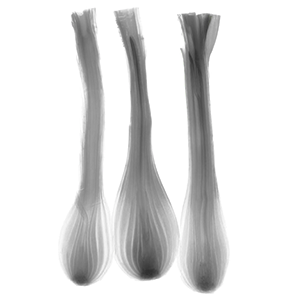
‘Modernist Cuisine: The Art and Science of Cooking’ is a 2011 cookbook by Nathan Myhrvold, Chris Young, and Maxime Bilet. The book is an encyclopedia and a guide to the science of contemporary cooking. Five volumes cover history and fundamentals, techniques and equipment, animals and plants, ingredients and preparation, plated dish recipes; the sixth volume is a kitchen manual.
Myhrvold has attended Ecole de Cuisine la Varenne, a cooking school in Burgundy, France and has also cooked part-time at Rover’s, a French restaurant in Seattle owned by Thierry Rautureau. He is also a scientist, having earned advanced degrees in geophysics, space physics, and theoretical and mathematical physics, done post-doctoral research with Stephen Hawking at Cambridge University, and worked for many years as the chief technology officer and chief strategist of Microsoft.
read more »
Posted in Food, Language, Science |
Leave a Comment »
November 7, 2012

Scrapple [skrap-uhl], known by the Amish by the Pennsylvania Dutch name ‘pon haus,’ is a mush of pork scraps and trimmings combined with cornmeal and wheat flour, often buckwheat flour, and spices. The mush is formed into a semi-solid congealed loaf, and slices of the scrapple are then panfried to form a crust before serving.
Scraps of meat left over from butchering, not used or sold elsewhere, were made into scrapple to avoid waste. Scrapple is best known as a rural American food of the Mid-Atlantic states (Delaware, Maryland, New Jersey and Pennsylvania). It is found in supermarkets throughout the region in both fresh and frozen refrigerated cases. It is arguably the first pork food invented in America.
read more »
Posted in Food, World |
Leave a Comment »
October 29, 2012

Obesity in pets is common in many countries. Rates of overweight and obesity in dogs in the United States ranges from 23% to 41% with about 5.1% obese. Rates of obesity in cats was slightly higher at 6.4%. The risk of obesity in dogs but not cats is related to whether or not their owners are obese. Obese dogs and cats have a higher incidence of arthritis and heart disease.
In fact, fatness to the point of health impairment is enough of a concern that Pfizer developed and got Food and Drug Administration-approval for a drug (Slentrol) to treat canine and feline obesity. Pet owners have been prosecuted for cruelty to animals due to their dangerously obese dogs. Two British brothers were cited in 2006 for cruelty and neglect of their chocolate labrador retriever, ‘who was allegedly made so obese by his owners that he ‘looked like a seal’ and could barely waddle a few steps.’
read more »
Posted in Food, Health |
1 Comment »
October 29, 2012


Chicago-style pizza refers to a deep-dish pizza, with a crust up to three inches tall at the edge, slightly higher than the ingredients, which include large amounts of cheese and chunky tomato sauce, acting as a large bowl. Besides deep-dish, the term also refers to stuffed pizza, another Chicago style. Both styles of pizza are usually eaten with a knife and fork. There is also a style of thin-crust pizza found in Chicago and throughout the rest of the Midwest.
The crust is thin and firm enough to have a noticeable crunch, unlike a New York-style pizza. Most Chicago pizzerias offer both thin-crust and deep-dish pizzas. The Chicago-style ‘deep-dish’ pizza was invented at Pizzeria Uno, in Chicago, in 1943, reportedly by Uno’s founder Ike Sewell, a former University of Texas football star. However, a 1956 article from the ‘Chicago Daily News’ asserts that Uno’s original pizza chef Rudy Malnati developed the recipe. Another deep-dish restaurant is Uno’s companion restaurant Due, opened down the block by Sewell in 1955.
read more »
Posted in Food |
Leave a Comment »
October 27, 2012
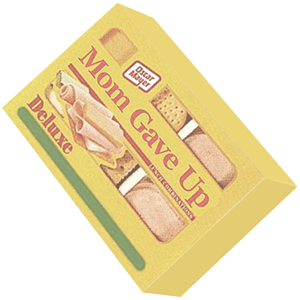
Lunchables is a line of lunch combinations manufactured by Kraft Foods, Inc, beginning in 1988. They are marketed under the Oscar Mayer brand in the United States and Dairylea in the United Kingdom. Many Lunchables products are produced at Kraft Foods, Inc.’s Fullerton factory in Fullerton, California, and are then distributed across the nation.
A typical Lunchables meal combination includes crackers, small slices of meat, and an equal number of slices of cheese. Other varieties include pizza, small hot dogs, small burgers, nachos, subs, and wraps. Overall there are 25 different kinds of Lunchables meals. ‘Deluxe’ versions, which were originally developed for adults, included two types of meats and two types of cheeses. Deluxe versions usually also contained a sauce and a mint.
read more »
Posted in Food, Health, Money |
Leave a Comment »
October 22, 2012
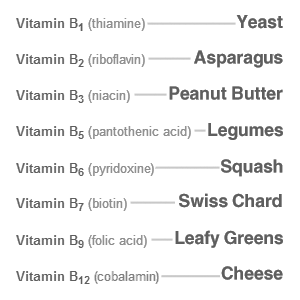
The B vitamin complex are a group of 8 water-soluble vitamins that play important roles in cell metabolism. Originally, it was thought they were just different forms of one vitamin (like with Vitamin D, for example).
Later it turned out that they are separate vitamins that often can be found together: Vitamin B1 (Thiamine), Vitamin B2 (Riboflavin), Vitamin B3 (Niacin) Vitamin B5 (pantothenic acid), Vitamin B6 (Pyridoxine), Vitamin B7 (Biotin), Vitamin B9 (Folic acid), and Vitamin B12 (Cyanocobalamin).
read more »
Posted in Food, Health |
Leave a Comment »
October 22, 2012

The Spice trade refers to the trade between historic civilizations in Asia, Northeast Africa, and Europe; spices such as cinnamon, cassia, cardamom, ginger, and turmeric were known, and used for commerce, in the Eastern World well into antiquity.
These spices found their way into the Middle East before the beginning of the Christian Era, where the true sources of these spices was withheld by the traders, and associated with fantastic tales.
read more »
Posted in Food, Money, World |
Leave a Comment »


 The Daily Omnivore