March 23, 2011

Tetra Pak is a multinational food processing and packaging company of Swedish origin. It was founded in 1951 in Lund, Sweden, by Ruben Rausing and Erik Åkerlund. Erik Wallenberg invented the original tetrahedral package in 1952, today known as ‘Tetra Classic.’ Ruben Rausing’s sons Hans and Gad Rausing ran Tetra Pak from 1954 until 1985, taking the company from a seven-person concern to one of Sweden’s largest corporations. At his death in 1983, Ruben Rausing was Sweden’s richest person.
Tetra Pak’s innovation is in the area of aseptic processing liquid food packaging which, when combined with ultra-high-temperature processing, allows liquid food to be packaged and stored under room temperature conditions for up to a year. In 1963 the company introduced ‘Tetra Brik,’ a rectangular cuboid carton. Later, it launched other formats such as ‘Tetra Wedge’ (wedge-shaped), ‘Tetra Prisma’ (round octagonal), and ‘Tetra Fino’ (pouch-shaped). Recent innovations have seen the introduction of laminated paper boxes for vegetables as an alternative to canned goods (‘Tetra Recart’).
Posted in Food, Money, Technology |
Leave a Comment »
March 23, 2011


Conveyor belt sushi (kaiten-zushi) is the popular English translation for Japanese fast-food sushi sometimes called a ‘sushi-g0-round.’ In Australia, it is known as ‘sushi train’ In South Korea, conveyor belt sushi has become popular and is known as ‘revolving sushi.’
Plates with the sushi are placed on a rotating conveyor belt that winds through the restaurant and moves past every table and counter seat. Customers may place special orders, but most simply pick their selections from a steady stream of fresh sushi moving along the conveyor belt. The final bill is based on the number and type of plates of the consumed sushi.
read more »
Posted in Food, Money, Technology |
Leave a Comment »
March 23, 2011

The Bocuse d’Or [bo-kyewz dor] is a biennial world chef championship. Named for the chef Paul Bocuse, the event takes place during two days near the end of January in Lyon, France, and is frequently referred to as the culinary equivalent of the Olympic Games. The initial competition took place in 1987.
The audience atmosphere of the Bocuse d’Or evolved in 1997 when the support for the Mexican candidate included a mariachi band, foghorns, cowbells, cheering and yelling from the stands, marking the beginning of a tradition of noisy spectator presence. Originally the reigning champion nation was not permitted to participate in the following contest, but that rule was removed after the 1999 event when France was competing and did not win gold for the first time.
Posted in Food, Games, Money |
Leave a Comment »
March 23, 2011

Auguste Escoffier [es-kaw-fyey] (1846 – 1935) was a French chef, restaurateur and culinary writer who popularized and updated traditional French cooking methods. He is a legendary figure among chefs and gourmands, and was one of the most important leaders in the development of modern French cuisine.
Much of Escoffier’s technique was based on that of Antoine Carême, one of the codifiers of French haute cuisine, but Escoffier’s achievement was to simplify and modernize Carême’s elaborate and ornate style. Referred to by the French press as ‘roi des cuisiniers et cuisinier des rois’ (‘king of chefs and chef of kings’ —though this had also been previously said of Carême), Escoffier was France’s pre-eminent chef in the early part of the 20th century.
read more »
Posted in Food, Money |
Leave a Comment »
March 23, 2011

Antonin Carême [kah-rehm] (1784 – 1833), known as the ‘King of Chefs, and the Chef of Kings’ was an early practitioner and exponent of the elaborate style of cooking known as haute cuisine, the ‘high art’ of French cooking: a grandiose style of cookery favored by both international royalty and by the newly rich of Paris. Carême is often considered as one of the first, internationally renowned celebrity chefs.
He is remembered as the founder of the haute cuisine, and credited with creating the standard chef’s hat, the toque. He designed new sauces and dishes, and published a classification of all sauces into groups, based on four mother sauces. He is also frequently credited with replacing the practice of service à la française (serving all dishes at once) with service à la russe (serving each dish in the order printed on the menu).
read more »
Posted in Art, Food, Language |
Leave a Comment »
March 23, 2011
Nouvelle cuisine (‘new cuisine’) is an approach to cooking and food presentation used in French cuisine. By contrast with ‘cuisine classique,’ an older form of French ‘haute cuisine,’ nouvelle cuisine is characterized by lighter, more delicate dishes and an increased emphasis on presentation.
The modern usage can be attributed to author Henri Gault, who used it to describe the cooking of Paul Bocuse and Fernand Point. Bocuse claims that Gault first used the term to describe food prepared for the maiden flight of the Concorde airliner in 1969.
read more »
Posted in Art, Food, World |
Leave a Comment »
March 13, 2011
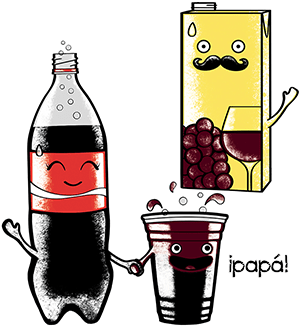
Kalimotxo [kal-ee-moht-cho] is a drink consisting of approximately 50% red wine and 50% cola-based soft drink.
read more »
Posted in Drugs, Food, World |
2 Comments »
March 10, 2011
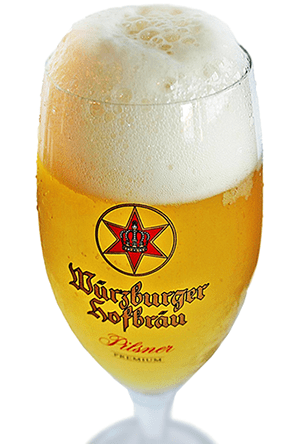
Beer head is the frothy foam on top of beer after it is poured in a glass. It is produced by bubbles of carbon dioxide rising to the surface. The density and longevity of the head will be determined by the type of malt and adjunct from which the beer was fermented. In general, wheat tends to produce larger and longer lasting heads than barley.
The carbon dioxide may be produced naturally through the activity of brewer’s yeast, or artificially by dissolving carbon dioxide under pressure into the liquid. The beer head is created by the carbon dioxide produced as a byproduct of the metabolism of brewer’s yeast acting upon starches and sugars found in the wort.
read more »
Posted in Drugs, Food, Science |
Leave a Comment »
March 10, 2011

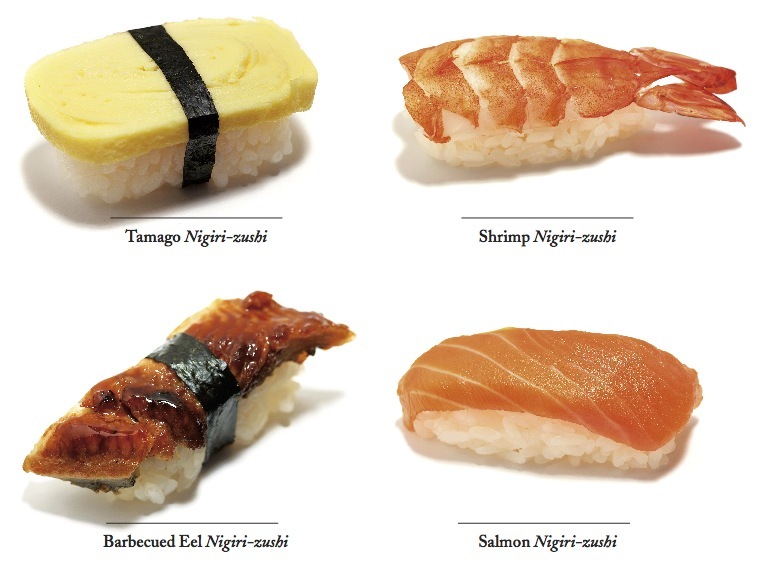
Nigirizushi [ni-geer-ee-zoo-shee] (‘hand-formed sushi’) is an oblong mound of sushi rice that the chef presses into a small rectangular box between the palms of the hands, usually with a bit of wasabi, and a topping draped over it (typically seafood). Certain toppings are bound to the rice with a thin strip of nori (seaweed), most commonly octopus (tako), freshwater eel (unagi), sea eel (anago), squid (ika), and sweet egg (tamago). When ordered separately, nigiri is generally served in pairs. A sushi set (a sampler dish) may contain only one piece of each topping.
Gunkanmaki (‘warship roll’) is a special type of nigirizushi: an oval, hand-formed clump of sushi rice that has a strip of nori wrapped around its perimeter to form a vessel that is filled with some soft, loose or fine-chopped ingredient that requires the confinement of nori such as roe, natto, oysters, sea urchin, corn with mayonnaise, and quail eggs. Temarizushi (‘ball sushi’) is a ball-shaped sushi made by pressing rice and fish into a ball-shaped form by hand using a plastic wrap.
Posted in Food, Language, World |
Leave a Comment »
March 10, 2011

Sous-vide [soo veed] (French for ‘under vacuum’) is a method of cooking food sealed in airtight plastic bags in a water bath for a long time—72 hours is not unusual—at an accurately determined temperature much lower than normally used for cooking, typically around 60 °C or 140 °F. The intention is to maintain the integrity of ingredients.
read more »
Posted in Food, Technology |
Leave a Comment »
March 8, 2011


The glycemic index or GI is a measure of the effects of carbohydrates on blood sugar levels. Carbohydrates that break down quickly during digestion and release glucose rapidly into the bloodstream have a high GI; carbohydrates that break down more slowly, releasing glucose more gradually into the bloodstream, have a low GI.
The concept was developed by Dr. David J. Jenkins and colleagues in 1980 at the University of Toronto in their research to find out which foods were best for people with diabetes.
read more »
Posted in Food, Health, Science |
Leave a Comment »
March 8, 2011
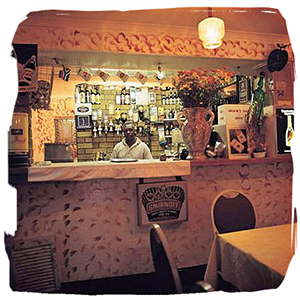
A shebeen [shuh-been] was originally an illicit bar or club where alcoholic beverages were sold without a licence. The term has spread far from its origins in Ireland, to Scotland, Canada, the US, England, Zimbabwe, the Caribbean, Namibia, and South Africa. In South Africa and Zimbabwe, shebeens are most often located in black townships as an alternative to pubs and bars, where under apartheid and the Rhodesian era, black Africans could not enter a pub or bar reserved for whites. Originally, shebeens were operated illegally, selling homebrewed and home-distilled alcohol and providing patrons with a place to meet and discuss political and social issues.
Often, patrons and owners were arrested by the police, though the shebeens were frequently reopened because of their importance in unifying the community and providing a safe place for discussion. During the apartheid era shebeens became a crucial place for activists to meet. They also provided music and dancing, allowing patrons to express themselves culturally, giving rise to the musical genre kwaito. Currently, shebeens are legal in South Africa and have become an integral part of urban culture, serving commercial beers as well as umqombothi, a traditional African beer made from maize and sorghum
Posted in Drugs, Food, World |
Leave a Comment »




 The Daily Omnivore