January 10, 2013

Piphilology [pahy-fi-lol-uh-jee] comprises the creation and use of mnemonic techniques to remember a span of digits of the mathematical constant π. The word is a play on the word ‘pi’ itself and of the linguistic field of philology (the study of written language).
There are many ways to memorize π, including the use of piems (a portmanteau, formed by combining pi and poem), which are poems that represent π in a way such that the length of each word (in letters) represents a digit.
read more »
Posted in Education, Games, Language |
Leave a Comment »
January 10, 2013


Memory sport, sometimes referred to as competitive memory or the mind sport of memory, is a competition in which participants attempt to memorize the most information that they can then present back, under certain guidelines. The sport has been formally developed since 1991, and features regional and international championships.
One common type of competition involves memorizing the order of randomized cards in as little time as possible, after which the competitor is required to arrange new decks of cards in the same order. Mnemonic techniques are generally considered to be a necessary part of competition, and are improved through extensive practice. These can include the method of loci (referred to as the journey method, which uses visualization to aid recall), the use of mnemonic linking and chunking, or other techniques for storage and retrieval of information.
read more »
Posted in Education, Games |
Leave a Comment »
January 10, 2013

‘Moonwalking with Einstein: The Art and Science of Remembering Everything’ is a nonfiction book by Joshua Foer, first published in 2011. Foer describes his book as participatory journalism in the world of competitive memorization and attempts to delineate the capacity of the human mind. He sets out to investigate the underpinnings of those with enhanced memory, soon finding himself at the 2005 U.S. Memory Championship.
He covers the scientific basis of memory creation and historical attitudes towards memory, including its negative reputation in the Western educational system, a perception which Foer is largely opposed to. He explores common mnemonic tools for improving memory: the techniques of Roman rhetoricians and the tannaim (‘reciters’) of Sri Lanka, the Major System and the PAO System for memorizing numbers and cards, and Mind Mapping, a note-taking technique developed by educational consultant Tony Buzan. These methods are all a form of the method of loci, in which data is stored in a sequence of memorable images that are decomposable into their original form.
read more »
Posted in Education, Games, Language |
Leave a Comment »
January 8, 2013

Anamanaguchi is a chiptune indie rock or ‘chip-punk’ band from New York City that ‘makes loud, fast music with a NES from 1985.’ The band has four members: lead songwriter Peter Berkman, bassist James DeVito, guitarist Ary Warnaar and drummer Luke Silas. Like other chiptune artists, Anamanaguchi creates music using synthesizers. However, unlike most chiptune bands, they use video game hardware from the mid-to-late 1980s: namely an NES and a Game Boy.
Berkman has stated that their music isn’t just based around video game music and that much of it is inspired by ‘[s]imple pop stuff, like Weezer and the Beach Boys.’ The band composed music for the videogame adaptation of the ‘Scott Pilgrim’ graphic novels, ‘Scott Pilgrim vs. the World: The Game.’ In 2010 it was announced that Anamanaguchi would appear in the popular music video game ‘Rock Band’ with the track ‘Airbrushed.’ The band’s song ‘Jetpack Blues, Sunset Hues’ is the current theme to Chris Hardwick’s ‘The Nerdist Podcast.’
Posted in Art, Games, Technology |
1 Comment »
November 28, 2012

Harold is a structure used in longform theatrical improvisation. Developed by Del Close and brought to fruition through Close’s collaboration with Charna Halpern, the Harold has become the signature form of Chicago’s iO and the Upright Citizens Brigade Theater in New York and Los Angeles. It is now performed by improvisational theater troupes and teams across the world.
The Committee, a San Francisco improv group, performed the first Harold in Concord, California in 1967. They were invited to a high school and decided to do their improvisations on the war in Vietnam. On the way home they were discussing the performance when one of them asked what they should call it. Allaudin (Bill) Mathieu called out ‘Harold.’ It was a joking reference to a line from ‘A Hard Days Night’ where a reporter asked George Harrison what he called his haircut; he answered ‘Arthur.’ Close later remarked that he wished he had chosen a better name.
read more »
Posted in Art, Games, Humor |
Leave a Comment »
November 28, 2012

Del Close (1934 – 1999) is one of the premier influences on modern improvisational theater. He was also an actor appearing in a number of films and television shows.
He was a co-author of the book ‘Truth in Comedy,’ which outlines techniques now common to longform improvisational theater and describes the overall structure (he named ‘Harold’) which remains a common frame for longer improvisational scenes. His favorite framework for comedic storytelling was the structures of Wagner’s ‘Ring Cycle.’
read more »
Posted in Art, Games, Humor |
Leave a Comment »
November 28, 2012
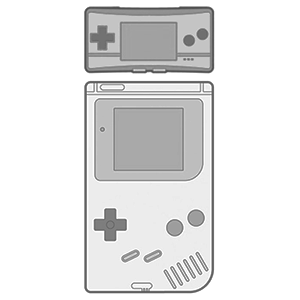
Game Boy Micro is a handheld game console developed and manufactured by Nintendo. It was first released in 2005. The system is the last console of the Game Boy line. The Game Boy Micro is the size of a typical Nintendo Entertainment System controller and a typical Famicom controller. The console retains some of the functionality of the Game Boy Advance SP, but with an updated form factor. It is unable to play original Game Boy and Game Boy Color games due to design changes. Even though it still has the required Z80 processor and graphics hardware necessary to run the old games, it is missing other circuitry necessary to be compatible with the old Game Boy cartridges.
It is officially incompatible with the Nintendo e-Reader and some other peripherals due to design issues. Additionally, it features a backlit screen with the ability to adjust the brightness so as to adapt to lighting. The Game Boy Micro features a removable face plate that allows consumers to purchase alternative designs. This device can play MP3 and digital video files from SD cards. The system retailed for US$99, compared to US$79 for the Game Boy Advance SP. Generally, the Game Boy Micro did not sell well, and failed to reach the company’s aim of units sold.
Posted in Games, Money, Technology |
Leave a Comment »
November 21, 2012
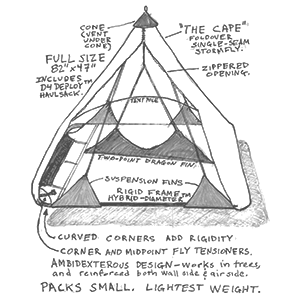
A portaledge is a deployable hanging tent system designed for rock climbers who spend multiple days and nights on a big wall climb. An assembled portaledge is a fabric-covered platform surrounded by a metal frame that hangs from a single point and has adjustable suspension straps. A separate cover, called a ‘stormfly,’ covers the entire system in the event of bad weather.
The first portaledges used in Yosemite were non-collapsible cots purloined from Housekeeping Camp, a Yosemite Valley campground that featured primitive metal framed bunks for the campers. These heavy cots were used on multi-day climbs on granite monoliths like El Capitan, and then sometimes tossed off the summit for later retrieval.
read more »
Posted in Games, Money, Technology |
Leave a Comment »
November 19, 2012

Long drive is a competitive sport where success is derived by hitting a golf ball the farthest by driving. A small but dedicated talent base of golfers populate the world of Long-Drive, with the top talent competing professionally in various events and exhibitions. Professional long drivers can average over 350 yards in competition, compared with 300 yard averages from the top PGA Tour drivers and 200 yards for an average amateur.
Some shots in competitions surpass 400 yards. The world record recognized by Guinness Records as the longest drive in a competition is 515 yards by 64 year old Mike Austin in 2002 at the US National Open Qualifier with a 43.5″ steel shafted persimmon wood driver. The current all-time record holder is Mike Dobbyn with 551 yards.
read more »
Posted in Games, Money |
Leave a Comment »
November 17, 2012

Nonlinear narrative, disjointed narrative or disrupted narrative is a narrative technique, sometimes used in literature, film, websites and other mediums, where events are portrayed out of chronological order. It is often used to mimic the structure and recall of human memory but has been applied for other reasons as well.
Beginning a narrative ‘in medias res’ (Latin: ‘into the middle of things’) began in ancient times as an oral tradition and was established as a convention of epic poetry with Homer’s ‘Iliad’ in the 8th century BCE. The technique of narrating most of the story in flashback also dates back to the Indian epic, the ‘Mahabharata,’ around the 5th century BCE. Several medieval ‘Arabian Nights’ tales also have nonlinear narratives employing ‘in medias res’ and flashback techniques.
read more »
Posted in Art, Games, Language |
Leave a Comment »
November 12, 2012

The DeltaWing is a racing car designed by Ben Bowlby that debuted at the 2012 24 Hours of Le Mans.
The entry will run under the Project 56 name, composed of Ben Bowlby’s DeltaWing Racing Cars (design), Dan Gurney’s All American Racers (constructor), Duncan Dayton’s Highcroft Racing (racing team) and International Motor Sports Association owner Don Panoz (advisor). Nissan’s NISMO division is also assisting in the development of the car.
read more »
Posted in Games, Technology |
Leave a Comment »
November 9, 2012
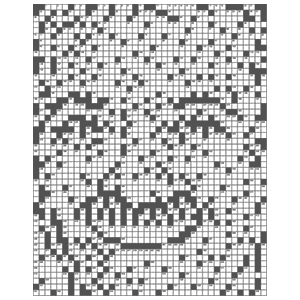
Will Shortz (b. 1952) is the long-time crossword puzzle editor for ‘The New York Times.’ Shortz was born and raised on an Arabian horse farm in Indiana. He is the only person known to hold a college degree in enigmatology, the study of puzzles.
Shortz achieved this feat by designing his own curriculum through Indiana University’s Individualized Major Program. He also earned a Juris Doctor degree from the University of Virginia School of Law (1977), though he forewent the bar exam and began a career in puzzles instead. Shortz began his career at ‘Penny Press Magazines,’ then moved to ‘Games’ magazine for 15 years, serving as its editor from 1989–1993.
read more »
Posted in Games, Humor, Language |
Leave a Comment »


 The Daily Omnivore