November 8, 2011


Urban exploration (often shortened as urbex or UE) is the examination of the normally unseen or off-limits parts of urban areas or industrial facilities. It is also commonly referred to as ‘infiltration,’ although that term is be more closely associated with the exploration of active or inhabited sites. It may also be referred to as ‘draining’ (when exploring drains) ‘urban spelunking,’ ‘urban caving,’ or ‘building hacking.’
The nature of this activity presents various risks, including both physical danger and the possibility of arrest and punishment. Many, but not all, of the activities associated with urban exploration could be considered trespassing or other violations of local or regional laws, including—but not limited to—invasion of privacy and certain broadly-interpreted anti-terrorism laws.
read more »
Posted in Games, Politics |
Leave a Comment »
November 8, 2011
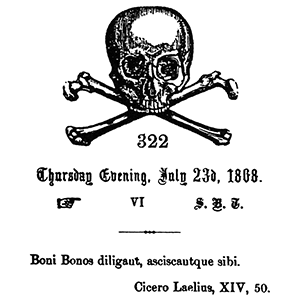
A secret society is a club or organization whose activities and inner functioning are concealed from non-members. The society may or may not attempt to conceal its existence. The term usually excludes covert groups, such as intelligence agencies or guerrilla insurgencies, which hide their activities and memberships but maintain a public presence.
The exact qualifications for labeling a group as a secret society are disputed, but definitions generally rely on the degree to which the organization insists on secrecy, and might involve the retention and transmission of secret knowledge, denial of membership in or knowledge of the group, the creation of personal bonds between members of the organization, and the use of secret rites or rituals which solidify members of the group.
read more »
Posted in Games, Language, Money |
Leave a Comment »
November 8, 2011

Hazing is a term used to describe various ritual and other activities involving harassment, abuse or humiliation used as a way of initiating a person into a group. Hazing is seen in many different types of groups, including in gangs, clubs, sports teams, military units, and workplaces. In the United States it is often associated with fraternities and sororities.
Hazing is often prohibited by law and may be either physical (violent) or mental (degrading) practices. It may also include nudity or sexually oriented activities. Hazing often serves a deliberate purpose, of building solidarity. Persons who go through a great deal of trouble or pain to attain something tend to value it more highly than persons who attain the same thing with a minimum of effort.
read more »
Posted in Education, Games, Politics |
Leave a Comment »
November 3, 2011

Blackout usually relates to the broadcasting of sports events, television programming, that is prohibited in a certain media market. The purpose is theoretically to generate more revenue by obliging certain actions from fans, either by making them buy tickets or watch other games on TV.
While financially a logical procedure on the part of those providing the programming, blackouts are frequently unpopular with the affected audience as it will cause some fans to miss the game completely even if they were willing to enter the stadium and pay. A similar term, known as preemption, often refers to stations blacking out a program for other than regulatory or governmental reasons, such as when a local station preempts a television network program for local news or a special program.
read more »
Posted in Games, Money |
Leave a Comment »
November 3, 2011

Since 1973, the NFL has maintained a blackout policy that states that a home game cannot be televised locally if it is not sold out 72 hours prior to its start time. The policy is intended to encourage full attendance. Prior to 1973, all games were blacked out in the home city of origin regardless of whether they were sold out. This policy, dating back to the NFL’s emerging television years, resulted in home-city blackouts even during championship games.
For instance, the 1958 ‘Greatest Game Ever Played’ between the Baltimore Colts and New York Giants was unavailable to New York fans despite the sellout. Many fans rented hotel rooms in Connecticut to watch the game on Hartford TV, a practice that continued for Giants games through 1972. Similarly, all Super Bowl games prior to the seventh edition were unavailable in the host city’s market.
read more »
Posted in Games, Money |
Leave a Comment »
October 28, 2011

Charlie Kelly is a fictional character on the FX television series ‘It’s Always Sunny in Philadelphia,’ portrayed by Charlie Day. Green Man is a persona assumed by Charlie wearing a green Lycra suit (morphsuit). The persona has spawned imitators, most notably at sporting events. Rob McElhenney, creator of ‘It’s Always Sunny in Philadelphia’ came up with idea after watching the Philadelphia Eagles defeat the Dallas Cowboys at Lincoln Financial Field in Philadelphia. Without warning, in the parking lot after the game, a friend of McElhenney’s stripped off his clothes and donned a full-body green lycra suit.
McElhenney said: ‘Everyone started chanting, ‘Green Man! Green Man!’ It went on for several hours, and all I could think was, My God, there has to be a way I can take advantage of this on the show.’ When McElhenney returned to Los Angeles, he ordered a suit from Japan that was identical to the outfit that McElhenney’s friend had worn. The character made his debut the next season in an episode entitled ‘The Gang Gets Invincible,’ which centered on three of the show’s central characters trying out for the Eagles, just as they had seen in the film ‘Invincible.’
Posted in Games, Humor |
Leave a Comment »
October 28, 2011
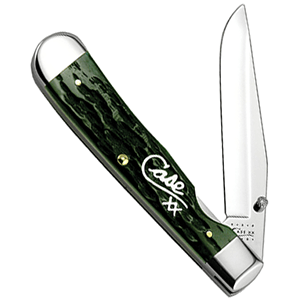
W.R. Case & Sons Cutlery Company is an American manufacturer of traditional pocketknives. The company originated in Little Valley, New York around the turn of the 20th century before relocating to its current home, Bradford, Pennsylvania, in 1905. The company’s namesake, William Russell Case, first made knives with his brothers under the name, Case Brothers Cutlery Company. His son, John Russell (‘Russ’) Case, worked as a salesman for his father’s company before founding W.R. Case & Sons.
The company’s roots extend back to 1889, when the Case brothers – William Russell (W.R.), Jean, John and Andrew Case, formerly of the Cattaraugus Cutlery Company – began selling cutlery from the back of a wagon in various small western New York villages. In January 1900, the brothers incorporated to form Case Brothers Cutlery Company.
read more »
Posted in Games, Money, War |
Leave a Comment »
October 24, 2011

In professional wrestling, something that is kayfabe [kay-fayb] is not real, but rather ‘acted out.’ People who believe that kayfabe acts are real are called ‘marks,’ as opposed to ‘smarts.’ Those who know wrestling is scripted but still enjoy the storylines are known as’ smart-marks,’ ‘or smarks.’
Kayfabe in general is the portrayal of events within the industry as ‘real’ or ‘true.’ Specifically, the portrayal of professional wrestling, in particular the competition and rivalries between participants, as being genuine or not of a worked nature. Referring to events or interviews as being a ‘chore’ means that the event/interview has been ‘kayfabed’ or staged, or is part of a wrestling angle (fictional storyline) while being passed off as legitimate.
read more »
Posted in Games, Language, Money |
Leave a Comment »
October 23, 2011
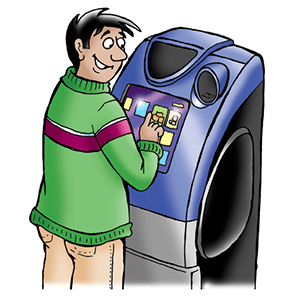
Quiz machine is a term used in the UK for commercial coin-operated video quiz games that offer cash prizes for winning performances. These machines are usually found sited in pubs, bars and other places of entertainment. The term quiz machine is often used interchangeably with the trade term SWP (‘Skill With Prizes’) although not all SWP games are quiz based. The quiz machine first appeared on the scene in the UK in 1985.
The first such machine was called Quizmaster which was made by the Cardiff based now defunct Coinmaster Ltd. This was rapidly followed by quiz machines from other manufacturers. Over the following years quiz machines/SWP’s became a regular feature of the British pub. Leading SWP manufacturers of the 1980s and 1990s were: Coinmaster, JPM, Barcrest, Bell-Fruit, Maygay and Ace-Coin. The themes of many SWP games were (and still are) based on popular TV quiz shows, board games or other aspects of popular culture.
read more »
Posted in Games, Money, Politics |
Leave a Comment »
October 23, 2011

A pub quiz is a quiz held in a public house (or pub for short). Origins of the pub quiz are unclear but there is little evidence of them existing before 1970 in the United Kingdom. Pub quizzes (also known as live trivia, or table quizzes) are often weekly events and will have an advertised start time, most often in the evening. While specific formats vary, most pub quizzes depend on answers being written in response to questions which may themselves be written or announced by a quizmaster.
Generally someone (either one of the bar staff or the person running the quiz) will come around with pens and quiz papers, which may contain questions or may just be blank sheets for writing the answers on. A mixture of both is common, in which case often only the blank sheet is to be handed in. Traditionally a member of the team hands the answers in for adjudication to the quiz master or to the next team along for marking when the answers are called.
read more »
Posted in Education, Games, Humor |
Leave a Comment »
October 23, 2011

The Liberal Arts is a curriculum of seven subjects, the first three of which are called the trivia (grammar, rhetoric and logic). Its literal meaning in Latin could have been, ‘appropriate to the street corner, commonplace, vulgar.’
In medieval Latin, it came to refer to the lower division of the Liberal Arts (the other four were the quadrivium, namely arithmetic, geometry, music, and astronomy, which were more challenging). Hence, trivial in this sense would have meant ‘of interest only to an undergraduate.’ The meaning ‘trite, commonplace, unimportant, slight’ occurs from the late 16th century, notably in the works of Shakespeare.
read more »
Posted in Education, Games, Humor |
1 Comment »
October 16, 2011
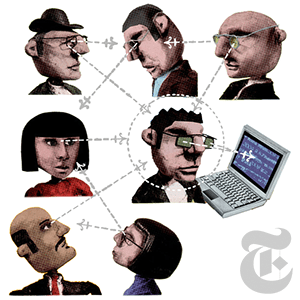
A Keynesian beauty contest [keyn-zee-uhn] is a concept developed by economist John Maynard Keynes in 1936 to explain price fluctuations in equity markets. Keynes described the action of rational agents in a market using an analogy based on a fictional newspaper contest, in which entrants are asked to choose a set of six faces from photographs of women that are the ‘most beautiful.’ Those who picked the most popular face are then eligible for a prize.
Keynes said: ‘It is not a case of choosing those [faces] that, to the best of one’s judgment, are really the prettiest, nor even those that average opinion genuinely thinks the prettiest. We have reached the third degree where we devote our intelligences to anticipating what average opinion expects the average opinion to be. And there are some, I believe, who practice the fourth, fifth and higher degrees.’ Keynes believed that similar behavior was at work within the stock market. This would have people pricing shares not based on what they think their fundamental value is, but rather on what they think everyone else thinks their value is, or what everybody else would predict the average assessment of value is.
Posted in Games, Language, Money |
Leave a Comment »


 The Daily Omnivore