July 29, 2011


Scratching is a DJ or turntablist technique used to produce distinctive sounds by moving a vinyl record back and forth on a turntable while optionally manipulating the crossfader on a DJ mixer. While scratching is most commonly associated with hip hop music, since the 1990s, it has been used in some styles of pop and nu metal. Within hip hop culture, scratching is one of the measures of a DJ’s skills.
Scratching was developed by early hip hop DJs from New York such as Grand Wizard Theodore and DJ Grandmaster Flash, who describes scratching as, ‘nothing but the back-cueing that you hear in your ear before you push it out to the crowd.’ Jamaican-born DJ Kool Herc also influenced the early development of scratching; he developed break-beat DJing, where the breaks of funk songs—the most danceable part, often featuring percussion—were isolated and repeated for the purpose of all-night dance parties.
read more »
Posted in Art, Games, Technology |
Leave a Comment »
July 29, 2011


The Melbourne Shuffle (also known as Rocking ) is a rave and club dance that originated in the late 1980s in the underground rave music scene in Melbourne, Australia. The basic movements in the dance are a fast heel-and-toe action with a style suitable for various types of electronic music. Some variants incorporate arm movements. People who dance the shuffle are often referred to as rockers, due in part to the popularity of shuffling to rock music in the early 1990s.
In the late ’80s, the Melbourne Shuffle began to emerge as a distinct dance, incorporating more hand movement than its predecessor, Stomping, which in turn originated from Celtic and Malaysian folk dances. The clog and sword dance can easily be matched to some earlier experimental rave and club dance moves that evolved into Stomping.
read more »
Posted in Art, Games, World |
Leave a Comment »
July 26, 2011

Biophilia is the musical project and forthcoming eighth full-length studio album from Icelandic singer Björk. The album is ‘partly recorded’ on an iPad and will be released in the form of a series of apps. Biophilia will be the world’s ‘first app album’ in collaboration with Apple. Björk has described the project as a multimedia collection ‘encompassing music, apps, internet, installations, and live shows.’ Scott Snibbe, an interactive artist was commissioned by Björk in the summer of 2010 to produce the app, as well as the images for the live shows (which will combine his visuals with National Geographic imagery, mixed live from iPads on the stage).
For the song, ‘Virus,’ the app will feature a close-up study of cells being attacked by a virus to represent what Snibbe calls: ‘A kind of a love story between a virus and a cell. And of course the virus loves the cell so much that it destroys it.’ The interactive game challenges the user to halt the attack of the virus, although the result is that the song will stop if the player succeeds. In order to hear the rest of the song, the players will have to let the virus take its course. Using some artistic license, the cells will also mouth along to the chorus. Björk is determined to fuse different elements together, be it juxtaposing a female choir from Greenland with the bleeps and glitches of electronic music pioneers Matmos during the Vespertine tour, or meshing soaring strings and jagged beats on ‘Homogenic,’ that ‘helps explain the power and success of Björk’s collaborations.’
Posted in Art, Games, Technology |
Leave a Comment »
July 25, 2011

Airstream is a brand of luxury recreational vehicle manufactured in Jackson Center, Ohio. It is currently a division of Thor Industries. The company, which now employs fewer than 400, is the oldest in the industry. Airstream trailers are easily recognized for their distinctive rounded aluminum bodies, which originated in the 1930s from designs created by Hawley Bowlus. Bowlus was the chief designer of Charles Lindbergh’s aircraft, the Spirit of St. Louis.
The company was founded by Wally Byam, who began building trailers out of Masonite in his backyard in Los Angeles during the late 1920s. A lawyer by training, Byam published a magazine selling ‘how-to’ kits to customers wishing to build their own trailers. He then acquired the struggling Bowlus Company. In 1936 Byam introduced the ‘Airstream Clipper,’ which was essentially a rebadged 1935 Bowlus, with the door relocated from the front to the side. The design cut down on wind resistance and thus improved fuel efficiency. It was the first of the now familiar sausage-shaped, silver aluminum Airstream trailers.
read more »
Posted in Games, Money, Technology |
Leave a Comment »
July 24, 2011

Tickle torture is the use of tickling to abuse, dominate, humiliate or otherwise assault someone. The victim laughs even if he or she finds the experience unpleasant because the laughter is an innate reflex rather than social conditioning. The term is often used to describe the act of tickling when prolonged for a long period of time in a sensitive area of the body. The phrase is also sometimes used to describe mock ‘tickle torture,’ where the activity is consensual.
Chinese tickle torture is a term used in Western society to describe an ancient form of torture practiced by the Chinese, in particular the courts of the Han Dynasty. Chinese tickle torture was a punishment for nobility since it left no marks and a victim could recover relatively easily and quickly. Another example of tickle torture was used in ancient Rome, where a person’s feet were dipped in a salt solution, and a goat was brought in to lick the solution off. This type of tickle torture would only start as tickling, eventually becoming extremely painful.
read more »
Posted in Games, Language, War |
Leave a Comment »
July 24, 2011
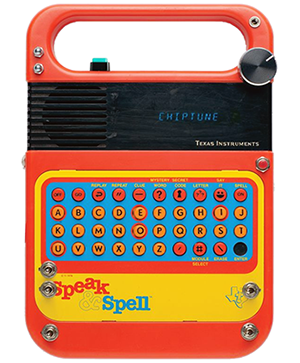
Circuit bending is the creative customization of the circuits within electronic devices such as low voltage, battery-powered guitar effects, children’s toys, and small digital synthesizers to create new musical or visual instruments and sound generators.
Emphasizing spontaneity and randomness, the techniques of circuit bending have been commonly associated with noise music, though many more conventional contemporary musicians and musical groups have been known to experiment with ‘bent’ instruments. Circuit bending usually involves dismantling the machine and adding components such as switches and potentiometers (control knobs) that alter the circuit.
read more »
Posted in Art, Games, Technology |
Leave a Comment »
July 23, 2011
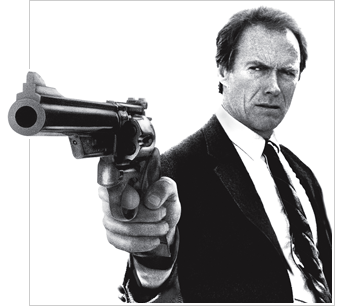
A death pool (or dead pool) is a game of prediction which involves guessing when someone will die. A typical pool might have players pick out celebrities who they think will die within the year. There are also several scoring variants. For example, a player might be rewarded few, if any, points for predicting the death of someone who is over 80 years old or is known to be suffering from a terminal disease. Another common method to calculate score is subtracting the celebrity’s age from 100. Other pools require participants to form a list ranked on how sure they are that a person on the list will die, with points given based on how high a person on their list is ranked, and others award points based on how many other contestants selected the deceased celebrity. Another variant on the game has a single point awarded for each correct prediction, regardless of the celebrity’s age or medical condition. The advantage of this scoring method is that there is more scoring, and it rewards research (learning which celebrities are experiencing failing health) rather than luck.
Definitions of celebrity vary from contest to contest. Smaller pools may rely on consensus of the players as to who is famous. Others require an obituary to appear in a recognized newswire such as the Associated Press or Reuters. The Lee Atwater Invitational Dead Pool employs a Fame Committee consisting of non-contestants who assess ahead of time the name-recognition of each celebrity. The Rotten.com Dead Pool, the largest in the world, uses the Notable Names Database (NNDB) as its source of qualified celebrities, and as arbiter of their life status.
Posted in Death, Games, Money |
Leave a Comment »
July 19, 2011
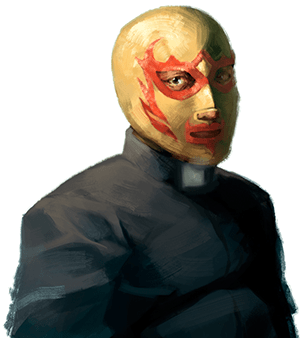
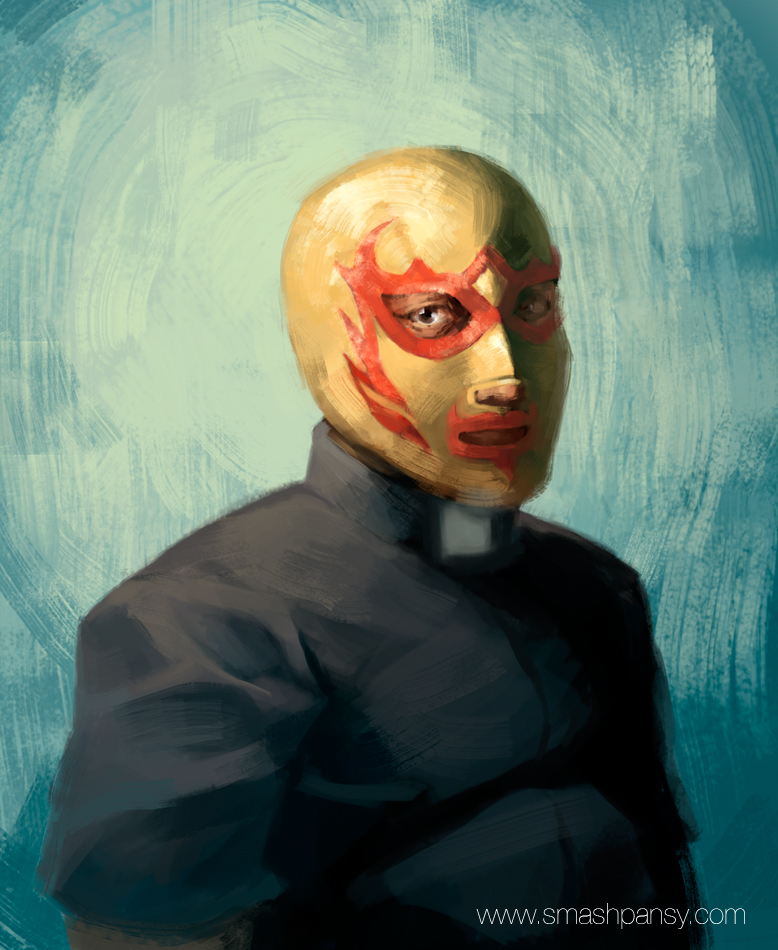
Fray Tormenta (b. 1945) is a Mexican priest who supported an orphanage for 23 years as a lucha libre wrestler. While performing, he wore a red and yellow mask. He is largely retired from wrestling, making only sporadic in-ring appearances, but still wears his mask even in his duties as a priest. Fray Tormenta means ‘Friar Storm’ in English. Father Sergio Gutiérrez Benítez had long been inspired to become a masked luchador after watching two 1963 Mexican films, ‘El Señor Tormenta’ (‘Mister Storm’) and ‘Tormenta En El Ring’ (‘Storm In The Ring’) both of which featured the story of a poor Mexican priest who supported the children of his orphanage by fighting as a lucha libre wrestler at night.
At age 22 he became interested in the priesthood and was inducted into the Piarists Order. His theological training took him to Rome, and then Spain, and for a while he taught philosophy and history at Roman Catholic universities in Mexico. He later became a secular priest in the Diocese of Texcoco, where he founded an orphanage. In need of money to take care of the children, the father became the masked wrestler known as Fray Tormenta. During that time he never let anyone know of his identity as a priest, explaining ‘No one would have taken me seriously as a wrestler had they known I was a priest.’
Posted in Games, Humor, Philosophy |
Leave a Comment »
July 19, 2011

A Sound clash is a musical competition where crew members from opposing reggae sound systems pit their skills against each other. Sound clashes take place in a variety of venues, both indoors and outdoors. Primarily featuring reggae (or dancehall) music, the object is to beat or ‘kill’ their competitors. In the early days of sound clashes, in Jamaican dancehall culture, sound systems would bring their own sound equipment–heavy bass sounds (that can be heard miles away) are especially important. A strong selection of contemporary, popular dubs is necessary also; sometimes sound systems paid artists for the exclusive use of dubs. Usually the Sound systems in the sound clash will play for a set time, perhaps 30 minutes before switching. This time interval gets shorter and shorter, so when playing returns to one sound again, they may only play a shorter time. Near the end of the clash they go song on song or ‘Dub fi dub.’
In Jamaica, sound clashes with their ‘violently martial ethos’ date back at least to the 1950s, when sound systems like Tom the Great Sebastian and Duke Reid’s the Trojan clashed in the old Back-O-Wall neighborhood of Kingston (now Tivoli Gardens). Sometimes these clashes were violent, with one system destroying the other system’s equipment. Sound clashes are an integral part of black culture in London as portrayed in the cult movie Babylon, at the same time that real-life sound systems such as Jah Shaka and Ital Lion were competing for supremacy in Deptford which is in The London Borough of Lewisham a traditional West-Indian area of South London.
Posted in Art, Games, Language |
Leave a Comment »
July 13, 2011

The Tetris effect occurs when people devote sufficient time and attention to an activity that it begins to overshadow their thoughts, mental images, and dreams. People who play the video game Tetris for a prolonged amount of time may then find themselves thinking about ways different shapes in the real world can fit together, such as the boxes on a supermarket shelf or the buildings on a street. In this sense, the Tetris effect is a form of habit. They might also dream about falling Tetris shapes when drifting off to sleep or see images of falling Tetris shapes at the edges of their visual fields or when they close their eyes. In this sense, the Tetris effect is a form of hallucination or hypnagogic imagery.
The Tetris effect can occur with other video games, with any prolonged visual task (such as classifying cells on microscope slides, weeding, picking or sorting fruit, flipping burgers, driving long distances, or playing board games such as chess or go), and in other sensory modalities. For example, there is the tendency for a catchy tune to play out unbidden in one’s mind (an earworm). In kinesthesis, a person newly on land after spending long periods at sea may move with an unbidden rocking motion, having become accustomed to the ship making such movements (known as sea legs or mal de debarquement). Computer programmers and developers sometimes have similar experiences, and report dreaming about code when they sleep at night.
read more »
Posted in Games, Language, Science |
1 Comment »
July 13, 2011

A card sharp (or card shark) is a person who uses skill and deception to win at poker or other card games. The label is not always intended as pejorative, and is sometimes used to refer to practitioners of card tricks for entertainment purposes. The term has also taken on the meaning of ‘expert card gambler who takes advantage of less-skilled players,’ without implication of actual cheating at cards, in much the same way that ‘pool shark’ or ‘pool hustler’ can (especially when used by non-players) be intended to mean ‘skilled player’ rather than ‘swindler.’ A card sharp/shark may be a ’rounder’ who travels, seeking out high-stakes games in which to gamble.
Card sharps who cheat or perform tricks use methods to keep control of the order of the cards or sometimes to control one specific card. Most, if not all, of these methods employ sleight of hand. Essential skills are false shuffles and false cuts that appear to mix the deck but actually leave the cards in the same order. More advanced techniques include culling (manipulating desired cards to the top or bottom of the deck), and stacking (putting desired cards in position to be dealt). Dealing the cards can also be manipulated, by dealing either the bottom card from the deck or the second one from the top instead of the top card. These are called Bottom dealing and Second dealing, respectively. Dealing may also be done from the middle of the deck, known as the middle deal or center deal, but this is not as common.
Posted in Games, Humor, Language |
Leave a Comment »
July 13, 2011

Hustling is the deceptive act of disguising one’s skill in a sport or game with the intent of luring someone of lesser skill into gambling (or gambling for higher than current stakes) with the hustler, as a form of confidence trick. It is most commonly associated with pool, but also can be performed with regard to other sports and gambling activities. Hustlers may also engage in ‘sharking’ – distracting, disheartening, enraging or even threatening their opponents, to throw them off. Hustlers are thus often called ‘pool sharks.’
Professional and semi-pro hustlers sometimes work with a ‘stakehorse’ — a person who provides the money for the hustler to bet with (and who may assist in the hustling) — in exchange for a substantial portion of all winnings. Another form of hustling (often engaged in by the same hustlers who use the skill-disguising technique) is challenging ‘marks’ (swindle targets) to bet on trick shots that seem near-impossible but at which the hustler is exceptionally skilled.
read more »
Posted in Games, Language, Money |
Leave a Comment »



 The Daily Omnivore