April 6, 2011


A baseball cap is a type of hat with a long, stiff brim, that is a part of the traditional baseball uniform worn by players, with the brim pointing forward to shield the eyes from the sun.
In 1860, the Brooklyn Excelsiors wore the ancestor of the modern rounded-top baseball cap, and by 1900, the ‘Brooklyn style’ cap became popular. During the 1940s, latex rubber became the stiffening material inside the hat and the modern baseball cap was born. The ‘bill’ or ‘brim’ was designed to protect a player’s eyes from the sun. Typically, the brim was much shorter in the earlier days of the baseball hat. Also, the hat has become more structured, versus the overall ‘floppy’ cap of the 19th and early 20th centuries.
read more »
Posted in Art, Games, War |
Leave a Comment »
April 5, 2011
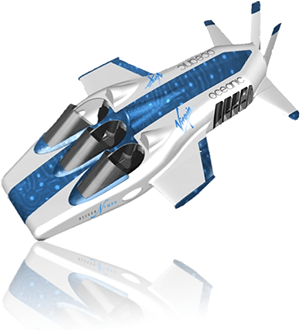
Virgin Oceanic, formerly Virgin Aquatic is a proposed undersea leisure venture of Sir Richard Branson’s Virgin Group. Currently the offering is limited to shallow water craft such as the Deep Flight Merlin (an open cockpit, three person submersible), named ‘Necker Nymph’ after Branson’s private island in the British Virgin Islands. Virgin plans to launch a deep sea version to carry passengers to extreme ocean depths.
Posted in Games, Money, Technology |
Leave a Comment »
April 3, 2011

Speed reading refers to a number of ways to increase the speed at which a text can be read where the important facts are still understood. A trained reader is able to read and understand between 200 and 300 words per minute of basic text. Better training can improve this speed to over 1000 words per minute.
With a lot of exercise it’s possible to increase reading speed further; the best readers can read between 3000 and 4000 words per minute, and understand about 80% of them (at that speed a short novel can be read in under 20 minutes).
read more »
Posted in Education, Games, Language |
Leave a Comment »
April 3, 2011
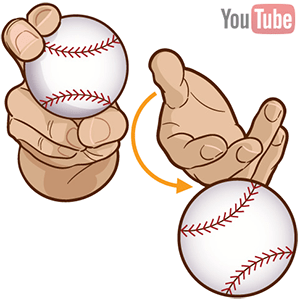

The curveball is a type of pitch in baseball thrown with a characteristic grip and hand movement that imparts forward spin to the ball causing it to dive in a downward path as it approaches the plate. Its close relatives are the slider and the slurve. A curve ball that a pitcher fails to put enough spin on will not break much and is colloquially called a ‘hanging curve.’
Baseball lore has it that the curveball was invented in the early 1870s by Fred Goldsmith or Candy Cummings. In the early years of the sport, use of the curveball was thought to be dishonest and was outlawed, but officials could not do much to stop pitchers from using it.
read more »
Posted in Games |
1 Comment »
April 2, 2011

I Wanna Be The Guy: The Movie: The Game (IWBTG) is a 2D platform indie freeware video game. First released in October 2007 by Kayin (Michael O’Reilly).
It is best known for its unusually difficult platforming elements, unorthodox level design and utilizing sound effects, characters and music from many other games.
read more »
Posted in Art, Games, Humor |
Leave a Comment »
April 1, 2011

Homies are a series of 2-inch figurines loosely based upon Chicano (Mexican American) characters in the life of artist David Gonzalez. First created in 1998, these plastic figurines were initially sold via vending machines typically positioned in supermarkets. Homies have become a highly collectible item among fans of the line, and many imitation toys have sprung up. The figures caused controversy after their initial release as members of the Los Angeles Police Department, argued that the figures glorified gang life. Many stores stopped selling the toys after the complaint.
Gonzales then created a story for each of the Homies’ characters, each of which had a positive view of the characters. Some became former jail mates who went on to educate children about how to avoid prison. Mainstream stores, such as Walmart, quickly returned the Homies to their stacks, and the toy branched out to include a line of diecast cars, among other things. By 2005, the Homies character line had women, as well as Filipino, Japanese and Puerto Rican, and even Evil Clown characters. The Puerto Ricans set, which includes twelve of the Homies, are nicknamed Los Boricuas.
Posted in Art, Games, Money |
Leave a Comment »
April 1, 2011

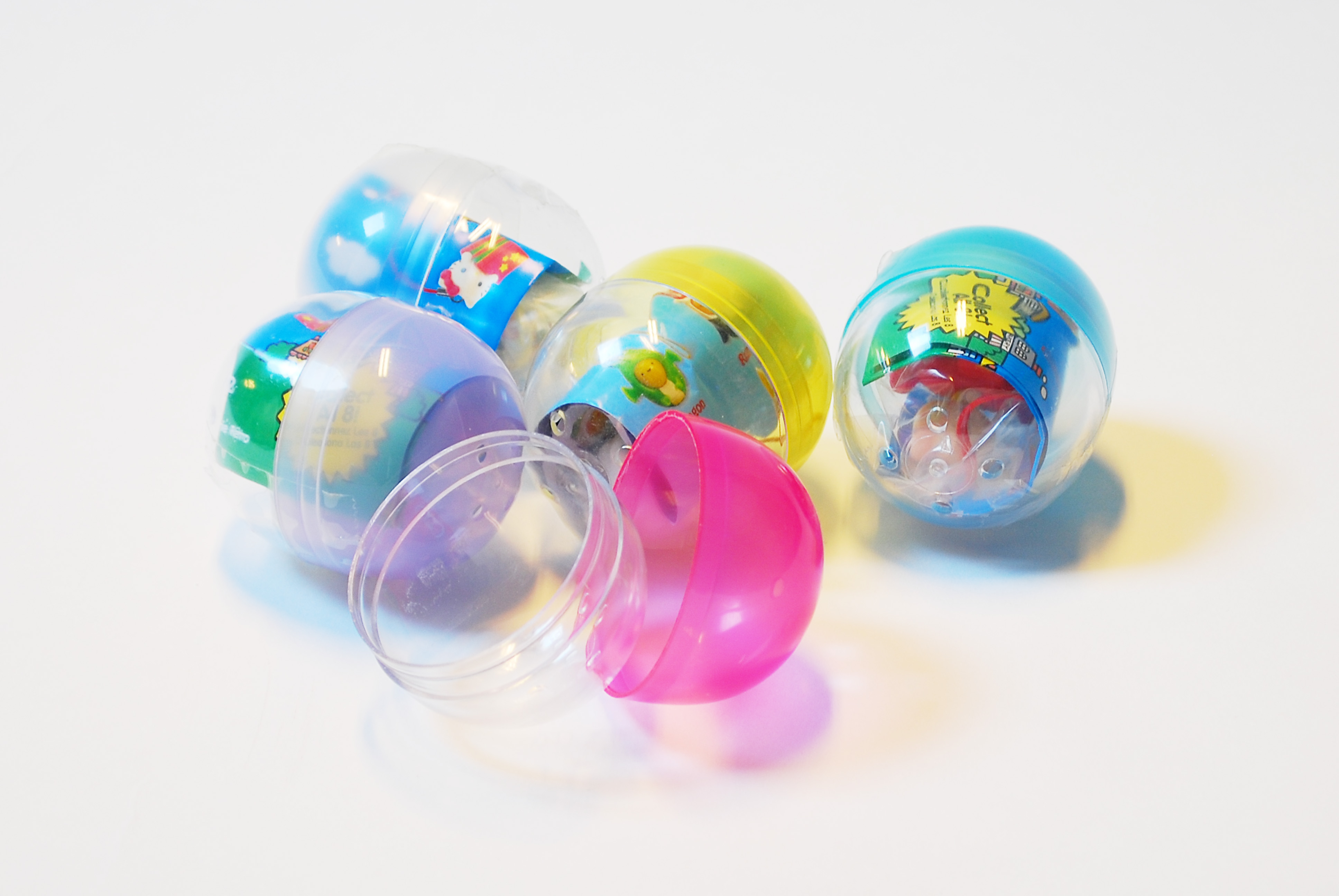
Gashapon [gosh-uh-pone] is a Bandai brand trademark widely used throughout the world for their capsule toys.
‘Gashapon’ is a Japanese onomatopoeia, made up of two sounds: ‘gasha’ for the turning of a crank on a toy vending machine, and ‘pon’ for the sound of the toy capsule dropping into the receptacle. It is used to describe both the machines themselves, and any toy obtained from them.
read more »
Posted in Art, Games, Money |
Leave a Comment »
April 1, 2011

Disney Vinylmation is a brand of vinyl toys sold at Disney theme parks and other locations. The toys all have a common shape (that of Mickey Mouse) but have different themed markings, colors and patterns.
The first figures were introduced in November 2008. The figures are sold in sealed packaging. The purchaser does not know which figure they are buying until they have opened it.
Posted in Art, Games, Money |
Leave a Comment »
March 28, 2011
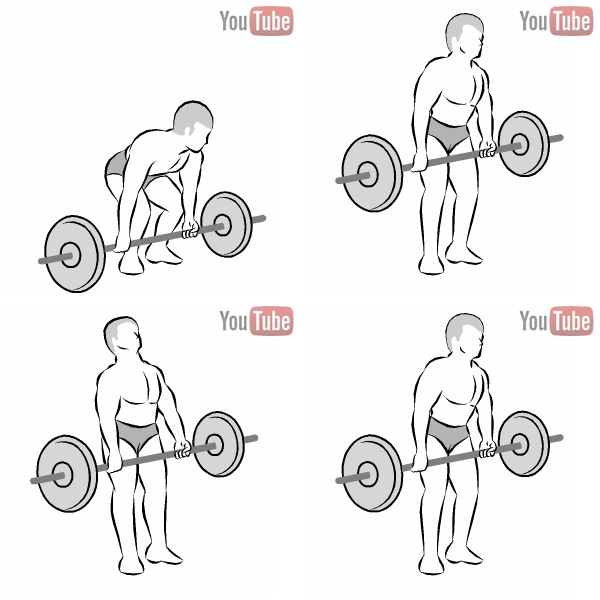
The deadlift is a weight training exercise where one lifts a loaded barbell off the ground from a stabilized bent-over position. It is one of the three gauges of powerlifting, and is an exercise for overall body development. The deadlift is a compound movement that works grip strength with the erector spinae, gluteus maximus, adductor magnus, hamstrings, and quadriceps serving as the primary muscles. The remaining muscles are involved in stability control. It is, in a sense, the purest test of strength because it is one of the few lifts of dead weight (weight lying on the ground).
In most other lifts there is an eccentric phase (lowering) followed by the concentric phase (lifting). The eccentric phase essentially stores some amount of energy in the stretched muscles and tendons, making the concentric phase somewhat easier. the deadlift, however, is solely a concentric movement. The lift begins at its most difficult point, with no inertia or stored energy. The record for a raw deadlift (a deadlift performed without the aid of a deadlift suit where only a belt is allowed) is 1015 lbs by Benedikt Magnússon of Iceland.
Posted in Games, Health |
Leave a Comment »
March 28, 2011
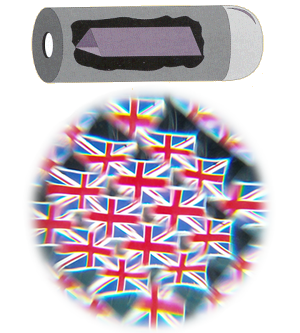
A teleidoscope [tel-ahy-duh-skohp] is a kind of kaleidoscope, with a lens and an open view, so it can be used to form kaleidoscopic patterns from objects outside the instrument, rather than from items installed as part of it. The lens at the end of the tube is not an optical requirement, but protects the internals of the teleidoscope. A spherical ball lens is often used. An advantage of using a sphere is that it will not press flat against the object being viewed, which would block all light and result in no image being seen.
The teleidoscope was invented by John Lyon Burnside III (1916 – 2008), and because he was also responsible for the rediscovery of the math behind kaleidoscope optics, for decades, every maker of optically correct kaleidoscopes sold in the US paid him royalties.
Posted in Games, Technology |
Leave a Comment »
March 28, 2011

A Spinthariscope [spin-thar-uh-skohp] is a device for observing individual nuclear disintegrations caused by the interaction of ionizing radiation with a phosphor (radioluminescence). It was invented by William Crookes in 1903. It consisted of a small screen coated with zinc sulfide affixed to the end of a tube, with a tiny amount of radium salt suspended a short distance from the screen and a lens on the other end of the tube for viewing the screen. Crookes named his device after the Greek word ‘spintharis’, meaning ‘a spark.’
It is said that for a short time after its invention, spinthariscopes were very popular among the social upper classes who gave them as gifts and used them in demonstrations to appear up to date with the most modern scientific advances of the day. Spinthariscopes were quickly replaced with more accurate and quantitative devices for measuring radiation in scientific experiments, but enjoyed a modest revival in the mid 20th century as children’s educational toys. They can still be bought today as instructional novelties, but they now use Americium or Thorium.
Posted in Games, Science |
Leave a Comment »
March 23, 2011

The Bocuse d’Or [bo-kyewz dor] is a biennial world chef championship. Named for the chef Paul Bocuse, the event takes place during two days near the end of January in Lyon, France, and is frequently referred to as the culinary equivalent of the Olympic Games. The initial competition took place in 1987.
The audience atmosphere of the Bocuse d’Or evolved in 1997 when the support for the Mexican candidate included a mariachi band, foghorns, cowbells, cheering and yelling from the stands, marking the beginning of a tradition of noisy spectator presence. Originally the reigning champion nation was not permitted to participate in the following contest, but that rule was removed after the 1999 event when France was competing and did not win gold for the first time.
Posted in Food, Games, Money |
Leave a Comment »






 The Daily Omnivore