March 19, 2011

A kill screen is a stage or level in a video game (often an arcade game) that stops the player’s progress due to a programming error or design oversight. Rather than ‘ending’ in a traditional sense, the game will crash, freeze, or behave so erratically that further play is impossible. Pac-Man has a famous kill screen often referred to as the ‘Pac-Man Bomb Screen.’ The game’s level counter was a single 8-bit byte and could therefore store only 256 distinct values. Reaching the 256th level causes the counter that is used while drawing the fruit to overflow to zero, causing 256 fruits and seven blank spaces to be drawn.
Kill screens were much more common during the Golden Age of Arcade Games. Games from this era were often written with the assumption that the player would stop playing long before the numerical limits of the game code were reached; most games from this period were intended to continue until the players lost all of their lives. Additionally, the limited hardware of these early machines often meant that programmers could not spend memory on logical checks of the game state.
Posted in Games, Language, Technology |
Leave a Comment »
March 17, 2011

The endurance running hypothesis is the theory that the evolution of certain human characteristics can be explained as adaptations to long-distance running. The theory states that prior to the invention of the spear, the first projectile weapon, 200,000 years ago, ancient humans would use persistence hunting as their method of hunting animals, whereby, rather than outpacing animals, they would chase the animals over long distances until the animals would overheat.
Thus, adaptations favoring long-distance running ability would have been favored in humans. After projectile weapons were developed – in evolutionarily recent times – the importance of long-distance running became lessened but the traits remained.
Posted in Games, Science |
Leave a Comment »
March 15, 2011

David Goggins is a Navy SEAL, who served in Afghanistan, and an ultramarathon runner. After several of his friends died in the war, Goggins began long-distance running to raise money. In 2005, Goggins entered the 24 hour race in San Diego and was able to run 100 miles in under 19 hours, despite never having run a marathon before. Since then, Goggins competed in many different long distance running events such as the Las Vegas Marathon and the Badwater 135 miler, where he placed highly.
Posted in Games, Health, War |
Leave a Comment »
March 15, 2011
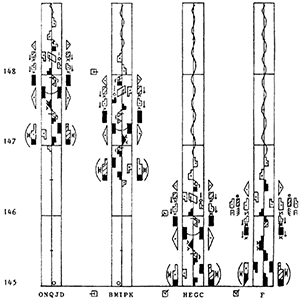

Laban [ley-buhn] Movement Analysis is a way and language for interpreting, describing, visualizing and notating all ways of human movement. Created by Rudolf Laban, LMA draws on his theories of effort and shape to describe, interpret and document human movement. Used as a tool by dancers, athletes, physical and occupational therapists, it is one of the most widely used systems of human movement analysis.
Rudolf Laban (1879–1958) was a dance artist and theorist whose work laid the foundations for dance notation. He is considered to be one of the most important figures in the history of dance and fencing.
Posted in Art, Education, Games |
Leave a Comment »
March 14, 2011

The Wave (North American) or the Mexican wave (British) is an example of metachronal rhythm achieved in a packed stadium when successive groups of spectators briefly stand and raise their arms. A metachronal rhythm refers to wavy movements produced by the sequential action (as opposed to synchronized) of structures such as cilia, segments of worms or legs.
In The Wave, each spectator is required to rise at the same time as those straight in front and behind, and slightly after the person immediately to either the right (for a clockwise wave) or the left (for a counterclockwise wave). Immediately upon stretching to full height, the spectator returns to the usual seated position.
read more »
Posted in Games |
Leave a Comment »
March 14, 2011
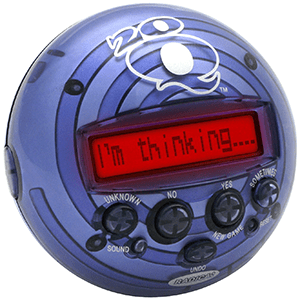
20Q is a computerized game of twenty questions that began as an experiment in artificial intelligence. It was invented by Robin Burgener. The game is based on the spoken parlor game known as twenty questions. 20Q asks the player to think of something and will then try to guess what they are thinking of with twenty yes-or-no questions.
If it fails to guess in 20 questions, it will ask an additional 5 questions. If it fails to guess even with 25 questions, the player is declared the winner.
read more »
Posted in Games, Technology |
Leave a Comment »
March 14, 2011


Computer poker players are computer programs designed to play the game of poker against human opponents or other computer opponents. They are commonly referred to as pokerbots or just simply bots.
These bots or computer programs are used often in online poker situations as either legitimate opponents for humans players or a form of cheating. Cardrooms forbid the use of bots although the level of enforcement from site operators varies considerably.
read more »
Posted in Games, Money, Technology |
Leave a Comment »
March 14, 2011

Polaris is a 2007 Texas hold ’em poker playing program developed by the computer poker research group at the University of Alberta. The program requires little computational power at match time, so it is run on an Apple MacBook Pro during competitions. It currently plays only heads-up (two player) Limit Texas hold’em. The University of Alberta has been developing ‘pokerbots’ since 1997.
read more »
Posted in Games, Money, Technology |
Leave a Comment »
March 8, 2011

Michel Fournier (b. 1944) is an adventurer and retired French Air Force colonel. He has been involved in planning several attempts to break freefall jumping height records, but has yet to be successful. In 1998, the French space agency chose Fournier to conduct a record jump to test the ability of astronauts to survive reentry without a space craft. This project was quickly canceled. In 2003, Fournier attempted his first privately-financed jump but the balloon ripped while being filled. ‘The New York Times’ reports that Fournier has spent nearly $20 million on his two private attempts.
Fournier was scheduled to carry out the Grand Saut (Big Jump) project in 2008, which would have seen him ascend to 40 km (25 mi) in a balloon and freefall 34 km (21 mi) to earth before opening his parachute at 6 km (3.7 mi). In the process he was expected to break the sound barrier, and reach speeds upward of 1,000 miles per hour. His freefall was expected to last 15 minutes. Joseph Kittinger set the previous parachute record by jumping from 31,333 meters (102,799 ft) in 1960 (with a small parachute for guidance) under Project Excelsior. Roger Eugene Andreyev from the Soviet Union holds the longest freefall record of 24,483 meters (80,325 ft) in 1962.
Posted in Games, Money, Technology |
Leave a Comment »
March 8, 2011

Yves Rossy (b. 1959) is a Swiss pilot and inventor. He is the first person to achieve sustained human flight using a jet-powered fixed wing strapped to his back. This jet pack has led to his being nicknamed Airman, Jetman, Rocketman and, later, Fusionman, according to his project steps. Rossy developed and built a system comprising a backpack with semi-rigid carbon-fiber wings with a span of about 2.4 metres (7.9 ft), powered by four attached Jet-Cat P200 jet engines modified from large-model, kerosene fueled, aircraft engines.
His first flight occurred in 2006, lasting nearly six minutes and nine seconds. Yves later successfully flew across the English Channel in 2008 in 9 minutes 7 seconds, reaching a speed of 299 km/h (186 mph) during the crossing. Later in 2008, he made a flight over the Alps, reaching a top descent speed of 304 km/h (189 mph) and an average speed of 124 mph.
Posted in Games, Technology |
Leave a Comment »
March 6, 2011

The Snurfer was the first marketed snowboard. It uses a noboard type of snowboard binding alternative. It was created in 1965 by Sherman Poppen in Muskegon, Michigan.
Poppen was outside his house one day sledding with his daughters, when his 11 year old was going down the hill, standing on her old sled. Poppen then ran inside his shop and bound two skis together. Poppen used a string and tied it to the nose of the board so the rider could have control of the board. Poppen’s wife called it the Snurfer. He licensed the concept to Brunswick Corporation to manufacture the Snurfer. Brunswick sold about a million Snurfers for $10 to $30.
Posted in Games, Money, Technology |
Leave a Comment »
March 6, 2011

Skimboarding is a boardsport in which a skimboard (a smaller counterpart to a surfboard) is used to glide across the water’s surface. Unlike surfing, skimboarding begins on the beach, it starts with the dropping of the board onto the thin wash of previous waves. They may use their momentum to ‘skim’ out to breaking waves, which they then catch back into shore in a manner similar to surfing.
Another aspect of skimboarding is ‘flatland’ which involves performing tricks derived from skateboarding such as ollies and shove-its on the wash of waves without catching shore breaks. Skimboarding originated in Southern california when lifeguards wanted an easy way to get across the beaches of Laguna.
Posted in Games |
Leave a Comment »


 The Daily Omnivore