December 7, 2010

Green Boots is the name given to the corpse of Indian climber Tsewang Paljor (1968 – 1996) on the North face route of Mount Everest. There is little doubt that the body is that of Paljor, who was wearing green Koflach boots on the day he and two others apparently summited. On the way down, he fell victim to exposure in the storm of 10 May 1996 that killed seven others. Since the cave his corpse lies in is on the popular northern route, his body is encountered frequently and came to be known as ‘Green Boots.’
An area along the northeast route to the summit has earned the unassuming nickname of ‘Rainbow Valley,’ simply because of the multicolored down jackets of the numerous corpses littering the hillside. In the harsh conditions of lethal altitudes, corpses can remain for decades, some appearing frozen in time with climbing gear intact. Despite the snow and ice, Everest is as dry as a desert and the sun and wind quickly mummify human remains. In the 56 years since the first men in history reached the top, 216 people have died and 150 bodies have never been, and likely can never be, recovered. They are all still there, and located, almost without exception, in the Death Zone, where oxygen is only one third of the sea level value.
Posted in Death, Games |
Leave a Comment »
November 30, 2010
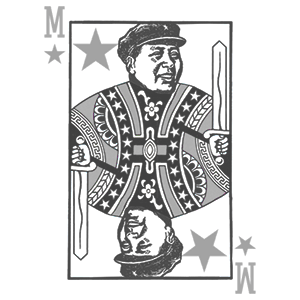
Mao (also known as Chairman, Dictator, Point of Order, Bjorn, and Peebo among many others) is a card game of the Shedding family, in which the aim is to get rid of all of the cards in hand without breaking certain unspoken rules. The game is from a subset of the Stops family, and is similar in structure to the card game Uno or Crazy Eights. The game forbids its players from explaining the rules, and new players are often told only ‘the only rule you may be told is this one.’
The ultimate goal of the game is to be the first player to get rid of all the cards in their hand. Specifics are discovered through trial and error. A player who breaks a rule is penalized by being given an additional card from the deck. The person giving the penalty must state what the incorrect action was, without explaining the rule that was broken.
Posted in Games |
Leave a Comment »
November 22, 2010

Gymkhana is a type of motorsport involving complex tracks and obstacles such as cones, tires, and barrels. The driver must maneuver through a predetermined course performing many different driving techniques. The name gymkhana derives from an equestrian event consisting of speed pattern racing and timed games for riders on horses.
Gymkhana requires drivers to perform reversals, 180 degree spins, 360 degree spins, parking boxes, figure 8s and other advanced skills. Drifting is also encouraged where helpful or necessary. Gymkhana courses typically involve only the use of first and second gear, whereas autotesting in the UK and Ireland add the use of reverse gear. A gymkhana course will typically be from 0:45 to 1:30 in length. The driver will use many techniques to effectively navigate a course. Handbrake technique, drifting and sliding and Left-foot braking are all necessary skills for gymkhana.
Posted in Games |
Leave a Comment »
November 22, 2010

Powerbocking is the act of jumping and running with spring-loaded stilts. For some it is an extreme sport, for others it is a form of exercise or even a means of artistic expression. The use of the stilts to perform extreme jumping, running and acrobatics is known as ‘Bocking’ or ‘PowerBocking’ after German inventor, Alexander Boeck. The stilts themselves are often referred to generically as bocks or powerbocks, or by their brand name (e.g. Powerskips, Velocity Stilts, Powerriser, 7 League Boots, Flying Locust, and Skyrunner).
Each boot consists of a foot-plate with snowboard type bindings, rubber foot pad which is also commonly called a hoof, and a fiberglass leaf spring. Using only their weight, and few movements, the user is generally able to jump 3–5 ft off the ground and run up to 20 mph. They also give the ability to take up to 9-foot strides.
Posted in Games, Technology |
Leave a Comment »
November 18, 2010

Prize indemnity insurance is indemnification insurance for a promotion in which the participants are offered the chance to win prizes. Instead of keeping cash reserves to cover large prizes, the promoter pays a premium to an insurance company, which then reimburses the insured should a prize be given away. One of the earliest and most common forms of prize indemnity insurance is hole-in-one insurance, which began to gain prominence during the early 1980s.
read more »
Posted in Games, Money |
Leave a Comment »
November 17, 2010

Zener [zeh-ner] cards are cards used to conduct experiments for extra-sensory perception (ESP), most often clairvoyance. Perceptual psychologist Karl Zener designed the cards in the early 1930s for experiments conducted with his colleague, parapsychologist J. B. Rhine. Originally, tests for ESP were conducted using a standard deck of playing cards. There are just five different Zener cards: a hollow circle (one curve), a Greek cross (two lines), three vertical wavy lines (or ‘waves’), a hollow square (four lines), and a hollow five-pointed star. There are 25 cards in a pack, five of each design.
When Zener cards were first used, they were made out of a fairly thin translucent white paper. Several subjects or groups of subjects scored very highly until it was discovered that they had often been able to see the symbols through the backs of the cards. A redesign made it impossible to see the designs through the cards under any conditions. A subsequent deck featured an illustration of a building at Duke University on its reverse side, but the use of a non-symmetric reverse design allowed the deck to be exploited as a one-way deck.
Posted in Games, Philosophy, Science |
Leave a Comment »
November 17, 2010
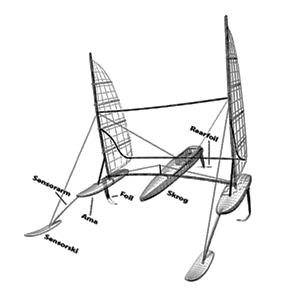
The Hobie TriFoiler is the fastest production sailboat ever created with a top speed of around 35 mph. Designed by the brothers Greg and Dan Ketterman, this trimaran has two sails, one on each ama, and hydrofoils that lift the hulls out of the water at speed. It lifts on the foils at wind speeds between 10 and 11 mph (18 km/h) and quickly accelerates to twice that speed in seconds.
The TriFoiler’s high price-tag ($12,900), fragility, and usage limited to winds between 10 and 25 mph (40 km/h) with low waves, led the Hobie Cat Company to discontinue production. Approximately 30 Trifoilers were built prior to production starting at Hobie in 1995 and another 170 were produced by Hobie before halt of production in 1999.
Posted in Games, Technology |
Leave a Comment »
November 15, 2010

A foilboard or hydrofoil board is a surfboard with a hydrofoil that extends below the board into the water. Laird Hamilton, a prominent figure in the invention of tow-in surfing (the use of a jet ski to tow the rider into a wave), is credited with popularizing the foilboard. Mango Carafino, a big wave tow surfing athlete and water sport instructor from the Hawaiian Island of Maui, is the leading developer of the hydrofoil board design for stand-up hydro foil boarding applications.
The stand-up design allows the rider to glide with the moving wave and eliminates the effects of choppy or rough conditions. Kite surfing with a foilboard allows the rider to angle higher into the wind than on traditional boards which ride on the surface of the water. As a result of reduced friction, hydrofoils can attain high speeds and lift at lower speeds compared to conventional designs. In addition to surfboards, hydrofoils have been employed on wakeboards, skis, seat towers, and windsurfers.
Posted in Games |
Leave a Comment »
November 9, 2010

Easter eggs are hidden messages, in-jokes or features in things like video games, web sites, DVDs and other media. For example, the HP 54622D, a professional oscilloscope, has an ‘Asteroids’ clone called ‘Rocks’ that can be accessed by entering a secret sequence of buttons. Google Maps contains an easter egg whereby a user asking for directions from Japan to China would be directed to jetski across the Pacific Ocean.
read more »
Posted in Games, Humor, Technology |
Leave a Comment »
November 9, 2010
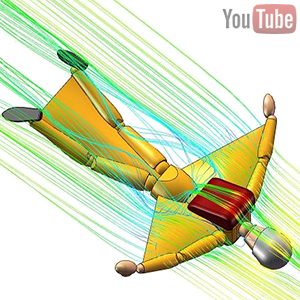
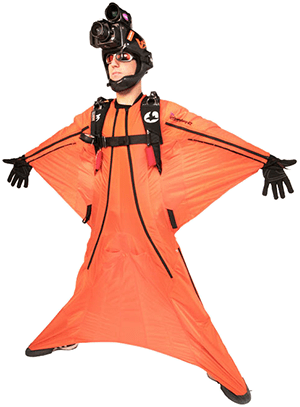
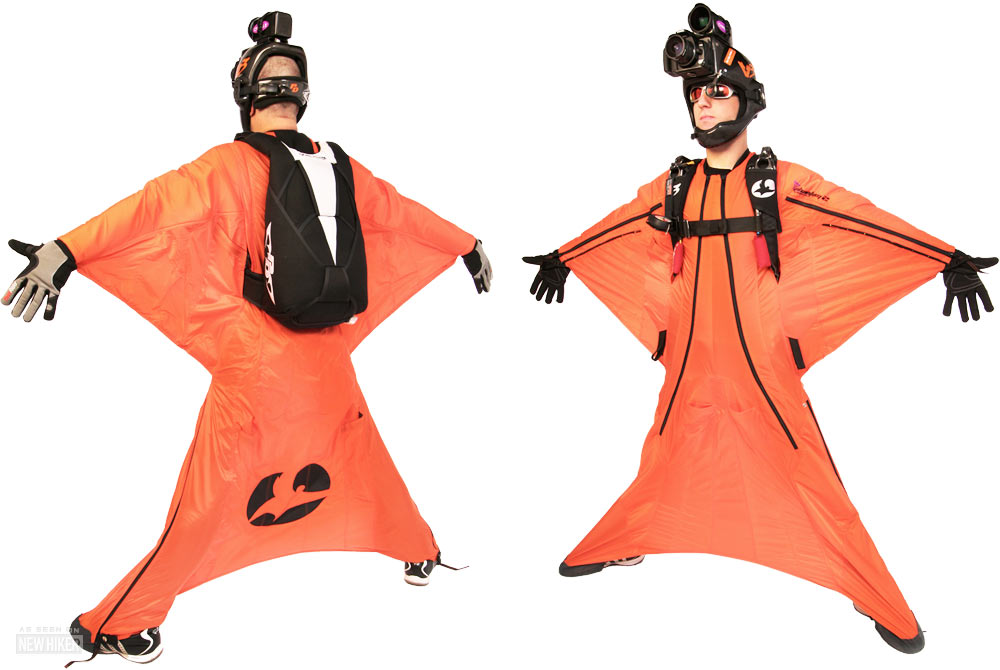
Wingsuit flying is the sport of flying the human body through the air using a special jumpsuit, called a wingsuit, which adds surface area to the human body to create lift. The wingsuit creates the surface area with fabric between the legs and under the arms. A wingsuit may be referred to as a birdman suit or squirrel suit. A wingsuit flight ends with a parachute opening, so a wingsuit can be flown from any point that provides sufficient altitude to glide through the air, such as skydiving aircraft or BASE jumping exit points, and to allow a parachute to deploy. In the mid-1990s, French skydiver Patrick de Gayardon developed a wingsuit that had unparalleled safety and performance. Unfortunately, de Gayardon died on April 13, 1998 while testing a new modification to his parachute container in Hawaii; his death is attributed to a rigging error which was part of the new modification rather than a flaw in the suit’s design.
In early 1998, Tom Begic, a BASE jumper from Australia, built and flew his own wingsuit based on a photograph of Patrick de Gayardon and his ideas. The suit was developed to assist Begic in capturing freefall footage of BASE jumpers while jumping the high cliffs of Europe. The benefits of the suit included: reduced freefall descent rates, increased freefall times, greater maneuverability around other jumpers and objects whilst in freefall, the potential to jump off sites around the world that were not possible without wingsuits, and the ability to accelerate away from underhung walls much more quickly.
Posted in Games |
Leave a Comment »
November 9, 2010

Speedflying (also known as speedriding) is a form of snowkiting, which is an outdoor winter sport where people uses kite power to glide on snow or ice. The sport is similar to kitesurfing, but with the footwear used in snowboarding or skiing. In the early days of snowkiting, foil kites were the most common type; nowadays some kitesurfers use their water gear such as inflatable kites. Snowkiting differs from other alpine sports in that it is possible for the snowkiter to travel uphill and downhill with any wind direction.
Snowkiting is becoming increasingly popular in places often associated with skiing and snowboarding, such as Russia, Canada, Iceland, France, Switzerland, Austria, Norway, Sweden and the Northern and Central United States. The sport is becoming more diverse as adventurers use kites to travel great distances and sports enthusiasts push the boundaries of freestyle, big air and back country exploration Riders can reach speeds over 90 miles per hour; descending from the top of Mont Blanc to the valley floor in Chamonix, 12,000 feet below takes about 10 minutes.
Posted in Games |
Leave a Comment »
November 3, 2010

Barefoot running was widespread for the majority of human history and is still relatively common in undeveloped populations. In competitive running virtually all modern athletes use running shoes, but a small minority of runners have achieved success running barefoot, including Olympic champions and world record holders Abebe Bikila and Tegla Loroupe, as well as Zola Budd. The biomechanics of running are changed quite significantly when shoes are used – in barefoot running, the balls of the feet strike the ground with the most force. With padded shoes more emphasis is placed on the heel and the back of the foot. Running in thin-soled, flexible shoes such as moccasins, VivoBarefoot and Vibram FiveFingers is biomechanically similar to barefoot running.
Barefoot running is experiencing a small resurgence of popularity. Its proponents believe it is healthier for feet and reduces the risk of chronic injuries, notably repetitive stress injuries due to the impact of heel striking in padded running shoes. These health claims are supported by some research and advocated by some authorities, but the research is not conclusive or widely accepted in the medical community. Barefoot running is not generally advocated by medical or sports organizations, who recommend that padded running shoes be worn, with particular consideration to foot type (type of pronation in heel strike gait).
Posted in Games, Health, Technology |
Leave a Comment »



 The Daily Omnivore