December 6, 2014

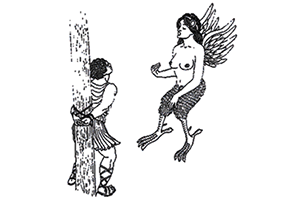
In economics, dynamic inconsistency, or time inconsistency, describes the situation: A decision-maker’s preferences change over time, in such a way that a preference, at one point in time, is inconsistent with a preference at another point in time. It is often easiest to think about preferences over time in this context by thinking of decision-makers as being made up of many different ‘selves,’ with each self representing the decision-maker at a different point in time. So, for example, there is my today self, my tomorrow self, my next Tuesday self, my year from now self, etc. The inconsistency will occur when somehow the preferences of some of the selves are not aligned with each other.
In the context of behavioral economics, time inconsistency is related to how each different self of a decision-maker may have different preferences over current and future choices. One common way in which selves may differ in their preferences is they may be modeled as all holding the view that now has especially high value compared to any future time. This is sometimes called the ‘immediacy effect’ or ‘temporal discounting.’ As a result the present self will care too much about herself and not enough about her future selves. Self control literature relies heavily on this type of time inconsistency, and it relates to a variety of topics including procrastination, addiction, efforts at weight loss, and saving for retirement.
read more »
Posted in Games, Money, Politics |
Leave a Comment »
December 5, 2014
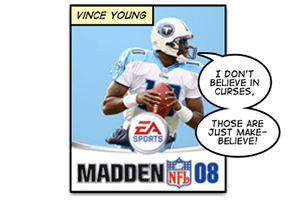

Regression toward the mean simply says that, following an extreme random event, the next random event is likely to be less extreme. In no sense does the future event ‘compensate for’ or ‘even out’ the previous event, though this is assumed in the gambler’s fallacy. Regression toward the mean was first described by Victorian polymath Francis Galton. He found that offspring of tall parents tended to be shorter. Also, offspring of shorter parents tended to be taller. Galton stated that processes that did not follow regression towards the mean would quickly go out of control. In finance, the term ‘mean reversion’ has a different meaning. Jeremy Siegel at Wharton uses it to describe a financial time series in which ‘returns can be very unstable in the short run but very stable in the long run,’ in seasonal businesses for example.
The effect can be exploited for general inference and estimation: the hottest place in the country today is more likely to be cooler tomorrow than hotter, as compared to today; the best performing mutual fund over the last three years is more likely to see relative performance decline than improve over the next three years; the most successful Hollywood actor of this year is likely to have less gross than more gross for his or her next movie; the baseball player with the greatest batting average by the All-Star break is more likely to have a lower average than a higher average over the second half of the season, etc.
read more »
Posted in Games, Money, Science |
Leave a Comment »
October 29, 2014
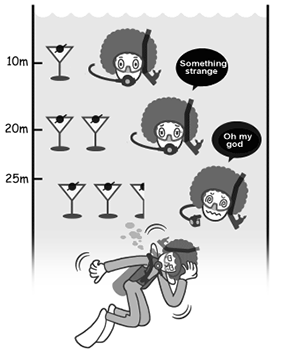
Nitrogen narcosis [nahr-koh-sis] (also known as ‘raptures of the deep’ and the ‘Martini effect’) is a reversible alteration in consciousness that occurs while diving at depth. It is caused by the anesthetic effect of certain gases at high pressure. The Greek word ‘narcosis’ is derived from ‘narke,’ ‘temporary decline or loss of senses and movement, numbness,’ a term used by Homer and Hippocrates. Narcosis produces a state similar to intoxication caused by drinking alcohol or inhaling nitrous oxide. It can occur during shallow dives, but usually becomes noticeable at depths greater than 30 meters (100 ft).
Except for helium and probably neon, all gases that can be breathed have a narcotic effect, although widely varying in degree. The effect is consistently greater for gases with a higher lipid solubility (the ability to diffuse directly through the fatty part of a cell membrane), and there is good evidence that the two properties are mechanistically related. As depth increases, the mental impairment may become hazardous. Divers can learn to cope with some of the effects of narcosis, but it is impossible to develop a tolerance. Narcosis affects all divers, although susceptibility varies widely from dive to dive, and between individuals.
read more »
Posted in Drugs, Games, Health |
2 Comments »
September 18, 2014

Mental rotation is the ability to rotate mental representations of two-dimensional and three-dimensional objects. The ability is somewhat localized to the right cerebral hemisphere, largely in the same areas as perception, and is associated with spatial processing and general intelligence but not verbal skills.
Mental rotation is the brain moving objects in order to understand what they are and where they belong. It has been studied to try to figure out how the mind recognizes objects in the environment. Researchers call these objects stimuli. A stimulus then would be any object or image seen in the person’s environment that has been altered in some way. Mental rotation then takes place for the person to figure out what the altered object is.
read more »
Posted in Education, Games, Science |
Leave a Comment »
September 7, 2014
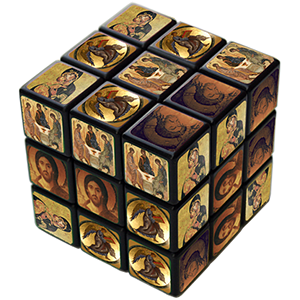
God’s algorithm is a notion originating in discussions of ways to solve the Rubik’s Cube puzzle, but which can also be applied to other combinatorial (sequential move) puzzles and mathematical games. It refers to any algorithm which produces a solution having the fewest possible number of moves, the idea being that an omniscient being would know an optimal step from any given configuration. The notion applies to puzzles that can assume a finite number of ‘configurations,’ with a relatively small, well-defined arsenal of ‘moves’ that may be applicable to configurations and then lead to a new configuration.
An algorithm for finding optimal solutions for Rubik’s Cube was published in 1997 by computer scientist Richard Korf. While it had been known since 1995 that 20 was a lower bound on the number of moves for the solution in the worst case, it was proved in 2010 through extensive computer calculations that no configuration requires more than 20 moves. Thus 20 is a sharp upper bound on the length of optimal solutions. This number is known as God’s number.
Posted in Games, Science |
1 Comment »
August 30, 2014
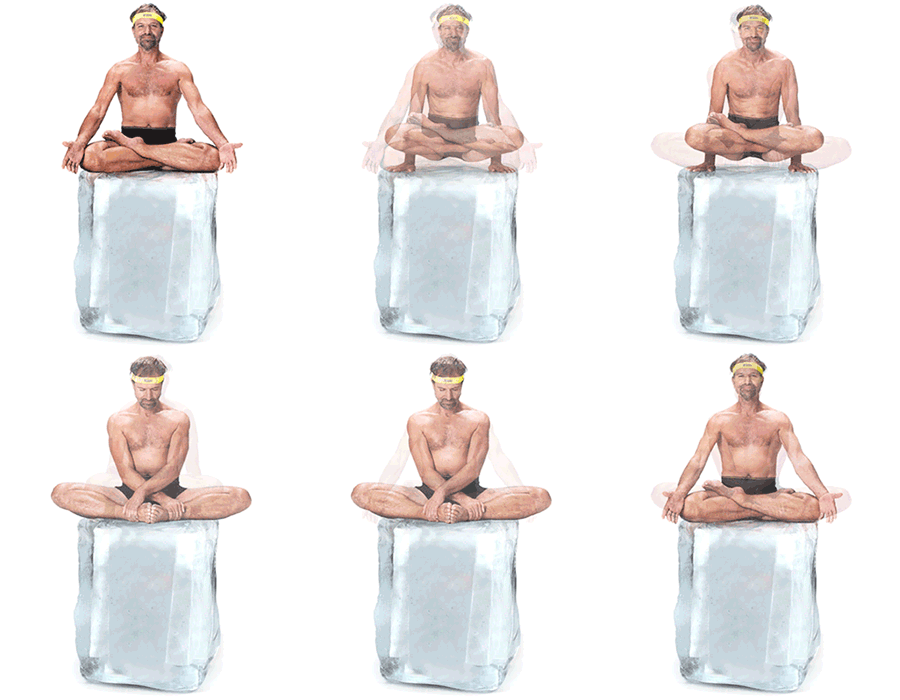

A superhuman is a person with extraordinary and unusual capabilities enabling feats beyond anything a layperson could conceivably achieve, even through extensive training. Superhuman can mean an improved human, for example, by genetic modification, cybernetic implants, nanotechnology, or natural evolution. Occasionally, it could mean an otherwise ‘normal’ human with purported super-abilities, such as psychic/psionic powers, levitation or flight, herculean strength, or unique proficiency at some task.
Superhuman can also mean something that is not human, but considered to be ‘superior’ to humans in some ways. This might include a robot that easily passed the Turing test (an indicator of a machine’s ability to exhibit intelligent behavior) that possessed greater than human strength, which is already common in robots today. A very intelligent or strong alien could be considered superhuman. In its most basic sense it means anything beyond (typical) human capabilities, e.g. a tiger may be described as having ‘superhuman strength.’
read more »
Posted in Games, Health, Science |
Leave a Comment »
July 7, 2014


What happens on tour stays on tour is a notorious phrase or saying agreed to by men who get together and travel either interstate or overseas for sporting tours. In essence, the phrase means that all exploits during the tour must be kept strictly confidential, never to be discussed with anyone outside the group. In more recent years, the phrase has also been applied to men attending music gigs, going on business trips, and fishing holidays. The expression is also used in the US military when speaking of temporary duty assignment (‘what happens TDY stays TDY’)
The phrase has been described by Samantha Brett, a writer for the ‘Age,’ as an ‘unspoken male pact that for centuries can never be broken.’ In essence, if you were there you may discuss the events, but if you were not there, you get nothing. In contrast, ‘Rugby for Dummies’ describes the phrase as, particularly funny, embarrassing or debauched moments are for consumption only by the tourists themselves and not casual listeners back home.
read more »
Posted in Games, Humor, Sex |
Leave a Comment »
June 18, 2014
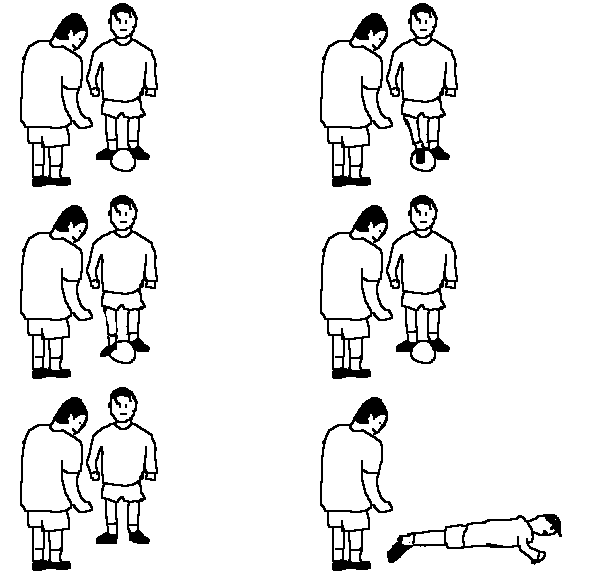

Gamesmanship is the use of dubious (although not technically illegal) methods to win or gain a serious advantage in a game or sport. It has been described as ‘Pushing the rules to the limit without getting caught, using whatever dubious methods possible to achieve the desired end.’ It may be inferred that the term derives from the idea of playing for the game (i.e., to win at any cost) as opposed to sportsmanship, which derives from the idea of playing for sport. The term originates from British author Stephen Potter’s humorous 1947 book, ‘The Theory and Practice of Gamesmanship (or the Art of Winning Games without Actually Cheating).’
Potter cites the origin of gamesmanship to be a tennis match in which he and the philosopher C. E. M. Joad competed against two younger and fitter men who were outplaying them fairly comfortably. On returning a serve, Joad hit the ball straight into the back-netting twelve feet behind the back-line. While the opponents were preparing for the next serve, Joad ‘called across the net, in an even tone: ‘Kindly state clearly, please, whether the ball was in or out.’ Being young, polite university students, their opponents offered to replay the point, but Joad declined. Because they were young and polite, the slight suggestion by Joad that their etiquette and sportsmanship were in question was extremely off-putting, and distracted them for the rest of contest. Potter and Joad went on to win the match.
read more »
Posted in Games, Politics |
Leave a Comment »
June 1, 2014
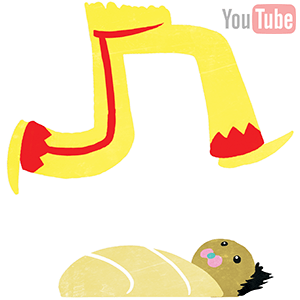
Baby jumping (‘El Colacho’) is a traditional Spanish holiday dating back to 1620 that takes place annually to celebrate the Catholic feast of Corpus Christi in the village of Castrillo de Murcia in northern Spain. During the act, known as ‘El Salto del Colacho’ (‘the devil’s jump’), men dressed as the Devil (the Colacho) jump over babies born during the previous twelve months of the year who lie on mattresses in the street. The Brotherhood of Santísimo Sacramento de Minerva organizes the week-long festivities which culminate on Sunday when the Colacho jumps over the babies on the mattresses placed on the procession route traversing the town.
The festival has been rated as one of the most dangerous in the world. The origins of the tradition are unknown but it is said to cleanse the babies of original sin, ensure them safe passage through life and guard against illness and evil spirits. In recent years, Pope Benedict has asked Spanish priests to distance themselves from El Colacho, and to downplay the tradition’s connection with Catholicism. The Church still teaches that it is baptism by water, not a giant leap by an airborne devil, which cleanses the soul of original sin.
Posted in Games, Philosophy, World |
Leave a Comment »
May 29, 2014

A Beer mile is a drinking race combining running and speed drinking. Typically, the event takes place on a standard 400 meter or 1/4 mile running track. Each lap must be preceded by the drinking of a standard amount of beer, typically a 12-ounce can. Rules vary by region. One custom requires runners to prove they have finished their beer by inverting it over their heads before commencing a lap.
The standard rules published by BeerMile.com are based on the most common rules used in North America. They specify that any competitor who vomits prior to finishing the race must complete a penalty lap immediately following the fourth lap. The penalty lap does not require the drinking of an additional beer. The standard rules also dictate that the beer be consumed directly from the pour of the can (i.e. tampering with the cans, such as ‘shotgunning,’ is not allowed). The beer used for the competition must also be full-strength, or at least 5.0% ABV. Hard ciders and other alcoholic beverages are generally not allowed.
read more »
Posted in Drugs, Games, Humor |
Leave a Comment »
May 15, 2014
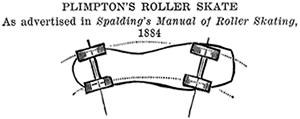

Roller skates are devices worn on the feet to enable the wearer to roll along on wheels. The first roller skates were converted ice skates, with two inline wheels instead of a blade. Later the ‘quad’ style of roller skate became more popular consisting of four wheels arranged in the same configuration as a typical car.
The first patented roller skate was introduced in 1760 by Belgian inventor John Joseph Merlin. His inline two wheelers were hard to steer and hard to stop because they didn’t have brakes, and as such were not very popular. In 1863, James Plimpton from Massachusetts invented the ‘rocking’ skate using a four wheel configuration for stability, and independent axles that turned by pressing to one side when the skater wanted to create an edge. It was a vast improvement on the Merlin design and was easier to use, driving the huge popularity roller skating through the 1930s. The Plimpton skate is still used today.
read more »
Posted in Games, Technology |
1 Comment »
April 30, 2014

The domino effect is a chain reaction that occurs when a small change causes a similar change nearby, which then causes another similar change, and so on in linear sequence. It typically refers to a linked sequence of events where the time between successive events is relatively small. It can be used literally (an observed series of actual collisions such as a falling row of dominoes) or metaphorically (causal linkages within systems such as global finance). A domino show is created by setting up dominoes in very long lines before initiating the chain reaction, toppling all of them.
One of the elements of excitement comes from the inherent risk: each added domino might accidently start the reaction. Some dominoes can have different top and back colors, making it look like they change after toppling; this allows domino builders to make pictures (mosaics) appear. Other tricks include three-dimensional stackings; shapes such as spirals and letters; contraptions like stairs and mouse traps; and dozens of special toppling techniques such as ‘Sonimod’ (‘dominos’ spelled backwards).
read more »
Posted in Games |
1 Comment »


 The Daily Omnivore