March 12, 2026

Doomscrolling is the act of spending an excessive amount of time watching short-form content or watching large quantities of user-generated content or news, particularly negative news, on the web and social media.
The concept was coined around 2018, and became more widespread in the context of the COVID-19 pandemic. The World Health Organization (WHO) observed that the pandemic was accompanied by widespread misleading information, conspiracy theories, and false reports, which it referred to as an ‘infodemic.’
read more »
Posted in Health, Technology |
Leave a Comment »
January 20, 2026

Chatbot psychosis, also called AI psychosis, is a phenomenon wherein individuals reportedly develop or experience worsening psychosis, such as paranoia and delusions, in connection with their use of chatbots. The term was first suggested in a 2023 editorial by Danish psychiatrist Søren Dinesen Østergaard. It is not a recognized clinical diagnosis.
Journalistic accounts describe individuals who have developed strong beliefs that chatbots are sentient, are channeling spirits, or are revealing conspiracies, sometimes leading to personal crises or criminal acts. Proposed causes include the tendency of chatbots to provide inaccurate information (‘hallucinate’) and to affirm or validate users’ beliefs, or their ability to mimic an intimacy that users do not experience with other humans.
read more »
Posted in Health, Technology |
Leave a Comment »
December 23, 2025

Since 2018, the health effects of consuming certain processed vegetable oils, or seed oils have been subject to misinformation in popular and social media. The trend grew in 2020 after podcaster and comedian Joe Rogan interviewed fad diet proponent Paul Saladino about the carnivore diet. Saladino made several claims about the health effects of vegetable fats.
The theme of the misinformation is that seed oils are the root cause of most diseases of affluence, including heart disease, cancer, diabetes, and liver spots. These claims are not based on evidence, but have nevertheless become popular on the political right. Critics cite a specific ‘hateful eight’ oils that constitute seed oils: canola, corn, cottonseed, soy, sunflower, safflower, grapeseed, and rice bran.
read more »
Posted in Food, Health, Politics |
1 Comment »
September 18, 2025

John Gall (1925-2014) was an American author, scholar, and pediatrician. Gall is known for his 1975 book ‘General Systemantics’ (republished two years later as ‘Systemantics: How Systems Work and Especially How They Fail’).
Gall’s Law is derived from Systemantics and states: ‘A complex system that works is invariably found to have evolved from a simple system that worked. A complex system designed from scratch never works and cannot be patched up to make it work. You have to start over with a working simple system.’
read more »
Posted in Health, Language, Science |
Leave a Comment »
June 29, 2025
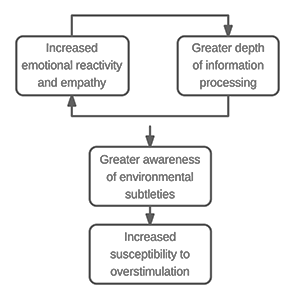
Sensory processing sensitivity (SPS) is a temperamental or personality trait involving ‘an increased sensitivity of the central nervous system and a deeper cognitive processing of physical, social, and emotional stimuli.’ The trait is characterized by ‘a tendency to ‘pause to check’ in novel situations, greater sensitivity to subtle stimuli, and the engagement of deeper cognitive processing strategies for employing coping actions, all of which is driven by heightened emotional reactivity, both positive and negative.’
A human with a particularly high measure of SPS is considered to have ‘hypersensitivity,’ or be a highly sensitive person (HSP). The terms SPS and HSP were coined in the mid-1990s by psychologists Elaine Aron and her husband Arthur Aron, who developed the Highly Sensitive Person Scale (HSPS) questionnaire by which SPS is measured. Other researchers have applied various other terms to denote this responsiveness to stimuli that is seen in humans and other species.
read more »
Posted in Health |
Leave a Comment »
February 13, 2025
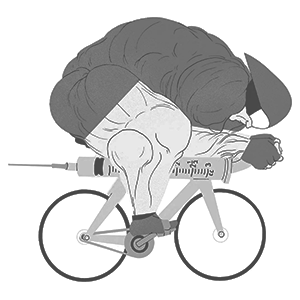
The Enhanced Games is a planned international sports event where the athletes will not be subject to drug testing. It is headed by Aron D’Souza, an Australian businessman. The event is meant to take place in 2025. Reactions from the sporting world have been generally negative, with commentators highlighting the safety risks of encouraging performance-enhancing drug use. Critics have dubbed it the Steroid Olympics. Some of the prominent investors in the Enhanced Games include Peter Thiel, Balaji Srinivasan, and Donald Trump Jr.
The event is intended to be annual and to include track and field, swimming, weightlifting, gymnastics, and combat sports.
read more »
Posted in Drugs, Games, Health |
1 Comment »
January 11, 2024

According to a false conspiracy theory, medbeds (an abbreviation of ‘medical bed’ or ‘meditation bed’) are secret beds that can miraculously heal humans and extend life. The plausibility of such devices is pseudoscience. Medbed conspiracy theories often involve claims that the devices are utilized by members of a ‘deep state’ and billionaires and that the former President of the United States, John F. Kennedy, is still alive, lying on a medbed.
Belief in these devices is popular among QAnon influencers such as Michael Protzman, Romana Didulo, and YamatoQ. Various companies sell devices or access to beds that supposedly heal ailments via imaginary technologies while also including fine print on their websites disclaiming that no diagnoses, treatment, or cures are provided.
Posted in Health, Politics, Technology |
Leave a Comment »
October 30, 2023

A participation trophy is a trophy given to children (usually) who participate in any sport event or contest without requiring their success in competition. The term may be used more generally as an example of the celebration of mediocrity or of emotional coddling. In this rhetorical context, it is frequently associated with millennials, those of Generation Y.
The use of participation trophies has caused some controversy. Critics argue that they promote narcissism and entitlement among children to whom they are given, and are based on incorrect assumptions regarding supposed psychological benefits of self-esteem. Critics also note that some children also do not value them as much as they do ‘normal’ trophies that are given to winners. Defenders of participation trophies argue that they teach children that trying their best is good enough, even if they do not win.
read more »
Posted in Games, Health, Politics |
Leave a Comment »
October 4, 2022

Everesting is an activity in which cyclists or runners ascend and descend a given hill multiple times, in order to have cumulatively climbed 8,848 meters (29,029 ft) (the elevation of Mount Everest).
The first event described as ‘Everesting’ was by George Mallory, grandson of George Mallory, who disappeared on Everest in 1924. The younger Mallory ascended Mount Donna Buang in 1994, having ridden eight ‘laps’ of the 1,069-meter hill. The format and rules were cemented by cyclist Andy van Bergen, inspired by the story of Mallory’s effort. In the first official group effort, van Bergen organized 65 riders, 40 of whom finished the Everesting attempt.
read more »
Posted in Games, Health |
Leave a Comment »
July 18, 2022
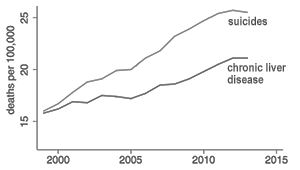

Shit life syndrome (SLS) is a phrase used by physicians to describe the effect that a variety of poverty or abuse-induced disorders can have on patients.
Journalist Sarah O’Connor’s 2018 article for the ‘Financial Times’ ‘Left behind: can anyone save the towns the economy forgot?’ on shit life syndrome in the English coastal town of Blackpool won the 2018 Orwell Prize for Exposing Britain’s Social Evils. O’Connor wrote: ‘Blackpool exports healthy skilled people and imports the unskilled, the unemployed, and the unwell. As people overlooked by the modern economy wash up in a place that has also been left behind, the result is a quietly unfolding health crisis.”
read more »
Posted in Health, Money |
Leave a Comment »
April 20, 2022

Terminal lucidity, also known as ‘rallying’ or ‘the rally,’ is an unexpected return of mental clarity and memory, or suddenly regained consciousness that occurs in the time shortly before death in patients suffering from severe psychiatric or neurological disorders. This condition has been reported by physicians since the 19th century.
Several case reports in the 19th century described the unusual condition of an improvement and recovery of the mental state in patients days or weeks before death. English physician William Munk, for instance, in 1887 called the phenomenon ‘lucidity before death.’
read more »
Posted in Death, Health |
Leave a Comment »
July 29, 2021

Fugu [foo-goo] is a pufferfish or porcupinefish dish originating in Japan. Fugu can be lethally poisonous to humans due to its tetrodotoxin, meaning it must be carefully prepared to remove toxic parts and to avoid contaminating the meat.
The restaurant preparation of fugu is strictly controlled by law in Japan and several other countries, and only chefs who have qualified after three or more years of rigorous training are allowed to prepare the fish. Domestic preparation occasionally leads to accidental death.
read more »
Posted in Food, Health, World |
Leave a Comment »


 The Daily Omnivore