March 4, 2015

Sleep inertia is a physiological state characterized by a decline in motor dexterity and a subjective feeling of grogginess immediately following an abrupt awakening. The impaired alertness may interfere with the ability to perform mental or physical tasks. Sleep inertia can also refer to the tendency of a person wanting to return to sleep.
Sleep inertia occurs normally after awakening. Upon awakening in the morning, subjective alertness and mental performance are significantly impaired. Morning sleep inertia takes two to four hours to dissipate completely, though some people require less time.
read more »
Posted in Health |
Leave a Comment »
February 21, 2015

Wim Delvoye (b. 1965 ) is a Belgian neo-conceptual artist known for his inventive and often shocking projects. Much of his work is focused on the body, and he is perhaps best known for his digestive machine, Cloaca, which he unveiled at the Museum voor Hedendaagse Kunst, Antwerp, after eight years of consultation with experts in fields ranging from plumbing to gastroenterology. In a comment on the Belgians’ love of fine dining, Cloaca is a large installation that turns food into feces, allowing Delvoye to explore the digestive process. The food begins at a long, transparent mouth, travels through a number of enzyme filled, machine-like assembly stations, and ends in hard matter which is separated from liquid through a cylinder. Delvoye collects and sells the realistically smelling output, suspended in small jars of resin at his Ghent studio.
When asked about his inspiration, Delvoye stated that everything in modern life is pointless. The most useless object he could create was a machine that serves no purpose at all, besides the reduction of food to waste. Previously, Delvoye claimed that he would never sell a Cloaca machine to a museum as he could never trust that the curator would maintain the installation properly. However after two years of discussion with David Walsh, Delvoye agreed to construct a custom Cloaca built specifically for the Museum of Old and New Art in Hobart, Tasmania. The new installation is suspended from the museum ceiling in a room custom-built for it.
Posted in Art, Health, Humor |
Leave a Comment »
February 11, 2015

Transcendental [tran-sen-den-tl] Meditation (TM) refers to a specific form of mantra meditation (consciousness training aided by inner chanting) first introduced in India in the mid-1950s by Hindu spiritual teacher Maharishi Mahesh Yogi (1918–2008). The Maharishi taught thousands of people during a series of world tours from 1958 to 1965, expressing his teachings in spiritual and religious terms.
TM became more popular in the 1960s and 1970s, as he shifted to a more technical presentation and his meditation technique was practiced by celebrities (notably the Beatles). At this time, he began training TM teachers and created specialized organizations to present TM to specific segments of the population such as business people and students. By the late 2000s, TM had been taught to millions of people, and the worldwide TM organization had grown to include educational programs, health products, and related services.
read more »
Posted in Health, Philosophy |
2 Comments »
February 4, 2015

South African psychiatrist Joseph Wolpe originally explored the use of assertiveness in his 1958 book on treating neurosis as a means of ‘reciprocal inhibition’ of anxiety (anxiety being inhibited by a feeling or response that is not compatible with the feeling of anxiety). Wolpe first started using eating as a response to inhibited anxiety in the laboratory cats. He would offer them food while presenting a conditioned fear stimulus. After his experiments in the laboratory he applied reciprocal inhibition to his clients in the form of assertiveness training.
Wolpe’s belief was that a person could not be both assertive and anxious at the same time, and thus being assertive would inhibit anxiety. Assertiveness training proved especially useful for clients who had anxiety about social situations. However, assertiveness training did have a potential flaw in the sense that it could not be applied to other kinds of phobias. Wolpe’s use of reciprocal inhibition led to his discovery of systematic desensitization (graduated exposure therapy). He believed that facing your fears did not always result in overcoming them but rather lead to frustration. According to Wolpe, the key to overcoming fears was ‘by degrees.
read more »
Posted in Health |
Leave a Comment »
January 18, 2015
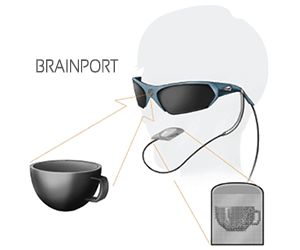
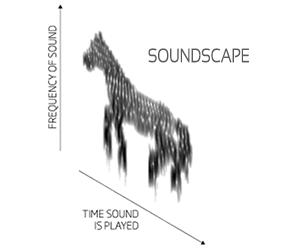
Sensory substitution means to transform the characteristics of one sensory modality (e.g. light, sound, temperature, taste, pressure, smell) into stimuli of another sensory modality (e.g. Tactile–Visual, converting video footage into into tactile information, such as vibration). These systems can help handicapped people by restoring their ability to perceive aspects of a defective physical sense.
A sensory substitution system consists of three parts: a sensor, a coupling system, and a stimulator. The sensor records stimuli and gives them to a coupling system which interprets the signals and transmits them to a stimulator. If the sensor obtains signals of a kind not originally available to the bearer it is called ‘sensory augmentation’ (e.g. implanting magnets under the fingertips imparts magnetoception, sensation of electromagnetic fields). Sensory substitution is based on research in human perception (the organization, identification, and interpretation of sensory information in order to represent and understand the environment) and neuroplasticity (how entire brain structures, and the brain itself, can change from experience).
read more »
Posted in Health, Science, Technology |
Leave a Comment »
January 8, 2015
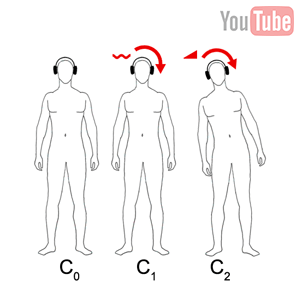
Galvanic [gal-van-ik] vestibular [ve-stib-yuh-ler] stimulation (GVS) is the process of sending electric messages to a nerve in the ear that maintains balance. This technology has been investigated for both military and commercial purposes, and is being applied in Atsugi, Japan, the Mayo Clinic in the US, and a number of other research institutions around the world for use in biomedical engineering, pilot training, and entertainment.
A patient undergoing GVS noted: ‘I felt a mysterious, irresistible urge to start walking to the right whenever the researcher turned the switch to the right. I was convinced — mistakenly — that this was the only way to maintain my balance. The phenomenon is painless but dramatic. Your feet start to move before you know it. I could even remote-control myself by taking the switch into my own hands.’
Posted in Health, Science, Technology |
1 Comment »
December 10, 2014

Handedness [han-did-nis] is a better (faster or more precise) performance or individual preference for use of a hand. It is not a discrete variable (right or left), but a continuous one that can be expressed at levels between strong left and strong right. While in an ordinary disclosure the terms left and right are used to define handedness, there are actually four types: left-handedness, right-handedness, mixed-handedness (favoring one hand for some tasks and the other hand for others), and ambidexterity (equally adept with both hands). Left-handedness is somewhat more common among men.
Global studies indicate that 10% of people are left-handed, 30% are mixed-handed, and the remainder are right-handed. Ambidexterity is exceptionally rare, although it can be learned. However, a truly ambidextrous person is able to do any task equally well with either hand, whereas those who learn it still tend to favor their originally dominant hand. Ambilevous or ambisinister people demonstrate awkwardness with both hands. Parkinson’s disease in particular is associated with a loss of dexterity.
read more »
Posted in Health, Language, Science |
Leave a Comment »
December 2, 2014

The drunken monkey hypothesis proposes that human attraction to ethanol may have a genetic basis due to the high dependence of the primate ancestor of Homo sapiens on fruit as a food source. Ethanol naturally occurs in ripe and overripe fruit and consequently early primates developed a genetically based attraction to the substance. This hypothesis was originally proposed by Dr. Robert Dudley of UC, Berkeley and was the subject of a symposium for the ‘Society for Integrative and Comparative Biology.’
Dudley believes that while most addictive substances are relatively new to humans, ethanol attraction may have a long evolutionarily based history. He believes that fruit ethanol may have been a significant source of energy and that the smell of the ripening fruit would help primates locate it. Ethanol is a light molecule and diffuses rapidly in a natural environment. Primates are known to have a higher olfactory sensitivity to alcohol than other mammals. The once-beneficial attraction to ethanol may underlie human tendencies for alcohol use and alcohol abuse.
Posted in Drugs, Health, Science |
1 Comment »
November 30, 2014

Caffeine is a naturally occurring chemical found in various seeds, leaves, nuts, and berries. It serves a dual function in plants: as a toxin against unwanted pests, and as an enticement to pollinators, who are stimulated by it. Common sources of caffeine include coffee seeds (beans), tea leaves, kola nuts, yerba mate leaves, and guarana berries. It is extracted from the plant by steeping in water, a process called infusion. Chemically caffeine is an alkaloid, a non-acidic, nitrogen containing compound. A number of alkaloids are produced by flowering plants (e.g. cocaine from coca, nicotine from tobacco, morphine from poppies) to reduce or avoid being eaten by herbivores.
Specifically, caffeine is a xanthine alkaloid, an organic (carbon-based) compound from which many stimulants are derived. It is the world’s most widely consumed psychoactive drug, but unlike many other psychoactive substances, it is legal and unregulated in nearly all parts of the world. Part of the reason caffeine is classified by the FDA as ‘generally recognized as safe’ is that toxic doses, over 10 grams per day for an adult, are much higher than the typically used doses of under 500 milligrams.
read more »
Posted in Drugs, Food, Health |
Leave a Comment »
November 9, 2014

Memory implantation is a technique used in cognitive psychology to investigate human memory. Researchers make people believe that they remember an event that actually never happened, such as being lost in a mall as a child, taking a hot air balloon ride, and putting slime in a teacher’s desk in primary school. Memory implantation techniques were developed in the 1990s as a way of providing evidence of how easy it is to distort people’s recollection of past events. Most of the studies were published in the context of the debate about repressed memories and the possible danger of digging for lost memories in therapy.
The first formal studies using memory implantation were published in the early 1990s, the most famous being ‘The Formation of False Memories’ (commonly referred to as the ‘Lost in the Mall’ study) by cognitive psychologist Elizabeth Loftus. The basic technique used in this study involved asking family members of a participant to provide narratives of events that happened when they were young and then add another event that definitely had not happened. The participants saw these four narratives and were told to try to remember as much as possible about each event. Across a number of studies using memory implantation, about 37% of people have come to remember parts of or entire events that never actually happened.
read more »
Posted in Health, Science |
1 Comment »
November 9, 2014

Imagination inflation refers to the finding that imagining an event which never happened can increase confidence that it actually occurred. This effect is relevant to the study of memory and cognition, particularly false memory. Imagination inflation is one way that techniques intended to retrieve repressed memories (e.g. recovered memory therapy) may lead to the development of false or distorted memories.
Imagination inflation also has implications for the criminal justice system, in particular interrogation and interviewing procedures, as it supports the claim that interrogators who ask suspects to repeatedly imagine committing a crime may risk making them more confident that they are the perpetrators, ultimately producing false confessions from innocent suspects. In one case in the US in 1990s, a man who initially denied accusations of raping his daughters was given an intense police interrogation. He confessed to abusing his children and leading a satanic cult which sacrificed babies, even admitting to crimes that were denied by his accusers.
read more »
Posted in Health, Politics, Science |
Leave a Comment »
November 8, 2014


Gelotology [jel-uh-tol-uh-jee] (from the Greek ‘gelos,’ meaning ‘laughter’) is the study of laughter and its effects on the body, from a psychological and physiological perspective. Its proponents often advocate induction of laughter on therapeutic grounds in complementary medicine. The field of study was pioneered by psychiatrist William F. Fry at Stanford.
Although healers since antiquity have recommended laughter as a form of medicine, the field was initially deprecated by most other physicians, who doubted that laughter possessed analgesic (painkilling) qualities. One early study that demonstrated the effectiveness of laughter in a clinical setting showed that it could help patients with atopic dermatitis (a recurring, itchy skin disorder) respond less to allergens. Other studies have shown that laughter can help alleviate stress and pain, and can even assist cardiopulmonary rehabilitation (treatment for patients recovering from cardiac surgeries).
read more »
Posted in Health, Humor, Science |
Leave a Comment »


 The Daily Omnivore