November 3, 2014

Near-death experiences (NDE) are associated with several common phenomena such as feelings of detachment from the body, levitation, serenity, security, warmth, dissolution, and bright light. These sensations are usually reported after an individual has been pronounced clinically dead or has been very close to death. With recent developments in cardiac resuscitation techniques, the number of reported NDEs has increased. According to a 1992 Gallup poll, approximately eight million Americans claim to have had a near-death experience. Popular interest in the topic was initially sparked by psychiatrist Raymond Moody’s 1975 book ‘Life After Life,’ in which he interviewed 150 people who had undergone NDEs.
In 1981, the International Association for Near-Death Studies (IANDS) was founded and the following year began publishing the ‘Journal of Near-Death Studies,’ the only peer-reviewed journal in the field. Research from neuroscience considers the NDE to be a hallucination resulting from one or more of several conditions including cerebral anoxia (insufficient oxygen to the brain), hypercarbia (elevated carbon dioxide in the blood), or damage to the temporal lobes (which are responsible for giving meaning to events). Spiritual thinkers and an parapsychologists have long pointed to NDEs as evidence for an afterlife and mind-body dualism.
read more »
Posted in Death, Health, Philosophy |
Leave a Comment »
October 29, 2014
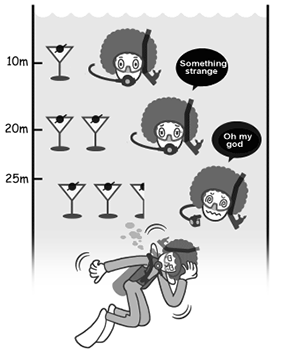
Nitrogen narcosis [nahr-koh-sis] (also known as ‘raptures of the deep’ and the ‘Martini effect’) is a reversible alteration in consciousness that occurs while diving at depth. It is caused by the anesthetic effect of certain gases at high pressure. The Greek word ‘narcosis’ is derived from ‘narke,’ ‘temporary decline or loss of senses and movement, numbness,’ a term used by Homer and Hippocrates. Narcosis produces a state similar to intoxication caused by drinking alcohol or inhaling nitrous oxide. It can occur during shallow dives, but usually becomes noticeable at depths greater than 30 meters (100 ft).
Except for helium and probably neon, all gases that can be breathed have a narcotic effect, although widely varying in degree. The effect is consistently greater for gases with a higher lipid solubility (the ability to diffuse directly through the fatty part of a cell membrane), and there is good evidence that the two properties are mechanistically related. As depth increases, the mental impairment may become hazardous. Divers can learn to cope with some of the effects of narcosis, but it is impossible to develop a tolerance. Narcosis affects all divers, although susceptibility varies widely from dive to dive, and between individuals.
read more »
Posted in Drugs, Games, Health |
2 Comments »
October 27, 2014
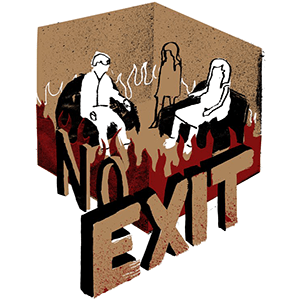
Narcissistic defenses are coping techniques that preserve idealized aspects of the self while repressing limitations. They tend to be rigid and totalistic, and are often driven by feelings of shame and guilt, conscious or unconscious. Narcissistic variants are among the earliest defense mechanisms to emerge, and include denial, distortion, and projection. Splitting is also common- seeing people and situations in black and white terms, either as all bad or all good. A narcissistic defense, with the narcissist’s typical over-valuation of the self, can come to the fore at any stage of development.
The narcissist typically runs through a sequence of defenses to discharge painful feelings until he or she finds one that works: unconscious repression, conscious denial, distortion (including exaggeration and minimization) and lies, psychological projection (blaming someone else), and finally, enlisting the help of one or more of his or her codependent friends who will support his or her distorted view.
read more »
Posted in Health |
1 Comment »
October 18, 2014

Bluma Zeigarnik (1901 – 1988) was a Soviet psychologist and psychiatrist who discovered the Zeigarnik [zy-gar-nik] effect, which states that people remember uncompleted or interrupted tasks better than completed tasks. She first studied the phenomenon after her professor, Gestalt psychologist Kurt Lewin, noticed that a waiter had better recollections of still unpaid orders. However, after the completion of the task – after everyone had paid – he was unable to remember any more details of the orders.
The advantage of remembrance can be explained by looking at Lewin’s field theory (a framework which examines patterns of interaction between the individual and the total field, or environment): a task that has already been started establishes a task-specific tension, which improves cognitive accessibility of the relevant contents. Task completion alleviates the tension. In case of task interruption the reduction of tension is impeded. Through continuous tension the content is easier accessible and it can be easily remembered.
read more »
Posted in Health, Science |
Leave a Comment »
October 17, 2014

Misophonia [mee-so-fo-nee-uh], literally ‘hatred of sound,’ is a rarely diagnosed neuropsychiatric disorder in which negative emotions (anger, flight, hatred, disgust) are triggered by specific sounds. The sounds can be loud or soft. The term was coined by American neuroscientists Pawel Jastreboff and Margaret Jastreboff and is sometimes referred to as ‘selective sound sensitivity syndrome.’
A 2013 review of neurological studies and fMRI studies of the brain as it relates to the disorder postulated that abnormal or dysfunctional assessment of neural signals occurs in the anterior cingulate cortex and insular cortex. These cortices are also implicated in Tourette Syndrome, and are the hub for processing anger, pain, and sensory information. Other researchers concur that the dysfunction is in central nervous system structures. It has been speculated that the anatomical location may be more central than that involved in hyperacusis (over-sensitivity to certain frequency and volume ranges of sound). An alternate view, by two misophonia treatment providers, is that misophonia is a Pavlovian conditioned reflex.
read more »
Posted in Health |
1 Comment »
October 17, 2014

The behavioral immune system is a phrase coined by psychologist Mark Schaller of the University of British Columbia to refer to a suite of psychological mechanisms that allow individual organisms to detect the potential presence of disease-causing parasites in their immediate environment, and to engage in behaviors that prevent contact with those objects and individuals (or remediate their effects).
These mechanisms include sensory processes through which cues connoting the presence of parasitic infections are perceived (e.g., the smell of a foul odor, the sight of pox or pustules), as well as stimulus–response systems through which these sensory cues trigger a cascade of aversive affective, cognitive, and behavioral reactions (e.g., arousal of disgust, automatic activation of cognitions that connote the threat of disease, behavioral avoidance).
read more »
Posted in Health, Science |
Leave a Comment »
September 23, 2014
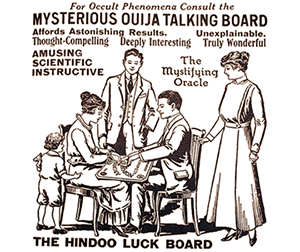

The ideomotor [id-ee-uh-moh-ter] effect is a psychological phenomenon wherein a subject makes motions unconsciously; for example, the body produces tears in response to powerful emotions without the person consciously deciding to cry. As in involuntary responses to pain, the body sometimes reacts reflexively to ideas alone without the person consciously deciding to take action.
The effects of automatic writing (an alleged psychic ability allowing a person to produce written words without consciously writing), dowsing (a type of divination employed in attempts to locate ground water without the use of scientific tools), facilitated communication (a process by which a person supports the hand or arm of a communicatively impaired individual while using a keyboard), and Ouija boards have been attributed to the phenomenon. Mystics have often attributed these effects to paranormal or supernatural force. Many subjects are unconvinced that their actions are originating solely from within themselves.
read more »
Posted in Health, Philosophy, Science |
Leave a Comment »
September 17, 2014

Error Management (EM) is an extensive theory of perception and cognitive biases that was created by psychologists David Buss and Martie Haselton. They describe a set of heuristics (mental shortcuts) that have survived evolutionary history because they hold slight reproductive benefits. The premise of the theory is built around the drive to reduce or manage costly reproductive errors. According to the theory, when there are differences in the cost of errors made under conditions of uncertainty, selection favors ‘adaptive biases,’ which ensure that the less costly survival or reproductive error will be committed.
When faced with uncertainty, a subject can make two possible errors: type I (false-positive or playing it safe, e.g. a fire alarm that later turns out to be a false alarm) and type II (false-negative or siding with skepticism, e.g. ignoring an often faulty fire alarm during an actual emergency). Error Management Theory asserts that evolved ‘mind-reading’ agencies will be biased to produce more for the first type of error, which explains the ‘sexual overperception bias,’ the tendency for men to incorrectly assume a platonic gesture from a woman is a sexual signal.
read more »
Posted in Health, Science, Sex |
Leave a Comment »
September 15, 2014
Defensive pessimism is a cognitive strategy identified by social psychologist Nancy Cantor and her students in the mid-1980s. Individuals use defensive pessimism as a strategy to prepare for anxiety provoking events or performances. When implementing defensive pessimism, individuals set low expectations for their performance, regardless of how well they have done in the past. Defensive pessimists then think through specific negative events and setbacks that could adversely influence their goal pursuits. By envisioning possible negative outcomes, defensive pessimists can take action to avoid or prepare for them, advantageously harnessing anxiety that might otherwise harm their performance.
The strategy is utilized in a variety of domains. In public speaking venues defensive pessimists can alleviate anxiety by imagining possible obstacles such as forgetting the speech, being thirsty, or staining their shirt before the event. Because defensive pessimists have thought of these problems, they can appropriately prepare to face the challenges ahead. The speaker could, for instance, create note cards with cues about the speech, place a cup of water on the podium to alleviate thirst, and bring a bleach pen to remove shirt stains. These preventative actions both reduce anxiety and promote superior performance.
read more »
Posted in Health |
Leave a Comment »
September 11, 2014


Simulator sickness is a condition where a person exhibits symptoms similar to motion sickness (e.g. headache, drowsiness, nausea, dizziness, vomiting, sweating) caused by playing computer/simulation/video games. Researchers the University of Minnesota had students play the first person shooter ‘Halo’ for less than an hour, and found that up to 50 percent felt sick afterwards. The phenomenon was well known in popular culture before it was known as simulation sickness. In the 1983 comedy film ‘Joysticks,’ the manager of a local video arcade says, ‘The reason why I never play any of these games, well, they make me physically ill. I mean, every time I look in one of the screens, they make me dizzy.’
In 1995, the US Army Research Institute for the Behavioral and Social Sciences published the results of a study of 742 pilot exposures from 11 military flight simulators. Half of the pilots reported post-effects of some kind. Symptoms dissipated in under an hour for one third, after four hours for six percent, after six hours for four percent, and one percent reported cases of spontaneously occurring flashbacks.
read more »
Posted in Health, Technology, War |
Leave a Comment »
September 9, 2014

Postprandial [pohst-pran-dee-uhl] somnolence [som-nuh-luhns] (colloquially known as a food coma) is a normal state of drowsiness or lassitude following a meal. It has two components: a general state of low energy related to activation of the parasympathetic nervous system (can be thought of as ‘rest and digest’ as opposed to the ‘fight-or-flight’ effects of the sympathetic nervous system) in response to mass in the gastrointestinal tract, and a specific state of sleepiness caused by hormonal and neurochemical changes related to the rate at which glucose enters the bloodstream and its downstream effects on amino acid transport in the central nervous system.
In response to the arrival of food in the stomach and small intestine, the activity of the parasympathetic nervous system increases and the activity of the sympathetic nervous system decreases. This shift in the balance of autonomic (involuntary) tone towards the parasympathetic system results in a subjective state of low energy and a desire to be at rest, the opposite of the fight-or-flight state induced by high sympathetic tone. The larger the meal, the greater the shift in autonomic tone towards the parasympathetic system, regardless of the composition of the meal.
read more »
Posted in Food, Health |
1 Comment »
September 4, 2014
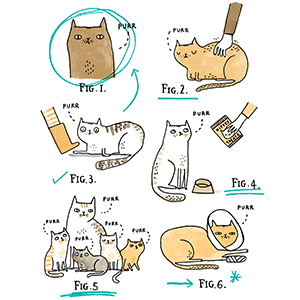
A purr is a continuous, soft, vibrating sound made in the throat by most species of felines. Domestic cat kittens can purr as early as two days of age. This tonal rumbling can characterize different personalities in domestic cats and is often believed to indicate a positive emotional state, however, felines sometimes purr when they are ill, tense, or experiencing traumatic or painful moments. Purring varies between cats (for example by loudness and tone), and from species to species, but can be characterized as a tonal buzzing.
The term ‘purring’ has been used liberally in literature, and it has been claimed that many non-cats including viverrids (civet, mongoose, genet), bears, badgers, and hyaenas purr. Others are reported to purr only at specific times, for example rabbits, squirrels, guinea pigs, tapirs, ring-tailed lemurs, elephants, raccoons and gorillas are claimed to purr while eating. However, using a strict definition of purring that continuous sound production must alternate between pulmonic egressive and ingressive airstream (breathing in and out) and usually go on for minutes, a 2002 study reached the conclusion that until then only ‘purring cats’ (Felidae) and two species of genets, Genetta tigrina, and most likely also Genetta genetta, had been documented to purr.
read more »
Posted in Health, Language, Science |
1 Comment »


 The Daily Omnivore