April 14, 2014

The concept of ego reduction is predicated on the use of Sigmund Freud’s concept of the ego to describe the conscious adult self; and broadly describes the deflating of an over-inflated or egotistical sense of oneself – a curtailment of what Irish philosopher Iris Murdoch called ‘the anxious avaricious tentacles of the self.’
Among other contexts, ego reduction has been seen as a goal in Alcoholics Anonymous; as a part of BDSM play, providing a means of entering ‘subspace’ (a state of submissiveness); and as a way of attaining religious humility and freedom from desire in Buddhism.
read more »
Posted in Health, Philosophy |
Leave a Comment »
April 10, 2014

Childhood amnesia, also called infantile amnesia, is the inability of adults to retrieve episodic memories before the age of 2–4 years, as well as the period before age 10 of which adults retain fewer memories than might otherwise be expected given the passage of time. For the first 1–2 years of life, brain structures such as the limbic system, which holds the hippocampus and the amygdala and is involved in memory storage, are not yet fully developed. Research has demonstrated that children can remember events from before the age of 3–4 years, but that these memories decline as children get older.
Psychologists differ in defining the offset of childhood amnesia. Some define it as the age from which a first memory can be retrieved, others the age at which memories change from general memories to more specific autobiographical events. It is generally agreed there is no set age that people should be able to remember events from. The nature of the childhood event and how the person retrieves a memory can influence what can be recalled. The amount of early childhood memories a person can recall also depends on how old they are when they are asked to remember.
read more »
Posted in Health |
Leave a Comment »
April 9, 2014
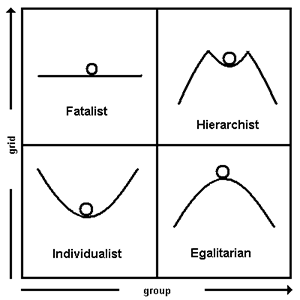
Risk perception is the subjective judgment that people make about the characteristics and severity of a risk. The phrase is most commonly used in reference to natural hazards and threats to the environment or health, such as nuclear power. Several theories have been proposed to explain why different people make different estimates of the dangerousness of risks. Three major families of theory have been developed: psychology approaches (heuristics and cognitive), anthropology/sociology approaches (cultural theory) and interdisciplinary approaches (social amplification of risk framework).
The study of risk perception arose out of the observation that experts and lay people often disagreed about how risky various technologies and natural hazards were. The mid 1960s saw the rapid rise of nuclear technologies and the promise for clean and safe energy. However, fears of both longitudinal dangers to the environment as well as immediate disasters creating radioactive wastelands turned the public against this new technology. The governmental communities asked why public perception was against the use of nuclear energy when all of the scientific experts were declaring how safe it really was. The problem, from the perspectives of the experts, was a difference between scientific facts and an exaggerated public perception of the dangers.
read more »
Posted in Health, Politics, Science |
Leave a Comment »
March 23, 2014
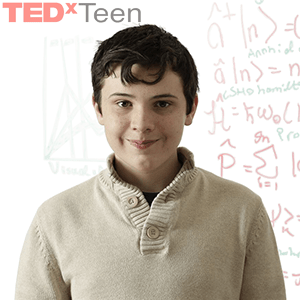
Jacob Barnett (b. 1998) is a mathematician and astrophysicist who, while still a teenager, has became an orator of Physics at Indiana University. Barnett was diagnosed with moderate to severe autism when he was 2 years old and was educated and taught privately by his parents. His mother, Kristine, wrote a book about this educational journey called ”The Spark: A Mother’s Story of Nurturing, Genius, and Autism.’ He was just 12 years old when he was enrolled into college at the Indiana University Purdue University Indianapolis, skipping 7 grades, having learned the majority of his school’s math syllabus within two weeks.
At the age of 15 he became a PSI-student at the Perimeter Institute for Theoretical Physics in Waterloo, Ontario, Canada and is expected to receive a PhD in late 2014. Barnett has been working on Einstein’s theory of relativity and thinks he will be able to amend it or even prove it wrong. He also expressed doubts about the Big Bang Theory and thinks he will be able to amend it too. Professor Scott Tremaine of the Institute of Advanced Study wrote ‘The theory that he’s working on involves several of the toughest problems in astrophysics and theoretical physics. Anyone who solves these will be in line for a Nobel Prize.’
Posted in Education, Health, Science |
1 Comment »
March 22, 2014
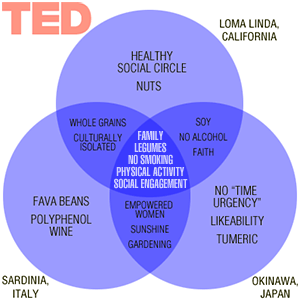
Blue Zone is a concept used to identify a demographic and/or geographic area of the world where people live measurably longer lives, as described in Dan Buettner’s book, ‘The Blue Zones: Lessons for Living Longer from people who lived the longest.’ The concept grew out of demographic work done by Gianni Pes and Michel Poulain, who identified Sardinia’s Nuoro province as the region with the highest concentration of male centenarians.
As the two men zeroed in on the cluster of villages with the highest longevity, they drew concentric blue circles on the map and began referring to the area inside the circle as the Blue Zone. Buettner identifies other zones in Okinawa, Japan; Nicoya, Costa Rica; Icaria, Greece; Vilcabamba, Ecuador; and among the Seventh-day Adventists in Loma Linda, California.
read more »
Posted in Death, Health, World |
1 Comment »
March 12, 2014

Surgeon Simulator 2013, a humorous medical sim, was initially created in a 48-hour period for the 2013 ‘Global Game Jam’ (the four developers spent an additional 48 days building the commercial version). The game is played in first-person perspective. A mouse is used to control the surgeon’s hand (holding the right button rotates the hand; the left button grabs items). Gameplay consists of various surgical procedures, for example a heart transplant. Extra modes are available after completion of the early operations, such as performing an operation in a moving ambulance with surgical instruments bouncing around at random, and operating in outer space where instruments float.
Reception for the game has been positive, with critics stating that although the game was hard to control, this difficulty was ‘part of the appeal.’ Ars Technica commented upon the narrator’s voice over, saying that it ‘belies the ridiculousness that unfolds as he flops and flails his way through surgery.’ ‘Rock, Paper, Shotgun, praised the game’s humor and fun, and said ”Surgeon Simulator 2013′ is not a brilliant game. But it is a brilliant joke. In the form of a game. It’s an idea that is a clean magnitude of awesome above 90% of what will be released this year because it is so absurd.’
Posted in Games, Health, Humor |
Leave a Comment »
March 8, 2014
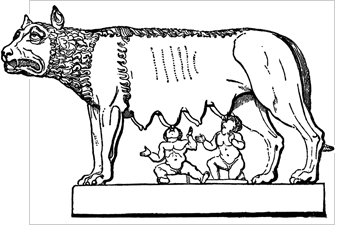

A feral child (also, colloquially, wild child) is a human child who has lived isolated from human contact from a very young age, and has no (or little) experience of human care, loving or social behavior, and crucially, of human language. Some feral children have been confined by people (usually their own parents); in some cases this child abandonment was due to the parents’ rejection of a child’s severe intellectual or physical impairment. Feral children may have experienced severe child abuse or trauma before being abandoned or running away.
Feral children are sometimes the subjects of folklore and legends, typically portrayed as having been brought up by animals. Myths and fictional stories have depicted feral children reared by wild animals such as wolves, apes, and bears. Famous examples include Ibn Tufail’s Hayy, Ibn al-Nafis’ Kamil, Rudyard Kipling’s Mowgli, Edgar Rice Burroughs’s Tarzan, and the legends of Atalanta, Enkidu and Romulus and Remus.
read more »
Posted in Health, Language |
Leave a Comment »
February 25, 2014

Robert H. Lustig is an American pediatric endocrinologist at the University of California, San Francisco (UCSF) where he is a Professor of Clinical Pediatrics. He practices in the field of neuroendocrinology, with an emphasis on the regulation of energy balance by the central nervous system. He also has a special interest in childhood obesity.
Lustig came to public attention through his efforts to establish that fructose can have serious deleterious effects on human (especially children’s) health if consumed excessively. In 2009, he delivered a lecture called ‘Sugar: The Bitter Truth’ that spread virally on YouTube, in which he calls fructose a ‘poison’ and equates its metabolic effects with those of ethanol.
read more »
Posted in Food, Health |
Leave a Comment »
February 7, 2014
In psychology, sublimation [suhb-luh-mey-shuhn] is a mature type of defense mechanism where socially unacceptable impulses or idealizations are consciously transformed into socially acceptable actions or behavior, possibly resulting in a long-term conversion of the initial impulse. Sigmund Freud believed that sublimation was a sign of maturity (indeed, of civilization), allowing people to function normally in culturally acceptable ways.
He defined sublimation as the process of deflecting sexual instincts into acts of higher social valuation, being ‘an especially conspicuous feature of cultural development; it is what makes it possible for higher psychical activities, scientific, artistic or ideological, to play such an important part in civilised life.’ Sublimation is when displacement ‘serves a higher cultural or socially useful purpose, as in the creation of art or inventions.’ Psychoanalysts often refer to it as the only truly successful defense mechanism.
read more »
Posted in Health, Philosophy, Sex |
1 Comment »
January 9, 2014

Mood repair strategies (MRS) offer techniques that an individual can use to shift their mood from general sadness or clinical depression to a state of greater contentment or happiness. A mood repair strategy is a cognitive, behavioral, and interpersonal psychological tool used to affect the mood regulation of an individual. MRS are common to cognitive therapy and are often assigned as homework by therapists in order to help positively impact individuals who are experiencing dysphoria or depression.
However, these tools can also be used for individuals experiencing temporary unwanted moods. Many factors go into the effectiveness of MRS on an individual ranging from the client’s self-esteem to their experience with the strategy being used. Also, how the strategy is presented (either to avoid negative moods or to pursue positive moods) may have an effect on its effectiveness.
read more »
Posted in Health, Science |
Leave a Comment »
January 6, 2014


Tobii Technology is a Swedish high-technology company that develops and sells products for eye control and eye tracking. Founded in 2001, the company has products in several market segments such as people with communication disabilities who use Tobii’s technical devices and language tools (AAC devices) to communicate.
It also has products that are widely used for research in the academic community, and to conduct usability studies and market surveys of commercial products. Tobii also partners with others to integrate eye tracking and eye control in different industry applications and fields such as advanced driver assistance, consumer computing, and gaming.
Posted in Health, Money, Technology |
Leave a Comment »
December 18, 2013

‘The Limits of Individual Plasticity‘ is an 1895 essay by science fiction author H.G. Wells offering his theories on the plasticity of animals. He argues that the default biological form of an animal could be altered so radically that it is no longer recognizable and still survive. This could, according to Wells, theoretically be achieved through surgical, or chemical modification. Wells was fully aware that surgical modification is only a physical change, and would not alter an animal’s genetic blueprint. He made note that should an animal be surgically modified, their offspring would most likely retain their parent creature’s original physical form.
These concepts were central to his 1896 science fiction novel, ‘The Island of Doctor Moreau.’ In the book, an Englishman is shipwrecked on a secluded island owned and operated by an eminent British physiologist named Dr. Moreau. Moreau was shunned from the scientific community when his horrific experiments of vivisection were brought to the public spotlight, but continued his work on his private island, where animals are altered with great detail to resemble human beings. They are a defective experiment, as they will revert to their bestial forms after a period of time.
Posted in Art, Health, Science |
Leave a Comment »


 The Daily Omnivore