December 11, 2013


Object Sexuality (OS), also called objectophilia, refers to pronounced emotional attachment to inanimate objects. For some, sexual or even close emotional relationships with humans are incomprehensible.
Some object-sexual individuals also often believe in animism (spirits in nonliving things), and sense reciprocation based on the belief that objects have souls, intelligence, and feelings, and are able to communicate. Contrary to sexual fetishism, the object to an OS person is viewed as their partner and not merely as a sexual entity.
read more »
Posted in Health, Sex |
Leave a Comment »
December 5, 2013

Personal genomics [jee‐noh-miks] (sequencing and analysis of the genome of an individual) employs several techniques, including single-nucleotide polymorphism (SNP) analysis chips (typically 0.02% of the genome), or partial or full genome sequencing. Once the genotypes are known, the individual’s genotype can be compared with the published literature to determine likelihood of trait expression and disease risk.
Automated sequencers have increased the speed and reduced the cost of sequencing, making it possible to offer genetic testing to consumers. 23andMe sells mail order kits for SNP genotyping. The information is stored in a user profile and used to estimate the genetic risk of the consumer for over 240 diseases and conditions, as well as ancestry analysis.
read more »
Posted in Health, Money, Technology |
Leave a Comment »
December 2, 2013

The tongue map or taste map is a common misconception that different sections of the tongue are exclusively responsible for different basic tastes. Although widely taught in schools, this was scientifically disproven by later research; all taste sensations come from all regions of the tongue, although parts may be more sensitive to certain flavors. The theory behind this map originated from a paper written by Harvard psychologist Edwin G. Boring, which was a translation of a 1901 German paper.
The paper showed minute differences in threshold detection levels across the tongue. These small differences were later taken out of context by textbooks in declaring discrete taste regions. So, while some parts of the tongue may be able to detect a taste before the others do, all parts are equally good at conveying the qualia of all tastes. Threshold sensitivity may differ across the tongue, but intensity of sensation does not.
Posted in Food, Health |
Leave a Comment »
November 29, 2013

Super AIDS is an informal name for multidrug resistant strains of HIV-1, first found in NYC in 2005. The strain is vulnerable to enfuvirtide (a drug from a novel class of antiretrovirals). In 2006, provisional data indicated that 15% of new infections were resistant to one antiretroviral drug, and 3.2% to two such drugs. As a result the Department of Health and Human Services changed its guidelines to recommend testing for drug resistance before beginning antiretroviral treatment in new patients.
Typically, the ‘wild’ type of HIV (the strain of HIV found in individuals not treated with antiretroviral drugs) is much more effective at attacking the human immune system than the types that evolve in the presence of antiretroviral drugs. Thus, by changing the selection pressure (from being infection driven to being drug-avoidance driven) retroviral drug treatment causes HIV to evolve to a more innocuous form, less efficient at infecting T-cells. Super AIDS strains, however, are not only resistant to anti-retroviral drugs, but more effective than ‘wild’ HIV at infecting T-cells.
Posted in Health |
Leave a Comment »
November 24, 2013

Sungazing refers to staring at the Sun for nourishment or as a spiritual practice.
Proponents claim increased energy levels and decreased appetite, but there is no scientific evidence that sungazing provides health benefits. Looking directly at the Sun for even brief periods of time may cause blindness or severe damage to the eye.
Posted in Health |
Leave a Comment »
November 19, 2013
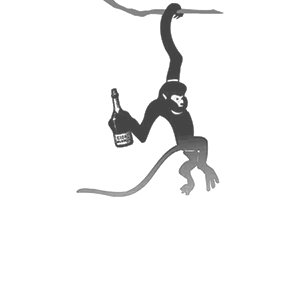
Zoopharmacognosy [zoh-uh-fahr-muh-kog-nuh-see] refers non-human animal self-medication (using plants, soils, insects and psychoactive drugs to treat and prevent disease).
Coined by Dr. Eloy Rodriguez, a biochemist and professor at Cornell University, the term came to popular attention in 2003 from Open University lecturer Cindy Engel in ‘Wild Health: How Animals Keep Themselves Well and What We Can Learn from Them.’ A well-known example of zoopharmacognosy is when dogs eat grass to induce vomiting. Some species ingest non-foods such as clay, charcoal, and even toxic plants, apparently to ward off parasitic infestation or poisoning.
read more »
Posted in Drugs, Health, Science |
Leave a Comment »
November 13, 2013

Soylent is a food substitute intended to supply all of a human body’s daily nutritional needs, made from powdered starch, rice protein, olive oil, and raw chemical powders. It was designed by software engineer Rob Rhinehart as a low cost alternative to traditional food that can be prepared and consumed very quickly.
Lacking background in chemistry or nutrition, Rhinehart developed the formula through research and self-experimentation. He named it after a fictional food from the novel ‘Make Room! Make Room!’, on which the 1973 film ‘Soylent Green’ was loosely based.
read more »
Posted in Food, Health, Money |
Leave a Comment »
October 28, 2013

Pharmacy automation is the automation of tasks performed in pharmacy:
measuring and mixing powders and liquids for compounding; tracking and updating customer information in databases (e.g. personally identifiable information, medical history, drug interaction risk detection); inventory management; and dispensing of medication.
read more »
Posted in Drugs, Health, Technology |
Leave a Comment »
October 24, 2013
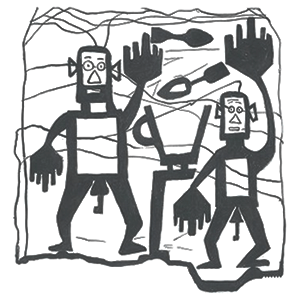
On the Origin of the “Influencing Machine” in Schizophrenia is a highly influential article written by German psychoanalyst Viktor Tausk in 1919. The paper describes Tausk’s observations and psychoanalytic interpretation of a type of paranoid delusion that occurs in patients diagnosed with schizophrenia. The delusion often involves their being influenced by a ‘diabolical machine,’ just outside the technical understanding of the victim, that influences them from afar.
It was typically believed to be operated by a group of people who were persecuting the individual, whom Tausk suggested were ‘to the best of my knowledge, almost exclusively of the male sex’ and the persecutors, ‘predominantly physicians by whom the patient has been treated.’ These delusions are known in contemporary psychiatry as ‘passivity delusions’ or ‘passivity phenomena’ and are listed among Kurt Schneider’s ‘first rank’ symptoms which are thought to be particularly diagnostic of schizophrenia, and still form some of the core diagnostic criteria.
read more »
Posted in Health, Technology |
1 Comment »
October 7, 2013

Mad Pride is a movement of the users of mental health services, former users, and their allies. The first known event, called ‘Psychiatric Survivor Pride Day’ in Toronto in 1993, was held in response to community prejudices towards individuals with a psychiatric history living in boarding homes in the Parkdale area of the city, and has been held annually since.
By the late 1990s similar events were being organized in London and around the globe according to MindFreedom International, a US mental health advocacy organization. Events often include music, poetry readings, film screenings, and street theater, such as ‘bed push’ protests, which aim to raise awareness about the poor levels of choice of treatments and the widespread use of force in psychiatric hospitals.
read more »
Posted in Health, Politics |
Leave a Comment »
September 19, 2013


Kleptothermy [klep-toh-thur-mee] is any form of thermoregulation by which an animal shares in the metabolic thermogenesis of another animal. It may or may not be reciprocal, and occurs in both endotherms and ectotherms. Its most common form is huddling. Some species of ectotherms including lizards and snakes increase their effective mass by clustering tightly together. It is also widespread among gregarious endotherms such as bats and birds (such as the mousebird and emperor penguin) where it allows the sharing of body heat (particularly among juveniles).
In at least one case this is not reciprocal, and might be accurately described as heat-stealing. Some male Canadian red sided garter snakes engage in female mimicry by producing fake pheromones after emerging from hibernation. This causes rival males to cover them in a mistaken attempt to mate, and so transfer heat to them. This allows those males that mimic females to become more quickly revitalized after hibernation (which depends upon raising their body temperature), giving them an advantage in their own attempts to mate.
Posted in Health, Language, Science |
Leave a Comment »
August 31, 2013

A Vietnam veteran is someone who served in the armed forces of participating countries during the Vietnam War. Common usage distinguishes between those who served ‘in country’ as ‘Vietnam veterans’ and the others as ‘Vietnam-era veterans.’ The U.S. government officially refers to all as ‘Vietnam-era veterans.’ According to the U.S. Department of Labor, the Vietnam Era Veterans’ Readjustment Assistance Act of 1974 (VEVRAA), ‘A Vietnam era veteran is a person who: ‘served on active duty for a period of more than 180 days, any part of which occurred between August 5, 1964 and May 7, 1975, and was discharged or released with other than a dishonorable discharge.’
The U.S. Census Bureau (2004) reports there are 8.2 million ‘Vietnam Era Veterans.’ Of these 2.59 million are reported to have served ‘in country.’ More than 58,000 US personnel died as a result of the conflict (this comprises deaths from all categories including deaths while missing, captured, non-hostile deaths, homicides, and suicides).
read more »
Posted in Health, War, World |
Leave a Comment »


 The Daily Omnivore