August 20, 2013
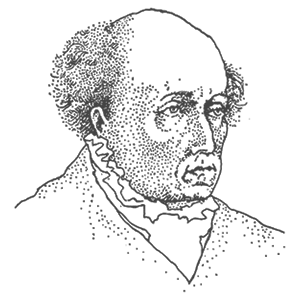
The dose makes the poison, a principle of toxicology, was first expressed by German-Swiss Renaissance physician Paracelsus. It means that a substance can produce the harmful effect associated with its toxic properties only if it reaches a susceptible biological system within the body in a high enough concentration (dose).
The principle relies on the finding that all chemicals—even water and oxygen—can be toxic if too much is eaten, drunk, or absorbed. ‘The toxicity of any particular chemical depends on many factors, including the extent to which it enters an individual’s body.’ This finding provides also the basis for public health standards, which specify maximum acceptable concentrations of various contaminants in food, public drinking water, and the environment.
read more »
Posted in Drugs, Health |
Leave a Comment »
August 18, 2013

Muscle dysmorphia (or more informally bigorexia) is a disorder in which a person becomes obsessed with the idea that he or she is not muscular enough. Those who suffer from muscle dysmorphia tend to hold delusions that they are ‘skinny’ or ‘too small’ but are often above average in musculature.
Sometimes referred to as reverse anorexia nervosa, or the Adonis Complex, muscle dysmorphia is strictly connected with selective attention: individuals selectively focus their attention on perceived defect (too skinny body, underweight etc.). They are hypervigilant to even small deviations from perceived ideal and they ignore information that their body image is not consistent with reality.
read more »
Posted in Health |
Leave a Comment »
August 16, 2013

Brené Brown Ph.D. LMSW is an American scholar, author, and public speaker, who is currently a research professor at the University of Houston Graduate College of Social Work.
Over the last ten years she has been involved in research on topics ranging from vulnerability, courage, and authenticity, to empathy and shame. She has written notable books such as ‘The Gifts of Imperfection’ (2010) and ‘Daring Greatly’ (2012). She is also the author of ‘Connections,’ a psychoeducational shame resilience curriculum.
Posted in Health, Language |
Leave a Comment »
August 15, 2013


Quackery [kwak-uh-ree] is the promotion of unproven or fraudulent medical practices. Random House Dictionary describes a ‘quack’ as a ‘fraudulent or ignorant pretender to medical skill’ or ‘a person who pretends, professionally or publicly, to have skill, knowledge, or qualifications he or she does not possess; a charlatan.’ The word ‘quack’ derives from the archaic word ‘quacksalver,’ of Dutch origin, literally meaning ‘hawker of salve.’ In the Middle Ages the word ‘quack’ meant ‘shouting.’ The quacksalvers sold their wares on the market shouting in a loud voice.
‘Health fraud’ is often used as a synonym for quackery, but quackery’s salient characteristic is aggressive promotion (‘quacks quack!’) rather than fraud, greed or misinformation. ‘Pseudo-medicine’ is a term for treatments known to be ineffective, regardless of whether their advocates themselves believe in their effectiveness.
read more »
Posted in Health, Language, Money |
Leave a Comment »
August 14, 2013

‘Bad Science‘ is a 2008 book by British physician and science writer Ben Goldacre, criticizing mainstream media reporting on health and science issues. The book contains extended and revised versions of many of his ‘Guardian’ columns.
The book discusses topics such as detoxification (Aqua Detox, ear candles etc.) that can easily be shown to be bogus by simple experiments, and discusses the ‘detox phenomenon’ and purification rituals. He also addresses the claims for Brain Gym, a program of specific physical exercises that its commercial promoters claim can create new pathways in the brain. The uncritical adoption of this program by sections of the British school system is derided.
read more »
Posted in Health, Language, Science |
Leave a Comment »
August 14, 2013

Jenny McCarthy (b. 1972) is an American model, actress, author, and activist. She began her career in 1993 as a nude model for ‘Playboy’ magazine and was later named their Playmate of the Year. McCarthy then parlayed her ‘Playboy’ fame into a television and film acting career.
More recently, she has written books about parenting, and has become an activist promoting research into environmental causes, and alternative medical treatments for autism. She has claimed that vaccines cause autism and that chelation therapy helped cure her son of autism. Both claims are controversial and unsupported by any medical evidence. Additionally, her son’s autism diagnosis is disputed.
read more »
Posted in Health, Humor, Sex |
Leave a Comment »
August 4, 2013
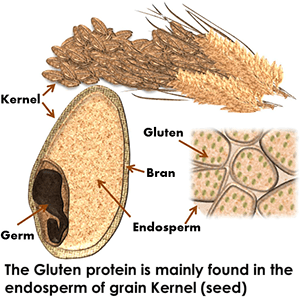
A gluten-free diet is a diet that excludes foods containing gluten. Gluten is a protein complex found in wheat (including ancient varieties: kamut and spelt), barley, rye, and triticale (a wheat/rye hybrid). A gluten-free diet is the only medically accepted treatment for celiac disease (an autoimmune disorder of the small intestine that occurs in genetically predisposed people of all ages).
Being gluten intolerant can often mean a person may also be wheat intolerant as well as suffer from the related inflammatory skin condition dermatitis herpetiformis (chronic blistering). A smaller minority of people who suffer from wheat intolerance alone are tolerant to gluten. Despite unknown benefits for the general population, and evidence to suggest adverse effects, a significant demand has developed for gluten-free food in the United States.
read more »
Posted in Food, Health |
Leave a Comment »
August 1, 2013

Tough love is an expression used when someone treats another person harshly or sternly with the intent to help them in the long run. The phrase was evidently coined by American politician Bill Milliken when he wrote the book ‘Tough Love’ in 1968 and has been used by numerous authors since then.
In most uses, there must be some actual love or feeling of affection behind the harsh or stern treatment to be defined as tough love. For example, genuinely concerned parents refusing to support their drug-addicted child financially until he or she enters drug rehabilitation would be said to be practicing tough love. Athletic coaches who maintain strict rules and highly demanding training regimens, but who care about their players, could also be said to be practicing tough love.
read more »
Posted in Health, Language, Love |
Leave a Comment »
July 25, 2013

Fear of Missing Out or FoMO is a form of social anxiety — a compulsive concern that one might miss an opportunity for social interaction, a novel experience, profitable investment or other satisfying event. This is especially associated with modern technologies such as mobile phones and social networking services.
A study by Andrew Przybylski found that the condition was most common in those who had unsatisfied psychological needs such as wanting to be loved and respected. The condition is also associated with social networks such as Facebook and LinkedIn, which provide constant opportunity for comparison of one’s status.
Posted in Health, Language |
Leave a Comment »
July 11, 2013

Sympathetic magic, also known as ‘imitative magic,’ is a type of magic based on imitation or correspondence.
It has been said that the theory of sympathetic magic was first popularized in 1889 by Scottish anthropologist Sir James George Frazer in ‘The Golden Bough’ (a comparative study of mythology and religion); German geographer and ethnographer Richard Andree, however, anticipates Frazer, writing of ‘Sympathie-Zauber’ in his 1878 ‘Ethnographische Parallelen und Vergleiche’ (‘Ethnographic Parallels and Comparisons). Frazer further subcategorized sympathetic magic into two varieties: that relying on similarity, and that relying on contact or ‘contagion.’
read more »
Posted in Health, Philosophy |
Leave a Comment »
June 14, 2013

‘Catching Fire: How Cooking Made Us Human‘ (2009) is a book by British primatologist Richard Wrangham forwarding the hypothesis that cooking food was an essential element in the physiological evolution of human beings.
Humans are the only species that cook their food and Wrangham argues Homo erectus emerged about two million years years ago as a result of this unique trait. Cooking had profound evolutionary effect because it increased food efficiency by permitting human ancestors to spend less time foraging, chewing, and digesting. H. erectus developed via a smaller, more efficient digestive tract which freed up energy to enable larger brain growth.
read more »
Posted in Food, Health, Science |
1 Comment »
June 14, 2013

Thinking, Fast and Slow is a 2011 book by Nobel Memorial Prize winner in Economics Daniel Kahneman which summarizes research that he conducted over decades, often in collaboration with cognitive scientist Amos Tversky. It covers all three phases of his career: his early days working on cognitive biases (unknowingly using poor judgement), prospect theory (the tendency to base decisions on the potential value of losses and gains rather than the final outcome), and his later work on happiness (e.g. positive psychology).
The book’s central thesis is a dichotomy between two modes of thought: System 1 is fast, instinctive and emotional; System 2 is slower, more deliberative, and more logical. The book delineates cognitive biases associated with each type of thinking, starting with Kahneman’s own research on loss aversion (the tendency to favor avoiding losses over acquiring gains). From framing choices (the tendency to avoid risk when a positive context is presented and seek risks when a negative one is) to attribute substitution (using an educated guess to fill in missing information), the book highlights several decades of academic research to suggest that people place too much confidence in human judgment.
read more »
Posted in Health, Language, Science |
Leave a Comment »


 The Daily Omnivore