May 24, 2013

‘The Ethical Slut: A Guide to Infinite Sexual Possibilities’ is a 1997 non-fiction book written by family therapist Dossie Easton and sex educator Janet Hardy (given as pseudonym Catherine A. Liszt for the book’s first edition).
The book discusses consensual non-monogamy as a lifestyle, and provides practical guidance on how such long-term relationships work and are put into practice.
read more »
Posted in Health, Language, Sex |
1 Comment »
May 24, 2013

There are many toilet-related injuries and some toilet-related deaths throughout history and in urban legends. In young boys, one of the most common causes of genital injury is when the toilet seat falls down while they are using the toilet. Smaller children run the risk of drowning if they fall headfirst into the toilet. Injuries to adults include bruised buttocks, tail bones, and dislocated hips from unsuspectingly sitting on the toilet bowl rim because the seat is up or loose.
Injuries can also be caused by pinching due to splits in plastic seats or by splinters from wooden seats, or if the toilet itself collapses under the weight of the user. Older high flush cast iron cisterns have been known to detach from the wall when the chain is pulled to flush, causing injuries to the user.
read more »
Posted in Death, Health |
Leave a Comment »
May 23, 2013


Morphological freedom refers to a proposed civil right of a person to either maintain or modify his or her own body, on his or her own terms, through informed, consensual recourse to, or refusal of, available therapeutic or enabling medical technology.
The term may have been coined by strategic philosopher Max More in his 1993 article, ‘Technological Self-Transformation: Expanding Personal Extropy,’ where he defined it as ‘the ability to alter bodily form at will through technologies such as surgery, genetic engineering, nanotechnology, uploading.’ The term was later used by science debater Anders Sandberg as ‘an extension of one’s right to one’s body, not just self-ownership but also the right to modify oneself according to one’s desires.’
read more »
Posted in Health, Politics, Technology |
Leave a Comment »
May 23, 2013
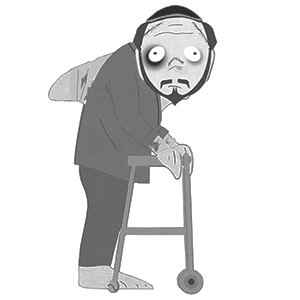
Species dysphoria [dis-fohr-ee-uh] is the experience of dysphoria (depression, discontent), sometimes including dysmorphia (excessive concern over one’s body image), associated with the feeling that one’s body is of the wrong species. Earls and Lalumière (2009) describe it as ‘the sense of being in the wrong (species) body… a desire to be an animal.’
Outside of psychological literature, the term is common within the otherkin and therian communities (people who see themselves as partially or entirely non-human). The phenomenon is sometimes experienced in the context of sexual arousal to the image of one’s self as an animal. ‘Species dysphoria’ is also used informally in psychological literature to compare the experiences of some individuals to those in the transgender community.
read more »
Posted in Health, Sex |
Leave a Comment »
May 22, 2013
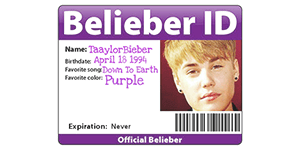
Celebrity worship syndrome is an obsessive-addictive disorder in which a person becomes overly involved with the details of a celebrity’s personal life. Psychologists have indicated that though many people obsess over glamorous film, television, sport and pop stars, the only common factor between them is that they are all figures in the public eye. The term Celebrity Worship Syndrome (CWS) is in fact a misnomer. The supposed condition first appeared in an article ‘Do you worship the celebs?’ by James Chapman in a British tabloid newspaper in 2003.
Chapman was basing his article on the journal paper, Maltby et al. (2003). Chapman refers to CWS, but in fact this is a misunderstanding of a term used in the academic article (CWS which stood for Celebrity Worship Scale). Nonetheless Chapman may be generally correct. A syndrome refers to a set of abnormal or unusual set of symptoms indicating the existence of an undesirable condition or quality. Indeed many attitudes and behaviors covered in this research indicate such states.
read more »
Posted in Health, Money |
Leave a Comment »
May 21, 2013
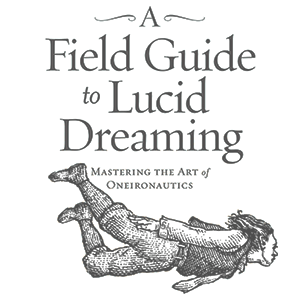
Oneironautics [oh-nahy-ruh-naw-tiks] refers to the ability to travel within a dream, usually on a conscious basis. A traveler in a dream may be called an oneironaut.
The idea of one person being able to consciously travel or interact within the dream of another person, known variously as ‘dream telepathy,’ ‘telepathic lucid dreaming,’ or ‘telepathic dreaming,’ has been explored in the realms of science and fantasy fiction; in recent works, such an interaction is often depicted as a computer-mediated psychotherapeutic action, as is the case in ‘The Cell,’ and ‘Paprika,’ as well as through the direct intervention of another sleeping person, as in ‘Inception,’ or ‘Dreamscape.’ The concept is also included in the fantasy series ‘The Wheel of Time’ as an ability ‘dreamwalkers’ are able to use.
read more »
Posted in Health, Philosophy |
1 Comment »
May 20, 2013

Michael Moss was awarded the Pulitzer Prize for explanatory reporting in 2010, and was a finalist for the prize in 2006 and 1999. He is also the recipient of a Loeb Award and an Overseas Press Club citation.
Before coming to ‘The New Times,’ he was a reporter for ‘The Wall Street Journal,’ ‘New York Newsday,’ and ‘The Atlanta Journal-Constitution.’ He has been an adjunct professor at the Columbia School of Journalism and currently lives in Brooklyn with his wife and two sons.
Posted in Food, Health, Money |
1 Comment »
May 20, 2013

Mind-Blindness can be described as a cognitive disorder where an individual is unable to attribute mental states to the self and other. As a result of this disorder the individual is unaware of others’ mental states. The individual is also not capable of attributing beliefs and desires to others. This ability to develop a mental awareness of what is in the mind of an individual is known as the ‘Theory of Mind’ (ToM).
This allows one to attribute our behavior and actions to various mental states such as emotions and intentions. Mind-blindness is associated with autism and Asperger’s syndrome (AS) patients who tend to show deficits in social insight. It is also associated with schizophrenia, dementia, bi-polar disorders, and antisocial personality disorders.
read more »
Posted in Health, Science |
2 Comments »
May 17, 2013

When a person receives unfair treatment or alienation due to a social stigma, the effects can be detrimental. Social stigmas are defined as any aspect of an individual’s identity that is devalued in a social context. These stigmas can be categorized as visible or invisible, depending on whether the stigma is readily apparent to others. Visible stigmas refer to characteristics such as race, age, gender, physical disabilities, or deformities; whereas invisible stigmas refer to characteristics such sexual orientation, gender identity, religious affiliation, early pregnancy, certain diseases, or mental illnesses.
When individuals possess invisible stigmas, they must decide whether or not to reveal their association with a devalued group to others. This decision can be an incredibly difficult one, as revealing one’s invisible stigma can have both positive and negative consequences depending on several situational factors. In contrast, a visible stigma requires immediate action to diminish communication tension and acknowledge a deviation from the norm. People possessing visible stigmas often use compensatory strategies to reduce potential interpersonal discrimination that they may face.
read more »
Posted in Health, Money, Politics |
Leave a Comment »
May 14, 2013

‘The Gift of Fear‘ (1997) is a nonfiction self-help book by security consultant Gavin de Becker. The book provides strategies to help readers avoid trauma and violence by teaching them various warning signs and precursors to violence.
De Becker’s book presents a paradox of genre: described as a ‘how-to book that reads like a thriller.’ By finding patterns in stories of violence and abuse, de Becker seeks to highlight the inherent predictability of violence.
read more »
Posted in Health, Language |
Leave a Comment »
May 10, 2013
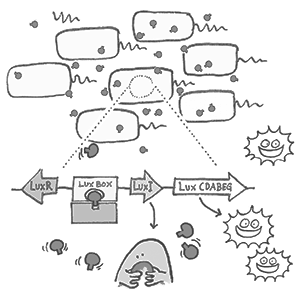
Quorum [kwawr-uhm] sensing is a chemical messaging system employed by bacteria to determine the presence of other bacteria. It is part of a system of stimulus and response correlated to population density (e.g. some bioluminescent bacteria will not produce light unless in sufficient concentration).
Many species of bacteria use quorum sensing to coordinate gene expression according to the density of their local population. In similar fashion, some social insects use a form of quorum sensing to determine where to nest. In addition to its function in biological systems, quorum sensing has several useful applications for computing and robotics.
read more »
Posted in Health, Science, Technology |
Leave a Comment »
May 9, 2013
The bias blind spot is the cognitive bias of failing to compensate for one’s own cognitive biases. The term was created by Emily Pronin, a social psychologist from Princeton University’s Department of Psychology, with colleagues Daniel Lin and Lee Ross. Pronin and her co-authors explained to subjects the better-than-average effect (illusory superiority), the halo effect, self-serving bias, and many other cognitive biases.
According to the better-than-average bias, specifically, people are likely to see themselves as inaccurately ‘better than average’ for possible positive traits and ‘less than average’ for negative traits. When subsequently asked how biased they themselves were, subjects rated themselves as being much less vulnerable to those biases than the average person.
read more »
Posted in Health, Science |
Leave a Comment »



