March 23, 2013

The Bell Jar is American writer and poet Sylvia Plath’s only novel, which was originally published under the pseudonym ‘Victoria Lucas’ in 1963. The novel is semi-autobiographical with the names of places and people changed.
The book is often regarded as a roman à clef (real events disguised as fiction), with the protagonist’s descent into mental illness paralleling Plath’s own experiences with what may have been clinical depression. Plath committed suicide a month after its first UK publication. The novel was published under her name for the first time in 1967 and was not published in the United States until 1971, pursuant to the wishes of Plath’s mother and her husband Ted Hughes.
read more »
Posted in Death, Health, Language |
Leave a Comment »
March 22, 2013

Vegemite [vej-uh-mahyt] is a dark brown Australian food paste made from yeast extract. It is a spread for sandwiches and a filling for pastries. A common method of eating Vegemite is on toasted bread with one layer of butter before spreading a thin layer of Vegemite. It is similar to British, New Zealand and South African Marmite, Australian Promite, Swiss Cenovis and German Hefeextrakt. More recently, other spreads – which are Australian-owned – have come on the market to provide an alternative to the now US-owned product, such as the yeast-based AussieMite.
Vegemite is made from brewers’ yeast extract, a by-product of beer manufacturing, various vegetables, wheat and spice additives. It is salty, slightly bitter and malty, and rich in umami (savory flavor) – similar to beef bouillon. The texture is smooth and the product is a paste. It is not as intensely flavored as British Marmite and it is less sweet than the New Zealand version of Marmite.
read more »
Posted in Food, Health, World |
Leave a Comment »
March 20, 2013

Margaret Sanger (1879 – 1966) was an American birth control activist, sex educator, and nurse. Sanger popularized the term ‘birth control,’ opened the first birth control clinic in the United States, and established Planned Parenthood. Sanger’s efforts contributed to the landmark U.S. Supreme Court case which legalized contraception in the United States.
Sanger is a frequent target of criticism by opponents of birth control and has also been criticized for supporting eugenics (‘racial hygiene’), but remains an iconic figure in the American reproductive rights movement. Sanger’s early years were spent in New York City. In 1914, prompted by suffering she witnessed due to frequent pregnancies and self-induced abortions, she started a monthly newsletter, ‘The Woman Rebel.’ Sanger’s activism was influenced by the conditions of her youth—her mother had 18 pregnancies in 22 years, and died at age 50 of tuberculosis and cervical cancer.
read more »
Posted in Health, Politics, Sex |
Leave a Comment »
March 20, 2013
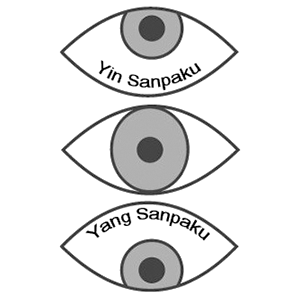
Sanpaku is a Japanese term that means ‘three whites’ and is generally referred to in English as ‘Sanpaku eyes.’ The term refers to the iris being rather small, so that it only covers about two-thirds or less of the vertical axis of the eye; e.g. delineate an eye into four portions; the iris would only occupy one portion of the divided four sections; thus leaving the other three in white, hence ‘three whites.’
When the bottom of the white part of the eye, known as the sclera, is visible it is referred to as ‘Yin Sanpaku’ in Chinese lore. According to the myth, it represents physical imbalance in the body and is claimed to be present in alcoholics, drug addicts and people who overconsume sugar or grain. Conversely when the upper sclera is visible this is called ‘Yang Sanpaku.’ This is said to be an indication of mental imbalance in people such as psychotics, murderers, and anyone rageful. Stress and fatigue may also be a cause.
read more »
Posted in Health, Philosophy, World |
Leave a Comment »
March 18, 2013

Coconut oil is an edible oil extracted from the kernel or meat of matured coconuts harvested from the coconut palm. Throughout the tropical world, it has provided the primary source of fat in the diets of millions of people for generations.
It has various applications in food, medicine, and industry. Coconut oil is very heat-stable, which makes it suited to methods of cooking at high temperatures like frying. Because of its stability, it is slow to oxidize and, thus, resistant to rancidity, lasting up to two years owing to the high saturated fat content.
read more »
Posted in Food, Health, World |
Leave a Comment »
March 15, 2013

Tachypsychia [tak-ee-sahy-kee-uh] is a neurological condition that alters the perception of time, usually induced by physical exertion, drug use, or a traumatic event. It is sometimes referred to by martial arts instructors and self defense experts as an ‘adrenaline dump.’
For someone affected by tachypsychia events appear to slow down and objects appear as moving in a speeding blur. It is believed that tachypsychia is induced by a combination of high levels of dopamine and norepinephrine, usually during periods of great physical stress and/or in violent confrontation. Tachypsychia is related to the ‘fight or flight’ response of the body to events considered life threatening.
read more »
Posted in Health, War |
Leave a Comment »
March 14, 2013

LifeStraw is a water filter that filters a maximum of 1000 liters of water, enough for one person for one year that was designed by the Swiss-based Vestergaard Frandsen for people living in developing nations and for distribution in humanitarian crisis. LifeStraw Family filters a maximum of 18,000 liters of water, providing safe drinking water for a family of five for up to three years. The LifeStraw is a plastic tube 310 millimeters long and 30 millimeters in diameter, Water that is drawn up through the straw first passes through hollow fibers that filter water particles down to 0.2 microns across, using only physical filtration methods and no chemicals.
LifeStraw has been generally praised for its effective and instant method of bacteria and protozoa removal and consumer acceptability. Paul Hetherington, of the charity WaterAid, has criticized the LifeStraw for being too expensive for the target market. He also points to other important problems linked with accessing the water in developing countries, which wait to be solved, but are not addressed by the device itself.
Posted in Food, Health, Technology |
Leave a Comment »
March 13, 2013

A dysfunctional family is a family in which conflict, misbehavior, and often child neglect or abuse on the part of individual parents occur continually and regularly, leading other members to accommodate such actions.
Children sometimes grow up in such families with the understanding that such an arrangement is normal. Dysfunctional families are primarily a result of co-dependent adults, and may also be affected by addictions, such as substance abuse (alcohol, drugs, etc.), or sometimes an untreated mental illness. Dysfunctional parents may emulate or over-correct from their own dysfunctional parents. In some cases, a ‘child-like’ parent will allow the dominant parent to abuse their children.
read more »
Posted in Health |
Leave a Comment »
March 13, 2013

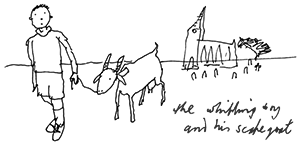
Identified patient (IP) is a form of dysfunctional parenting where one child, usually selected by the mother, is forced into going to therapy while the family’s overall dysfunction is kept hidden. The term is also used in the context of organizational management, in circumstances where an individual becomes the carrier of a group problem (also known as scapegoating).
The term emerged from the work on family homeostasis in the Bateson Project, a ground-breaking collaboration organized by English social scientist Gregory Bateson in the 1950s and early 1960s. Bateson described it as a way to identify a largely unconscious pattern of behavior whereby an excess of painful feelings in a family lead to one member being identified as the cause of all the difficulties – a scapegoating of the IP.
read more »
Posted in Health |
1 Comment »
March 13, 2013


Role suction is a term introduced in the USA by pyschologist Fritz Redl in the mid-twentieth century to describe the power of a social group to allocate roles willy-nilly to its members. British psychoanalyst W. R. Bion’s group dynamics further explored the ways whereby the group (unconsciously) allocates particular functions to particular individuals in order to have its covert emotional needs met; and the process has recently been highlighted anew within the ‘Systems Centered Therapy’ of Yvonne Agazarian (a form of group therapy).
Among regularly occurring group roles are those of the ‘scapegoat’ for the group’s troubles; the ‘joker’; the ‘peacemaker’; the ‘critic/spokesperson’ for group standards; the ‘idol,’ or upholder of the group ideal; and the ‘identified patient’ (the person in a dysfunctional group who has been subconsciously selected to act out the group’s inner conflicts as a diversion). In mixed gender groups, women may be disproportionately pressured by role suction into playing a nurturing/peacemaker role.
read more »
Posted in Health, Language, Science |
Leave a Comment »
March 13, 2013

Coulrophobia [kool-ruh-foh-bee-uh] is a fear of clowns. The term is of recent origin, probably dating from the 1980s, and according to one analyst, ‘has been coined more on the Internet than in printed form because it does not appear in any previously published, psychiatric, unabridged, or abridged dictionary.’ However, the author later notes, ‘regardless of its less-than-verifiable etymology, coulrophobia exists in several lists.’ The prefix ‘coulro-‘ may be a neologism derived from an Ancient Greek word meaning ‘stilt-walker,’ although the concept of a clown as a figure of fun was unknown in classical Greek culture, stiltwalking was practiced.
According to a psychology professor at California State University, Northridge, young children are ‘very reactive to a familiar body type with an unfamiliar face.’ A study conducted by the University of Sheffield found that the children did not like clown décor in the hospital or physicians’ office settings. The survey was about children’s opinions on décor for an upcoming hospital redesign. Dr Penny Curtis, a researcher, stated ‘We found that clowns are universally disliked by children. Some found the clown images to be quite frightening and unknowable.’
Posted in Health, Humor, Language |
1 Comment »
March 12, 2013

A comfort object, transitional object, or security blanket is an item used to provide psychological comfort, especially in unusual or unique situations, or at bedtime for small children. Among toddlers, comfort objects may take the form of a blanket, a stuffed animal, or a favorite toy, and may be referred to by English-speaking toddlers as ‘blankey’ or ‘lovey.’ Stuffed toys are sometimes equipped in emergency vehicles and police patrol cars, to be given to victims involved in an accident or traumatic shock, to provide them comfort.
Paramedics are trained to treat physical shock with a wide array of blankets designed to preserve heat, blood, and wounds for life threatening traumas. Often charities will provide comfort objects such as blankets and quilts to survivors of disasters. Psychologists are experimenting with the use of heavy thick fleece blankets to replace restraints such as straitjackets. They have noted through experiments with autistic children that weighted blankets have a desirable soothing effect to help calm agitated patients.
read more »
Posted in Health, Language |
Leave a Comment »


 The Daily Omnivore