April 9, 2013

In psychology-related slang, control freak is a derogatory term for a person who attempts to dictate how everything around them is done. The phrase was first used in the late 1960s — an era when great stress was laid on the principle of ‘doing one’s own thing’ and letting others do the same.
Control freaks are often perfectionists defending themselves against their own inner vulnerabilities in the belief that if they are not in total control they risk exposing themselves once more to childhood angst. Such persons manipulate and pressure others to change so as to avoid having to change themselves, and use power over others to escape an inner emptiness. When a control freak’s pattern is broken, ‘the Controller is left with a terrible feeling of powerlessness … But feeling their pain and fear brings them back to themselves.’
read more »
Posted in Health, Money |
1 Comment »
April 2, 2013

Manshiyat Naser, also known as Garbage City, is a slum settlement at the base of Mokattam Hill on the outskirts of Cairo.
Its economy revolves around the collection and recycling of the city’s garbage. Although the area has streets, shops, and apartments as other areas of the city, it lacks infrastructure and often has no running water, sewage, or electricity.
read more »
Posted in Health, Money, World |
Leave a Comment »
March 23, 2013

Hypomania [hahy-puh-mey-nee-uh] (literally, ‘below mania’) is a milder former of mania (elevated mood) and is a state characterized by persistent and pervasive elevated (euphoric) or irritable temperament . It is most often associated with the bipolar spectrum. Many who are in a hypomanic state are extremely energetic, talkative, confident, and assertive. They may have a flight of ideas and feel creative.Many people also experience signature hypersexuality.
While hypomania often generates productivity and creativity, it can become troublesome if the subject engages in risky behaviors. Individuals in a hypomanic state have a decreased need for sleep, are extremely outgoing and competitive, and have a great deal of energy. However, unlike with full mania, those with hypomanic symptoms are often fully functioning.
read more »
Posted in Health |
Leave a Comment »
March 23, 2013

Numerous studies have demonstrated correlations between creative occupations and mental illnesses, including bipolar disorder and schizophrenia. The association between bipolar disorder and creativity first appeared in literature in the 1970s, but the idea of a link between ‘madness’ and ‘genius’ is much older, dating back at least to the time of Aristotle. The Ancient Greeks believed that creativity came from the gods, and in particular the Muses, the goddesses of arts and sciences, and the nine daughters of Zeus, the king of the gods.
The idea of a complete work of art emerging without conscious thought or effort was reinforced by the views of the Romantic era. It has been proposed that there is a particular link between creativity and bipolar disorder, whereas major depressive disorder appears to be significantly more common among playwrights, novelists, biographers, and artists. Psychotic individuals are said to display a capacity to see the world in a novel and original way, literally, to see things that others cannot.
read more »
Posted in Art, Health |
Leave a Comment »
March 23, 2013

The Bell Jar is American writer and poet Sylvia Plath’s only novel, which was originally published under the pseudonym ‘Victoria Lucas’ in 1963. The novel is semi-autobiographical with the names of places and people changed.
The book is often regarded as a roman à clef (real events disguised as fiction), with the protagonist’s descent into mental illness paralleling Plath’s own experiences with what may have been clinical depression. Plath committed suicide a month after its first UK publication. The novel was published under her name for the first time in 1967 and was not published in the United States until 1971, pursuant to the wishes of Plath’s mother and her husband Ted Hughes.
read more »
Posted in Death, Health, Language |
Leave a Comment »
March 22, 2013

Vegemite [vej-uh-mahyt] is a dark brown Australian food paste made from yeast extract. It is a spread for sandwiches and a filling for pastries. A common method of eating Vegemite is on toasted bread with one layer of butter before spreading a thin layer of Vegemite. It is similar to British, New Zealand and South African Marmite, Australian Promite, Swiss Cenovis and German Hefeextrakt. More recently, other spreads – which are Australian-owned – have come on the market to provide an alternative to the now US-owned product, such as the yeast-based AussieMite.
Vegemite is made from brewers’ yeast extract, a by-product of beer manufacturing, various vegetables, wheat and spice additives. It is salty, slightly bitter and malty, and rich in umami (savory flavor) – similar to beef bouillon. The texture is smooth and the product is a paste. It is not as intensely flavored as British Marmite and it is less sweet than the New Zealand version of Marmite.
read more »
Posted in Food, Health, World |
Leave a Comment »
March 20, 2013

Margaret Sanger (1879 – 1966) was an American birth control activist, sex educator, and nurse. Sanger popularized the term ‘birth control,’ opened the first birth control clinic in the United States, and established Planned Parenthood. Sanger’s efforts contributed to the landmark U.S. Supreme Court case which legalized contraception in the United States.
Sanger is a frequent target of criticism by opponents of birth control and has also been criticized for supporting eugenics (‘racial hygiene’), but remains an iconic figure in the American reproductive rights movement. Sanger’s early years were spent in New York City. In 1914, prompted by suffering she witnessed due to frequent pregnancies and self-induced abortions, she started a monthly newsletter, ‘The Woman Rebel.’ Sanger’s activism was influenced by the conditions of her youth—her mother had 18 pregnancies in 22 years, and died at age 50 of tuberculosis and cervical cancer.
read more »
Posted in Health, Politics, Sex |
Leave a Comment »
March 20, 2013
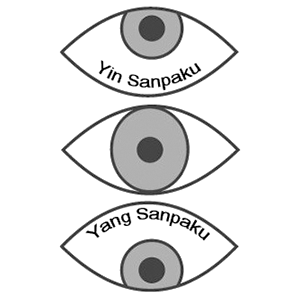
Sanpaku is a Japanese term that means ‘three whites’ and is generally referred to in English as ‘Sanpaku eyes.’ The term refers to the iris being rather small, so that it only covers about two-thirds or less of the vertical axis of the eye; e.g. delineate an eye into four portions; the iris would only occupy one portion of the divided four sections; thus leaving the other three in white, hence ‘three whites.’
When the bottom of the white part of the eye, known as the sclera, is visible it is referred to as ‘Yin Sanpaku’ in Chinese lore. According to the myth, it represents physical imbalance in the body and is claimed to be present in alcoholics, drug addicts and people who overconsume sugar or grain. Conversely when the upper sclera is visible this is called ‘Yang Sanpaku.’ This is said to be an indication of mental imbalance in people such as psychotics, murderers, and anyone rageful. Stress and fatigue may also be a cause.
read more »
Posted in Health, Philosophy, World |
Leave a Comment »
March 18, 2013
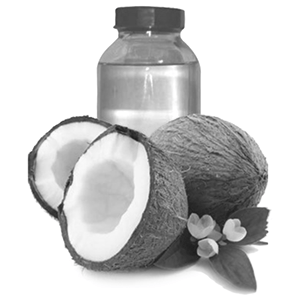
Coconut oil is an edible oil extracted from the kernel or meat of matured coconuts harvested from the coconut palm. Throughout the tropical world, it has provided the primary source of fat in the diets of millions of people for generations.
It has various applications in food, medicine, and industry. Coconut oil is very heat-stable, which makes it suited to methods of cooking at high temperatures like frying. Because of its stability, it is slow to oxidize and, thus, resistant to rancidity, lasting up to two years owing to the high saturated fat content.
read more »
Posted in Food, Health, World |
Leave a Comment »
March 15, 2013

Tachypsychia [tak-ee-sahy-kee-uh] is a neurological condition that alters the perception of time, usually induced by physical exertion, drug use, or a traumatic event. It is sometimes referred to by martial arts instructors and self defense experts as an ‘adrenaline dump.’
For someone affected by tachypsychia events appear to slow down and objects appear as moving in a speeding blur. It is believed that tachypsychia is induced by a combination of high levels of dopamine and norepinephrine, usually during periods of great physical stress and/or in violent confrontation. Tachypsychia is related to the ‘fight or flight’ response of the body to events considered life threatening.
read more »
Posted in Health, War |
Leave a Comment »
March 14, 2013

LifeStraw is a water filter that filters a maximum of 1000 liters of water, enough for one person for one year that was designed by the Swiss-based Vestergaard Frandsen for people living in developing nations and for distribution in humanitarian crisis. LifeStraw Family filters a maximum of 18,000 liters of water, providing safe drinking water for a family of five for up to three years. The LifeStraw is a plastic tube 310 millimeters long and 30 millimeters in diameter, Water that is drawn up through the straw first passes through hollow fibers that filter water particles down to 0.2 microns across, using only physical filtration methods and no chemicals.
LifeStraw has been generally praised for its effective and instant method of bacteria and protozoa removal and consumer acceptability. Paul Hetherington, of the charity WaterAid, has criticized the LifeStraw for being too expensive for the target market. He also points to other important problems linked with accessing the water in developing countries, which wait to be solved, but are not addressed by the device itself.
Posted in Food, Health, Technology |
Leave a Comment »
March 13, 2013

A dysfunctional family is a family in which conflict, misbehavior, and often child neglect or abuse on the part of individual parents occur continually and regularly, leading other members to accommodate such actions.
Children sometimes grow up in such families with the understanding that such an arrangement is normal. Dysfunctional families are primarily a result of co-dependent adults, and may also be affected by addictions, such as substance abuse (alcohol, drugs, etc.), or sometimes an untreated mental illness. Dysfunctional parents may emulate or over-correct from their own dysfunctional parents. In some cases, a ‘child-like’ parent will allow the dominant parent to abuse their children.
read more »
Posted in Health |
Leave a Comment »



 The Daily Omnivore