February 26, 2013
The Mediterranean diet is a modern nutritional recommendation inspired by the traditional dietary patterns of southern Italy, Greece, and Spain. The principal aspects of this diet include proportionally high consumption of olive oil, legumes, unrefined cereals, fruits and vegetables, moderate to high consumption of fish, moderate consumption of dairy products (mostly as cheese and yogurt), moderate wine consumption, and low consumption of meat and meat products.
Despite its name, this diet is not typical of all Mediterranean cuisine. In Northern Italy, for instance, lard and butter are commonly used in cooking, and olive oil is reserved for dressing salads and cooked vegetables. In North Africa, wine is traditionally avoided by Muslims. In both North Africa and the Middle East, sheep’s tail fat and rendered butter (samna) are the traditional staple fats, with some exceptions.
read more »
Posted in Food, Health, World |
Leave a Comment »
February 20, 2013
Sensory-specific satiety [suh-tahy-i-tee] is a sensory hedonic phenomenon that refers to the declining satisfaction generated by the consumption of a certain type of food, and the consequent renewal in appetite resulting from the exposure to a new flavor or food. The phenomenon was first described in 1956 by French physiologist Jacques Le Magnen, and the term was coined in 1981 by food scientist Barbara J. Rolls and neuroscientist Edmund T. Rolls. Its concept illustrates the role of physical stimuli in generating appetite and, more specifically, explains the significance of taste in relation to hunger. Besides conditioned satiety and alimentary alliesthesia, it is one of the three major phenomena of satiation.
This process is most commonly illustrated by a standard buffet. People are more likely to eat a larger amount of food at a buffet because the variety of foods and flavors presented renews a sense of appetite in the individual. A study conducted by Rolls and van Duijvenvoorde in 1984 verified this process by simulating a buffet-style meal. They fed participants four meals that included sausages, bread and butter, chocolate desert, and bananas. They then fed the participants four courses of one of these foods. The results revealed a 44% increase in overall food consumption when exposed to the meals with a variety of foods.
read more »
Posted in Food, Health |
Leave a Comment »
February 18, 2013

‘Private Guns, Public Health‘ is a 2004 non-fiction book by David Hemenway, an economist who has served as Professor of Health Policy at the Harvard School of Public Health as well as the Director of Harvard’s Injury Control Research Center. He argues that the widespread ownership of firearms in private hands in the U.S. promotes the spread of the ‘disease’ of gun violence, and he takes a collective interpretation of the Second Amendment while stating that increased regulations are absolutely necessary in the purposes of public safety. Hemenway makes the central case that ‘more guns in a community lead to more homicide.’
Hemenway interprets the issues of gun violence and gun politics in the U.S. through a public health lens, which he believes ’emphasizes prevention rather than fault-finding, blame, or revenge.’ He writes that he is not ‘anti-gun’ or ‘anti-gun owner’ any more than people who advocate for consumer safety measures in cars are ‘anti-cars.’ He sums the goal of the book up as ‘injury prevention.’
read more »
Posted in Health, Language, Politics |
Leave a Comment »
February 13, 2013
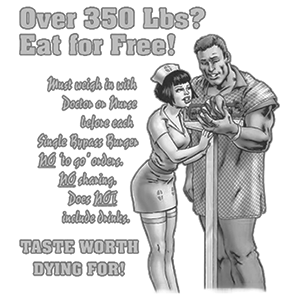
The Heart Attack Grill is an American hamburger restaurant in Las Vegas (formerly located in Chandler, Arizona). It has courted controversy by serving high-calorie menu items with deliberately provocative names coupled with waitresses in sexually provocative clothing. The establishment is a hospital theme restaurant: waitresses (‘nurses’) take orders (‘prescriptions’) from the customers (‘patients’).
A tag is wrapped on the patient’s wrist showing which foods they order and a ‘doctor’ examines the ‘patients’ with a stethoscope. The menu includes ‘Single,’ ‘Double,’ ‘Triple,’ and ‘Quadruple Bypass’ hamburgers, ranging from a half pound to two pounds of beef (up to about 8,000 calories), all-you-can-eat ‘Flatliner Fries’ (cooked in pure lard), beer and tequila (shots are served in four ounce novelty syringes.), ‘butter-fat Shakes,’ and soft drinks such as Jolt and Mexican-bottled Coca-Cola made with real sugar. Customers over 350 lb in weight eat for free if they weigh in with a doctor or nurse before each burger. Beverages and to-go orders are excluded and sharing food is also not allowed for the free food deal.
Posted in Food, Health, Humor |
1 Comment »
February 12, 2013
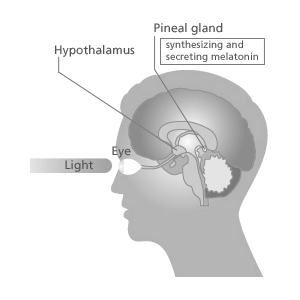
Melatonin [mel-uh-toh-nin] is a naturally occurring hormone found in animals, plants, and microbes. In animals, circulating levels of melatonin vary in a daily cycle, thereby allowing the entrainment of the circadian rhythms of several biological functions.
Many biological effects of melatonin are produced through activation of melatonin receptors, while others are due to its role as a pervasive and powerful antioxidant (a molecule that neutralizes free radicals), with a particular role in the protection of nuclear and mitochondrial DNA. Products containing melatonin have been available over-the-counter in the United States since the mid-1990s. In many other countries, the sale of this neurohormone is not permitted or requires a prescription.
read more »
Posted in Drugs, Health, Science |
3 Comments »
February 12, 2013
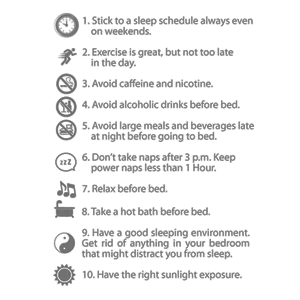
Dark therapy is an experimental treatment which involves eliminating all light in the subject’s environment, for a period of six to sixteen hours per day, in combination with a regular sleep schedule. Dark therapy manipulates circadian rhythms acting on hormones and neurotransmitters. It has been proposed recently (2005) to combine the chronobiological manipulations of light/dark and/or sleep/wake therapies with psychopharmacological medication.
In the words of Swiss neuroscientist Anna Wirz-Justice: ‘Light therapy has undergone widespread controlled randomized clinical trials, and wake therapy has been so widely studied over decades that the efficacy data are strong. These nonpharmaceutical, biologically based therapies are not only powerful adjuvants, but also antidepressants in their own right… [P]ilot studies suggest that the simple measure of promoting long nights (more rest, more sleep, no light) can stop rapid cycling in bipolar patients, or diminish manic symptoms — intriguing findings that require replication.
read more »
Posted in Health |
Leave a Comment »
February 12, 2013

Segmented sleep, also known as divided sleep, bimodal sleep pattern, or interrupted sleep, is a polyphasic or biphasic sleep pattern where two or more periods of sleep are punctuated by a period of wakefulness. Along with a nap (siesta) in the day, it has been argued that this is the natural pattern of human sleep. A case has been made that maintaining such a sleep pattern may be important in regulating stress.
Historian A. Roger Ekirch argues that before the Industrial Revolution, segmented sleep was the dominant form of human slumber in Western civilization. He draws evidence from documents from the ancient, medieval, and modern world, which he discovered over the course of fifteen years of research. Other historians, such as Craig Koslofsky, have endorsed Ekirch’s discovery and analysis.
read more »
Posted in Health, Science |
Leave a Comment »
February 7, 2013
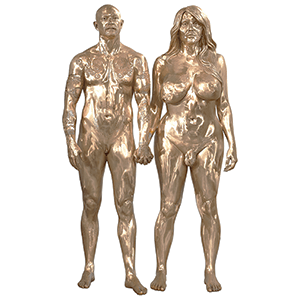
Transsexualism describes the condition in which an individual identifies with a gender inconsistent or not culturally associated with their assigned sex, i.e. in which a person’s assigned sex at birth conflicts with their psychological gender. A medical diagnosis can be made if a person experiences discomfort as a result of a desire to be a member of the opposite sex, or if a person experiences impaired functioning or distress as a result of that gender identification.
Transsexualism is stigmatized in many parts of the world but has become more widely known in Western culture in the mid to late 20th century, concurrently with the sexual revolution and the development of sex reassignment surgery (SRS). Discrimination or negative attitudes towards transsexualism often accompany certain religious beliefs or cultural values. However, some cultures have less difficulty integrating people who change gender roles, often holding them with high regard, such as the traditional role for ‘two-spirit’ people found among certain native American tribes.
read more »
Posted in Health, Politics, Sex |
Leave a Comment »
February 6, 2013
The God gene hypothesis proposes that a specific gene (VMAT2) predisposes humans towards spiritual or mystic experiences. The idea has been postulated by geneticist Dean Hamer, the director of the Gene Structure and Regulation Unit at the U.S. National Cancer Institute, and author of the 2005 book ‘The God Gene: How Faith is Hardwired into our Genes.’ The God gene hypothesis is based on a combination of behavioral genetic, neurobiological, and psychological studies.
The major arguments of the theory are: (1) spirituality can be quantified by psychometric measurements; (2) the underlying tendency to spirituality is partially heritable; (3) part of this heritability can be attributed to the gene VMAT2; (4) this gene acts by altering monoamine levels; and (5) spiritual individuals are favored by natural selection because they are provided with an innate sense of optimism, the latter producing positive effects at either a physical and psychological level.
read more »
Posted in Health, Philosophy, Science |
1 Comment »
February 6, 2013

‘Help at Any Cost: How the Troubled-Teen Industry Cons Parents and Hurts Kids’ is a 2006 non-fiction book by science journalist Maia Szalavitz analyzing the controversy surrounding the tough love behavior modification industry. Szalavitz focuses on four programs: Straight, Incorporated, a copy of the Straight Inc. program called KIDS, North Star wilderness boot camp, and the World Wide Association of Specialty Programs and Schools.
She discusses the background, history and methodology of the troubled teen industry, including techniques drawn from attack therapy, Erhard Seminars Training (est), and Synanon, all of which are highly controversial. She uses first-person accounts and court testimony in her research, and states that no evidence exists proving that these programs are effective. The book also includes advice for parents and an appendix with additional resources on how to get responsible help for teenagers.
read more »
Posted in Health, Money, Politics |
Leave a Comment »
February 5, 2013

Magical thinking is thinking that one’s thoughts by themselves can bring about effects in the world or that thinking something corresponds with doing it. It is a type of causal reasoning or causal fallacy that looks for meaningful relationships of grouped phenomena between acts and events. In religion, folk religion, and superstition, the correlation posited is between religious ritual, such as prayer, sacrifice, or the observance of a taboo, and an expected benefit or recompense.
In clinical psychology, magical thinking is a condition that causes the patient to experience irrational fear of performing certain acts or having certain thoughts because they assume a correlation with their acts and threatening calamities. ‘Quasi-magical thinking’ describes ‘cases in which people act as if they erroneously believe that their action influences the outcome, even though they do not really hold that belief.’
read more »
Posted in Health, Philosophy |
Leave a Comment »
February 3, 2013
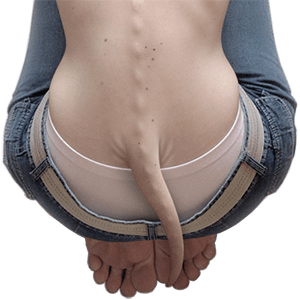
In the context of human evolution, human vestigiality [ve-stij-ee-al-i-tee] involves those characters (such as organs or behaviors) occurring in the human species that are considered vestigial—in other words having lost all or most of their original function through evolution. Although structures usually called ‘vestigial’ often appear functionless, a vestigial structure may retain lesser functions or develop minor new ones.
In some cases, structures once identified as vestigial simply had an unrecognized function. The examples of human vestigiality are numerous, including the anatomical (such as the human appendix, tailbone, wisdom teeth, and inside corner of the eye), the behavioral (goose bumps and infant grasp reflex), sensory (decreased olfaction), and molecular (junk DNA). Many human characteristics are also vestigial in other primates and related animals.
read more »
Posted in Health, Science |
Leave a Comment »


 The Daily Omnivore