September 17, 2012

The Culture of Narcissism: American Life in an Age of Diminishing Expectations is a book by the cultural historian Christopher Lasch, first published in 1979. It explores the roots and ramifications of the normalizing of pathological narcissism in 20th century American culture using psychological, cultural, artistic, and historical synthesis.
The book proposes that post-war, late-capitalist America, through the effects of ‘organized kindness’ on the traditional family structure, has produced a personality-type consistent with clinical definitions of ‘pathological narcissism.’ This pathology is not akin to everyday narcissism — a hedonistic egoism — but rather a very weak sense of self requiring constant external validation. For Lasch, ‘pathology represents a heightened version of normality.’
read more »
Posted in Health, Language, Money |
1 Comment »
September 17, 2012

In psychology, compensation is a strategy whereby one covers up, consciously or unconsciously, weaknesses, frustrations, desires, feelings of inadequacy or incompetence in one life area through the gratification or (drive towards) excellence in another area.
Compensation can cover up either real or imagined deficiencies and personal or physical inferiority. The compensation strategy, however does not truly address the source of this inferiority. Positive compensations may help one to overcome one’s difficulties. On the other hand, negative compensations do not, which results in a reinforced feeling of inferiority.
read more »
Posted in Health, Humor, Money |
1 Comment »
September 17, 2012

Superiority complex is a psychological defense mechanism in which a person’s feelings of superiority counter or conceal his or her feelings of inferiority. The term was coined by Alfred Adler, as part of his School of Individual psychology.
It was introduced in his series of books, including ‘Understanding Human Nature’ and ‘Social Interest’: ‘We should not be astonished if in the cases where we see an inferiority [feeling] complex we find a superiority complex more or less hidden. On the other hand, if we inquire into a superiority complex and study its continuity, we can always find a more or less hidden inferiority [feeling] complex.’
read more »
Posted in Health, Philosophy |
Leave a Comment »
September 15, 2012

Limerence [lim-rens] is a term coined in 1977 by American psychologist Dorothy Tennov to describe an involuntary state of mind which seems to result from a romantic attraction to another person combined with an overwhelming, obsessive need to have one’s feelings reciprocated. The concept grew out of Tennov’s mid-1960s work, when she interviewed over 500 people on the topic of love, and was first published in her 1979 book ‘Love and Limerence: The Experience of Being in Love.’
Though there are no established preconditions for limerence, there is a high rate of coincidence between limerence, depersonalization/derealization disorders, and dysfunctional attachment environments in childhood. This might suggest that sustained exposure to a psychologically unstable environment in childhood, or unhealthy/incomplete attachment between a child and their caretakers in early life, may make an individual more susceptible to limerence. There is also a statistically significant correlation between limerence and post traumatic stress disorder.
read more »
Posted in Health, Love, Sex |
1 Comment »
September 15, 2012

Erotomania [ih-roh-tuh-mey-nee-uh] is a type of delusion in which the affected person believes that another person, usually a stranger, high-status or famous person, is in love with him or her. The illness often occurs during psychosis, especially in patients with schizophrenia, delusional disorder, or bipolar mania.
During an erotomanic episode, the patient believes that a ‘secret admirer’ is declaring his or her affection to the patient, often by special glances, signals, telepathy, or messages through the media. Usually the patient then returns the perceived affection by means of letters, phone calls, gifts, and visits to the unwitting recipient. Even though these advances are unexpected and unwanted, any denial of affection by the object of this delusional love is dismissed by the patient as a ploy to conceal the forbidden love from the rest of the world.
read more »
Posted in Health, Love, Sex |
Leave a Comment »
September 15, 2012

Involuntary celibacy (colloquially ‘incel’) is chronic near-total or total absence in a person’s sexuality of intimate relationships or sexual intercourse that is occurring for reasons other than voluntary celibacy, asexuality, antisexualism, or sexual abstinence. It is the psycho-social opposite of having a sex life.
Incel people, despite being open to sexual intimacy and potential romance with another person and also making active, repeated efforts towards such an end, cannot cause any such end(s) to occur with any significant degree of regularity—or even at all.
read more »
Posted in Health, Love, Sex |
1 Comment »
September 14, 2012
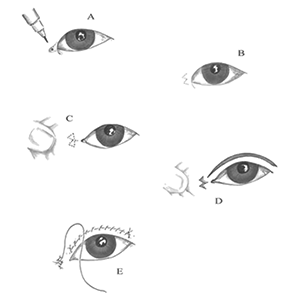
Asian blepharoplasty [blef-er-uh-plas-tee], also known as ‘double eyelid surgery,’ is a type of cosmetic surgery where the skin around the eye is reshaped. The purpose of the procedure is to create an upper eyelid with a crease (‘double eyelid’) from an eyelid that is naturally without a crease. The procedure has been a subject of controversy, and was described by opponents, such as author David Mura, as being ‘indoctrinated by white standards of beauty.’ New York based cosmetic surgeon Dr. Edward Kwak states that many patients who get the procedure done are ‘not trying to look white,’ but look like the many north and eastern Asians who naturally have an eyelid fold.
While there are some Asians with a double eyelid and some without, there is also a large variation in the crease position (double eyelid size) of the East Asian upper eyelid. The upper lid fold can range from 1 mm above the eyelash line to about 10 mm. Asian blepharoplasties have been reported to be the most common aesthetic procedure in Taiwan, South Korea, and other parts of East Asia. The procedure has been reported to have some risk of complications, but is generally quite safe if done by an expert plastic surgeon. A procedure to remove the epicanthal fold (near the tear duct) (i.e. an epicanthoplasty) is often performed in conjunction.
Posted in Health, Politics, World |
Leave a Comment »
September 14, 2012

A gyroscopic exercise tool is a device used to exercise the wrist as part of physical therapy or in order to build palm, forearm, and finger strength. It can also be used as a unique demonstration of some aspects of rotational dynamics. The non impact nature of the products combined with the soothing resistance of the spinning rotor have made them good rehabilitation devices for persons suffering from carpal tunnel syndrome, arthritis, RSI, bone breakage etc.
The device consists of a tennis ball-sized plastic or metal shell around a free-spinning mass, which is started with a short rip string. Once the gyroscope inside is going fast enough, a person holding the device can accelerate the spinning mass to high revolution rates by moving the wrist in a circular motion. The shell almost completely covers the mass inside, with only a small round opening allowing the gyroscope to be manually started.
Posted in Games, Health |
Leave a Comment »
September 13, 2012

Social intuitionism is a movement in moral psychology that arose in contrast to more heavily rationalist theories of morality, like that of Lawrence Kohlberg. Kohlberg developed a stage theory of moral reasoning that he claimed accounts for people’s moral behavior. More sophisticated reasoning, he asserted, should lead one to more consistent moral action, because one realizes that moral principles are prescriptive in nature and so demand action from the self. NYU psychologist Jonathan Haidt greatly de-emphasizes the role of reasoning in reaching moral conclusions.
Haidt asserts that moral judgment is primarily given rise to by intuition with reasoning playing a very marginalized role in most of our moral decision-making. Conscious thought-processes serves as a kind of post hoc justification of our decisions. His main evidence comes from studies of ‘moral dumbfounding’ where people have strong moral reactions but fail to establish any kind of rational principle to explain their reaction. He suggests that we have affective heuristics (mental shortcuts) which are unconscious that generate our reactions to morally charged situations and our moral behavior. He suggests that if people reason about morality, it is independent of or at least processes causing moral decisions to be made.
Posted in Health, Philosophy, Science |
2 Comments »
September 13, 2012
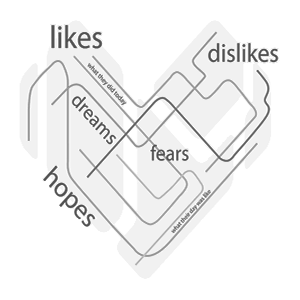
The concept of a lovemap was originated by psychologist and sexologist John Money to assist in a discussion of why people like what they enjoy sexually and erotically. According to Money, it is ‘a developmental representation or template in the mind and in the brain depicting the idealized lover and the idealized program of sexual and erotic activity projected in imagery or actually engaged in with that lover.’
According to Money, the word lovemap was first used in 1980 in an article entitled: ‘Pairbonding and Limerence.’ Money describes the formation of an individual’s lovemap as similar to the acquisition of a native language, in that it bears the mark of his or her own unique individuality, similar to an accent in a spoken language. A lovemap is usually quite specific as to details of the temperament, build, race, color, etc. of the ideal lover. Since its inception, the concept of ‘love maps,’ applied to interpersonal relationships, has found apt acceptance and is frequently referenced in love / relationship / sexual-evolution theory books; as for example in Wilson and McLaughlin’s 2001 ‘The Science of Love.’
read more »
Posted in Health, Love, Sex |
1 Comment »
September 11, 2012

Psilocybin [sil-uh-sahy-bin] is a naturally occurring psychedelic compound produced by more than 200 species of mushrooms, collectively known as psilocybin mushrooms. The most potent are members of the genus Psilocybe, such as P. azurescens, P. semilanceata, and P. cyanescens, but psilocybin has also been isolated from about a dozen other genera.
Psilocybin is quickly converted by the body to psilocin, which has mind-altering effects similar to those of LSD and mescaline. The effects generally include euphoria, visual and mental hallucinations, changes in perception, a distorted sense of time, and spiritual experiences, and can include possible adverse reactions such as nausea and panic attacks. Possession of psilocybin-containing mushrooms has been outlawed in most countries, and it has been classified as a scheduled drug by many national drug laws.
read more »
Posted in Drugs, Health, Philosophy |
1 Comment »
September 10, 2012

Kale is a form of cabbage, green or purple, in which the central leaves do not form a head. It is considered to be closer to wild cabbage than most domesticated forms. It is in the same family as broccoli, cauliflower, collard greens, and brussels sprouts..When baked or dehydrated, Kale takes on a consistency similar to that of a potato chip, and is a much healthier alternative to regular potato chips. The chips can be seasoned with salt or other spices.
Kale is very high in beta carotene, vitamin K, vitamin C, lutein, zeaxanthin, and reasonably rich in calcium. Kale, as with broccoli and other brassicas, contains sulforaphane (particularly when chopped or minced), a chemical with potent anti-cancer properties. Boiling decreases the level of sulforaphane; however, steaming, microwaving, or stir frying do not result in significant loss.
Posted in Food, Health |
Leave a Comment »


 The Daily Omnivore