February 7, 2012
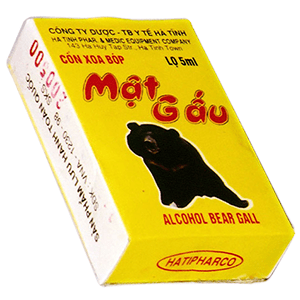
Bile bears or battery bears are Asiatic black bears kept in captivity in China and Vietnam to harvest bile, a digestive juice produced by the liver and stored in the gall bladder. When extracted, the bile is a valuable commodity for sale as an ingredient in traditional Chinese medicine (TCM).
The bears are also known as moon bears because of the cream-colored crescent moon shape on their chest. The Asiatic black bear, the one most commonly used on bear farms, is listed as vulnerable on the World Conservation Union’s (IUCN’s) Red List of Threatened Animals.
read more »
Posted in Health, Politics, World |
Leave a Comment »
February 3, 2012

Blue balls is a slang term for the condition of temporary fluid congestion (vasocongestion) in the testicles and prostate region, accompanied by acute testicular pain, or a prolonged dull aching pain emanating from the prostate, caused by prolonged and unsatisfied sexual arousal in the human male. The term is thought to have originated in the United States, first appearing in 1916. Some urologists call the condition ‘epididymal hypertension.’ The condition is not universally experienced by all males.
Although widely discussed, there has been scant information in the medical research literature until a 2000 article by Chalett and Nerenberg in ‘Pediatrics’ which found little formal data regarding the condition but concluded that ‘the treatment is sexual release, or perhaps straining to move a very heavy object—in essence doing a Valsalva maneuver,’ a moderately forceful attempted exhalation against a closed airway.
Posted in Health, Sex |
Leave a Comment »
February 3, 2012

Hyperthymesia [hi-per-thy-mee-zee-uh], also known as piking, is a condition in which the individual possesses a superior autobiographical memory, meaning they can recall the vast majority of personal experiences and events in their lives.
The term ‘hyperthymesia’ is derived from the Greek words thymesis, meaning ‘remembering’ and hyper meaning ‘excessive.’ As first described in a 2006 ‘Neurocase’ article, the two defining characteristics of hyperthymesia are ‘the person spends an abnormally large amount of time thinking about his or her personal past, and the person has an extraordinary capacity to recall specific events from his or her personal past.’
read more »
Posted in Health |
Leave a Comment »
February 2, 2012

Emotional blackmail is a term used to cover a central form of psychological manipulation – ‘the use of a system of threats and punishment on a person by someone close to them in an attempt to control their behavior.’ ‘Emotional blackmail… typically involves two people who have established a close personal or intimate relationship (mother and daughter, husband and wife, sister and sister, two close friends).’ When subjected to emotional blackmail, ‘we become the other’s emotional hostage.’ As French sociologist Jean Baurdrillard puts it, emotional blackmail is telling someone: ‘If you don’t give me that, you will be responsible for my breakdown.’
According to psychotherapist Susan Forward, who did much to popularize the term, ’emotional blackmail’ is a powerful form of manipulation in which blackmailers who are close to the victim threaten, either directly or indirectly, to punish them to get what they want. They may know the victim’s vulnerabilities and their deepest secrets. ‘Many of the people who use emotional blackmail are friends, colleagues and family members with whom we have close ties that we want to strengthen and salvage’ – parents, partners, bosses or lovers. No matter how much the blackmailer cares about the victim, they use their intimate knowledge to win compliance.
read more »
Posted in Health |
1 Comment »
February 2, 2012

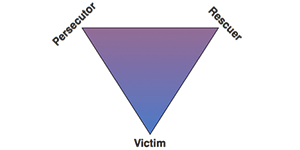
The term mind games refers to three main categories:
First, a largely conscious struggle for psychological one-upmanship, often employing passive–aggressive behavior to specifically demoralize or empower the thinking subject, making the aggressor look superior – ‘mind games or power games.’ Second, ‘The unconscious games played by innocent people engaged in duplex transactions (sending and receiving both explicit and unspoken messages) of which they are not fully aware, and which form the most important aspect of social life all over the world.’ And third, mental exercises designed to improve the functioning of mind and/or personality.
read more »
Posted in Games, Health |
Leave a Comment »
February 2, 2012

Transactional analysis, commonly known as TA to its adherents, is an integrative approach to the theory of psychology and psychotherapy. It is described as integrative because it has elements of psychoanalytic, humanist and cognitive approaches. TA was first developed by Canadian-born U.S. psychiatrist, Eric Berne, in the late 1950s.
As a theory of personality, TA describes how people are structured psychologically. It uses what is perhaps its best known model, the ego-state (Parent-Adult-Child) model, to do this. The same model helps explain how people function and express their personality in their behavior. It offers a theory for child development by explaining how adult patterns of life originated in childhood. This explanation is based on the idea of a ‘Life (or Childhood) Script’: the assumption that we continue to re-play childhood strategies, even when this results in pain or defeat. Thus it claims to offer a theory of psychopathology.
read more »
Posted in Health, Philosophy |
3 Comments »
February 2, 2012
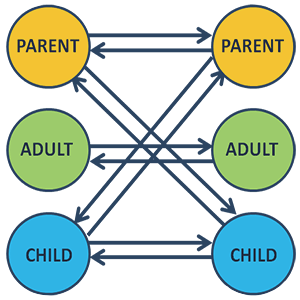
‘Games People Play: The Psychology of Human Relationships’ is a 1964 bestselling book by psychiatrist Eric Berne. Since its publication it has sold more than five million copies. The book describes both functional and dysfunctional social interactions.
In the first half of the book, Berne introduces transactional analysis as a way of interpreting social interactions. He describes three roles or ego states, known as the Parent, the Adult, and the Child, and postulates that many negative behaviors can be traced to switching or confusion of these roles. The book uses casual, often humorous phrases such as ‘See What You Made Me Do,’ ‘Why Don’t You — Yes But,’ and ‘Ain’t It Awful’ as a way of briefly describing each game. In reality, the ‘winner’ of a mind game is the person that returns to the Adult ego-state first.
read more »
Posted in Games, Health, Language |
1 Comment »
January 30, 2012

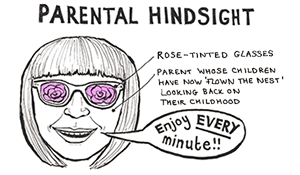
In psychology and cognitive science, the positivity effect is the tendency to make situational attributions about negative behaviors and dispositional attributions about positive behaviors for individuals one prefers.The term also refers to age differences in emotional attention and memory. Studies have found that older adults are more likely than younger adults to pay attention to positive than negative stimuli. In addition, compared with younger adults’ memories, older adults’ memories are more likely to consist of positive than negative information and more likely to be distorted in a positive direction. This version of the positivity effect was coined by Laura L. Carstensen’s research team.
Gender roles effect the behavior of the individual as well, and how they perceive others. Males tend to take more dominant roles, whereas females tend to be more nurturing and caregiving. Person-perception studies state that the characteristics of the perceiver are as important as the characteristics of the one being perceived. Since females are deemed to be the more nurturing and selfless by nature, they perceive others more favorably than men do. This is known as the ‘Female Positivity Effect.’ For example, women are more likely to be social and agreeable in a group task situation whereas the males are going to be mainly focused on the task at hand.
Posted in Health, Science |
1 Comment »
January 30, 2012
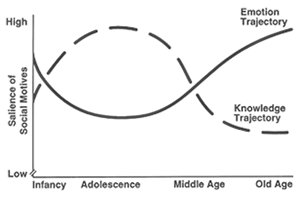
Socioemotional Selectivity Theory, developed by Stanford psychologist, Laura Carstensen, a life-span theory of motivation, maintains that as time horizons shrink, as they typically do with age, people become increasingly selective, investing greater resources in emotionally meaningful goals and activities.
According to the theory, motivational shifts also influence cognitive processing. Aging is associated with a relative preference for positive over negative information in attention and memory (called the ‘positivity effect’).
read more »
Posted in Death, Health, Science |
Leave a Comment »
January 19, 2012
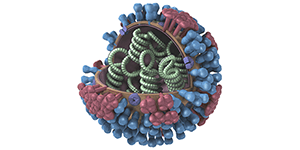
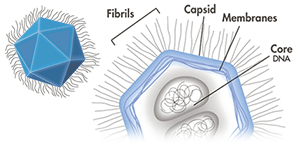
Non-cellular life is life that exists without a cellular structure. This term presumes the phylogenetic (evolutionary relatedness) scientific classification of viruses as lifeforms. Hypothesized artificial life, self-replicating machines, and most simple molecules capable of self-replication, such as crystals, are not usually considered living. Some biologists refer to wholly syncytial (containing multiple cell nuclei) organisms (such as many fungi) as ‘acellular’ because their bodies contain multiple nuclei which are not separated by cell walls, but they do contain cells. Viral self-assembly has implications for the study of the origin of life, as it lends further credence to the hypothesis that life could have started as self-assembling organic molecules.
The issue of life without cellular structure came again to the fore with the 2003 discovery that the large and complex Mimivirus can make some proteins. This discovery suggests that some viruses may have evolved from earlier forms that could produce proteins independent of a host cell. If so, there may at one time have been a viral domain of life. It is not clear that all small viruses have originated from more complex viruses by means of genome size reduction. A viral domain of life may only be relevant to certain large viruses such as nucleocytoplasmic large DNA viruses like the Mimivirus.
Posted in Health, Science |
Leave a Comment »
January 16, 2012

Wakamaru is a Japanese domestic robot made by Mitsubishi Heavy Industries, primarily intended to provide companionship to elderly and disabled people. The robot is yellow, 1m tall, and weighs 30 kilograms. It has two arms and its flat, circular base has a diameter of 45 cm. The first hundred went on sale in 2005, for USD $14,000. Wakamaru runs a Linux operating system on multiple microprocessors.
It can connect to the Internet, and has limited speech (in both male and female voices) and speech recognition abilities. Functions include reminding the user to take medicine on time, and calling for help if it suspects something is wrong. Wakamaru was the childhood name of Minamoto no Yoshitsune, a 12th century Japanese general.
Posted in Health, Technology, World |
1 Comment »
January 16, 2012

Paro is a therapeutic robot baby harp seal, intended to be very cute and to have a calming effect on and elicit emotional responses in patients of hospitals and nursing homes, similar to Animal-Assisted Therapy. It was designed by Takanori Shibata of the Intelligent System Research Institute of Japan’s AIST beginning in 1993. It was first exhibited to the public in late 2001 and handmade versions have been sold commercially since 2004.
Paro is based on harp seals Shibata saw in Canada, where he also recorded their cries that Paro uses. The robot has tactile sensors and responds to petting by moving its tail and opening and closing its eyes. It also responds to sounds and can learn a name. It can show emotions such as surprise, happiness and anger. It produces sounds similar to a real baby seal and (unlike a real baby seal) is active during the day and goes to sleep at night.
Posted in Health, Technology, World |
Leave a Comment »



 The Daily Omnivore