November 9, 2011
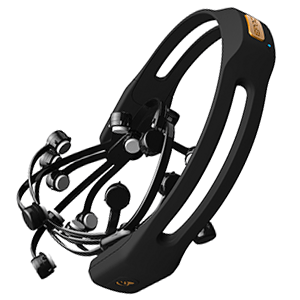
Thought identification refers to the empirically verified use of technology to, in some sense, read people’s minds. Recent research using Neuroimaging has provided some early demonstrations of the technology’s potential to recognize high-order patterns in the brain. In some cases, this provides meaningful (and controversial) information to investigators.
With brain scanning technology becoming increasingly accurate, experts predict important debates over how and when it should be used. One potential area of application is criminal law. Haynes explains that simply refusing to use brain scans on suspects also prevents the wrongly accused from proving their innocence.
read more »
Posted in Health, Politics, Technology |
1 Comment »
November 3, 2011

Movember is an annual, month-long event involving the growing of moustaches during the month of November. The event was conceived in 1999 by a group of Australian men from Adelaide. It is also known as ‘Novembeard.’ Since 2004, the Movember Foundation charity has run events to raise awareness and funds for men’s health issues, such as prostate cancer and depression, in Australia and New Zealand. In 2007, events were launched in Ireland, Canada, Cyprus, Czech Republic, Denmark, Greece, Spain, the United Kingdom, Israel, South Africa, and the United States.
The rules for participants as given on the official movember website are as follows: Once registered each bro must begin the 1st Movember with either a clean shaven face or facial growth dependant on your usual style. For the entire month of Movember each bro must shape grow and groom a moustache. There is to be no joining of the mo to the sideburns (that is considered a beard). There is to be no joining of the handlebars to your chin (that is considered a goatee). Each bro must conduct himself like a true country gentleman. Also shaving a beard to provide a ready-made mustache is cheating and not in the spirit of movember. A small growth of hair under the bottom lip (aka a tickler) is permitted as long as it is not connected to any other region.
Posted in Health, Humor |
Leave a Comment »
November 3, 2011

Lipstick is a cosmetic product containing pigments, oils, waxes, and emollients that applies color, texture, and protection to the lips. Ancient Mesopotamian women were possibly the first to wear lipstick. They crushed semi precious jewels and used them to decorate their lips.
Ancient Egyptians extracted purplish-red dye from seaweed, iodine, and toxic bromine, which resulted in serious illness. Cleopatra had her lipstick made from crushed carmine beetles, which gave a deep red pigment, and ants for a base. Lipsticks with shimmering effects were initially made using a pearlescent substance found in fish scales.
read more »
Posted in Health, Sex |
Leave a Comment »
November 3, 2011

Norepinephrine [nawr-ep-uh-nef-rin] is a hormone and a neurotransmitter. Areas of the body that produce or are affected by norepinephrine are described as noradrenergic. The terms noradrenaline (from the Latin) and norepinephrine (derived from Greek) are interchangeable, with noradrenaline the common name in most parts of the world. However, to avoid confusion and achieve consistency medical authorities have promoted norepinephrine as the favored nomenclature.
One of the most important functions of norepinephrine is its role as the neurotransmitter released from the sympathetic neurons (part of the subconscious, autonomic nervous system) affecting the heart. An increase in norepinephrine from the sympathetic nervous system increases the rate of contractions. As a stress hormone, norepinephrine affects parts of the brain, such as the amygdala, where attention and responses are controlled.
read more »
Posted in Drugs, Health, Science |
Leave a Comment »
November 3, 2011

GABA (Gamma-Aminobutyric acid) is a neurotransmitter in the central nervous system of mammals. Its role changes from excitatory to inhibitory as the brain develops into adulthood. Normally, when a neuron receives an impulse, it will make the signal stronger, an inhibiting neurotransmitter prevents the cell from receiving the impulse, and the signal as a whole is weakened. In mammals, GABA regulates the extent to which neurons in the central nervous system will be stimulated.
It plays a role in regulating neuronal excitability throughout the nervous system. In humans, GABA is also directly responsible for the regulation of muscle tone. Even though chemically it is an amino acid, GABA is rarely referred to as such in the scientific or medical communities. The term ‘amino acid,’ used without a qualifier, refers to the alpha amino acids, which GABA is not. GABA is also not incorporated into proteins.
read more »
Posted in Drugs, Health, Science |
Leave a Comment »
November 1, 2011
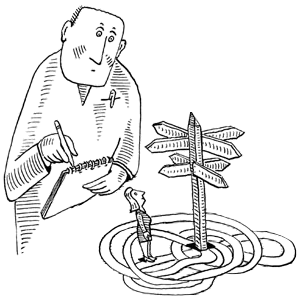
Developmental Topographical Disorientation, also known as DTD, is caused by the inability to segregate landmarks and derive navigational information from them, navigate through a non-verbal process, or generate cognitive maps. This is a newly discovered cognitive disorder in which patients who do not have brain structural abnormalities, such as lesions, and exhibit symptoms since childhood. Not to be confused with healthy individuals who have a poor sense of direction, DTD patients get lost in very familiar surroundings, such as their house or neighborhood, daily. This disorder could stem from a lack of experience in navigation during development and could present in different degrees of severity.
A woman in Vancouver, referred to as Pt1, presented with topographical disorientation in absence of any structural lesions. Despite normal cognitive development, she has never been able to orient with in the environment. Further testing showed that she was able to follow route based, landmark based, and verbal directions to reach a destination in an urban environment. In map based testing, the patient was unable to determine the shortest path between two locations on a map, but was able to follow a route traced on a map. The patient was unable to draw a detailed schematic of her house. Although the number of rooms and their locations were accurate, the spatial scaling was distorted.
Posted in Health, Language |
Leave a Comment »
October 31, 2011
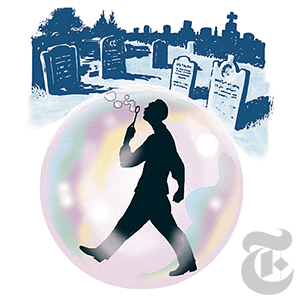
Stumbling on Happiness is a 2006 non-fiction book by Daniel Gilbert, the central thesis of which is that, through perception and cognitive biases, people imagine the future poorly, in particular what will make them happy. He argues that imagination fails in three ways: Imagination tends to add and remove details, but people do not realize that key details may be fabricated or missing from the imagined scenario. Imagined futures (and pasts) are more like the present than they actually will be (or were). And imagination fails to realize that things will feel differently once they actually happen — most notably, the psychological immune system will make bad things feel not so bad as they are imagined to feel.
The advice Gilbert offers is to use other people’s experiences to predict the future, instead of imagining it. It is surprising how similar people are in much of their experiences, he says. He does not expect too many people to heed this advice, as our culture, accompanied by various thinking tendencies, is against this method of decision making. Also, Gilbert covers the topic of ‘filling in’or the frequent use of patterns, by the mind, to connect events which we do actually recall with other events we expect or anticipate fit into the expected experience. This ‘filling in’ is also used by our eyes and optic nerves to remove our blind spot or scotoma, and instead substitute what our mind expects to be present in the blind spot.
Posted in Health, Language |
Leave a Comment »
October 29, 2011
Mickey Hart (b. 1943), real name Michael Steven Hartman, is an American percussionist and musicologist. He is best known as one of the two drummers of the rock band the Grateful Dead. He and fellow Dead drummer Bill Kreutzmann earned the nickname ‘the rhythm devils.’ Before joining the Grateful Dead, Hart and his father, Leonard Hart, a champion rudimental drummer, owned and operated Hart Music, selling drums and musical instruments in San Carlos, California. Hart joined the Grateful Dead in 1967, and left in 1971 when he extricated himself from the band, due to conflict between band management and Mickey’s father. During his sabbatical, in 1972, he recorded the album ‘Rolling Thunder.’ He returned to the Dead in 1974, and remained with the group until their official dissolution in 1995. Collaboration with the remaining members of the Grateful Dead continues, under the band name The Dead.
Alongside his work with the Grateful Dead, Mickey Hart has flourished as a solo artist, percussionist, and the author of several books. In these endeavors he has pursued a lifelong interest in ethnomusicology and in world music. His travels and his interest in all things percussion-related led him to collect percussion instruments, and to collaborate with percussion masters the world over.
read more »
Posted in Art, Health, World |
1 Comment »
October 29, 2011

Wake therapy is a form of sleep deprivation used as a treatment for depression. The subject is woken at 1AM and stays awake all morning, and the next full day.
While sleepy, patients find that their depression vanishes, until they sleep again. Combining this with bright light therapy make the beneficial effects last longer than one day.
Posted in Health |
1 Comment »
October 29, 2011

Lifestyle medicine is defined as the application of environmental, behavioral, medical and motivational principles to the management of lifestyle-related health problems in a clinical setting. It is an established branch of medicine which discusses lifestyle’s contribution to health in addition to non-pharmacological intervention in the treatment and management of lifestyle diseases such as exercise in diabetes mellitus and weight management in obesity. It should not be confused with lifestyle drugs (medications which treat non-life threatening and non-painful conditions such as baldness, impotence, wrinkles, or acne).
Lifestyle medicine is often prescribed in conjunction with a typical medicine approach of pharmacotherapy. For example, diabetic patients who may be on medication to help control the blood glucose levels in the short term might also be prescribed a lifestyle intervention of a healthy diet and exercise to assist in the long term management of their pathology. In some cases lifestyle interventions are more effective when augmented with appropriate pharmacotherapy, as with tobacco use where medications such as buproprion may be prescribed to assist the patient to quit smoking and adopt a healthy lifestyle change.
Posted in Food, Health |
Leave a Comment »
October 29, 2011

The Walkman Effect refers to the way music listened to via headphones allows the user to gain more control over their environment. It was coined by International Research Center for Japanese Studies Professor Shuhei Hosokawa in an article of the same name published in the journal ‘Popular Music’ in 1984. While the term was named after the dominant portable music technology of the time, the Sony Walkman, it applies to all such devices and has been cited numerous times to refer to more current products such as the Apple iPod.
When Sony released the first Walkmans, they featured two headphone jacks and a ‘talk button.’ When pressed, this button activated a microphone and lowered the volume to enable those listening to have a conversation without removing their headphones. Sony Chairman Akio Morita added these features to the design for fear the technology would be isolating. Though he ‘thought it would be considered rude for one person to be listening to his music in isolation,’ however, people bought their own units rather than share and these features were removed for later models.
read more »
Posted in Health, Technology |
1 Comment »
October 28, 2011
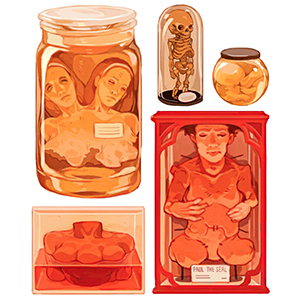
A freak show is an exhibition of biological rarities, referred to as ‘freaks of nature.’ Typical features would be physically unusual humans, such as those uncommonly large or small, those with both male and female secondary sexual characteristics, people with other extraordinary diseases and conditions, and performances that are expected to be shocking to the viewers. Heavily tattooed or pierced people have sometimes been seen in freak shows, as have attention-getting physical performers such as fire-eating and sword-swallowing acts.
Freak shows were popular in the United States from the mid 19th to mid 20th centuries, and were often, but not always, associated with circuses and carnivals. Some shows also exhibited deformed animals (such as two-headed cows, one-eyed pigs, and four-horned goats) and famous hoaxes, or simply ‘science gone wrong’ exhibits (such as deformed babies).
read more »
Posted in Health, Money |
1 Comment »


 The Daily Omnivore