September 25, 2011

A standing desk is both an antique desk and a modern desk form conceived for writing and/or reading while standing up or while sitting on a high stool. The term stand-up or stand up desk is also used. During the 18th and 19th centuries, standing desks were popular in the homes and offices of the rich. While most modern desks are 30 inches (76 cm.) high and most antique desks 29 inches high (73.7 cm), there is no such average for standing desks.
Users of a ‘sitting desk’ are fairly immobile so it is relatively easy to adjust the height of a seat to compensate for variations in the individual height of the users. Users of a standing desk move around a bit more, so it is not practical to have them stand on a small pedestal or some other object. Thus, standing desks tend to vary greatly in height.
read more »
Posted in Health, Money, Technology |
2 Comments »
September 20, 2011

Bless you, or God bless you, is a common English expression addressed to a person after they sneeze. In non-English-speaking cultures, words referencing good health or a long life are often used instead of ‘bless you,’ though some also use references to God. English speakers also respond to sneezing with the German word Gesundheit, which means ‘health.’
The origin of the custom and its original purpose is unknown. Several possible origins are commonly given. The practice of blessing someone who sneezes, dating as far back as at least 77 CE, however, is far older than most specific explanations can account for.
read more »
Posted in Health, Language, Philosophy |
1 Comment »
September 13, 2011

Steatopygia [stee-at-uh-pahy-jee-uh] is a high degree of fat accumulation in and around the buttocks. The deposit of fat is not confined to the gluteal regions, but extends to the outside and front of the thighs, forming a thick layer reaching sometimes to the knee. This development constitutes a genetic characteristic of the Khoisan, an African ethnic group, where it is regarded as a sign of feminine beauty: it begins in infancy and is fully developed by the time of the first pregnancy. It is often accompanied by the formation known as elongated labia (labia minora that may extend as much as 4 inches outside the vulva). This was historically known as the ‘hottentot apron’ — now deemed a very offensive term.
It has been suggested that this feature was once more widespread. Paleolithic Venus figurines, sometimes referred to as ‘steatopygian Venus’ figures, discovered from Europe to Siberia and presenting a remarkable development of the thighs, and even the prolongation of the labia minora, have been used to support this theory. Whether these were intended to be lifelike or exaggeratory, even idealistic, is unclear. However, these figures do not strictly qualify as steatopygian, since they exhibit an angle of approximately 120 degrees between the back and the buttocks, while steatopygia is diagnosed at an angle of about 90 degrees only.
Posted in Health, Sex, World |
Leave a Comment »
September 12, 2011


Processed cheese is a food product made from normal cheese and sometimes other unfermented dairy ingredients, plus emulsifiers, extra salt, food colorings, or whey. Many flavors, colors, and textures of processed cheese exist. In the United States, the most recognizable variety of processed cheese is sold under the name American cheese, although this name also has other meanings. The Laughing Cow is an example of processed cheese.
Although processed cheese was first invented in 1911 by Walter Gerber of Thun, Switzerland, it was James L. Kraft who first applied for an American patent for his method in 1916. Kraft Foods also created the first commercially available sliced processed cheese, which was introduced in 1950. This form of sliced cheese and its derivatives have become commonplace in the United States, most notably used for cheeseburgers and grilled cheese sandwiches.
read more »
Posted in Food, Health, Money |
Leave a Comment »
September 11, 2011
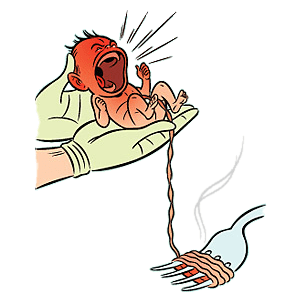
Placentophagy [pluh-sen-tof-uh-jee] is the act of mammals eating the placenta of their young after childbirth. The placenta contains high levels of prostaglandin which stimulates shrinking or return to a former size of the uterus. The placenta also contains small amounts of oxytocin which eases birth stress and causes the smooth muscles around the mammary cells to contract and eject milk. Although the placenta is revered in many cultures, very few customarily eat the placenta after the newborn’s birth. Those who advocate placentophagy in humans believe that eating the placenta prevents postpartum depression and other pregnancy complications. The Royal College of Obstetricians and Gynaecologists states that there is no medical reason to eat the placenta: ‘Animals eat their placenta to get nutrition – but when people are already well-nourished, there is no benefit, there is no reason to do it.’ Human placenta has also been an ingredient in some traditional Chinese medicines.
There is a school of thought that holds that placentophagy naturally occurred to hide any trace of childbirth from predators in the wild, though the fact that amniotic fluid is not similarly ingested by the mother seems to discredit this theory. Most placental mammals participate in placentophagy, including, surprisingly, herbivorous ones. Whales and seals are exceptions to mammalian placentophagy, as is the camel. Marsupials (pouched mammals) resorb rather than deliver the placenta, and therefore cannot engage in placentophagia; they do, however, vigorously lick birth fluids as they are excreted.
Posted in Food, Health |
1 Comment »
September 11, 2011

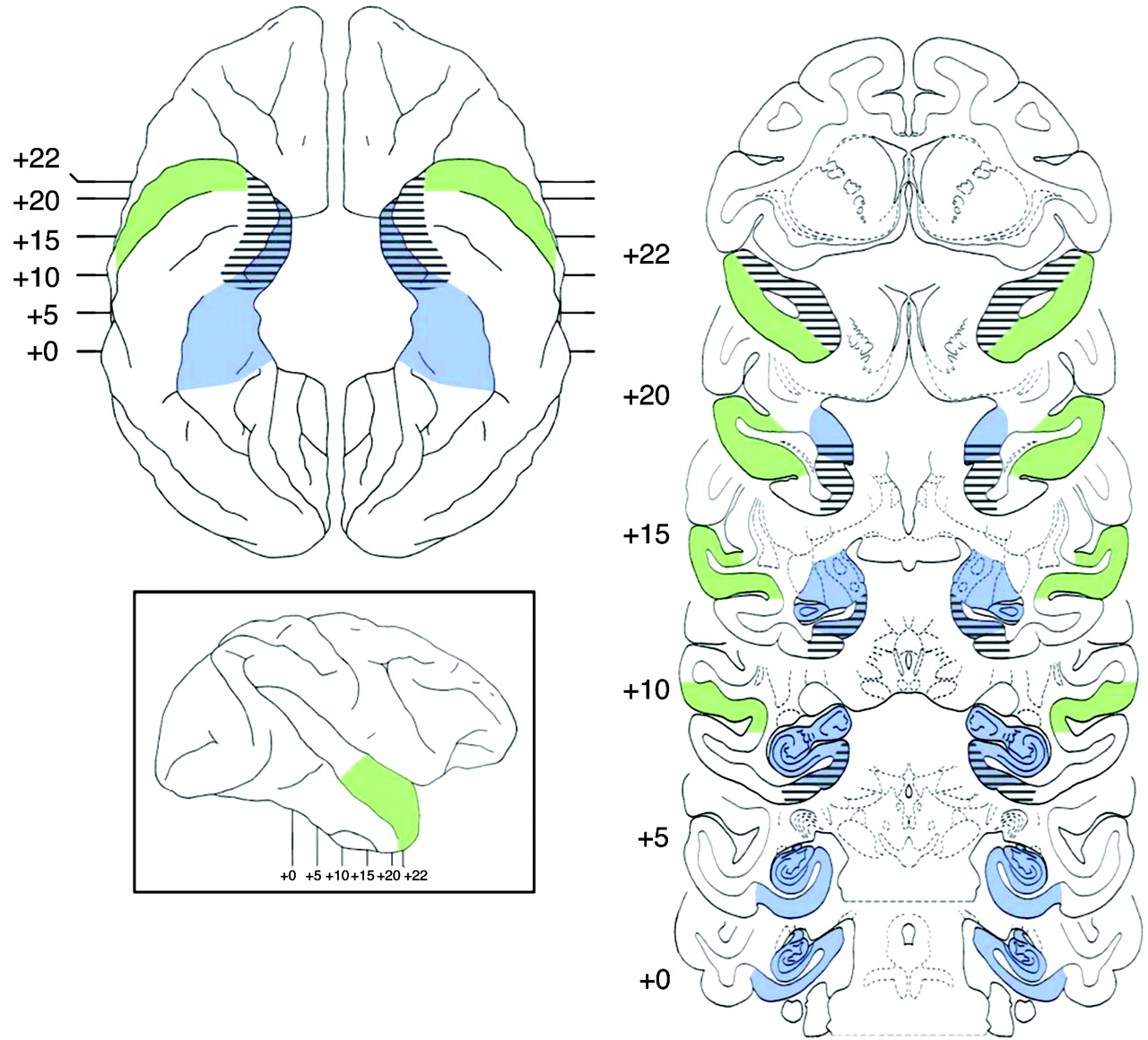
Engrams [en-gram] are a hypothetical means by which memory traces are stored as biophysical or biochemical changes in the brain (and other neural tissue) in response to external stimuli. They are also sometimes thought of as a neural network or fragment of memory, sometimes using a hologram analogy to describe its action in light of results showing that memory appears not to be localized in the brain. The existence of engrams is posited by some scientific theories to explain the persistence of memory and how memories are stored in the brain. The existence of neurologically defined engrams is not significantly disputed, though their exact mechanism and location has been a focus of persistent research for many decades.
The term was coined by the little-known but influential German evolutionary biologist Richard Semon. Overall, the mechanisms of memory are poorly understood. Such brain parts as the cerebellum, striatum, cerebral cortex, hippocampus, and amygdala are thought to play an important role in memory. For example, the hippocampus is believed to be involved in spatial and declarative learning, as well as consolidating short-term into long-term memory.
read more »
Posted in Health, Language, Science |
Leave a Comment »
September 9, 2011

Experiential avoidance (EA) has been broadly defined as attempts to avoid thoughts, feelings, memories, physical sensations, and other internal experiences—even when doing so creates harm in the long-run. The process of EA is thought to be maintained through negative reinforcement—that is, short-term relief of discomfort is achieved through avoidance, thereby increasing the likelihood that the behavior will persist.
Importantly, the current conceptualization of EA suggests that it is not negative thoughts, emotions, and sensations that are problematic, but how one responds to them that can cause difficulties. In particular, a habitual and persistent unwillingness to experience uncomfortable thoughts and feelings (and the associated avoidance and inhibition of these experiences) is thought to be linked to a wide range of problems.
read more »
Posted in Health, Language, Science |
Leave a Comment »
September 9, 2011

Malingering [muh-ling-ger-ing] is a medical term that refers to fabricating or exaggerating the symptoms of mental or physical disorders for a variety of ‘secondary gain’ motives, which may include financial compensation (often tied to fraud); avoiding school, work or military service; obtaining drugs; getting lighter criminal sentences; or simply to attract attention or sympathy. A common form of malingering in legal procedure prosecution is sometimes referred to as fabricated mental illness or feigned madness.
Malingering remains separate from somatization disorders and factitious disorders in which primary and secondary gain, such as the relief of anxiety or the assumption of the ‘patient role,’ is the goal. The symptoms most commonly feigned include those associated with mild head injury, fibromyalgia, chronic fatigue syndrome, and chronic pain. Failure to detect actual cases of malingering imposes a substantial economic burden on the health care system, and false attribution of malingering imposes a substantial burden of suffering on a significant proportion of the patient population.
read more »
Posted in Health, Politics, War |
1 Comment »
September 9, 2011
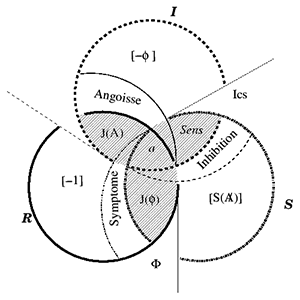
In Freudian psychology, the pleasure principle is the psychoanalytic concept describing people seeking pleasure and avoiding suffering (pain) in order to satisfy their biological and psychological needs. Furthermore, the counterpart concept, the ‘reality principle,’ describes people choosing to defer gratification of a desire when circumstantial reality disallows its immediate gratification. In infancy and early childhood, the Id (one of the three components of Freud’s model of the psyche) rules behavior by obeying only the pleasure principle. Maturity is learning to endure the pain of deferred gratification, when reality requires it; thus, the psychoanalitic Sigmund Freud proposes that ‘an ego thus educated has become ‘reasonable’; it no longer lets itself be governed by the pleasure principle, but obeys the reality principle, which also, at bottom, seeks to obtain pleasure, but pleasure which is assured through taking account of reality, even though it is pleasure postponed and diminished.’
Sigmund Freud discusses this idea, pleasure principle, and its limits in more details in his book, ‘Beyond the Pleasure Principle,’ published in 1921. In his discussion of the opposition between Eros, the life instinct, and the Thanatos, the death instinct, he examines the role of the repetition compulsion caused by the pleasure principle and of the sexual instincts.
Posted in Health, Language, Science |
Leave a Comment »
September 9, 2011

Laziness (also called indolence) is a disinclination to activity or exertion despite having the ability to do so. It is often used as a pejorative; related terms for a person seen to be lazy include couch potato, slacker, and in Australian slang, bludger.
Despite Sigmund Freud’s discussion of the pleasure principle, American psychologist Leonard Carmichael notes that ‘laziness is not a word that appears in the table of contents of most technical books on psychology… It is a guilty secret of modern psychology that more is understood about the motivation of thirsty rats and hungry pecking pigeons as they press levers or hit targets than is known about the way in which poets make themselves write poems or scientists force themselves into the laboratory when the good golfing days of spring arrive.’
read more »
Posted in Health, Language, Money |
Leave a Comment »
September 9, 2011

Acedia [uh-see-dee-uh] (Greek: ‘negligence’) describes a state of listlessness or torpor, of not caring or not being concerned with one’s position or condition in the world. It can lead to a state of being unable to perform one’s duties in life. Its spiritual overtones make it related to but distinct from depression. Acedia was originally noted as a problem among monks and other ascetics who maintained a solitary life. In the medieval Latin tradition of the seven deadly sins, acedia has generally been folded into the sin of sloth.
Moral theologians, intellectual historians and cultural critics have variously construed acedia as the ancient depiction of a variety of psychological states, behaviors or existential conditions: primarily laziness, ennui or boredom. The demon of acedia manifests itself in a range of psychological and somatic symptoms that is far broader and more complex than the familiar tradition in the West.
read more »
Posted in Health, Language, Philosophy |
Leave a Comment »
September 6, 2011

Tanning addiction is a rare syndrome where an individual appears to have a physical and/or psychological addiction to sunbathing or the use of tanning beds.In 2005, a group of dermatologists published a study showing that frequent tanners experience a loss of control over their tanning schedule, displaying a pattern of addiction similar to smokers and alcoholics. Biochemical evidence indicates that tanning addicts are addicted to an opioid release experienced during tanning. When frequent tanners took an endorphin blocker in a 2006 study, they experienced severe withdrawal symptoms, while infrequent tanners experienced no withdrawal symptoms under the same conditions.
Although the syndrome has not been officially described by the medical community, it may include the following reported symptoms: intense anxiety if a session of tanning is missed, competition among peers to see which can get the darkest tan, and chronic frustration about the color of one’s skin, with the affected person being convinced his or her complexion is constantly lighter than it actually is.
read more »
Posted in Health, Language |
1 Comment »