July 24, 2011

God Helmet refers to an experimental apparatus used in neuroscience, primarily in the field of neurotheology (the study of correlations of neural phenomena with subjective experiences of spirituality). Originally called the ‘Koren helmet’ after its inventor Stanley Koren, it was conceived to study creativity and the effects of subtle stimulation of the temporal lobes. Reports by participants of a ‘sensed presence’ brought public attention to the device. The apparatus, placed on the head of an experimental subject, generates weak fluctuating (i.e. ‘complex’) magnetic fields. These fields are approximately as strong as those generated by a land line telephone handset or an ordinary hair dryer, but far weaker than that of an ordinary fridge magnet.
Michael Persinger, a Canadian neuroscientist, has published extensively about the effects on the human brain of the ‘complex’ magnetic fields generated by the God helmet and similar devices. Many subjects have reported ‘mystical experiences and altered states’ while wearing the God Helmet.
read more »
Posted in Health, Philosophy, Technology |
1 Comment »
July 15, 2011


Near-death studies is a school of psychology and psychiatry that studies the phenomenology and after-effects of a Near-death experience (NDE). The NDEs are reported by people who have come close to dying in a medical or non-medical setting.
Some researchers try to study the postulated role of physiological, psychological and transcendental factors associated with the NDE. These factors come together to form an overall pattern when numerous NDE reports are considered together. It is this pattern that is one of the main objects of interest for Near-Death studies.
read more »
Posted in Death, Health, Science |
1 Comment »
July 14, 2011
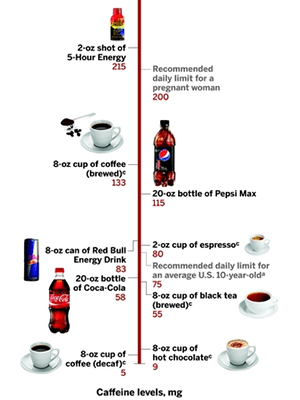
Energy shots are a specialized kind of energy drink. Sold in 59ml (2 fluid oz.) bottles, energy shots normally contain the same amount of caffeine, vitamins or other functional ingredients as their larger siblings, and therefore they may be considered concentrated forms of energy drinks. Also similar to energy drinks, energy shots contain caffeine, vitamins, and herbs such as guarana, ginseng or ginkgo biloba, taurine, maltodextrin, inositol, carnitine, creatine or glucuronolactone. Most energy shots contain sugar; however, many brands also offer artificially-sweetened ‘diet’ versions. The central ingredient in most energy shots is caffeine, the same stimulant found in coffee or tea. The average 50ml energy shot has about 80 mg of caffeine. This is approximately equivalent to a cup of coffee.
The idea of energy shots started decades ago in the Far East, notably in Japan, where small ‘tonics’ became very popular among consumers; they were highly concentrated and without carbonation. In 2004 the first suppliers, like 5-Hour Energy, Nitro2Go, and ZipFizz, took up the idea and launched these energy shots in the US, opening up a sub-segment in the energy drink market. Although originally marketed in the US, energy shots are becoming more popular in other parts of the world, like Europe, Asia and Australia.
Posted in Drugs, Health, Money |
Leave a Comment »
July 14, 2011
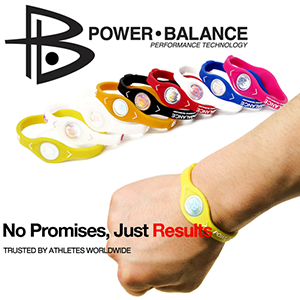
Hologram therapy is the pseudoscientific practice of adorning oneself with hologram jewelry for enhancement of athletic performance. Merchants claim it to be a method in alternative holistic medicine that can improve general physical fitness and athletic prowess. It centers around wearing plastic holograms purported to resonate with frequencies that react positively with the putative energy field of the human body.
Promoters borrow from concepts in crystal healing, vibrational medicine, energy medicine, and physics, but provide a sparse and disjointed scientific explanation. The holograms are printed on stickers, plastic wristbands, and pendants. Promoters rely heavily on the ritualistic superstition that often characterizes athletes.
Posted in Health, Money |
Leave a Comment »
July 13, 2011


A form constant is one of several geometric patterns which are recurringly observed during hallucinations and altered states of consciousness. In 1926, psychologist Heinrich Klüver systematically studied the effects of mescaline on the subjective experiences of its users. In addition to producing hallucinations characterized by bright, ‘highly saturated’ colors and vivid imagery, Klüver noticed that mescaline produced recurring geometric patterns in different users. He called these patterns ‘form constants’ and categorized four types: lattices (including honeycombs, checkerboards, and triangles), cobwebs, tunnels, and spirals.
Klüver’s form constants have appeared in other drug-induced and naturally-occurring hallucinations, suggesting a similar physiological process underlying hallucinations with different triggers. Klüver’s form constants also appear in near-death experiences and sensory experiences of those with synesthesia. Other triggers include psychological stress, threshold consciousness(hypnagogia), insulin hypoglycemia, the delirium of fever, epilepsy, psychotic episodes, advanced syphilis, sensory deprivation, photostimulation, electrical stimulation, crystal gazing, migraine headaches, dizziness and a variety of drug-induced intoxications. These shapes may appear on their own or with eyes shut in the form of phosphenes, especially when exerting pressure against the closed eyelid.
Posted in Drugs, Health, Language |
Leave a Comment »
July 12, 2011

Purple drank is a slang term for a recreational drug popular in the hip hop community in the southern United States, originating in Houston, Texas. Its main ingredient is prescription-strength cough syrup containing codeine and promethazine. Cough syrup is typically mixed with ingredients such as Sprite soft drink or Mountain Dew and pieces of Jolly Rancher candy. The purplish hue of purple drank comes from dyes in the cough syrup. Producer DJ Screw popularized the concoction in the 1990s, which is widely attributed as a source of inspiration for the ‘chopped and screwed’ style of hip hop music. However, musician Big Hawk claims it was consumed as early as the 1960s and 1970s.
DJ Screw died of a codeine-promethazine-alcohol overdose in 2000. Purple drank is confirmed or suspected to have caused the deaths of several prominent users. Respiratory depression is a potentially serious or fatal adverse drug reaction associated with the use of codeine, but mainly the danger lies in the much more potent and CNS-depressing phenothiazine-related antihistamine promethazine.
Posted in Drugs, Health, Language |
Leave a Comment »
July 12, 2011

A hug machine, or squeeze box, is a deep-pressure device designed to calm hypersensitive persons, usually individuals with autism spectrum disorders. The therapeutic, stress-relieving device was invented by professor of animal science Temple Grandin in 1965.
Autism and autism-spectrum disorders have profound effects upon both social interactions and sensitivity to sensory stimulation in persons with such conditions, often making it uncomfortable or impractical for them to turn to other human beings for comfort. Grandin solved this by designing the hug machine so both she and others could turn to it for sensory relief, whenever needed or simply desired.
read more »
Posted in Health, Technology |
2 Comments »
July 12, 2011

Bionic contact lenses are being developed to provide a virtual display that could have a variety of uses from assisting the visually impaired to the video game industry. The lenses require organic materials that are biologically safe and also use inorganic material for the electronic circuits. The electronic circuits are built from a layer of metal a few nanometres thick. The light-emitting diodes are one third of a millimetre across. A grey powder is sprinkled onto the lens. Then a technique called microfabrication or ‘self-assembly’ is used to shape each tiny component. Capillary forces pull the pieces into their final position.
Wireless communication, radio frequency power transmission and solar cells are expected in future developments. The prototype does not light up or display information; however, it is proof that it is possible to create a biologically safe electronic lens that does not obstruct a person’s view. Engineers have tested the finished lenses on rabbits.
Posted in Health, Technology |
Leave a Comment »
July 12, 2011
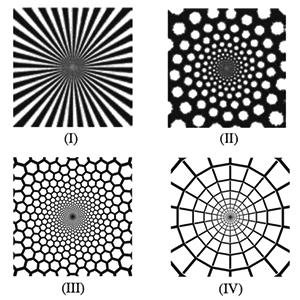
A phosphene [fos-feen] is an entoptic (visual) phenomenon characterized by the experience of seeing light without light actually entering the eye. The word phosphene comes from the Greek words ‘phos’ (‘light’) and ‘phainein’ (‘to show’). Phosphenes are flashes of light, often associated with optic neuritis, induced by movement or sound.
They can be directly induced by mechanical, electrical, or magnetic stimulation of the retina or visual cortex as well as by random firing of cells in the visual system. Phosphenes have also been reported by meditators (commonly called nimitta); people who go for long periods without visual stimulation (also known as the prisoner’s cinema); or those who are using psychedelic drugs.
read more »
Posted in Drugs, Health, Language |
1 Comment »
July 11, 2011


Addiction medicine is a medical specialty that deals with the treatment of addiction. The specialty often crosses over into other areas, since various aspects of addiction fall within the fields of public health, psychology, social work, psychiatry, and internal medicine, among others. Incorporated within the specialty are the processes of detoxification, rehabilitation, harm reduction, abstinence-based treatment, individual and group therapies, oversight of halfway houses, treatment of withdrawal-related symptoms, acute intervention, and long term therapies designed to reduce likelihood of relapse. Some specialists, primarily those who also have expertise in family medicine or internal medicine, also provide treatment for disease states commonly associated with substance use, such as hepatitis and HIV infection.
Physicians specializing in the field are in general agreement concerning applicability of treatment to those with addiction to drugs, such as alcohol and heroin, and often also to gambling, which has similar characteristics and has been well described in the scientific literature. There is less agreement concerning definition or treatment of other so-called addictive behavior such as sexual addiction and internet addiction, such behaviors not being marked generally by physiologic tolerance or withdrawal.
Posted in Drugs, Health, Politics |
Leave a Comment »
July 11, 2011
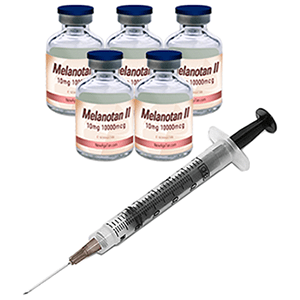
Melanotan II, developed at the University of Arizona, is a synthetic analog of the naturally occurring melanocortin peptide hormone alpha-melanocyte stimulating hormone (α-MSH) that in usage has been shown to have melanogenesis (tanning) and aphrodisiac effects in preliminary studies and clinical trials.
No compound incorporating the melanotan II peptide has ever been approved for use by any governmental drug regulatory bodies outside of clinical trials. Unlicensed and untested powders sold as ‘melanotan II’ are found on the Internet and are reported to be used by thousands of members of the general public.
read more »
Posted in Drugs, Health, Sex |
2 Comments »
July 11, 2011
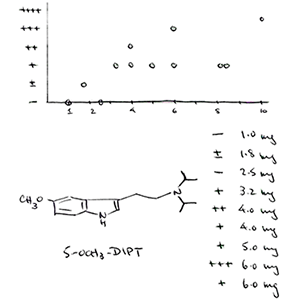
The Shulgin Rating Scale is a simple scale for reporting the subjective effect of psychoactive substances at a given dosage, and at a given time.
The system was developed for research purposes by the American biochemist Alexander Shulgin and detailed in his book ‘PiHKAL’ (‘Phenethylamines I Have Known And Loved: A Chemical Love Story’).
read more »
Posted in Drugs, Health, Science |
Leave a Comment »





 The Daily Omnivore