February 1, 2016


Survivor guilt is a mental condition that occurs when a person perceives themselves to have done wrong by surviving a traumatic event when others did not. It may be found among survivors of combat, natural disasters, epidemics, among the friends and family of those who have died by suicide, and in non-mortal situations such as among those whose colleagues are laid off. The experience and manifestation of survivor’s guilt will depend on an individual’s psychological profile.
The Diagnostic and Statistical Manual of Mental Disorders defines it as a significant symptom of post traumatic stress disorder (PTSD). Characteristic symptoms include anxiety and depression, social withdrawal, sleep disturbance and nightmares, physical complaints and mood swings with loss of drive.
read more »
Posted in Death, Health, War |
Leave a Comment »
January 27, 2016

The term infomania is used to describe a sometimes debilitating feeling of ‘information overload,’ caused by the combination of a backlog of information to process (usually in e-mail), and continuous interruptions from technologies like phones and instant messaging. It is also understood as distraction caused by the urge to constantly check on incoming information, which causes the person to neglect other, often more important things—duties, family, etc. (For instance, a typical symptom of infomania is that of checking email frequently during vacation.)
The term was coined by Elizabeth M. Ferrarini, the author of ‘Confessions of an Infomaniac ‘(1984) and ‘Infomania: The Guide to Essential Electronic Services’ (1985). Confessions was an early book about life online. In 2005, British psychologist Glenn Wilson conducted an experimental study which documented the detrimental effects of information overload on problem solving ability. This was described in a press release accompanying a self-report survey of the extent of misuse of modern technology sponsored by Hewlett-Packard (However, in 2010, Wilson published a clarifying note about the study in which he documented its limited size and stated the results were ‘widely misrepresented in the media.’)
Posted in Education, Health, Technology |
Leave a Comment »
January 26, 2016


Restraint bias is the tendency for people to overestimate their ability to control impulsive behavior. An inflated self-control belief may lead to greater exposure to temptation, and increased impulsiveness. Therefore, the restraint bias has bearing on addiction. For example, someone might experiment with drugs, simply because they believe they can resist any potential addiction. An individual’s inability to control, or their temptation can come from several different visceral impulses such as hunger, sexual arousal, and fatigue. These impulses provide information about the current state and behavior needed to keep the body satisfied.
The ‘Empathy Gap Effect’ deals with individuals having trouble appreciating the power that the impulse states have on their behavior. There is a cold-to-hot empathy gap that states when people are in a cold state, like not experiencing hunger, they tended to underestimate those influences in a hot state. The underestimation of the visceral impulses can be contributed to restricted memory for the visceral experience which means the individual can recall the impulsive state but cannot recreate the sensation of the impulsive state.
read more »
Posted in Health |
Leave a Comment »
January 12, 2016

The hedgehog’s dilemma is a metaphor about the challenges of human intimacy. It describes a situation in which a group of hedgehogs all seek to become close to one another in order to share heat during cold weather. They must remain apart, however, as they cannot avoid hurting one another with their sharp spines. Though they all share the intention of a close reciprocal relationship, this may not occur, for reasons they cannot avoid.
German philosopher Arthur Schopenhauer and psychoanalyst Sigmund Freud have used this situation to describe what they feel is the state of the individual in relation to others in society. The hedgehog’s dilemma suggests that despite goodwill, human intimacy cannot occur without substantial mutual harm, and what results is cautious behavior and weak relationships. The hedgehog’s dilemma demands moderation in affairs with others both because of self-interest, as well as out of consideration for others, leading to introversion and isolationism.
read more »
Posted in Health, Science, Sex |
Leave a Comment »
January 9, 2016


In the psychoanalysis of Sigmund Freud, afterwardsness is a ‘mode of belated understanding or retroactive attribution of [meaning] to earlier events… [from the German word] ‘Nachträglichkeit,’ translated as ‘deferred action, retroaction, après-coup, afterwardsness.’ As summarized by another scholar, ‘In one sense, Freud’s theory of deferred action can be simply stated: memory is reprinted, so to speak, in accordance with later experience.’
Closely related for Freud to deferred action was ‘deferred obedience’: again, ‘a deferred effect…a ‘deferred obedience’ under the influence of repression.’ Thus for instance Freud explored the different phases of a man’s infantile attitude to his father: ‘As long as his father was alive it showed itself in unmitigated rebelliousness and open discord, but immediately after his death it took the form of a neurosis based on abject submission and deferred obedience to him.’ In ‘Totem and Taboo’ he generalized the principle and ‘depicted the social contract also as based on posthumous obedience to the father’s authority’ — offset at times by its converse, occasional Carnival-like licence such as ‘the memorial festival of the totem meal, in which the restrictions of deferred obedience no longer held.’
read more »
Posted in Death, Health, Philosophy |
Leave a Comment »
January 8, 2016

The psychological concept of the uncanny [uhn-kan-ee] was first described by Sigmund Freud in his essay ‘Das Unheimliche’ as something that is strangely familiar, rather than just mysterious. Because the uncanny is familiar, yet incongruous, it has been seen as creating cognitive dissonance within the experiencing subject, due to the paradoxical nature of being simultaneously attracted to yet repulsed by an object.
This cognitive dissonance (discomfort stemming from holding conflicting beliefs) often leads to an outright rejection of the object, as one would rather reject than rationalize, as in the ‘uncanny valley’ effect (people are not as affected in an emotional way by an object if it is easy to tell it is not human, but after a certain point, they start to feel emotionally about it, but feel bad emotions because it is so nonhuman).
read more »
Posted in Health, Philosophy |
Leave a Comment »
January 4, 2016

Setting boundaries is a life skill that has been popularized by self help authors and support groups since the mid 1980s. It is the practice of openly communicating and asserting personal values as way to preserve and protect against having them compromised or violated. The term ‘boundary’ is a metaphor – with ‘in-bounds’ meaning acceptable and ‘out-of-bounds’ meaning unacceptable. Without values and boundaries our identities become diffused and often controlled by the definitions offered by others. The concept of boundaries has been widely adopted by the counseling profession.
Healthy relationships are ‘inter-dependent’ connections between two ‘independent’ people. Healthy individuals should establish values that they honor and defend regardless of the nature of a relationship (core or independent values). Healthy individuals should also have values that they negotiate and adapt in an effort to bond with and collaborate with others (inter-dependent values).
read more »
Posted in Health |
Leave a Comment »
December 1, 2015


Mechanophilia [muh-kan-uh-fil-ee-uh] is a paraphilia (atypical sexuality) involving a sexual attraction to machines. It is a crime in some nations, such as the UK, with perpetrators placed on a sex-offender registry. Motorcycles in particular are often portrayed as sexualized fetish objects to those who desire them. Designers such as Francis Picabia and Filippo Tommaso Marinetti have been said to have exploited the sexual attraction of automobiles. In 2008, an American named Edward Smith admitted to ‘having sex’ with 1000 cars.
Biologist Edward O. Wilson is quoted describing mechanophilia, the love of machines, as ‘a special case of ‘biophilia,” the instinctive bond between human beings and other living (or lifelike) systems. Conversely, psychologists such as Erich Fromm would see it as a form of necrophilia.
read more »
Posted in Health, Sex, Technology |
1 Comment »
November 14, 2015

Dysrationalia [dis-rash-uh-ney-lee-uh] is defined as the inability to think and behave rationally despite adequate intelligence. Dysrationalia can be a resource to explain why smart people fall for Ponzi schemes and other fraudulent encounters. A survey given to a Canadian Mensa club (which grants membership solely based on high IQ scores) on the topic of paranormal belief found that 44% of the members believed in astrology.
There are many examples of people who are famous because of their intelligence, but often display irrational behavior. Martin Heidegger, a renowned philosopher, was also a Nazi apologist and used the most fallacious arguments to justify his beliefs. William Crookes, a famous scientist who discovered the element thallium and a Fellow of the Royal Society, was continually duped by spiritual ‘mediums’ yet never gave up his spiritualist beliefs.
read more »
Posted in Health |
1 Comment »
October 26, 2015
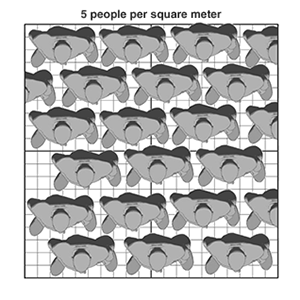
A stampede is uncontrolled concerted running as an act of mass impulse among herd animals or a crowd of people. Cattle are particularly prone to stampedes. Any sudden, unusual event can set one off, such as a horse shaking itself, a lightning strike, or even just a tumbleweed. Other species that stampede include elephants, walruses, wild horses, rhinoceros, and humans. Human crushes often occur during religious pilgrimages and professional sporting and music events. They also occur in times of panic (e.g. as a result of a fire or explosion) as people try to get away.
Crushes are very often referred to as stampedes but, unlike true stampedes, they can cause many deaths. They typically occur when members at the back of a large crowd continue pushing forward not knowing that those at the front are being crushed, or because of something that forces them to move. It has been suggested that crowd density rather than size is important, with a density of about four people per square meter beginning to be dangerous, even if the crowd is not very large.
read more »
Posted in Death, Health, Technology |
1 Comment »
October 15, 2015
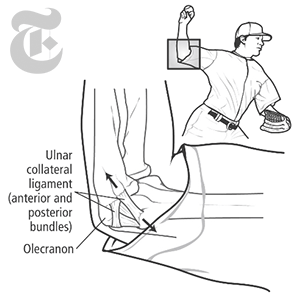
Tommy John surgery (TJS), known in medical practice as ulnar collateral ligament (UCL) reconstruction, is a surgical graft procedure in which a ligament in the elbow is replaced with a tendon from elsewhere in the body (ligaments and tendons are connective tissue; the former connects bones to each other and latter connects muscles to bone). The procedure is common among collegiate and professional athletes in several sports, particularly baseball pitchers.
The procedure was first performed in 1974 by orthopedic surgeon Dr. Frank Jobe, then a Los Angeles Dodgers team physician who served as a special advisor to the team until his death in 2014. It is named after the first baseball player to undergo the surgery, major league pitcher Tommy John, whose record of 288 career victories ranks seventh all time among left-handed pitchers.
read more »
Posted in Games, Health, Money |
Leave a Comment »
October 1, 2015

The Dr. Fox effect states that even experts will be fooled by a nonsensical lecture if it is delivered with warmth, liveliness, and humor. A 1980 study found that the perceived prestige of research is increased by using a confounding writing style, with research competency being positively correlated to reading difficulty.
The original experiment was conducted at USC School Of Medicine in 1970. Two speakers gave lectures to a classroom of psychiatrists and psychologists on a topic the attendees were unfamiliar with (‘Mathematical Game Theory as Applied to Physician Education’). The control group was lectured by an actual scientist and the other by an actor who was given the identity ‘Dr. Myron L. Fox,’ a graduate of Albert Einstein College of Medicine.
read more »
Posted in Education, Health, Language |
1 Comment »


 The Daily Omnivore