March 1, 2016


The bandwagon effect is a phenomenon whereby the rate of uptake of beliefs, ideas, fads and trends increases the more that they have already been adopted by others. As more people come to believe in something, others also ‘hop on the bandwagon’ regardless of the underlying evidence.
The tendency to follow the actions or beliefs of others can occur because individuals directly prefer to conform to social pressure, or because individuals derive information from others. The former has been used to explain Asch’s conformity experiments, a series of studies directed by Polish American social psychologist Solomon Asch studying if and how individuals yield to or defy a majority group and the effect of such influences on beliefs and opinions.
read more »
Posted in Health, Money, Philosophy |
1 Comment »
February 24, 2016
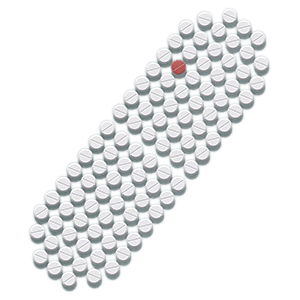
Microdosing is a technique for studying the behavior of drugs in humans through the administration of doses so low (‘sub-therapeutic’) they are unlikely to produce whole-body effects, but high enough to allow the cellular response to be studied. This allows the observation of a drug’s pharmacokinetics with a low risk of side effects. This is called a ‘Phase 0 study’ and is usually conducted before clinical Phase I to predict whether a drug is viable for the next phase of testing. Human microdosing aims to reduce the resources spent on non-viable drugs and the amount of testing done on animals.
Psychedelic drugs are also sometimes used at sub-therapeutic doses for non-hallucinogenic effects. For example, LSD at one tenth the normal dose has been reported to have antidepressant properties and is said to aid in problem solving.
Posted in Drugs, Health |
1 Comment »
February 10, 2016

Aquafaba [ah-kwuh-fah-buh], or chickpea brine, is the liquid from canned chickpeas, used as an egg substitute because of its function as an emulsifier, leavening agent, and foaming agent. Vegan baker Goose Wohlt coined the term aquafaba (‘bean liquid’) to describe the substance, which French chef Joël Roessel discovered could be used as substitute for egg whites in recipes. Aquafaba has been used to create meringues, macarons, nougat, and other products that normally require the use of eggs, making them suitable for people with egg allergies, vegans, and lacto-vegetarians.
There is currently no scientific consensus on the chemical properties of aquafaba and why it mimics egg whites so effectively. Seed proteins, including albumins and globulins, as well as soluble fibers, sugars, and glycosides have been proposed as contributing to the similarity. Roessel purports that the most likely agent that causes the liquid to foam are saponins, plant molecules containing a combination of hydrophobic (fat-soluble) and a hydrophilic (water-soluble) components.
Posted in Food, Health |
1 Comment »
February 5, 2016


In cognitive psychology the adaptive unconscious is thought to be a set of mental processes that influence judgment and decision making in a way that is inaccessible to introspective awareness, and thus linked to the unconscious mind. It is different from conscious processing: it is faster, effortless, more focused on the present, but less flexible. In other theories of the mind, the unconscious is limited to ‘low-level’ activity, such as carrying out goals which have been decided consciously. In contrast, the adaptive unconscious is thought to be involved in ‘high-level’ cognition such as goal-setting as well.
The term ‘adaptive unconscious’ suggests it has survival value and hence is an adaptation which was strongly selected in the past. Indeed, for much of vertebrate evolution, all mental activity was unconscious. No-one supposes that fish have consciousness. Thus our consciousness is added to an already-existing set of mechanisms which operate but whose operation is normally not felt by us.
read more »
Posted in Education, Health |
1 Comment »
February 1, 2016

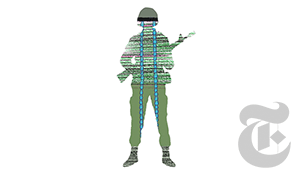
Survivor guilt is a mental condition that occurs when a person perceives themselves to have done wrong by surviving a traumatic event when others did not. It may be found among survivors of combat, natural disasters, epidemics, among the friends and family of those who have died by suicide, and in non-mortal situations such as among those whose colleagues are laid off. The experience and manifestation of survivor’s guilt will depend on an individual’s psychological profile.
The Diagnostic and Statistical Manual of Mental Disorders defines it as a significant symptom of post traumatic stress disorder (PTSD). Characteristic symptoms include anxiety and depression, social withdrawal, sleep disturbance and nightmares, physical complaints and mood swings with loss of drive.
read more »
Posted in Death, Health, War |
Leave a Comment »
January 27, 2016

The term infomania is used to describe a sometimes debilitating feeling of ‘information overload,’ caused by the combination of a backlog of information to process (usually in e-mail), and continuous interruptions from technologies like phones and instant messaging. It is also understood as distraction caused by the urge to constantly check on incoming information, which causes the person to neglect other, often more important things—duties, family, etc. (For instance, a typical symptom of infomania is that of checking email frequently during vacation.)
The term was coined by Elizabeth M. Ferrarini, the author of ‘Confessions of an Infomaniac ‘(1984) and ‘Infomania: The Guide to Essential Electronic Services’ (1985). Confessions was an early book about life online. In 2005, British psychologist Glenn Wilson conducted an experimental study which documented the detrimental effects of information overload on problem solving ability. This was described in a press release accompanying a self-report survey of the extent of misuse of modern technology sponsored by Hewlett-Packard (However, in 2010, Wilson published a clarifying note about the study in which he documented its limited size and stated the results were ‘widely misrepresented in the media.’)
Posted in Education, Health, Technology |
Leave a Comment »
January 26, 2016


Restraint bias is the tendency for people to overestimate their ability to control impulsive behavior. An inflated self-control belief may lead to greater exposure to temptation, and increased impulsiveness. Therefore, the restraint bias has bearing on addiction. For example, someone might experiment with drugs, simply because they believe they can resist any potential addiction. An individual’s inability to control, or their temptation can come from several different visceral impulses such as hunger, sexual arousal, and fatigue. These impulses provide information about the current state and behavior needed to keep the body satisfied.
The ‘Empathy Gap Effect’ deals with individuals having trouble appreciating the power that the impulse states have on their behavior. There is a cold-to-hot empathy gap that states when people are in a cold state, like not experiencing hunger, they tended to underestimate those influences in a hot state. The underestimation of the visceral impulses can be contributed to restricted memory for the visceral experience which means the individual can recall the impulsive state but cannot recreate the sensation of the impulsive state.
read more »
Posted in Health |
Leave a Comment »
January 12, 2016

The hedgehog’s dilemma is a metaphor about the challenges of human intimacy. It describes a situation in which a group of hedgehogs all seek to become close to one another in order to share heat during cold weather. They must remain apart, however, as they cannot avoid hurting one another with their sharp spines. Though they all share the intention of a close reciprocal relationship, this may not occur, for reasons they cannot avoid.
German philosopher Arthur Schopenhauer and psychoanalyst Sigmund Freud have used this situation to describe what they feel is the state of the individual in relation to others in society. The hedgehog’s dilemma suggests that despite goodwill, human intimacy cannot occur without substantial mutual harm, and what results is cautious behavior and weak relationships. The hedgehog’s dilemma demands moderation in affairs with others both because of self-interest, as well as out of consideration for others, leading to introversion and isolationism.
read more »
Posted in Health, Science, Sex |
Leave a Comment »
January 9, 2016
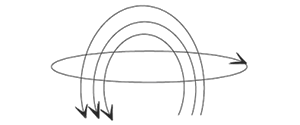

In the psychoanalysis of Sigmund Freud, afterwardsness is a ‘mode of belated understanding or retroactive attribution of [meaning] to earlier events… [from the German word] ‘Nachträglichkeit,’ translated as ‘deferred action, retroaction, après-coup, afterwardsness.’ As summarized by another scholar, ‘In one sense, Freud’s theory of deferred action can be simply stated: memory is reprinted, so to speak, in accordance with later experience.’
Closely related for Freud to deferred action was ‘deferred obedience’: again, ‘a deferred effect…a ‘deferred obedience’ under the influence of repression.’ Thus for instance Freud explored the different phases of a man’s infantile attitude to his father: ‘As long as his father was alive it showed itself in unmitigated rebelliousness and open discord, but immediately after his death it took the form of a neurosis based on abject submission and deferred obedience to him.’ In ‘Totem and Taboo’ he generalized the principle and ‘depicted the social contract also as based on posthumous obedience to the father’s authority’ — offset at times by its converse, occasional Carnival-like licence such as ‘the memorial festival of the totem meal, in which the restrictions of deferred obedience no longer held.’
read more »
Posted in Death, Health, Philosophy |
Leave a Comment »
January 8, 2016

The psychological concept of the uncanny [uhn-kan-ee] was first described by Sigmund Freud in his essay ‘Das Unheimliche’ as something that is strangely familiar, rather than just mysterious. Because the uncanny is familiar, yet incongruous, it has been seen as creating cognitive dissonance within the experiencing subject, due to the paradoxical nature of being simultaneously attracted to yet repulsed by an object.
This cognitive dissonance (discomfort stemming from holding conflicting beliefs) often leads to an outright rejection of the object, as one would rather reject than rationalize, as in the ‘uncanny valley’ effect (people are not as affected in an emotional way by an object if it is easy to tell it is not human, but after a certain point, they start to feel emotionally about it, but feel bad emotions because it is so nonhuman).
read more »
Posted in Health, Philosophy |
Leave a Comment »
January 4, 2016

Setting boundaries is a life skill that has been popularized by self help authors and support groups since the mid 1980s. It is the practice of openly communicating and asserting personal values as way to preserve and protect against having them compromised or violated. The term ‘boundary’ is a metaphor – with ‘in-bounds’ meaning acceptable and ‘out-of-bounds’ meaning unacceptable. Without values and boundaries our identities become diffused and often controlled by the definitions offered by others. The concept of boundaries has been widely adopted by the counseling profession.
Healthy relationships are ‘inter-dependent’ connections between two ‘independent’ people. Healthy individuals should establish values that they honor and defend regardless of the nature of a relationship (core or independent values). Healthy individuals should also have values that they negotiate and adapt in an effort to bond with and collaborate with others (inter-dependent values).
read more »
Posted in Health |
Leave a Comment »
December 1, 2015


Mechanophilia [muh-kan-uh-fil-ee-uh] is a paraphilia (atypical sexuality) involving a sexual attraction to machines. It is a crime in some nations, such as the UK, with perpetrators placed on a sex-offender registry. Motorcycles in particular are often portrayed as sexualized fetish objects to those who desire them. Designers such as Francis Picabia and Filippo Tommaso Marinetti have been said to have exploited the sexual attraction of automobiles. In 2008, an American named Edward Smith admitted to ‘having sex’ with 1000 cars.
Biologist Edward O. Wilson is quoted describing mechanophilia, the love of machines, as ‘a special case of ‘biophilia,” the instinctive bond between human beings and other living (or lifelike) systems. Conversely, psychologists such as Erich Fromm would see it as a form of necrophilia.
read more »
Posted in Health, Sex, Technology |
1 Comment »



