January 10, 2011
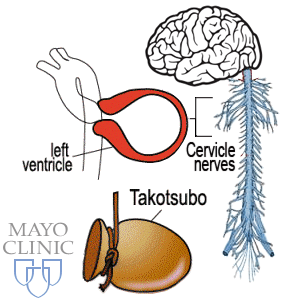
Takotsubo cardiomyopathy, is a sudden temporary weakening of the myocardium (the muscle of the heart). Because this weakening can be triggered by emotional stress, such as the death of a loved one, the condition is also known as broken heart syndrome. A tako tsubo is a jar-shaped, Japanese octopus trap that bears a resemblance to a heart experiencing Takotsubo cardiomyopathy: a bulging left ventricular apex and a preserved base of the left ventricle. The cause of the syndrome is not entirely understood, and is currently thought to involve high circulating levels of catecholamines (fight-or-flight hormones like adrenaline).
Evaluation of individuals with takotsubo cardiomyopathy typically includes a coronary angiogram, which will not reveal any significant blockages that would cause the left ventricular dysfunction. Provided that the individual survives their initial presentation, the left ventricular function improves within two months. Takotsubo cardiomyopathy is more commonly seen in post-menopausal women, and those with a history of a recent severe emotional or physical stress. A 2008 study by life insurance companies indicated that in the year following a loved one’s death, women were more than twice as likely to die than normal, and men more than six times as likely.
Posted in Death, Health |
Leave a Comment »
January 6, 2011


A telomere [tel-uh-meer] is a protective region of repetitive DNA at the end of a chromosome, The telomere regions deter the degradation of genes near the ends of chromosomes by allowing for the shortening of chromosome ends, which necessarily occurs during chromosome replication. The telomeres are disposable buffers blocking the ends of the chromosomes and are consumed during cell division and replenished by an enzyme, the telomerase reverse transcriptase.
The telomere shortening mechanism normally limits cells to a fixed number of divisions, and animal studies suggest that this is responsible for aging on the cellular level and sets a limit on lifespans. Telomeres also protect a cell’s chromosomes from fusing with each other or rearranging — abnormalities that can lead to cancer — and so cells are destroyed when their telomeres are consumed. Most cancers are the result of ‘immortal’ cells that have ways of evading this programmed destruction.
Posted in Death, Health, Science |
Leave a Comment »
January 5, 2011

Osteopathy [os-tee-op-uh-thee] or osteopathic medicine is an approach to healthcare that emphasizes the role of the musculoskeletal system in health and disease. The first school of Osteopathy was founded in 1892 by Andrew Taylor Still, an Army surgeon in the American Civil War. In the United States an American-trained D.O. (Doctor of Osteopathic Medicine) is legally and professionally equivalent to an M.D. in all 50 states, since their medical education and training is mostly identical.
read more »
Posted in Health, Language, Science |
Leave a Comment »
January 1, 2011

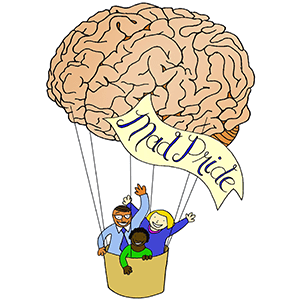
Neurodiversity is an idea which asserts that atypical neurological development is a normal human difference that is to be recognized and respected as any other human variation. Differences may arise in ways of processing information, including language, sound, images, light, texture, taste, or movement. The concept of neurodiversity is embraced by some autistic individuals and people with related conditions.
Some groups apply the concept of neurodiversity to conditions potentially unrelated to autism such as bipolar disorder, ADHD, schizophrenia, circadian rhythm disorders, developmental speech disorders, Parkinson’s disease (and other motor control disorders), and dyslexia.
Posted in Health, Politics |
Leave a Comment »
January 1, 2011
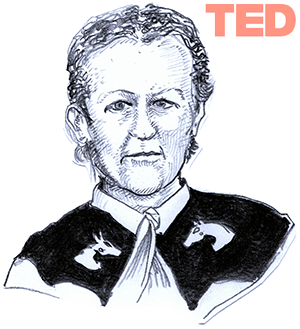
Temple Grandin (b. 1947) is an American doctor of animal science and professor at Colorado State University, bestselling author, and consultant to the livestock industry on animal behavior. As a person with high-functioning autism, Grandin is also widely noted for her work in autism advocacy and is the inventor of the ‘hug machine’ designed to calm hypersensitive persons.
Grandin became well known after being described by Oliver Sacks in the title narrative of his book ‘An Anthropologist on Mars’ (1995); the title is derived from Grandin’s description of how she feels around neurotypical people. She first spoke in public about autism in the mid-1980s at the request of Ruth C. Sullivan, one of the founders of the Autism Society of America.
read more »
Posted in Health, Science |
Leave a Comment »
December 23, 2010

Tadoma is a method of communication used by deafblind individuals, in which they place their thumb on the speaker’s lips and their fingers along the jawline. The middle three fingers often fall along the speaker’s cheeks with the little finger picking up the vibrations of the speaker’s throat. It is sometimes referred to as ‘tactile lipreading,’ as the deafblind person feels the movement of the lips, as well as vibrations of the vocal cords, puffing of the cheeks and the warm air produced by nasal sounds such as ‘N’ and ‘M.’
It is a difficult method to learn and use, and is rarely used nowadays. However, a small number of deafblind people successfully use Tadoma in everyday communication. Helen Keller also used a form of Tadoma.
read more »
Posted in Health, Language |
Leave a Comment »
December 23, 2010

A cochlear [kok-leer] implant (CI) is a surgically implanted electronic device that provides a sense of sound to a person who is profoundly deaf or severely hard of hearing. The cochlear implant is often referred to as a bionic ear. It will not cure deafness or hearing impairment, but is a prosthetic substitute for hearing.
While cochlear implants restore physical ability to hear, this does not mean the brain can learn to process and distinguish speech if the recipient has passed the critical period of adolescence. As a result, those born profoundly deaf who receive an implant as an adult can only distinguish simple sounds, such as a ringing phone vs. a doorbell, while others who receive implants early can understand speech.
read more »
Posted in Health, Technology |
Leave a Comment »
December 19, 2010

Fibromyalgia [fahy-broh-mahy-al-juh] (latin for muscle and connective tissue pain) is a medical disorder characterized by chronic widespread pain and allodynia (pain in response to something that should not cause pain, like a light touch). It is estimated to affect 2–4% of the population, with a female to male incidence ratio of approximately 9:1, but is considered a controversial diagnosis, due to lacking scientific consensus to its cause. Not all members of the medical community consider it a disease because of a lack of abnormalities on physical examination and the absence of objective diagnostic tests.
read more »
Posted in Health, Science |
2 Comments »
December 16, 2010

The current drug policy of Portugal was put in place in 2000, to be legally effective from July 2001. The EU had in effect forced the Portuguese government to make radical measures to reduce Portugal’s record high incidence of HIV/AIDS. In 1999 Portugal had the highest rate of HIV amongst injecting drug users in the European Union.
read more »
Posted in Drugs, Health, Politics |
Leave a Comment »
December 16, 2010

A human milk bank is a service which collects, screens, processes, and dispenses by prescription human milk donated by nursing mothers who are not biologically related to the recipient infant. There are currently eleven milk banks in North America. They are usually housed in hospitals, although sometimes they are free standing.
read more »
Posted in Drugs, Food, Health |
Leave a Comment »
December 15, 2010

Slow Cow is a ‘relaxation beverage’ launched in Quebec in December 2008, dubbed an ‘anti-energy’ drink by its creators.
Slow Cow’s principal ingredient is L-Theanine, an amino acid found in tea plants, which is said to produce a ‘feeling of relaxation and well-being.’ Other ingredients include extracts of chamomile, passiflora, valerian, tilia cordata, and hops.
Posted in Drugs, Food, Health |
Leave a Comment »
December 14, 2010

Kangaroo care is a technique shown to increase survivability rates in newborns wherein the infant is held, skin-to-skin, with an adult. Kangaroo care for pre-term infants may be restricted to a few hours per day, but if they are medically stable that time may be extended. Some parents may keep their babies in-arms for many hours per day. Kangaroo care, named for the similarity to how certain marsupials carry their young, was initially developed to care for preterm infants in areas where incubators are either unavailable or unreliable.
Posted in Health, Science |
Leave a Comment »



 The Daily Omnivore