October 13, 2010

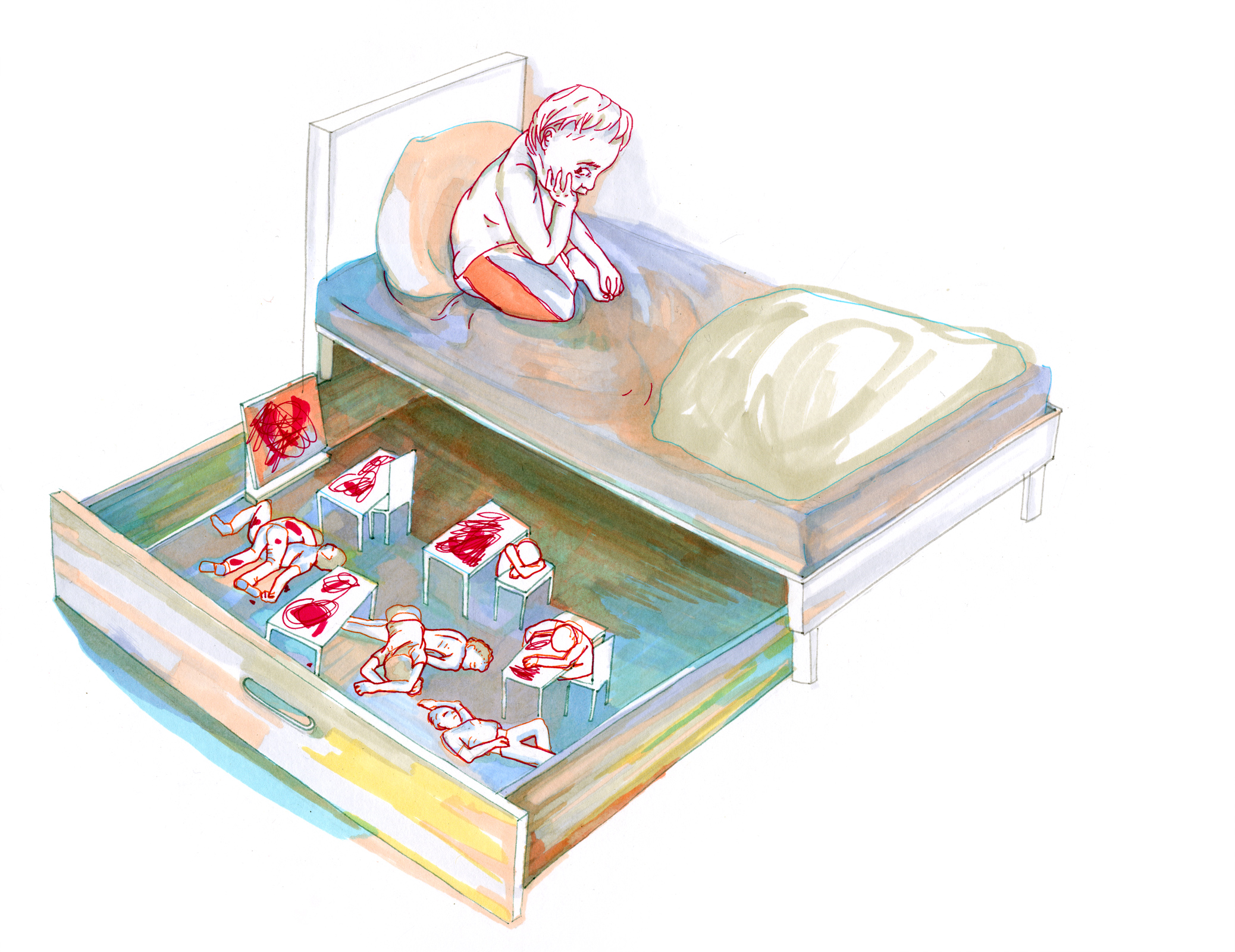
Syringe Tide refers to a period during 1987-88 in New Jersey, where significant amounts of medical waste and raw garbage washed up onto a 50-mile (80 km) stretch of Atlantic Ocean beaches in Jersey Shore communities in Monmouth and Ocean counties. This forced the closing of all the beaches in the two counties. Officials traced the source of the waste to the Fresh Kills Landfill in Staten Island. New York City was required to pay $1 million for past pollution damages as well as pay for the clean up. Reparations were denied business owners on the Jersey Shore for revenues lost during the months of inactivity.
In response to syringe tides of 1987 and 1988, the participants in the New Jersey Harbor Estuary Program (HEP) implemented an extremely successful effort, known as the Short-term Floatables Action Plan. The plan has been implemented since 1989. It curtails floatable debris wash-ups by intercepting slicks within the Harbor. With this plan, the extent of beach closures declined from over 70 miles (110 km) in 1988 to fewer than 4 miles (6.4 km) in 1989, and closures have remained at a low level since.
Posted in Health |
Leave a Comment »
October 10, 2010
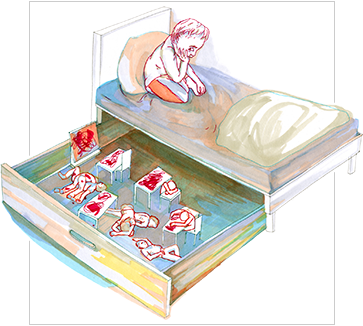
Hikikomori (literally ‘pulling away,’ being confined’) is a Japanese term to refer to the phenomenon of reclusive people who have chosen to withdraw from social life, often seeking extreme degrees of isolation and confinement because of various personal and social factors in their lives.
The term hikikomori refers to both the sociological phenomenon in general as well as to people belonging to this societal group. In Western terminology this group may include individuals suffering from social phobia or social anxiety problems. This could also be due to agoraphobia, avoidant personality disorder or painful or extreme shyness.
Posted in Health, Language, World |
Leave a Comment »
September 28, 2010


Paruresis [pahr-yew-ree-sis] is a type of phobia in which the sufferer is unable to urinate in the (real or imaginary) presence of others, such as in a public restroom. It most commonly affects males, though there are female sufferers too. The analogous condition that affects bowel movement is called parcopresis.
Many people have brief, isolated episodes of urinary difficulty in situations where other people are in close proximity. Paruresis is also known by many colloquial terms, including bashful bladder, bashful kidneys, mental cloggery, stage fright, pee fright, urophobia, pee-shyness, the slow dribbles, creeping pee-pee, public piss syndrome, shy bladder syndrome, air-blockage, and psychogenic urinary retention.
read more »
Posted in Health |
Leave a Comment »
September 23, 2010

Facilitated communication (FC) is a process by which a facilitator supports the hand or arm of a communicatively impaired individual while using a keyboard or other devices with the aim of helping the individual to develop pointing skills and to communicate. The procedure is controversial, since a majority of peer reviewed scientific studies conclude that the typed language output attributed to the clients is directed or systematically determined by the therapists who provide facilitated assistance.
Some neurologists and psychologists believe there is a high incidence of dyspraxia, or difficulty with planning and/or executing voluntary movement, among such individuals, and that this is alleviated by a facilitator’s manual support. Proponents of FC suggest that some people with autism and moderate and profound mental retardation may have ‘undisclosed literacy,’ or the capacity for other symbolic communication, consistent with higher intellectual functioning than has been presumed.
Posted in Health, Language |
Leave a Comment »
September 21, 2010
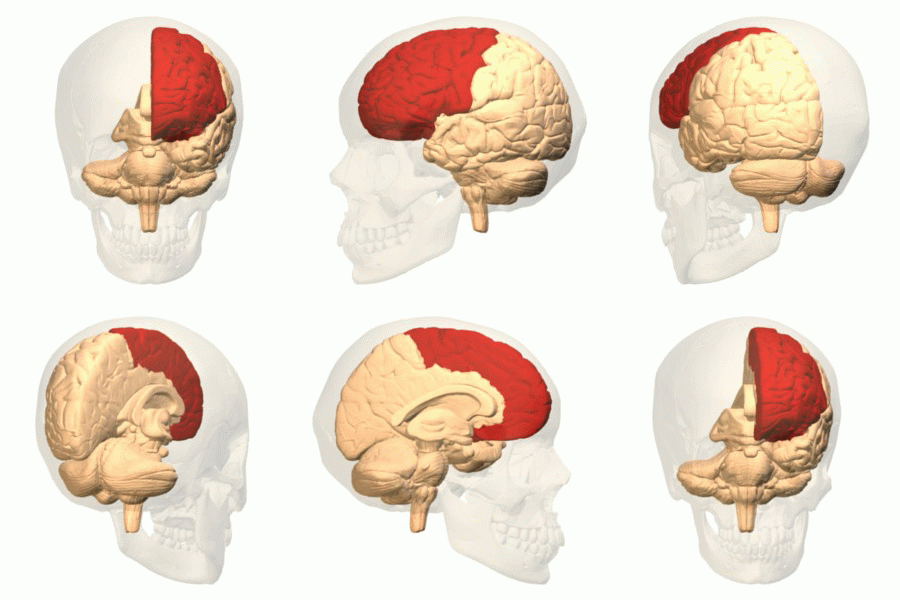
The frontal lobe is an area in the brain of humans and other mammals, located at the front of each cerebral hemisphere, directly behind the forehead or ‘temple.’ The frontal lobe contains most of the dopamine-sensitive neurons in the cerebral cortex. The dopamine system is associated with reward, attention, long-term memory, planning, and drive.
In the early 20th century, a medical treatment for mental illness, first developed by Portuguese neurologist Egas Moniz, involved damaging the pathways connecting the frontal lobe to the limbic system. Frontal lobotomy successfully reduced distress but at the cost of often blunting the subject’s emotions, volition and personality. The indiscriminate use of this psychosurgical procedure, combined with its severe side effects and dangerous nature, gained it a bad reputation. The frontal lobotomy has largely died out as a psychiatric treatment.
Posted in Health, Science |
Leave a Comment »
September 21, 2010
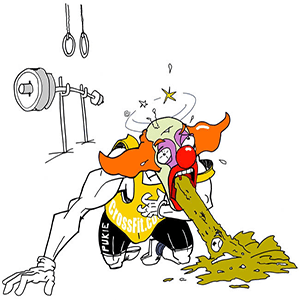

CrossFit is a strength and conditioning brand. CrossFit combines weightlifting, sprinting, and gymnastics. Athletes run, row, jump rope, climb rope and carry odd objects. CrossFit is used in nearly 1,700 gyms worldwide and by many fire departments, law enforcement agencies and military organizations including the Canadian Forces, and the Royal Danish Life Guards. The program even names workout moves to honor deceased troops, like a grueling forward-and-backward sprint combo dubbed ‘Griff’ for U.S. Air Force Staff Sgt. Travis L. Griffin. Its mascot is ‘Pukey the Clown.’
Posted in Health, Money |
Leave a Comment »
September 20, 2010
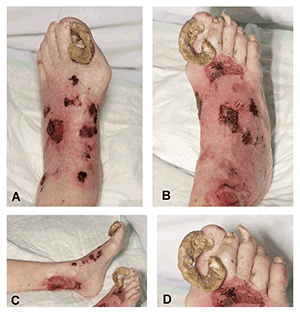
Onychogryphosis (also known as ‘Ram’s horn nails‘) is a disorder that may produce nails resembling claws or a ram’s horn, possibly caused by trauma or peripheral vascular disorders, but most often secondary to neglect and failure to cut the nails for extended periods of time.
Posted in Health |
Leave a Comment »
September 15, 2010

Smegma [smeg-muh] (Greek for ‘soap’), sometimes described as a ‘cheesy substance,’ is a combination of exfoliated (shed) epithelial cells, transudated skin oils, and moisture. It occurs in both female and male mammalian genitalia. In human females, it collects around the clitoris and in the folds of the labia minora.
In human males, smegma is produced and can collect under the foreskin. In healthy animals, smegma helps clean and lubricate the genitals. In veterinary medicine, analysis of this smegma is sometimes used for detection of urogenital tract pathogens.
Posted in Health, Language |
Leave a Comment »
September 13, 2010

Washlet is a registered trademark of Japanese toilet industry giant TOTO, referring to electric toilets with bidet functions. The first toilet with an integrated bidet was produced in the United States in 1964. The age of the high-tech toilet in Japan started in 1980 with the introduction of the Washlet G Series by Toto, and since then the product name washlet has been used to refer to all types of Japanese high-tech toilets. As of 2002, almost half of all private homes in Japan have such a toilet, exceeding the number of households with a personal computer.
While the toilet looks like a Western-style toilet at first glance, there are numerous additional features—such as blow dryer, seat heating, massage options, water jet adjustments, automatic lid opening, automatic flushing, wireless control panel, room heating and air conditioning for the room—included either as part of the toilet or in the seat. Recently, researchers have added medical sensors into these toilets, which can measure the blood sugar based on the urine, and also measure the pulse, blood pressure, and the body fat content of the user.
Posted in Health, Technology, World |
2 Comments »
August 16, 2010

A chipper is an occasional drug user who does not use drugs with the regularity or frequency typical of addicts. It is used particularly to refer to opiate users and tobacco smokers. Above a certain threshold they develop regular cravings and become addicted. The term dates at least to the 1970s, where it is used in reference to opiate use and was used notably in reference to tobacco by psychologist Saul Shiffman and journalist Malcolm Gladwell.
Posted in Drugs, Health, Science |
Leave a Comment »
August 11, 2010

Fecal bacteriotherapy, also known as fecal transfusion, fecal transplant, or human probiotic infusion (HPI), is a medical treatment for patients with gastrointestinal conditions which require restoration of normal bacterial flora from stool obtained from a healthy donor.
Posted in Health, Science |
Leave a Comment »
August 11, 2010
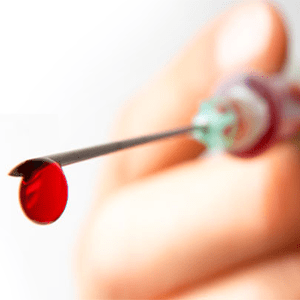
Flashblood (also called Flushblood) is a technique employed by drug users in which an addict injects himself with blood extracted from another drug user, most commonly one who has injected heroin. After injecting themselves with heroin using a syringe, the user will extract approximately one teaspoon of blood from the vein. Another user will then inject the withdrawn blood into themselves. It is unclear if there is enough heroin in the injected blood to get high or if the high that many users claim is a result of traces of the heroin that had been injected by the user, or if the high is simply the result of the placebo effect.
Posted in Drugs, Health |
1 Comment »