July 15, 2015
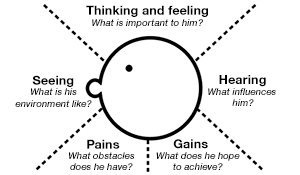

Perspective-taking is the process by which an individual views a situation from another’s point-of-view. It can occur visually in that one changes their physical location to see things as someone else does, or cognitively in that one mentally simulates the point-of-view of another’s cognitive state. For instance, one can visualize the viewpoint of a taller individual (physical state) or reflect upon another’s point-of-view on a particular concept (cognitive state).
In other words, perspective-taking is the process of temporarily suspending one’s own point-of-view in an attempt to view a situation as someone else might. This process does not necessitate any form of affinity, compassion, or emotional identification with the other (i.e. empathy). Therefore, as an other-oriented activity, perspective-taking can be used to gain an understanding of a given physical state and/or situation after which a determination of appropriate action can be selected (e.g., empathy).
read more »
Posted in Health, Money, Politics |
Leave a Comment »
July 12, 2015

Priming is an implicit memory effect in which exposure to one stimulus influences the response to another stimulus. Studies show that people are faster in deciding that a string of letters is a word when it follows an associatively or semantically related word. For example, ‘nurse’ is recognized more quickly following ‘doctor’ than ‘bread.’ As another example, if the original concept is ‘red’ and the word ‘vehicles’ is primed, people are much more likely to say ‘fire engine’ instead of something unrelated to vehicles, such as ‘cherries.’ If instead ‘fruits’ was primed, they would likely name ‘cherries.’
Priming can also be visual, rather than semantic; if people see an incomplete sketch they are unable to identify and they are shown more of the sketch until they recognize the picture, later they will identify the sketch at an earlier stage than was possible for them the first time. The effects of priming can be very salient and long lasting, even more so than simple recognition memory. Unconscious priming can affect word choice long after the primes have been consciously forgotten. Priming works best when the two stimuli are in the same modality. For example visual priming works best with visual cues and verbal priming works best with verbal cues. But priming also occurs between modalities.
read more »
Posted in Health |
Leave a Comment »
July 9, 2015
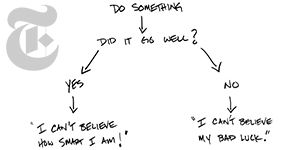

Explanatory style is a psychological attribute that indicates how people explain to themselves why they experience a particular event, either positive or negative. There are three main components: Personal (internal vs. external), Permanent (stable vs. unstable), and Pervasive (global vs. local/specific).
‘Personalization’ refers to how one explains the cause of an event. People experiencing events may see themselves as the cause; that is, they have internalized the cause for the event (e.g. ‘I always forget to make that turn,’ as opposed to, ‘That turn can sure sneak up on you’). ‘Permanenence’ describes how one explains the extent of the cause. People may see a situation as unchangeable (e.g., ‘I always lose my keys’ or ‘I never forget a face’). ‘Pervasiveness’ measures how one explains the extent of the effects. People may see a situation as affecting all aspects of life (e.g., ‘I can’t do anything right’ or ‘Everything I touch seems to turn to gold’).
read more »
Posted in Health, Language, Science |
1 Comment »
June 29, 2015

‘Character Strengths and Virtues‘ (CSV) is a 2004 book by psychologists Christopher Peterson and Martin Seligman that presents humanist ideals of virtue in an empirical, rigorously scientific manner. Seligman describes it as a ‘positive’ counterpart to the Diagnostic and Statistical Manual of Mental Disorders (DSM). While the DSM focuses on what can go wrong, CSV is designed to look at what can go right.
In their research they looked across cultures and time to distill a manageable list of virtues that have been highly valued from ancient China and India, through Greece and Rome, to contemporary Western cultures. Their list includes six character strengths: wisdom/knowledge, courage, humanity, justice, temperance, and transcendence. Each of these has three to five sub-entries; for instance, temperance includes forgiveness, humility, prudence, and self-regulation. The authors do not believe that there is a hierarchy for the six virtues; no one is more fundamental than or a precursor to the others.
read more »
Posted in Health, Language, Science |
Leave a Comment »
June 18, 2015
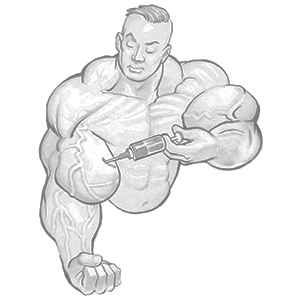
Some bodybuilders, particularly at professional level, inject substances such as ‘site enhancement oil,’ commonly known as synthol [sin-thawl], to mimic the appearance of developed muscle where it may otherwise be disproportionate or lagging. This is practice is referred to as ‘fluffing.’ (Synthol is also the name of an all natural mouthwash available in France since 1920 that is also packaged as a gel and spray for the treatment of muscular pain.)
Site enhancement oil is 85% oil, 7.5% lidocaine (a local anesthetic), and 7.5% alcohol. It is not restricted, as it is ostensibly sold for topical use only, and many brands are available on the internet. The use of injected oil to enhance muscle appearance was abandoned in the late 20th century as it can cause pulmonary embolisms (blood clots in the lungs), nerve damage, infections, skin lesions, stroke, and the formation of oil-filled cysts in the muscle. Sesame oil is often used, which can cause allergic reactions such as vasculitis (inflamed blood vessels). An aesthetic issue is drooping of muscle under gravity.
Posted in Drugs, Games, Health |
Leave a Comment »
June 17, 2015
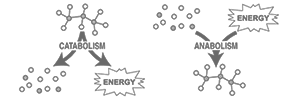
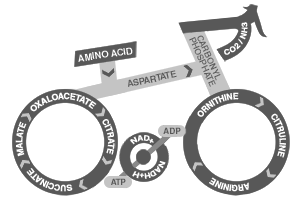
Metabolism [muh-tab-uh-liz-uhm] is the name given to the chemical reactions which keep an organism alive. A chemical reaction is the transformation of one set of chemical substances to another. Organisms require myriad reactions to grow, reproduce, maintain their structures, and respond to their environments. These reactions are catalyzed by enzymes (aided by reusable proteins that change the rate of chemical reactions).
Most of the structures that make up animals, plants, and microbes are made from three basic classes of molecule: amino acids (the building blocks of proteins), carbohydrates (sugars), and lipids (fats). As these molecules are vital for life, metabolic reactions either focus on making these molecules during the construction of cells and tissues (anabolism), or by breaking them down and using them as a source of energy, by their digestion (catabolism).
read more »
Posted in Health, Science |
1 Comment »
June 12, 2015
Ambiguity Tolerance is a psychological construct which describes the relationship that individuals have with ambiguous stimuli or events (situations where familiar cues are either lacking, overwhelming, or misleading). Individuals view these stimuli in a neutral and open way or as a threat.
Psychologist Stanley Budner defined ambiguity intolerance as ‘the tendency to perceive (i.e. interpret) ambiguous situations as sources of threat…’ and its counterpart, tolerance of ambiguity, as ‘the tendency to perceive ambiguous situations as desirable.’
read more »
Posted in Health |
Leave a Comment »
June 9, 2015

Illusory [ih-loo-suh-ree] correlation [kawr-uh-ley-shuhn] is the phenomenon of perceiving a relationship between variables (typically people, events, or behaviors) even when no such relationship exists. A common example of this phenomenon would be when people form false associations between membership in a statistical minority group and rare (typically negative) behaviors as variables that are novel or salient tend to capture the attention. This is one way stereotypes form and endure, which can lead people to expect certain groups and traits to fit together, and then to overestimate the frequency with which these correlations actually occur.
The term ‘Illusory correlation’ was originally coined in 1967 by psychologists Loren Chapman and Jean Chapman to describe people’s tendencies to overestimate relationships between two groups when distinctive and unusual information is presented. The concept was used to question claims about objective knowledge in clinical psychology through the Chapmans’ refutation of many clinicians’ widely used Wheeler signs for homosexuality in Rorschach tests.
read more »
Posted in Health, Science |
Leave a Comment »
June 3, 2015

Grit in psychology is a positive, non-cognitive trait based on an individual’s passion for a particular long-term goal or endstate, coupled with a powerful motivation to achieve their respective objective. This perseverance of effort promotes the overcoming of obstacles or challenges that lie within a gritty individual’s path to accomplishment, and serves as a driving force in achievement realization. Commonly associated concepts within the field of psychology include ‘perseverance,’ ‘hardiness,’ ‘resilience,’ ‘ambition,’ ‘need for achievement,’ and ‘conscientiousness.’ These constructs can be conceptualized as individual differences related to the accomplishment of work rather than latent ability.
This distinction was brought into focus in 1907 when American psychologist William James challenged the field to further investigate how certain individuals are capable of accessing richer trait reservoirs enabling them to accomplish more than the average person, but the construct dates back at least to Victorian polymath Francis Galton, and the ideals of persistence and tenacity have been understood as a virtue at least since Aristotle. Although the last decade has seen a noticeable increase in research focused on achievement-oriented traits, there continues to be difficulty in aligning specific traits and outcomes.
read more »
Posted in Education, Health, Science |
Leave a Comment »
June 1, 2015
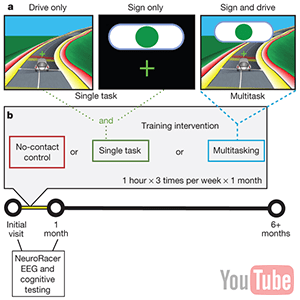
NeuroRacer is a video game designed by a team of researchers at the University of California, San Francisco led by cognitive neuroscientist Adam Gazzaley as a way to help with mental cognition.
It was designed as an intervention for ‘top-down modulation deficits in older adults.’ A study on 60-85 year olds showed that the multitasking nature of the game caused improvements in tasks outside of the game involving working memory and sustained attention.
Posted in Education, Games, Health |
Leave a Comment »
May 16, 2015

Flip-flops (also called thongs, jandals, pluggers, go-aheads, slaps, slides, step-ins, chankla or a variety of other names throughout the world) are a type of open-toed sandal typically worn in casual situations. They consist of a flat sole held loosely on the foot by a Y-shaped strap that passes between the first and second toes and around either side of the foot. They may also be held to the foot with a single strap over the top of the foot rather than a thong. The name is an onomatopoeia for the sound that is made when the sole slaps the ground while walking in flip-flops.
This style of footwear has been worn by the people of many cultures throughout the world, originating as early as the ancient Egyptians. The modern flip-flop descends from the Japanese zōri, which were popularized in the US after WWII by soldiers returning from the Pacific theater. They are common summer footwear for both genders, and some varieties have even found their way into more formal attire, despite criticism.
read more »
Posted in Health, Technology, World |
Leave a Comment »
May 14, 2015


The Third Wave was an experimental social movement created by high school history teacher Ron Jones to demonstrate the appeal of fascism and explain how the German populace could accept the actions of the Nazi regime. Over the course of five days, Jones conducted a series of exercises in his classroom emphasizing discipline and community, intended to model certain characteristics of the Nazi movement.
As the movement grew outside his class and began to number in the hundreds, Jones began to feel that the experiment had spiraled out of control. He convinced the students to attend a rally where he claimed the announcement of a Third Wave presidential candidate would be televised. Upon their arrival, the students were presented with a blank channel and told the true nature of the movement, and shown a short film discussing the actions of Nazi Germany. The psychology involved has been extensively studied in terms of youth gang behavior and peer pressure, of which this experiment was a variant.
read more »
Posted in Health, Politics, War |
Leave a Comment »


 The Daily Omnivore