April 24, 2013

American science writer Michael Shermer has described as ‘wronger than wrong‘ the mistake addressed in what he calls ‘Asimov’s axiom,’ after the noted author Isaac Asimov, who discussed the issue in his book of essays, ‘The Relativity of Wrong.’
A statement that equates two errors is wronger than wrong when one of the errors is clearly more wrong than the other. As Asimov put it: ‘When people thought the earth was flat, they were wrong. When people thought the earth was spherical, they were wrong. But if you think that thinking the earth is spherical is just as wrong as thinking the earth is flat, then your view is wronger than both of them put together.’
read more »
Posted in Humor, Language |
Leave a Comment »
April 24, 2013

The Relativity of Wrong is a 1988 essay collection by Isaac Asimov, which takes its title from the most ambitious essay it contains. Like most of the essays Asimov wrote for ‘F&SF Magazine,’ each one in ‘The Relativity of Wrong’ begins with an autobiographical anecdote which serves to set the tone.
Several of the essays form a sequence explaining the discovery and uses of isotopes; the introductory passages in these essays recount Asimov’s not particularly pleasant personal relationship with physical chemist Harold C. Urey, whom he met at Columbia University.
read more »
Posted in Humor, Language, Science |
Leave a Comment »
April 24, 2013
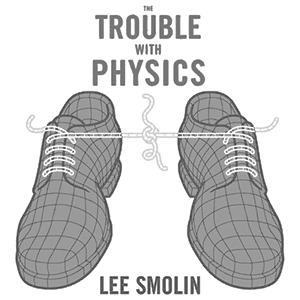
The phrase not even wrong is generally attributed to theoretical physicist Wolfgang Pauli, who was known for his colorful objections to incorrect or sloppy thinking. Rudolf Peierls writes that ‘a friend showed Pauli the paper of a young physicist which he suspected was not of great value but on which he wanted Pauli’s views. Pauli remarked sadly, ‘It is not even wrong.” Peierls remarks that quite a few apocryphal stories of this kind have been circulated and mentions that he listed only the ones personally vouched by him. He also quotes another example when Pauli replied to Lev Landau: ‘What you said was so confused that one could not tell whether it was nonsense or not.’
It has come to be used to describe any argument that purports to be scientific but fails at some fundamental level, usually in that it cannot be falsified (i.e., tested with the possibility of being rejected) by experiment or cannot be used to make predictions about the natural world. ‘Not even wrong’ has also been used by Peter Woit to mean proposed scientific theories that are well-meaning and based on current scientific knowledge, but can neither be used for prediction nor falsified. He has applied the phrase to aspects of string theory in physics on the grounds that, although mathematically elegant, it does not currently provide predictions or tests.
Posted in Humor, Language, Science |
Leave a Comment »
April 24, 2013

Bullshit (also bullcrap) is a common English expletive which may be shortened to the euphemism bull or the initialism BS. In British English, ‘bollocks’ is a comparable expletive, although bullshit is commonly used in British English. It is a slang profanity term meaning either (literally) bovine excrement or, more commonly, ‘nonsense,’ especially in a rebuking response to communication or actions viewed as deceiving, misleading, disingenuous, or false. As with many expletives, the term can be used as an interjection or as many other parts of speech, and can carry a wide variety of meanings.
It can be used either as a noun or as a verb. While the word is generally used in a deprecating sense, it may imply a measure of respect for language skills, or frivolity, among various other benign usages. In philosophy, Harry Frankfurt, among others, analyzed the concept of bullshit as related to but distinct from lying. Outside of the philosophical and discursive studies, the everyday phrase bullshit conveys a measure of dissatisfaction with something or someone, but does not generally describe any role of truth in the matter.
read more »
Posted in Humor, Language, Philosophy |
Leave a Comment »
April 18, 2013
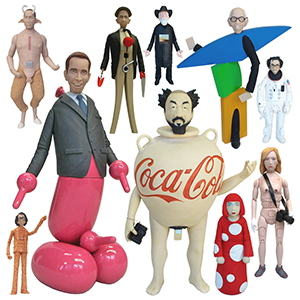
Michael Leavitt (b. 1977) is a visual artist based in Seattle, described as “the best caricature sculptor in the city.’ The ‘über-allround-cool-creator’ is most widely known for his ‘Art Army’ series of handmade action figures depicting visual artists, musicians, and entertainers. Through his company, Intuition Kitchen Productions, Leavitt is a ‘jack-of-all-trades’ responsible for a wide variety of conceptual art projects and performance artworks.
From a disinterest in convention, Leavitt proclaims, ‘I’d be afraid not to try other mediums.’ Growing up in the Pacific Northwest, Leavitt was influenced by the wood-craft and engineering of Native American, Scandinavian, and industrial manufacturing in the region. His parents practiced education, graphic design, and environmentalism by trade, formulating Leavitt’s early interests in both art and sociology.
read more »
Posted in Art, Humor, Money |
Leave a Comment »
April 17, 2013
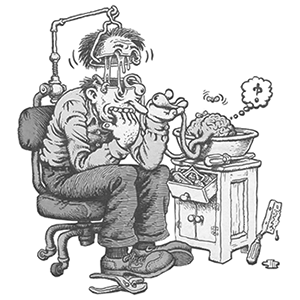
Zap Comix is an underground comics which was part of the youth counterculture of the late 1960s. ‘Zap’ #1 was published in San Francisco in late 1968. It featured the work of satirical cartoonist Robert Crumb. Some 3,500 copies were printed by Beat writer Charles Plymell. ‘Zap’ #1 was the first title put out by publisher Don Donahue under the ‘Apex Novelties’ imprint.
Philadelphia publisher Brian Zahn (who had published earlier works of R. Crumb in his tabloid called ‘Yarrowstalks’) had intended to publish an earlier version of the comic, but reportedly left the country with the artwork. Shortly before ‘Zap’ #3 was to be published, Crumb found photocopies of that earlier issue, drew new covers, and published it as ‘Zap’ #0. The first issue was sold on the streets of Haight-Ashbury out of a baby stroller pushed by Crumb’s wife, Dana. In years to come, the comic’s sales would be most closely linked with alternative venues such as head shops.
read more »
Posted in Art, Humor |
Leave a Comment »
April 17, 2013
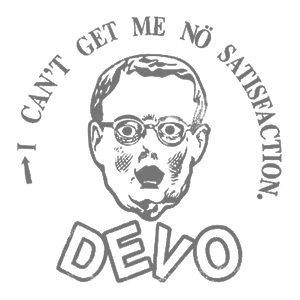
Booji Boy is a character created in the early 1970s by American New Wave band Devo. The name is pronounced ‘Boogie Boy’—the strange spelling resulted when the band was using Letraset to produce captions for a film, and ran out of the letter ‘g.’ When the ‘i’ was added but before the ‘e,’ Devo lead singer Mark Mothersbaugh reportedly remarked that the odd spelling ‘looked right.’
Booji Boy has traits of a simian child and typically wears an orange nuclear protection suit. He is portrayed by Mothersbaugh in a mask and is the son of another fictitious Devo character, General Boy. The intent of the figure is to satirize infantile regression in Western culture, a quality Devo enjoyed elucidating. This character was officially introduced in the 1976 short film ‘The Truth About De-Evolution.’
read more »
Posted in Art, Games, Humor |
Leave a Comment »
April 16, 2013
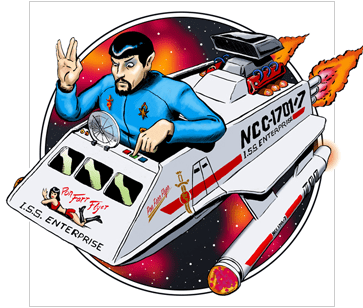
The evil twin is an antagonist found in many different fictional genres. They are physical copies of protagonists, but with radically inverted moralities. In filmed entertainment, they can have obvious physical differences with the protagonist—such as facial hair (often a goatee), eyepatches, scars or distinctive clothing—that make it easy for the audience to visually identify the two characters. Sometimes, however, the physical differences between the characters will be minimized, so as to confuse the audience. Both roles are almost always played by either the same actor or the actor’s actual twin (if the actor has one).
Though there may be moral disparity between actual biological twins, the term is more often a misnomer. In many cases, the two look-alikes are not actually twins, but rather physical duplicates produced by other phenomena (e.g. alternate universes). In others, the so-called ‘evil’ twin is more precisely a dual opposite to their ‘good’ counterpart, possessing at least some commonality with the value system of the protagonist.
read more »
Posted in Humor, Language, Philosophy |
Leave a Comment »
April 16, 2013
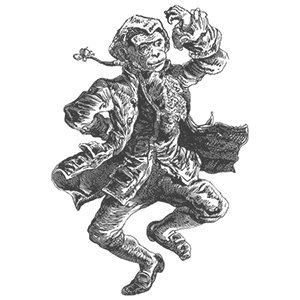
Signifyin’ (vernacular) is a practice in African-American culture, involving a verbal strategy of indirection that exploits the gap between the denotative and figurative meanings of words. According to African-American literary scholar Henry Louis Gates Jr., the practice derived from the Trickster archetype found in much African mythology, folklore, and religion: a god, goddess, spirit, man, woman, or anthropomorphic animal who plays tricks or otherwise disobeys normal rules and societal norms. In practice, signifyin’ often takes the form of quoting from subcultural vernacular, while extending the meaning at the same time through a rhetorical figure.
The expression itself derives from the numerous tales about the Signifying Monkey, a folk trickster figure said to have originated during slavery in the United States. In most of these narratives, the Monkey manages to dupe the powerful Lion by signifying. Signifyin(g) directs attention to the connotative, context-bound significance of words, which is accessible only to those who share the unique cultural values of a given speech community.
read more »
Posted in Humor, Language, Politics |
Leave a Comment »
April 15, 2013

The Signifying Monkey is a character of African-American folklore that derives from the trickster figure of Yoruba mythology, Esu Elegbara. This character was transported with Africans to the Americas under the names of Exu, Echu-Elegua, Papa Legba, and Papa Le Bas. Esu and his variants all serve as messengers who mediated between the gods and men by means of tricks. The Signifying Monkey is ‘distinctly Afro-American’ but is thought to derive from Yoruban mythology, which depicts Echu-Elegua with a monkey at his side.
Numerous songs and narratives concern the Signifying Monkey and his interactions with his friends, the Lion and the Elephant. In general the stories depict the Signifying Monkey insulting the Lion, but claiming that he is only repeating the Elephant’s words. The Lion then confronts the Elephant, who soundly beats the Lion. The Lion later comes to realize that the Monkey has been signifyin(g) and has duped him and returns angrily. The Signifying Monkey is a classic routine originally on a comedy album by Rudy Ray Moore.
Posted in Humor, Language |
Leave a Comment »
April 15, 2013
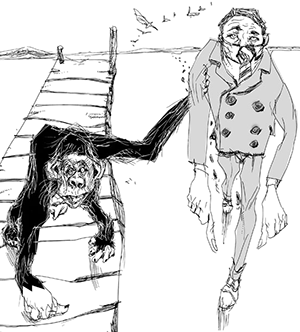
‘The Signifying Monkey: A Theory of African-American Literary Criticism’ is a work of literary criticism and theory by American scholar Henry Louis Gates Jr. first published in 1988. The book traces the folkloric origins of the African-American cultural practice of ‘signifying” and uses the concept to analyze the interplay between texts of prominent African American writers, specifically Richard Wright, Ralph Ellison, Zora Neale Hurston and Ishmael Reed.
Signifyin(g) is closely related to double-talk and trickery of the type used by the Monkey of these narratives, but, as Gates himself admits, ‘It is difficult to arrive at a consensus of definitions of signifyin(g).’ Bernard W. Bell defines it as an ‘elaborate, indirect form of goading or insult generally making use of profanity.’ Roger D. Abrahams writes that to signify is ‘to imply, goad, beg, boast by indirect verbal or gestural means.’ Signifyin(g) is a homonym with the concept of signification put forth by Semiotician Ferdinand de Saussure wherein the signifier (sound image) interacts with the signified (concept) to form one whole linguistic sign. Gates plays off this homonym and incorporates the linguistic concept of signifier and signified with the vernacular concept of signifyin(g).
read more »
Posted in Humor, Language, Politics |
Leave a Comment »
April 15, 2013

In mythology, and in the study of folklore and religion, a trickster is a god, goddess, spirit, man, woman, or anthropomorphic animal who plays tricks or otherwise disobeys normal rules and conventional behavior. The term was probably first used in this context by American ethnologist Daniel G. Brinton in 1885.
The trickster deity breaks the rules of the gods or nature, sometimes maliciously (for example, Loki) but usually with ultimately positive effects (though the trickster’s initial intentions may have been either positive or negative). Often, the bending/breaking of rules takes the form of tricks (e.g. Eris, Greek goddess of chaos) or thievery. Tricksters can be cunning or foolish or both; they are often funny even when considered sacred or performing important cultural tasks. An example of this is the sacred Iktomi of the Lakota, whose role is to play tricks and games and by doing so raises awareness and acts as an equalizer.
read more »
Posted in Humor, Philosophy, World |
Leave a Comment »


 The Daily Omnivore