December 16, 2019
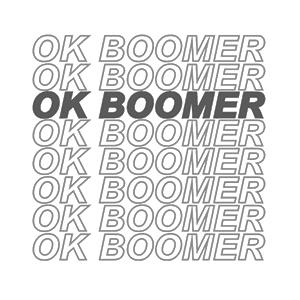
OK Boomer is a catchphrase and internet meme that gained popularity among younger cohorts throughout 2019, used to dismiss or mock attitudes stereotypically attributed to the baby boomer generation. The phrase first drew widespread attention in a 2019 TikTok video in response to an older man, though the phrase was coined years before that. It is considered by some to be ageist.
The phrase is a pejorative retort used to dismiss or mock perceived narrow-minded, outdated, negatively-judgemental, or condescending attitudes of older people, particularly baby boomers. The term has been used as a retort for perceived resistance to technological change, climate change denial, marginalization of minorities or opposition to younger generations’ ideals.
read more »
Posted in Humor, Politics |
Leave a Comment »
December 10, 2019
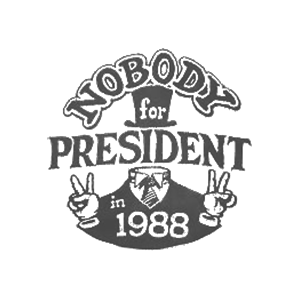
Hugh Nanton Romney (b. 1936), known as Wavy Gravy, is an American entertainer and peace activist best known for his role at Woodstock, as well as for his hippie persona and countercultural beliefs. He has reported that his moniker was given to him by B.B. King at the Texas International Pop Festival in 1969.
Romney has founded or co-founded several organizations, including the activist commune, the Hog Farm, and later, as Wavy Gravy, Camp Winnarainbow and the Seva Foundation. He founded the Phurst Church of Phun, a secret society of comics and clowns that aimed to support ending of the Vietnam War through political theater, and has adopted a clown persona in support of his political activism, and more generally as a form of entertainment work, including as the official clown of the Grateful Dead.
read more »
Posted in Art, Humor, Politics |
Leave a Comment »
December 6, 2019
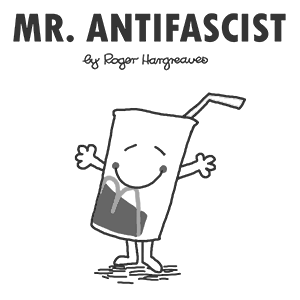
Milkshaking is the act of throwing milkshakes and other drinks at targets as a means of political protest in a manner similar to egging or pieing.
The trend gained popularity in the UK during the 2019 European Parliament election and was used against right-wing and far-right political candidates, such as Tommy Robinson, Nigel Farage, and Carl Benjamin, as well as other members of the UK Independence Party (UKIP) and the Brexit Party.
read more »
Posted in Food, Humor, Politics |
Leave a Comment »
November 22, 2019
Luther Blissett is a multiple-use name, an ‘open pop star’ informally adopted and shared by hundreds of artists and activists all over Europe and the Americas since 1994. The pseudonym first appeared in Bologna, Italy, in mid-1994, when a number of cultural activists began using it for staging a series of urban and media pranks and to experiment with new forms of authorship and identity.
From Bologna the multiple-use name spread to other European cities, such as Rome and London, as well as countries such as Germany, Spain, and Slovenia. Sporadic appearances of Luther Blissett have been also noted in Canada, the United States, Finland and Brazil.
read more »
Posted in Art, Humor, Politics |
Leave a Comment »
August 12, 2019
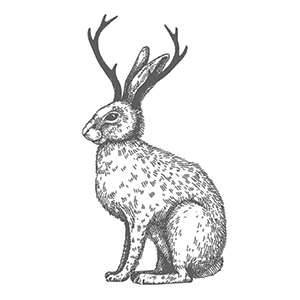
In early lumberjack folklore, fearsome critters are fantastical beasts that were said to inhabit the frontier wilderness of North America, such as the jackalope, a rabbit with the antlers of an antelope. Fearsome critters were an integral part of oral tradition in North America lumber camps during the turn of the 20th century, principally as a means to pass time (such as in tall tales) or as a jest for hazing newcomers.
In a typical fearsome critter gag, a person would casually remark about a strange noise or sight they encountered in the wild; subsequently, another accomplice would join in. Meanwhile, an eavesdropper would begin to investigate.
read more »
Posted in Humor |
Leave a Comment »
July 28, 2019
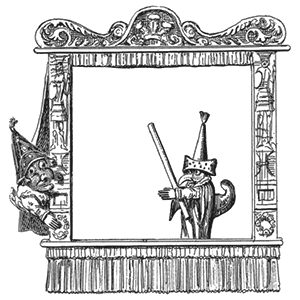
Slapstick is a style of humor involving exaggerated physical activity. The term arises from a device developed during the broad, physical comedy style known as commedia dell’arte in 16th-century Italy.
The ‘batacchio’ or ‘bataccio’ (lit. ‘slap stick’) consists of two thin slats of wood, which make a ‘slap’ when striking another actor, with little force needed to make a loud—and comical—sound. The physical slap stick remains a key component of the plot in the traditional and popular ‘Punch and Judy’ puppet show. Along with the inflatable bladder (of which the whoopee cushion is a modern variant), it was among the earliest special effects.
read more »
Posted in Art, Humor |
Leave a Comment »
July 11, 2019

The Scunthorpe problem is the unintentional blocking of websites, e-mails, forum posts, or search results by a spam filter or search engine because their text contains a string of letters that appear to have an obscene or otherwise unacceptable meaning. Names, abbreviations, and technical terms are most often cited as being affected by the issue.
The problem arises since computers can easily identify strings of text within a document, but interpreting words of this kind requires considerable ability to interpret a wide range of contexts, possibly across many cultures, which is an extremely difficult task. As a result, broad blocking rules may result in false positives affecting innocent phrases.
read more »
Posted in Humor, Language, Technology |
Leave a Comment »
April 22, 2019
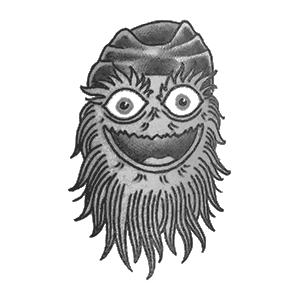
Gritty is the official mascot for the Philadelphia Flyers National Hockey League (NHL) team. He is a 7-foot furry orange creature with googly eyes who wears Flyers’ gear. Gritty has been compared to the Phillie Phanatic, the mascot for the Philadelphia Phillies baseball team.
He was created by Brian Allen of Flyland Designs with help from David Raymond, the first man to portray the Phillie Phanatic. Gritty was introduced on September 24, 2018. According to his official biography, Gritty emerged after construction at the Wells Fargo Center, the Flyers’ home arena, disturbed his secret hideout. Within the months following his debut, he became an internet sensation and made appearances on several talk shows.
read more »
Posted in Games, Humor |
Leave a Comment »
January 22, 2019

Wait Wait… Don’t Tell Me! is a weekly news-based radio panel show produced by WBEZ in Chicago and National Public Radio (NPR). On the program, panelists and contestants are quizzed in humorous ways about that week’s news.
The show is recorded in front of a live audience in Chicago at the Chase Auditorium beneath the Chase Tower on Thursday nights and typically airs weekend mornings.
read more »
Posted in Games, Humor, Politics |
1 Comment »
January 6, 2019

Super Dave Osborne was a character created and played by comedian Bob Einstein. Einstein’s comedic depiction is of a naive but optimistic stuntman who frequently appears injured when his stunts go spectacularly wrong.
Super Dave is billed as an ‘accomplished’ stuntman, though he rarely succeeds when performing the stunts depicted on-screen. Typically the character will perform outrageous daredevil stunts which often go disastrously awry and result in the appearance of grievous bodily injury. These include such mishaps as riding inside the hub of a giant yo-yo suspended from a crane (the yo-yo broke free of its string and rolled off a cliff into a ravine) and being flung by a catapult inside a giant football (the catapult malfunctioned and ‘spiked’ the football instead of throwing it). After such a mishap, Super Dave would usually appear torn apart, stretched, or otherwise injured.
read more »
Posted in Art, Humor |
Leave a Comment »
January 2, 2019
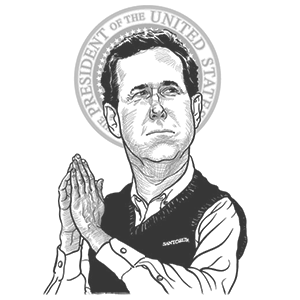
Pennsyltucky is a slang portmanteau of the state names Pennsylvania and Kentucky. It is used to characterize—usually humorously, but sometimes deprecatingly—the rural part of the U.S. state of Pennsylvania outside the Pittsburgh and Philadelphia metropolitan areas, more specifically applied to the local people and culture of its mountainous central Appalachian region.
The term is used more generally to refer to the Appalachian region, particularly its central core, which runs from Pennsylvania to Kentucky, and its people. An actual connection between the two regions was formed after numbers of Western Pennsylvanians left the state for Kentucky following the Whiskey Rebellion.
read more »
Posted in Humor, Politics |
Leave a Comment »
December 26, 2018

Alternative comedy is a term coined in the 1980s for a style of comedy that makes a conscious break with the mainstream comedic style of an era. The phrase has had different connotations in different contexts. In the UK, it was used to describe content which was an ‘alternative’ to the mainstream of live comedy, which often involved racist and sexist material.
In other contexts, it is the nature of the form that is ‘alternative,’ avoiding reliance on a standardized structure of a sequence of jokes with punchlines. American comedian Patton Oswalt has defined it as ‘comedy where the audience has no pre-set expectations about the crowd, and vice versa. In comedy clubs, there tends to be a certain vibe—alternative comedy explores different types of material.’
read more »
Posted in Humor |
Leave a Comment »



