March 22, 2026
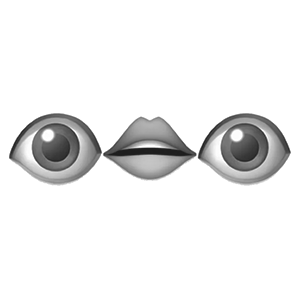
The Gen Z stare is a generally pejorative phrase coined by social media users to describe a ‘blank stare that members of younger generations give in situations where a verbal response would be more common’ or appropriate.
It most commonly occurs in customer service interactions in response to ostensibly simple questions about products, services or signage in the establishment. Reflecting a generation gap, instead of explaining to the customer something that they may not understand, the generation Z cohort members are often dumbstruck by these questions, perhaps temporarily.
read more »
Posted in Humor, Language |
Leave a Comment »
February 7, 2026
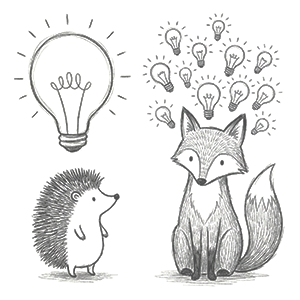
The Hedgehog and the Fox is an essay by philosopher Isaiah Berlin that was published as a book in 1953. It was one of his most popular essays with the public. However, Berlin said, ‘I meant it as a kind of enjoyable intellectual game, but it was taken seriously. Every classification throws light on something.’ It has been compared to ‘an intellectual’s cocktail-party game.’
The title is a reference to a fragment attributed to the Ancient Greek poet Archilochus: ‘a fox knows many things, but a hedgehog knows one big thing.’ The fable of ‘The Fox and the Cat’ embodies the a related idea: having one simple, reliable skill is better than boasting many clever but useless plans.
read more »
Posted in Language, Philosophy |
Leave a Comment »
February 1, 2026
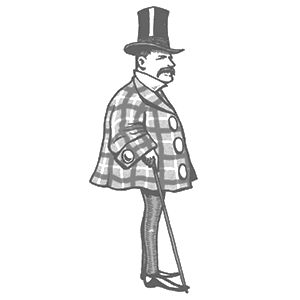
Dude is American slang for an individual, typically male. From the 1870s to the 1960s, dude primarily meant a male person who dressed in an extremely fashionable manner (a dandy) or a conspicuous citified person who was visiting a rural location, a ‘city slicker.’ In the 1960s, dude evolved to mean any male person, a meaning that slipped into mainstream American slang in the 1970s. Current slang retains at least some use of all three of these common meanings.
The etymology of the term is obscure. ‘Dude’ may have derived from the 18th-century word ‘doodle,’ as in ‘Yankee Doodle Dandy.’
read more »
Posted in Language |
1 Comment »
January 14, 2026
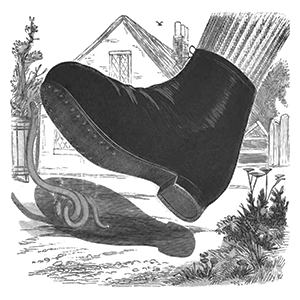
‘Even a worm will turn‘ is an English language expression used to convey the message that even the meekest or most docile of creatures will retaliate or seek revenge if pushed too far.
The phrase was first recorded in a 1546 collection of proverbs by John Heywood, in the form ‘Treade a worme on the tayle, and it must turne agayne.’ At the time ‘agayne’ also meant ‘against’ or ‘oppose.’
read more »
Posted in Language |
Leave a Comment »
December 7, 2025
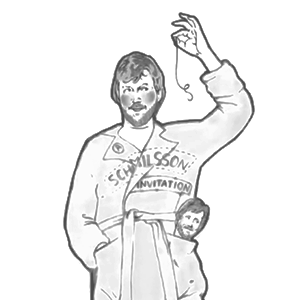
Shm-reduplication or schm-reduplication is a form of reduplication originating in Yiddish in which the original word or its first syllable (the base) is repeated with the copy (the reduplicant) beginning with the duplifix shm- (sometimes schm-), pronounced /ʃm/. The construction is generally used to indicate irony, sarcasm, derision, skepticism, or lack of interest with respect to comments about the discussed object. In general, the new combination is used as an interjection.
Shm-reduplication is often used with a noun, as a response to a previously-made statement to express the viewer’s doubts (eg. ‘He’s just a baby!,’ ‘Baby-shmaby, he’s five years old!’) or lack of interest (‘What a sale!,’ ‘Sale, schmale, there’s nothing I would want’).
read more »
Posted in Humor, Language |
Leave a Comment »
December 6, 2025
An inherently funny word is a word that is humorous without context, often more for its phonetic structure than for its meaning.
Vaudeville tradition holds that words with the /k/ sound are funny. A 2015 study at the University of Alberta suggested that the humor of certain nonsense words can be explained by whether they seem rude, and by the property of entropy: the improbability of certain letters being used together in a word.
read more »
Posted in Humor, Language |
Leave a Comment »
November 19, 2025
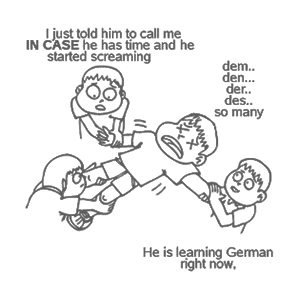
In grammar, case changes what a noun, adjective, or pronoun does in a sentence. It is a set of forms which depend on the syntax (how the words go together). Case is an example of inflection, which is often an affix, a part of a word that is added to other words, that signals a grammatical relationship. Long ago, Old English used several cases, but Modern English does not normally use cases except in pronouns.
In Latin, nouns pack several ideas into one word. Nouns must be masculine (Latin: ends in -us), feminine (ends in -a) or neutral (ends in -um). Also, adjectives must agree with the nouns by changing their endings. English is one of the few European languages that does not usually have gender for nouns.
read more »
Posted in Language, World |
1 Comment »
November 8, 2025
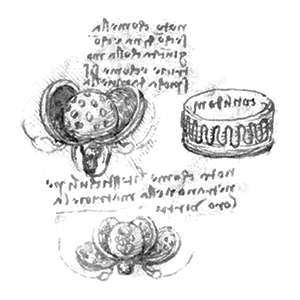
Commonplace books (or commonplaces) are personal notebooks used to compile any information the owner finds interesting or useful. They can variously contain notes, proverbs, adages, aphorisms, maxims, recipes, quotes, letters, poems, tables of weights and measures, prayers, legal formulas, and other professional references. They have been kept from antiquity, and were kept particularly during the Renaissance and in the nineteenth century.
Entries are most often organized under systematic subject headings and differ functionally from journals or diaries, which are chronological and introspective.
read more »
Posted in Language, Philosophy, Science |
Leave a Comment »
October 30, 2025
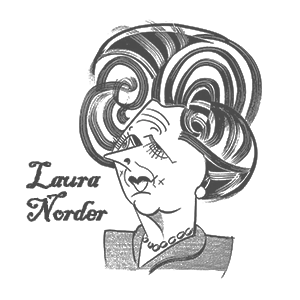
Linking R and intrusive R are sandhi phenomena (when the form of a word changes as a result of its position in an utterance) wherein a rhotic consonant (r-like sound) is pronounced between two consecutive vowels with the purpose of avoiding a hiatus, that would otherwise occur in the expressions, such as ‘tuner amp,’ although in isolation ‘tuner’ is pronounced the same as ‘tuna’ in non-rhotic varieties of English (those that skip some r sounds).
These phenomena occur in many of these dialects, such as those in most of England and Wales, parts of the United States, and all of the Anglophone societies of the southern hemisphere, with the exception of South Africa. In these varieties, /r/ is pronounced only when it is immediately followed by a vowel.
read more »
Posted in Language |
1 Comment »
October 20, 2025
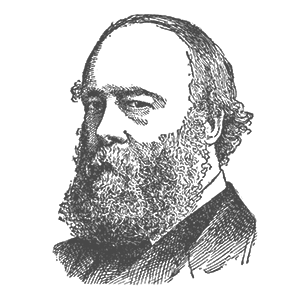
Bob’s your uncle is an idiom commonly used in the United Kingdom and Commonwealth countries that means ‘and there it is,’ or ‘and there you have it,’ or ‘it’s done.’ Typically, someone says it to conclude a set of simple instructions or when a result is reached. The meaning is similar to that of the French expression et voilà!’
The origins are uncertain, but a common hypothesis is that the expression arose after Conservative Prime Minister Robert Gascoyne-Cecil, 3rd Marquess of Salisbury (Bob), appointed his nephew Arthur Balfour as Chief Secretary for Ireland in 1887, an act of nepotism, which was apparently both surprising and unpopular. Whatever other qualifications Balfour might have had, ‘Bob’s your uncle’ was seen as the conclusive one.
read more »
Posted in Language, World |
Leave a Comment »
October 9, 2025

Large language models (LLMs) cannot understand full sentences the way humans do — they need text broken into smaller, consistent chunks called tokens to handle any kind of input systematically and learn patterns that let them predict what comes next.
A glitch token is token that causes unexpected or glitchy outputs when used in a prompt. Such output may include the model misunderstanding meanings of words, refusing to respond or generating repetitive or unrelated text. Prompts that cause this behavior may look completely or mostly normal.
read more »
Posted in Language, Technology |
Leave a Comment »
September 18, 2025
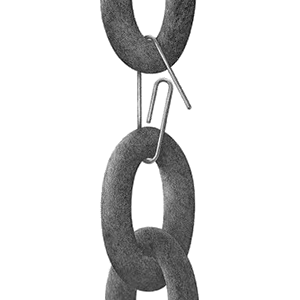
John Gall (1925-2014) was an American author, scholar, and pediatrician. Gall is known for his 1975 book ‘General Systemantics’ (republished two years later as ‘Systemantics: How Systems Work and Especially How They Fail’).
Gall’s Law is derived from Systemantics and states: ‘A complex system that works is invariably found to have evolved from a simple system that worked. A complex system designed from scratch never works and cannot be patched up to make it work. You have to start over with a working simple system.’
read more »
Posted in Health, Language, Science |
Leave a Comment »


 The Daily Omnivore