January 25, 2011


A fad, sometimes called a trend, meme or a craze, is any form of behavior that develops among a large population and is collectively followed with enthusiasm for some period, generally as a result of the behavior’s being perceived as novel in some way.
A fad is said to ‘catch on’ when the number of people adopting it begins to increase rapidly, but they fade quickly once the perception of novelty is gone. Though the term trend may be used interchangeably with fad, a fad is generally considered a fleeting behavior whereas a trend is considered to be a behavior that evolves into a relatively permanent change.
read more »
Posted in Language, Money, Politics |
Leave a Comment »
January 24, 2011

Electro (short for either electro-funk or electro-boogie) is a genre of electronic music directly influenced by the use of funk samples, Roland TR-808 synthesizers, and Moog keytars. Records in the genre typically feature drum machines and heavy electronic sounding deprived of vocals in general, although if present, they are delivered in a deadpan manner, often through an electronic distortion such as vocoding.
This is the main distinction of electro from previously prominent late-1970s genres such as disco and boogie, in which electronic sound was only part of the instrumentation rather than basis of the whole song. In 1982, Bronx based producer Afrika Bambaataa released the seminal track ‘Planet Rock,’ which contained elements of Kraftwerk’s Trans-Europe Express and ‘Numbers’ (from Kraftwerk’s Computer World album). ‘Planet Rock’ is widely regarded as a turning point in the electro genre.
read more »
Posted in Art, Language |
Leave a Comment »
January 24, 2011

A straw man argument is an informal fallacy based on misrepresentation of an opponent’s position. To ‘attack a straw man’ is to create the illusion of having refuted a proposition by substituting it with a superficially similar yet not equivalent proposition (the ‘straw man’), and refuting it, without ever having actually refuted the original position.
The origins of the term are unclear; one common (folk) etymology given is that it originated with men who stood outside courthouses with a straw in their shoe in order to indicate their willingness to be a false witness, but the practice is of questionable authority. Another more popular origin is a human figure made of straw, such as practice dummies used in military training. Such a dummy is supposed to represent the enemy, but it is considerably easier to attack because it neither moves, nor fights back.
Posted in Language, Politics |
Leave a Comment »
January 24, 2011

Boomerang Generation is one of several terms applied to the current generation of young adults in Western culture. They are so named for the frequency with which they choose to cohabitate with their parents after a brief period of living on their own–thus boomeranging back to their place of origin. This cohabitation can take many forms, ranging from situations that mirror the high dependency of pre-adulthood to highly independent, separate-household arrangements. In as much as home-leaving practices differ by economic class, the term is most meaningfully applied to members of the middle class.
The 18th through 21st birthdays of this generation coincide with the economic downturn starting with the collapse of the stock market bubble in 2000. This led to rising unemployment until 2004, the same time this generation was entering the workforce after high school or college graduation. Additionally, in the new economy, where globalisation-induced phenomena like outsourcing have eliminated many jobs, real wages have fallen over the last twenty years, and a college degree no longer ensures job stability, this is the easiest, if not only, way for these young adults to maintain the middle class lifestyle they anticipated.
Posted in Language, Money |
Leave a Comment »
January 24, 2011

Helicopter parent is a colloquial, early 21st-century term for a parent who pays extremely close attention to his or her child’s or children’s experiences and problems, particularly at educational institutions. The term was originally coined by Foster W. Cline, M.D. and Jim Fay in their 1990 book ‘Parenting with Love and Logic.’
Helicopter parents are so named because, like helicopters, they hover closely overhead, rarely out of reach, whether their children need them or not. They try to resolve their child’s problems, and try to stop them coming to harm by keeping them out of dangerous situations.
read more »
Posted in Education, Language, Politics |
2 Comments »
January 24, 2011
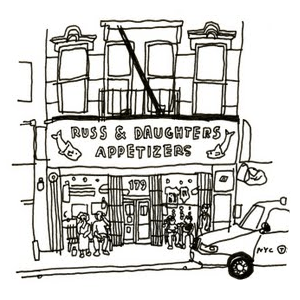
An appetizing store, typically in reference to Jewish cuisine, is best understood as a store that sells ‘the foods one eats with bagels’ ‘Appetizing’ is used as a noun by itself to refer to these type of foods. Appetizing stores includes both dairy and ‘parve’ (neither dairy nor meat) food items such as lox (smoked salmon), whitefish, and cream cheese spreads. These foods are typically eaten for breakfast or lunch and, based on Jewish kashrut dietary laws, include no meat products (kosher fish products are not considered meat).
The simplest distinction is that an appetizing store is a place that sells fish and dairy products, whereas a delicatessen sells meats. It can also can be described as ‘appy table,’ ‘appetizing table,’ or just ‘appy’ (short for ‘appetizing’ in the way ‘deli’ is short for ‘delicatessen.’ The term is used typically among American Jews, especially those in the New York City area. Pareve and dairy restaurants in Toronto, Canada, also have ‘Appetizers’ as part of their name who are both Kosher and Kosher style.
Posted in Food, Language, Money |
Leave a Comment »
January 20, 2011
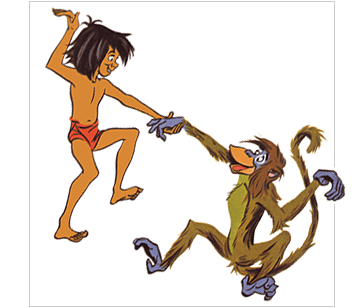
Mowgli syndrome is a term used by Wendy Doniger O’Flaherty in her 1995 book ‘Other Peoples’ Myths: The Cave of Echoes’ to describe mythological figures who succeed in bridging the animal and human worlds to become one with nature, a human animal, only to become trapped between the two worlds, not completely animal yet not entirely human.
It is also a rarely-used descriptive term for so-called feral children. The term originates from the character Mowgli, a fictional feral child from Rudyard Kipling’s ‘The Jungle Book.’
Posted in Art, Health, Language |
Leave a Comment »
January 19, 2011

A supertaster is a person who experiences the sense of taste with far greater intensity than average. Women are more likely to be supertasters, as are Asians and Africans. The cause of this heightened response is currently unknown, although it is thought to be, at least in part, due to an increased number of fungiform papillae (small mushroom-like structures on the tongue that house taste buds). Supertasters contrast with nontasters who have a decreased sense. The term originates with experimental psychologist Linda Bartoshuk who has spent much of her career studying genetic variation in taste perception.
In some environments, heightened taste response, particularly to bitterness, would represent an important advantage in avoiding potentially toxic plant alkaloids. However, in other environments, increased response to bitter may have limited the range of palatable foods. In a modern, energy-rich environment, supertasting may be cardioprotective, due to decreased liking and intake of fat.
Posted in Food, Language, Science |
Leave a Comment »
January 19, 2011

Percussive maintenance, also known as percussion therapy or a technical tap, is a term used to describe the malediction of an ill-behaved device to make it work, that is to say, swear at it and hit it. The origins and practice of the term are unknown, although some suggest the act became commonplace with the introduction of vacuum tube electronics. The term is a play on ‘preventive maintenance.’
Posted in Humor, Language, Technology |
Leave a Comment »
January 19, 2011
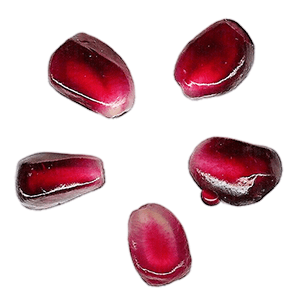
An aril [ar-il] is any specialized outgrowth from the funiculus (attachment point of the seed) or that covers or is attached to the seed. It is sometimes applied to any appendage or thickening of the seed coat in flowering plants, such as the edible parts of the mangosteen and pomegranate fruit, the mace of the nutmeg seed, or the hairs of a cotton plant. The aril may create a fruit-like structure (called a false-fruit). The edible flesh of the longan, lychee, ackee and lleuque fruits are highly developed arils surrounding the seed.
Posted in Food, Language, Science |
Leave a Comment »
January 18, 2011


The word chevron [shev-ruhn] originates from 14th century French and translates to ‘rafter.’ A chevron is a v-shaped mark so called because it looks like rafters of a shallow roof.
It is also the punctuation mark seen in Chinese, Korean and Japanese languages (︾), used to enclose vertically-written titles, acting as quotation mark; a V-shaped pattern in insignia, heraldry, flag design, road signs, architecture and construction; a wedge-shaped sediment deposit composed of material displaced from the ocean floor onto land by a tsunami.
Posted in Language |
Leave a Comment »
January 18, 2011


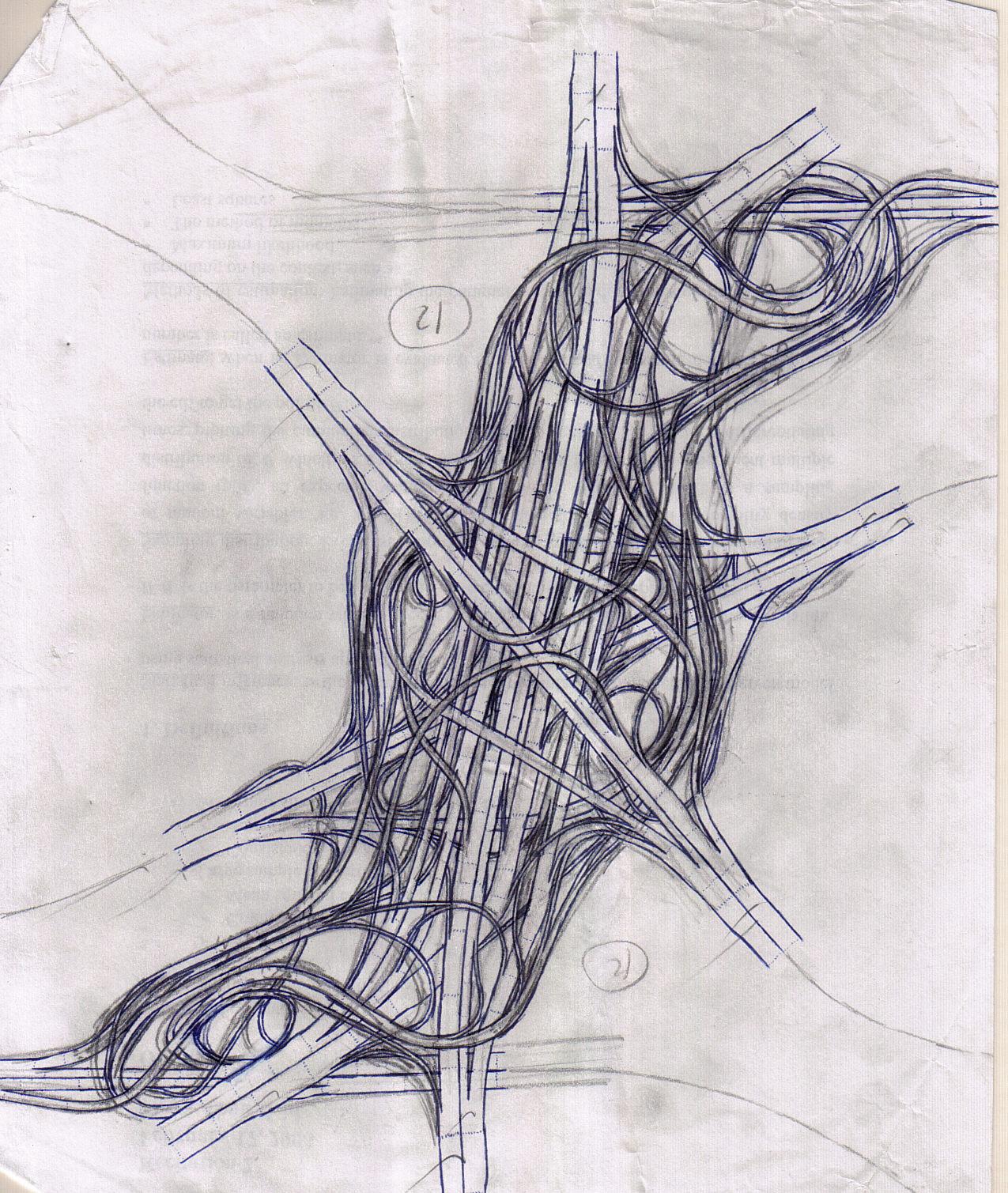
Spaghetti Junction is a nickname sometimes given to a complicated or massively intertwined road traffic interchange that resembles a plate of spaghetti. The term is believed to have been coined by a journalist at the Birmingham Evening Mail in the 1970s to refer to the Gravelly Hill Interchange on the M6 motorway in Birmingham, United Kingdom. Since then many complex interchanges around the world have acquired the nickname.
Posted in Humor, Language, Technology |
Leave a Comment »



 The Daily Omnivore