January 26, 2011

Henry Charles ‘Hank’ Chinaski is a semi-autobiographical protagonist of several works by the American writer Charles Bukowski. He appears in five of Bukowski’s novels, a number of his short stories and poems, the 1987 film ‘Barfly’ (played by Mickey Rourke and featuring a script written by Bukowski), and the 2005 film ‘Factotum’ (portrayed by Matt Dillon).
The works featuring him are ‘Confessions of a Man Insane Enough to Live With the Beasts’ (1965), ‘Post Office’ (1971), ‘South of No North’ (1973), ‘Factotum’ (1975), ‘Women’ (1978), ‘Ham on Rye’ (1982), ‘Hot Water Music’ (1983), ‘Hollywood’ (1989), and ‘Septuagenarian Stew’ (1990). He is also mentioned briefly in the beginning of Bukowski’s last novel, ‘Pulp.’
Posted in Art, Drugs, Language |
Leave a Comment »
January 26, 2011


The Ouroboros [or-oh-bohr-ohs] is an ancient symbol depicting a serpent or dragon eating its own tail, which often represents self-reflexivity or cyclicality, especially in the sense of something constantly re-creating itself, the eternal return, and other things perceived as cycles that begin anew as soon as they end (compare with phoenix). It can also represent the idea of primordial unity related to something existing in or persisting before any beginning with such force or qualities it cannot be extinguished.
The ouroboros has been important in religious and mythological symbolism, but has also been frequently used in alchemical illustrations, where it symbolizes the circular nature of the alchemist’s opus. It is also often associated with Gnosticism, and Hermeticism. The earliest known representation of the Ouroboros is contained in the Egyptian Book of the Netherworld. The self-begetting sun god Atum is said to have ascended from chaos-waters with the appearance of a snake, the animal renewing itself every morning, and the deceased wishes to turn into the shape of the snake Sato (‘son of the earth’), the embodiment of Atum.
Posted in Art, Language, Philosophy |
1 Comment »
January 26, 2011

Thundersnow is a rare kind of thunderstorm with snow falling as the primary precipitation instead of rain. It typically falls in regions of strong upward motion within the cold sector of an extratropical cyclone, where the precipitation consists of ice pellets rather than snow. One unique aspect of thundersnow is that the snowfall acts as an acoustic suppressor of the thunder.
The thunder from a typical thunderstorm can be heard many miles away, while the thunder from thundersnow can usually only be heard within a two to three mile radius from the lightning. In the United States, March is their peak month of formation, and on average, only 6.3 events are reported per year.
Posted in Language, Science |
Leave a Comment »
January 25, 2011


Prole drift, short for proletarian drift, is a trend in which products, styles or other aspects of culture previously considered to be upscale or upper class become popular among working class people. Prole drift can also go the other way, as when things that were once the purview of the working class become fashionable in the middle or upper classes. The term was coined by, American literary historian, Paul Fussell in 1983 to describe the phenomenon of most aspects of high culture eventually joining the lowest common denominator.
Examples include sales of premium coffee, Burberry clothing or Coach Inc. handbags to working class people. Examples of reverse prole drift include Mockney, the skinhead and punk subcultures, hip hop, rockabilly, dressing down, slumming it (e.g. going to a working class bar) and NASCAR. BMW cars (particularly the 3 series) have also suffered from this phenomenon, in some instances the 3 series outselling more mainstream cars such as the Ford Mondeo and Vauxhall Vectra.
Posted in Language, Money, Politics |
Leave a Comment »
January 25, 2011

A chav is a stereotype of certain people in the United Kingdom. Also known as a charver in Yorkshire and North East England, ‘chavs’ are said to be aggressive teenagers, of white working class background, who repeatedly engage in antisocial behaviour such as street drinking, drug abuse and rowdiness, or other forms of juvenile delinquency. The derivative Chavette has been used to refer to females.
Chav probably has its origins in the Romani word ‘chavi,’ meaning ‘child’ (or ‘chavo,’ meaning ‘boy,’ or ‘chavvy,’, meaning ‘youth’). This word may have entered the English language through the Geordie dialect word charva, meaning a rough child. This is similar to the colloquial Spanish word chaval, meaning ‘kid’ or ‘guy.’ In Italy, chavs are termed as coatto, which basically means ‘working class’ and vulgar.
read more »
Posted in Language, Money, World |
Leave a Comment »
January 25, 2011

In the context of the World Wide Web, content farms are companies (or their divisions) that employ large numbers of (often freelance) writers to generate large amounts of textual content. The articles in content farms are written by human beings but may not be written by a specialist in the area. In one of Google’s own promotional videos the majority of the links available were actually produced at content farms.
Content farms contain huge number of articles. For instance, Demand Media will soon be publishing 1 million items a month, the equivalent of four English-language Wikipedias a year. Big content farms are expensive resources, sold for many millions.
read more »
Posted in Language, Money, Technology |
Leave a Comment »
January 25, 2011


A fad, sometimes called a trend, meme or a craze, is any form of behavior that develops among a large population and is collectively followed with enthusiasm for some period, generally as a result of the behavior’s being perceived as novel in some way.
A fad is said to ‘catch on’ when the number of people adopting it begins to increase rapidly, but they fade quickly once the perception of novelty is gone. Though the term trend may be used interchangeably with fad, a fad is generally considered a fleeting behavior whereas a trend is considered to be a behavior that evolves into a relatively permanent change.
read more »
Posted in Language, Money, Politics |
Leave a Comment »
January 24, 2011

Electro (short for either electro-funk or electro-boogie) is a genre of electronic music directly influenced by the use of funk samples, Roland TR-808 synthesizers, and Moog keytars. Records in the genre typically feature drum machines and heavy electronic sounding deprived of vocals in general, although if present, they are delivered in a deadpan manner, often through an electronic distortion such as vocoding.
This is the main distinction of electro from previously prominent late-1970s genres such as disco and boogie, in which electronic sound was only part of the instrumentation rather than basis of the whole song. In 1982, Bronx based producer Afrika Bambaataa released the seminal track ‘Planet Rock,’ which contained elements of Kraftwerk’s Trans-Europe Express and ‘Numbers’ (from Kraftwerk’s Computer World album). ‘Planet Rock’ is widely regarded as a turning point in the electro genre.
read more »
Posted in Art, Language |
Leave a Comment »
January 24, 2011

A straw man argument is an informal fallacy based on misrepresentation of an opponent’s position. To ‘attack a straw man’ is to create the illusion of having refuted a proposition by substituting it with a superficially similar yet not equivalent proposition (the ‘straw man’), and refuting it, without ever having actually refuted the original position.
The origins of the term are unclear; one common (folk) etymology given is that it originated with men who stood outside courthouses with a straw in their shoe in order to indicate their willingness to be a false witness, but the practice is of questionable authority. Another more popular origin is a human figure made of straw, such as practice dummies used in military training. Such a dummy is supposed to represent the enemy, but it is considerably easier to attack because it neither moves, nor fights back.
Posted in Language, Politics |
Leave a Comment »
January 24, 2011

Boomerang Generation is one of several terms applied to the current generation of young adults in Western culture. They are so named for the frequency with which they choose to cohabitate with their parents after a brief period of living on their own–thus boomeranging back to their place of origin. This cohabitation can take many forms, ranging from situations that mirror the high dependency of pre-adulthood to highly independent, separate-household arrangements. In as much as home-leaving practices differ by economic class, the term is most meaningfully applied to members of the middle class.
The 18th through 21st birthdays of this generation coincide with the economic downturn starting with the collapse of the stock market bubble in 2000. This led to rising unemployment until 2004, the same time this generation was entering the workforce after high school or college graduation. Additionally, in the new economy, where globalisation-induced phenomena like outsourcing have eliminated many jobs, real wages have fallen over the last twenty years, and a college degree no longer ensures job stability, this is the easiest, if not only, way for these young adults to maintain the middle class lifestyle they anticipated.
Posted in Language, Money |
Leave a Comment »
January 24, 2011

Helicopter parent is a colloquial, early 21st-century term for a parent who pays extremely close attention to his or her child’s or children’s experiences and problems, particularly at educational institutions. The term was originally coined by Foster W. Cline, M.D. and Jim Fay in their 1990 book ‘Parenting with Love and Logic.’
Helicopter parents are so named because, like helicopters, they hover closely overhead, rarely out of reach, whether their children need them or not. They try to resolve their child’s problems, and try to stop them coming to harm by keeping them out of dangerous situations.
read more »
Posted in Education, Language, Politics |
2 Comments »
January 24, 2011
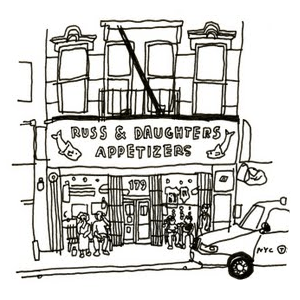
An appetizing store, typically in reference to Jewish cuisine, is best understood as a store that sells ‘the foods one eats with bagels’ ‘Appetizing’ is used as a noun by itself to refer to these type of foods. Appetizing stores includes both dairy and ‘parve’ (neither dairy nor meat) food items such as lox (smoked salmon), whitefish, and cream cheese spreads. These foods are typically eaten for breakfast or lunch and, based on Jewish kashrut dietary laws, include no meat products (kosher fish products are not considered meat).
The simplest distinction is that an appetizing store is a place that sells fish and dairy products, whereas a delicatessen sells meats. It can also can be described as ‘appy table,’ ‘appetizing table,’ or just ‘appy’ (short for ‘appetizing’ in the way ‘deli’ is short for ‘delicatessen.’ The term is used typically among American Jews, especially those in the New York City area. Pareve and dairy restaurants in Toronto, Canada, also have ‘Appetizers’ as part of their name who are both Kosher and Kosher style.
Posted in Food, Language, Money |
Leave a Comment »



