September 16, 2025

Fewer versus less is a debate in English grammar about the appropriate use of these two determiners. Linguistic prescriptivists usually say that fewer and not less should be used with countable nouns (e.g. apples or cars), and that less should be used only with uncountable nouns (e.g. water or happiness).
This distinction was first tentatively suggested by the grammarian Robert Baker in 1770, and it was eventually presented as a rule by many grammarians since then.
read more »
Posted in Language |
Leave a Comment »
September 8, 2025

Clanker is a slur for robots and artificial intelligence software. The term has been used in ‘Star Wars’ media, first appearing in the franchise’s 2005 video game ‘Star Wars: Republic Commando.’ In 2025, the term became widely used to discuss distaste for machines ranging from delivery robots to large language models. This trend has been attributed to anxiety around the negative societal effects of artificial intelligence.
Whereas AI slop describes low-quality output from artificial intelligence, clanker belittles the underlying robotic systems. While other science fiction media includes pejoratives for robots, such as ‘skinjob’ in ‘Blade Runner’ and ‘toaster’ in ‘Battlestar Galactica,’ clanker is believed to have gained popularity because its usage is intuitive and flexible.
read more »
Posted in Language, Technology |
Leave a Comment »
July 25, 2025
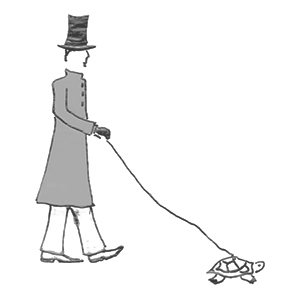
Flâneur [flah-neyr] is a French term for a type of urban male ‘stroller,’ ‘lounger,’ ‘saunterer,’ or ‘loafer.’ Traditionally depicted as male, a flâneur is an ambivalent figure of urban affluence and modernity, representing the ability to wander detached from society, for an entertainment from the observation of the urban life. Flânerie is the act of strolling, with all of its accompanying associations. A near-synonym of the noun is boulevardier.
The flâneur was first a literary type from 19th-century France, essential to any picture of the streets of Paris. The word carried a set of rich associations: the man of leisure, the idler, the urban explorer, the connoisseur of the street. Drawing on the work of Charles Baudelaire who described the flâneur in his poetry and 1863 essay ‘The Painter of Modern Life,’ Walter Benjamin promoted 20th-century scholarly interest in the flâneur as an emblematic archetype of urban, modern (even modernist) experience.
read more »
Posted in Language, World |
1 Comment »
April 28, 2025
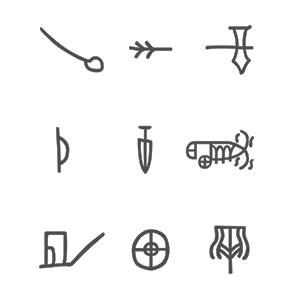
Linear B is the earliest known form of written Greek. It is a Mycenaean syllabic script that predates the Greek alphabet by several centuries, the earliest known examples dating to around 1450 BCE. It is adapted from the earlier Linear A, an undeciphered script perhaps used for writing the Minoan language. Linear B, found mainly in the palace archives at Knossos, Kydonia, Pylos, Thebes, and Mycenae, disappeared with the fall of Mycenaean civilization (1750-1050 BCE) during the Late Bronze Age collapse. The succeeding period, known as the Greek Dark Ages, provides no evidence of the use of writing.
Linear B was deciphered in 1952 by English architect and self-taught linguist Michael Ventris based on the research of American classicist Alice Kober. It is the only Bronze Age Aegean script to have been deciphered, with Linear A, Cypro-Minoan, and Cretan hieroglyphic remaining unreadable.
read more »
Posted in Language, World |
Leave a Comment »
December 16, 2024
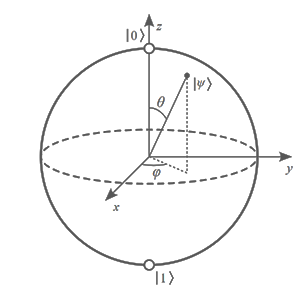
In quantum computing, quantum supremacy or quantum advantage is the goal of demonstrating that a programmable quantum computer can solve a problem that no classical computer can solve in any feasible amount of time, irrespective of the usefulness of the problem. The term was coined by Caltech theoretical physicist John Preskill in 2011, but the concept dates to Russian mathematician Yuri Manin’s 1980 and theoretical physicist Richard Feynman’s 1981 proposals of quantum computing.
Conceptually, quantum supremacy involves both the engineering task of building a powerful quantum computer and the computational-complexity-theoretic task of finding a problem that can be solved by that quantum computer and has a superpolynomial speedup over the best known or possible classical algorithm for that task.
read more »
Posted in Language, Science, Technology |
Leave a Comment »
October 11, 2024

Slop is low-quality media—including writing and images—made using generative artificial intelligence technology. Coined in the 2020s, the term has a derogatory connotation akin to ‘spam.’ It has been variously defined as ‘digital clutter,’ ‘filler content produced by AI tools that prioritize speed and quantity over substance and quality,’ and ‘shoddy or unwanted AI content in social media, art, books and, increasingly, in search results.’ Jonathan Gilmore, a professor of philosophy at the City University of New York, describes the ‘incredibly banal, realistic style’ of AI slop as being ‘very easy to process.’
After Hurricane Helene, an AI-generated image of a girl holding a puppy while sitting in a boat floating on flooded waters circulated among Republicans, who used as evidence of failures or the Biden administration to respond to the disaster. U.S. Senator Mike Lee posted the image of the girl on social media before later deleting it. The image apparently originated on the Trump-centered Internet forum Patriots.win.
read more »
Posted in Language, Money, Technology |
Leave a Comment »
April 11, 2024

”No Way to Prevent This,’ Says Only Nation Where This Regularly Happens’ is the title of a series of articles perennially published by the American news satire organization ‘The Onion’ satirizing the frequency of mass shootings in the United States and the lack of action taken in the wake of such incidents.
Each article is about 200 words long, detailing the location of the shooting and the number of victims, but otherwise remaining essentially the same. A fictitious resident—usually of a state in which the shooting did not take place—is quoted as saying that the shooting was ‘a terrible tragedy,’ but ‘there’s nothing anyone can do to stop them.’ The article ends by saying that the United States is the ‘only economically advanced nation in the world where roughly two mass shootings have occurred every month for the past eight years,’ and that Americans view themselves and the situation as ‘helpless.’
read more »
Posted in Humor, Language, Politics |
Leave a Comment »
March 19, 2024

In literary and historical analysis, presentism is a term for the introduction of present-day ideas and perspectives into depictions or interpretations of the past. Some modern historians seek to avoid presentism in their work because they consider it a form of cultural bias, and believe it creates a distorted understanding of their subject matter. The practice of presentism is regarded by some as a common fallacy when writing about the past.
The debate surrounding presentism in historical analysis is ongoing, with some arguing that completely divorcing moral judgments from historical inquiry may lead to a relativistic approach that fails to acknowledge the universal nature of certain moral principles. Balancing historical context with ethical considerations remains a challenge for historians and philosophers alike.
read more »
Posted in Language, Politics, World |
Leave a Comment »
March 12, 2024
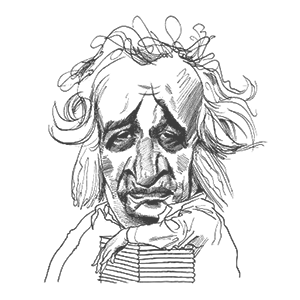
‘The Anxiety of Influence: A Theory of Poetry’ is a 1973 book by Harold Bloom, literary critic and Sterling Professor of humanities at Yale. It was the first in a series of books that advanced a new ‘revisionary’ or antithetical approach to literary criticism. Bloom’s central thesis is that poets are hindered in their creative process by the ambiguous relationship they necessarily maintain with precursor poets.
He argues that ‘the poet in a poet’ is inspired to write by reading another poet’s poetry and will tend to produce work that is in danger of being derivative of existing poetry, and, therefore, weak. Because poets historically emphasize an original poetic vision in order to guarantee their survival into posterity, the influence of precursor poets inspires a sense of anxiety in living poets. Thus Bloom attempts to work out the process by which the small minority of ‘strong’ poets manage to create original work in spite of the pressure of influence.
read more »
Posted in Art, Language |
1 Comment »
March 3, 2024
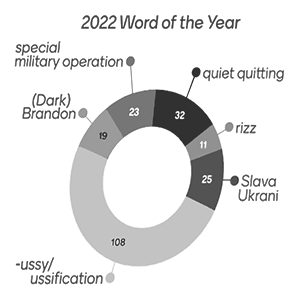
ussy is an English-language suffix derived from the word pussy used to create novel portmanteau terms, usually referring to hole-shaped objects. The suffix has existed within LGBT slang in the form ‘bussy’ (boy pussy) since the early 2000s, but was popularized in the late 2010s and early 2020s on social media platforms including TikTok. It was named the American Dialect Society’s word of the year for 2022.
‘Bussy’ and ‘mussy’ (man pussy) first appearing on the internet between 1999 and 2004. An April 2017 Tumblr post popularized the suffix with the term ‘thrussy’ (from throat), and it was further spread as part of the ‘one thicc bih’ Internet meme that began to spread about a month later. A 2018 study of ussy usage on Twitter as part of the meme identified 1,338 ‘pussy blends’ used in tweets from June to August 2017.
read more »
Posted in Humor, Language, Sex |
Leave a Comment »
January 18, 2024
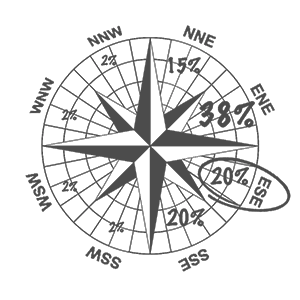
Crosswordese is the group of words frequently found in U.S. crossword puzzles but seldom found in everyday conversation. The words are usually short, three to five letters, with letter combinations which crossword constructors find useful in the creation of crossword puzzles, such as words that start and/or end with vowels, abbreviations consisting entirely of consonants, unusual combinations of letters, and words consisting almost entirely of frequently used letters. Such words are needed in almost every puzzle to some extent. Too much crosswordese in a crossword puzzle is frowned upon by cruciverbalists (people skillful in creating or solving crossword puzzles) and crossword enthusiasts.
The popularity of individual words and names of crosswordese, and the way they are clued, changes over time. For instance, ITO was occasionally clued in the 1980s and 1990s in reference to dancer Michio Itō and actor Robert Ito; then boomed in the late 1990s and 2000s with the rise of judge Lance Ito; and has since fallen somewhat, and when it appears today, the clue typically references figure skater Midori Ito or uses the partial phrase ‘I to’ (as in [‘How was ___ know?’]).
Posted in Games, Language |
1 Comment »
November 14, 2023
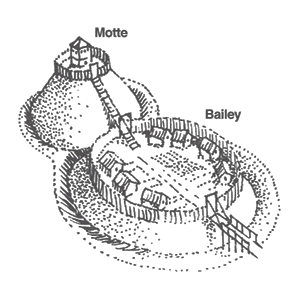
The motte-and-bailey fallacy (named after the motte-and-bailey castle) is a form of argument and an informal fallacy where an arguer conflates two positions that share similarities, one modest and easy to defend (the ‘motte’) and one much more controversial and harder to defend (the ‘bailey’).
The arguer advances the controversial position, but when challenged, insists that only the more modest position is being advanced. Upon retreating to the motte, the arguer can claim that the bailey has not been refuted (because the critic refused to attack the motte) or that the critic is unreasonable (by equating an attack on the bailey with an attack on the motte).
read more »
Posted in Language, Politics |
Leave a Comment »


 The Daily Omnivore