August 29, 2023

Guns don’t kill people, people kill people is a slogan popularized by the National Rifle Association of America (NRA) and other gun advocates. The slogan and connected understanding dates back to at least the 1910s, and it became widely popular among gun advocates in the second half of the 20th century, so much so that some have labeled it a cliché.
Gun control proponents claim the slogan is an example of bumper sticker logic and supports the larger folk psychology behind gun advocacy. In colloquial use, both parts of the statement are largely considered true. However, when the statement is used in the context of gun debates it becomes misdirection and can be considered a fallacy.
read more »
Posted in Death, Language, Politics |
Leave a Comment »
July 9, 2023

Muntzing is reducing the components inside an electronic appliance to the minimum required for it to function in most operating conditions, reducing design margins above minimum requirements toward zero.
The term is named after Earl “Madman” Muntz, a car and electronics salesman, who was not formally educated or trained in any science or engineering discipline. Muntz built a low part TV in the 1950s.
read more »
Posted in Language, Money, Technology |
Leave a Comment »
July 5, 2023

In machine learning, a stochastic [stuh-kas-tik] parrot is a large language model (LLM) that is good at generating convincing language, but does not actually understand the meaning of the language it is processing. The term was coined by computational linguistics professor Emily M. Bender in the 2021 artificial intelligence research paper ‘On the Dangers of Stochastic Parrots: Can Language Models Be Too Big?’
Stochastic means ‘random and involving chance or probability.’ A stochastic parrot,’ according to Bender, is an entity ‘for haphazardly stitching together sequences of linguistic forms … according to probabilistic information about how they combine, but without any reference to meaning.’ Less formally, the term refers to ‘large language models that are impressive in their ability to generate realistic-sounding language but ultimately do not truly understand the meaning of the language they are processing.’
read more »
Posted in Humor, Language, Technology |
1 Comment »
June 2, 2023

Gaming the system (also rigging, abusing, cheating, milking, playing, working, or breaking the system, or gaming or bending the rules) can be defined as using the rules and procedures meant to protect a system to, instead, manipulate the system for a desired outcome. Although the term generally carries negative connotations, gaming the system can be used for benign purposes in the undermining and dismantling of corrupt or oppressive organisations.
The first known documented use of the term ‘gaming the system’ is in 1975. According to James Rieley, a British advisor to CEOs and an author, structures in companies and organizations (both explicit and implicit policies and procedures, stated goals, and mental models) drive behaviors that are detrimental to long-term organizational success and stifle competition. For some, error is the essence of gaming the system, in which a gap in protocol allows for errant practices that lead to unintended results.
read more »
Posted in Games, Language |
Leave a Comment »
April 27, 2023

System D is a manner of responding to challenges that require one to have the ability to think quickly, to adapt, and to improvise when getting a job done. The term gained wider popularity after appearing in the 2006 publication of Anthony Bourdain’s ‘The Nasty Bits.’ Bourdain references finding the term in Nicolas Freeling’s memoir, ‘The Kitchen,’ about Freeling’s years as a Grand Hotel cook in France.
The term is a direct translation of French Système D. The letter D refers to any one of the French nouns ‘débrouille,’ ‘débrouillardise,’ or ‘démerde’ (French slang). The verbs se débrouiller and se démerder mean ‘to make do,’ ‘to manage, ‘especially in an adverse situation. Basically, it refers to one’s ability and need to be resourceful.
read more »
Posted in Food, Language, World |
Leave a Comment »
April 19, 2023

Sheng nu (‘leftover ladies’) is a derogatory Chinese term for women who remain unmarried in their late twenties and beyond. Most prominently used in China, the term has also been used colloquially to refer to women in India, North America, and other parts of Asia. The term compares unmarried women to leftover food and has gone on to become widely used in the mainstream media focusing on the negative connotations and positive reclamation of the term.
While initially backed and disseminated by pro-government media in 2007, the term eventually came under criticism from government-published newspapers two years later. The equivalent term for men, ‘guang gun’ meaning ‘bare branches,’ is used to refer to men who do not marry and thus do not add ‘branches’ to the family tree. Similarly, ‘shengnan’ (‘leftover men’) has also been used, though this term is not as commonly used as ‘leftover women’ in Chinese society and single males reaching a certain age will often be labeled as either ‘golden bachelors’ or ‘diamond single man.’
read more »
Posted in Language, Sex, World |
1 Comment »
February 25, 2023

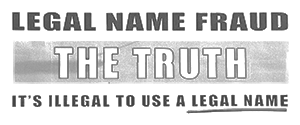
Pseudolaw consists of statements, beliefs, or practices that are claimed to be based on accepted law or legal doctrine, but which deviate significantly from most conventional understandings of law and jurisprudence, or which originate from non-existent statutes or legal principles the advocate or adherent incorrectly believes exist.
Canadian legal scholar Donald J. Netolitzky defined pseudolaw as ‘a collection of legal-sounding but false rules that purport to be law,’ a definition that distinguishes pseudolaw from arguments that fail to conform to existing laws such as novel arguments or an ignorance of precedent in case law.
read more »
Posted in Language, Money, Politics |
1 Comment »
February 3, 2023
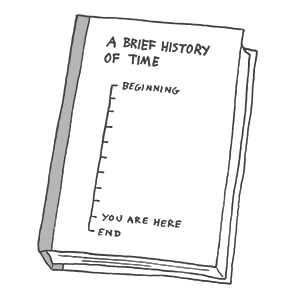
The Hawking Index (HI) is a mock mathematical measure of how far people will read through a book before giving up. The index is named after physicist Stephen Hawking’s ‘A Brief History of Time,’ which was dubbed ‘the most unread book of all time.’ It was invented by American mathematician Jordan Ellenberg, who created it in a blog for the ‘Wall Street Journal’ in 2014.
Ellenberg relied on data from Kindle users for his model. ‘A Brief History of Time’ scored 6.6% on the HI, meaning Ellenberg estimated that only 6.6% of readers finished the book.
read more »
Posted in Humor, Language, Science |
1 Comment »
December 18, 2022

A mumpsimus [muhmp-suh-muhs] is a ‘traditional custom obstinately adhered to however unreasonable it may be,’ or ‘someone who obstinately clings to an error, bad habit or prejudice, even after the foible has been exposed and the person humiliated; also, any error, bad habit, or prejudice clung to in this fashion.’
The term originates in the story of a priest using the nonsense Latin word ‘mumpsimus’ instead of ‘sumpsimus’ (lit. ‘we have taken’) when giving mass, and refusing to be corrected on the matter. The word may refer to either the speaker or their habit.
read more »
Posted in Language, Philosophy |
Leave a Comment »
August 17, 2022
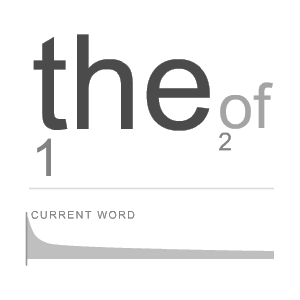
In corpus linguistics, a hapax [hah-paks] legomenon [luh-gaa-muh-naan] (sometimes abbreviated to hapax, plural hapaxes) is a word or an expression that occurs only once within a context: either in the written record of an entire language, in the works of an author, or in a single text.
The term is sometimes incorrectly used to describe a word that occurs in just one of an author’s works but more than once in that particular work. Hapax legomenon is a transliteration of Greek: ‘being said once.’
read more »
Posted in Language, World |
Leave a Comment »
February 6, 2022
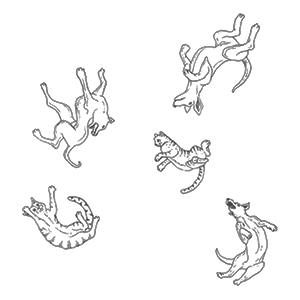
The English-language idiom raining cats and dogs is used to describe particularly heavy rain. It is of unknown etymology. One possible explanation involves the drainage systems on buildings in 17th-century Europe, which were poor and may have disgorged their contents, including the corpses of any animals that had accumulated in them, during heavy showers.
This occurrence is documented in Jonathan Swift’s 1710 poem ‘Description of a City Shower,’ in which he describes: ‘Drowned puppies, stinking sprats, all drenched in mud, Dead cats and turnip-tops come tumbling down the flood.’
read more »
Posted in Language, World |
1 Comment »
November 19, 2021

Akhfash’s goat is a Persian parable in which a philosopher trains his pet goat to nod its head when asked if it had understood a book that it was shown.
The term refers to a person who nods along with a conversation that they do not understand.
read more »
Posted in Language, Money, World |
Leave a Comment »


 The Daily Omnivore