July 16, 2012

Concerted cultivation is a style of parenting that is marked by a parent’s attempts to foster their child’s talents by incorporating organized activities in their children’s lives.
This parenting style is commonly exhibited in middle and upper class American families, and is also characterized by consciously developing language use and ability to interact with social institutions. Many have attributed cultural benefits to this form of child-rearing due to the style’s use in higher income families, conversely affecting the social habitus (socially learned dispositions) of children raised in such a manner.
read more »
Posted in Education, Language, Money |
Leave a Comment »
July 12, 2012
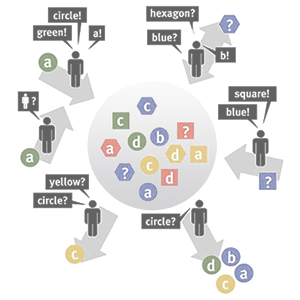
A folksonomy [fohk-son-uh-mee] is a system of classification derived from the practice and method of collaboratively creating and managing tags to annotate and categorize content; this practice is also known as collaborative tagging, social classification, social indexing, and social tagging. Folksonomy, a term coined by Thomas Vander Wal, is a portmanteau of folk and taxonomy.
Folksonomies became popular on the Web around 2004 as part of social software applications such as social bookmarking and photograph annotation. Tagging, which is one of the defining characteristics of Web 2.0 services, allows users to collectively classify and find information. Some websites include tag clouds as a way to visualize tags in a folksonomy. A good example of a social website that utilizes folksonomy is ’43 Things.’ However, tag clouds visualize only the vocabulary but not the structure of folksonomies, as do tag graphs.
read more »
Posted in Language, Technology |
1 Comment »
July 9, 2012

Black Hole is a comic written and illustrated by Charles Burns; it was published as a 12-issue limited series between 1995 and 2005. Set in the suburbs of Seattle during the mid-1970s, the comics follow a group of mostly middle class teenagers who, over the summer, contract a mysterious sexually transmitted disease known as ‘the Bug’ or ‘the teen plague,’ which causes them to develop bizarre unique physical mutations, turning them into social outcasts.
Burns has said that the mutations can be read as a metaphor for adolescence, sexual awakening, and the transition into adulthood. The look of the comic is meant to evoke the feel and atmosphere of classic 70s teen horror films like ‘The Last House on the Left,’ ‘Carrie,’ and ‘Halloween.’
Posted in Art, Language |
Leave a Comment »
July 9, 2012


Tony Millionaire (b. 1956) (real name Scott Richardson) is an American cartoonist, illustrator and author known for his syndicated comic strip ‘Maakies’ and the ‘Sock Monkey’ series of comics and picture books. The nautical settings of much of Millionaire’s work draw inspiration from his childhood memories of his grandparents’ artwork and seaside home in Massachusetts as well as the novels of Patrick O’Brian, of which he is an avid reader. He draws in a lush style that mingles naturalistic detail with strong doses of the fanciful and grotesque. His linework resembles that of Johnny Gruelle, whom he cites as one of his main sources of inspiration along with Ernest Shepard and ‘all those freaks from the twenties and thirties who did the newspaper strips’; many of Millionaire’s admirers adduce a similarity to the work of E. C. Segar in particular. He draws with a fountain pen.
When asked in interviews why he uses a pseudonym, Millionaire maintains that he does not, and that ‘Tony Millionaire’ is his real name: ‘It is my legal name, and it’s been around a lot longer than I’ve been a cartoonist.’ He has claimed that his unusual surname is an Old French word meaning ‘a person who owns a thousand serfs.’ Skeptics trace the origin of the name to a character in an episode of the ’60s TV series ‘I Dream of Jeannie.’ Millionaire has speculated that in the future he may publish some family-friendly works of his under a different moniker in order to dissociate them from his other, more ribald output.
read more »
Posted in Art, Humor, Language |
Leave a Comment »
July 9, 2012

The Believer is a United States literary magazine that also covers other arts and general culture. Founded and designed in 2003 by the writer and publisher Dave Eggers of McSweeney’s Publishing, it is edited by novelists Vendela Vida and Heidi Julavits, along with’Village Voice’ editor Ed Park. The magazine is published in San Francisco nine times a year. Eggers and his cohorts initially planned to ‘focus on writers and books we like,’ with a nod to ‘the concept of the inherent Good.’
The magazine urges readers and writers to ‘reach beyond their usual notions of what is accessible or possible.’ Illustrations and cartoons are featured throughout the magazine. The cover illustrations are done by Charles Burns, while most of the other portraits and line drawings are by Tony Millionaire (following Gilbert Hernandez from the fifth issue on). Michael Kupperman’s ‘Four-Color Comics’ has appeared in many issues, and in most issues a series of images from a given artist or other source run throughout the articles à la ‘The New Yorker.’
Posted in Art, Language |
Leave a Comment »
July 9, 2012
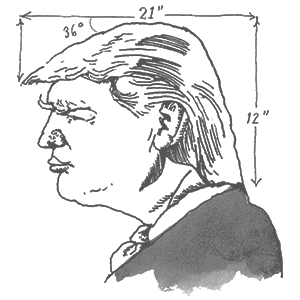
Ugly American is a pejorative term used to refer to perceptions of loud, arrogant, demeaning, thoughtless and ethnocentric behavior of American. Although the term is usually associated with or applied to travelers and tourists, it also applies to US corporate businesses in the international arena.
The term has been defined as: ‘Americans traveling or living abroad who remain ignorant of local culture and judge everything by American standards.’
read more »
Posted in Language, Politics, World |
Leave a Comment »
July 9, 2012

‘The Art of Noises‘ (‘L’arte dei Rumori’) is a Futurist manifesto, written by Luigi Russolo in a 1913 letter to friend and Futurist composer Francesco Balilla Pratella. Futurism was an artistic and social movement that originated in Italy in the early 20th century. It emphasized and glorified themes associated with contemporary concepts of the future, including speed, technology, youth, and violence, and objects such as the car, the airplane, and the industrial city.
In his letter, Russolo argues that the human ear has become accustomed to the noise of the bustling urban industrial soundscape; furthermore, this new sonic palette requires a new approach to musical instrumentation and composition. He proposes a number of conclusions about how electronics and other technology will allow futurist musicians to ‘substitute for the limited variety of timbres that the orchestra possesses today the infinite variety of timbres in noises, reproduced with appropriate mechanisms.’ ‘The Art of Noises’ is considered to be one of the most important and influential texts in 20th century musical aesthetics.
read more »
Posted in Art, Language, Technology |
Leave a Comment »
July 9, 2012

The Age of Spiritual Machines is a book by futurist Ray Kurzweil about the future course of humanity, particularly relating to the development of artificial intelligence and its impact on human consciousness. It is also a study on the concept of technological singularity, the hypothetical future emergence of greater-than-human superintelligence through technological means.
Originally published in 1999, the book predicts that machines with human-like intelligence will be available from affordable computing devices within a couple of decades, revolutionizing most aspects of life, and that eventually humanity and its machinery will become one and the same.
read more »
Posted in Language, Philosophy, Technology |
Leave a Comment »
July 6, 2012
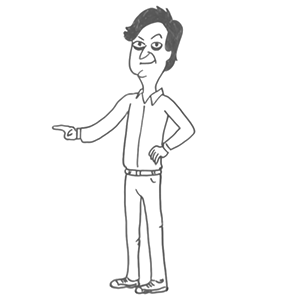
‘Predictably Irrational: The Hidden Forces That Shape Our Decisions’ is a 2008 book by behavioral economist Dan Ariely, in which he challenges readers’ assumptions about making decisions based on rational thought.
Ariely explains, ‘My goal, by the end of this book, is to help you fundamentally rethink what makes you and the people around you tick. I hope to lead you there by presenting a wide range of scientific experiments, findings, and anecdotes that are in many cases quite amusing. Once you see how systematic certain mistakes are–how we repeat them again and again–I think you will begin to learn how to avoid some of them.’
read more »
Posted in Health, Language, Money |
Leave a Comment »
July 5, 2012
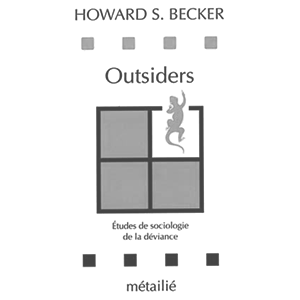
Labeling theory holds that deviance is not inherent to an act, but instead focuses on the tendency of majorities to negatively label minorities or those seen as deviant from standard cultural norms. It was developed by sociologists during the 1960s; Howard Saul Becker’s book ‘Outsiders’ was particularly influential. The theory is concerned with how the self-identity and behavior of individuals may be determined or influenced by the terms used to describe or classify them.
It is associated with the concepts of self-fulfilling prophecy and stereotyping. Unwanted descriptors or categorizations – including terms related to deviance, disability, or diagnosis of a mental disorder – may be rejected on the basis that they are merely ‘labels,’ often with attempts to adopt a more constructive language in its place. A stigma is defined as a powerfully negative label that changes a person’s self-concept and social identity.
read more »
Posted in Health, Language, Politics |
Leave a Comment »
July 3, 2012
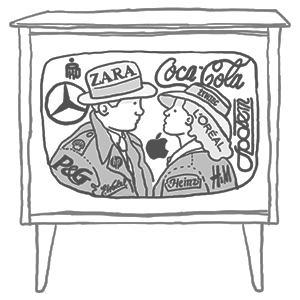
‘Four Arguments for the Elimination of Television‘ is a 1978 book written by liberal activist Jerry Mander which argues that there are a number of problems with the medium of television. Mander argues that many of the problems with television are inherent in the medium and technology itself, and thus cannot be reformed. Mander spent 15 years in the advertising business, including five as president and partner of Freeman, Mander & Gossage, San Francisco, a nationally-known advertising agency.
‘Four Arguments for the Elimination of Television’ argues that the technology of television is not a neutral or benign instrument or tool. The author argues that in varied technologies and institutions such as militaries, automobiles, nuclear power plants, mass production, and advertising, the basic form of the institution and the technology determines its interaction with the world, the way it will be used, the kind of people who use it, and to what ends.
read more »
Posted in Language, Politics, Technology |
2 Comments »
July 3, 2012

‘The medium is the message‘ is a phrase coined by Marshall McLuhan meaning that the form of a medium embeds itself in the message, creating a symbiotic relationship by which the medium influences how the message is perceived. The phrase was introduced in his most widely known book, ‘Understanding Media: The Extensions of Man,’ published in 1964.
McLuhan proposes that a medium itself, not the content it carries, should be the focus of study. He said that a medium affects the society in which it plays a role not only by the content delivered over the medium, but also by the characteristics of the medium itself. McLuhan frequently punned on the word ‘message’ changing it to ‘mass age,’ ‘mess age,’ and ‘massage’; a later book, ‘The Medium is the Massage’ was originally to be titled ‘The Medium is the Message,’ but McLuhan preferred the new title which is said to have been a printing error.
read more »
Posted in Language, Politics, Technology |
1 Comment »


 The Daily Omnivore