October 11, 2012
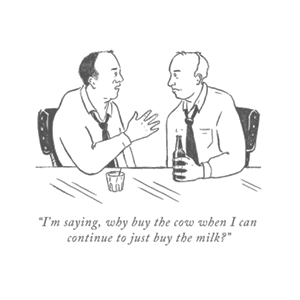
Sexual economy refers to the resources men offer to women in order to acquire sex. In this sense the heterosexual community is considered as a marketplace where sex is bought and sold. The marketplace is defined by gender roles, and in the sex economy men are the buyers, and women are the sellers.
Couples and their sexual activities are loosely interrelated by a marketplace; the decisions made regarding sex by each couple may be influenced by conditions in the market. As with all economic principles, price is determined by supply and demand, product variety, complicity among sellers, competition between sellers, as well as other factors. The price of sex is not limited to money, it has a wide conception of resources including, respect, love, time, gifts, affection, or commitment.
read more »
Posted in Love, Money, Sex |
1 Comment »
September 29, 2012
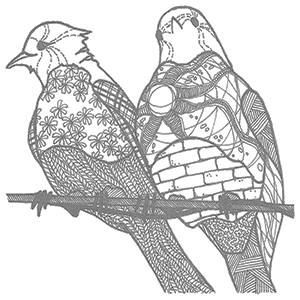
In social psychology, propinquity [proh-ping-kwi-tee] (from Latin: ‘nearness’) is one of the main factors leading to interpersonal attraction. It refers to the physical or psychological proximity between people. Propinquity can mean physical proximity, a kinship between people, or a similarity in nature between things (‘like-attracts-like’).
Two people living on the same floor of a building, for example, have a higher propinquity than those living on different floors, just as two people with similar political beliefs possess a higher propinquity than those whose beliefs strongly differ. Propinquity is also one of the factors, set out by Jeremy Bentham, used to measure the amount of (utilitarian) pleasure in a method known as felicific calculus (which is used to calculate the degree or amount of pleasure that a specific action is likely to cause).
read more »
Posted in Love, Science, Sex |
Leave a Comment »
September 15, 2012

Limerence [lim-rens] is a term coined in 1977 by American psychologist Dorothy Tennov to describe an involuntary state of mind which seems to result from a romantic attraction to another person combined with an overwhelming, obsessive need to have one’s feelings reciprocated. The concept grew out of Tennov’s mid-1960s work, when she interviewed over 500 people on the topic of love, and was first published in her 1979 book ‘Love and Limerence: The Experience of Being in Love.’
Though there are no established preconditions for limerence, there is a high rate of coincidence between limerence, depersonalization/derealization disorders, and dysfunctional attachment environments in childhood. This might suggest that sustained exposure to a psychologically unstable environment in childhood, or unhealthy/incomplete attachment between a child and their caretakers in early life, may make an individual more susceptible to limerence. There is also a statistically significant correlation between limerence and post traumatic stress disorder.
read more »
Posted in Health, Love, Sex |
1 Comment »
September 15, 2012

Erotomania [ih-roh-tuh-mey-nee-uh] is a type of delusion in which the affected person believes that another person, usually a stranger, high-status or famous person, is in love with him or her. The illness often occurs during psychosis, especially in patients with schizophrenia, delusional disorder, or bipolar mania.
During an erotomanic episode, the patient believes that a ‘secret admirer’ is declaring his or her affection to the patient, often by special glances, signals, telepathy, or messages through the media. Usually the patient then returns the perceived affection by means of letters, phone calls, gifts, and visits to the unwitting recipient. Even though these advances are unexpected and unwanted, any denial of affection by the object of this delusional love is dismissed by the patient as a ploy to conceal the forbidden love from the rest of the world.
read more »
Posted in Health, Love, Sex |
Leave a Comment »
September 15, 2012

Unrequited love is love that is not openly reciprocated or understood as such. The beloved may or may not be aware of the admirer’s deep and strong romantic affections. ‘Some say that one-sided love is better than none, but like half a loaf of bread, it is likely to grow hard and moldy sooner.’
Others, however, like Nietzsche, considered that ‘indispensable…to the lover is his unrequited love, which he would at no price relinquish for a state of indifference.’ The inability of the unrequited lover to express and fulfill emotional needs may lead to feelings such as depression, low self-esteem, anxiety, and rapid mood swings between depression and euphoria.
read more »
Posted in Art, Love, Philosophy |
Leave a Comment »
September 15, 2012
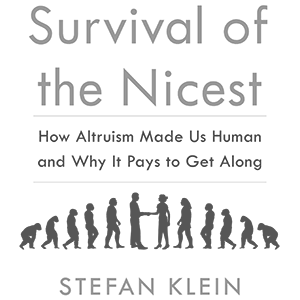
Nice guy is a term in the general public discourse and in popular culture describing an adult or teenage male with friendly yet unassertive personality traits in the context of a relationship with a woman. A typical nice guy believes in putting the needs of others before his own, avoids confrontations, does favors, gives emotional support, tries to get out of trouble, and generally acts nicely towards women.
There is an active debate about whether the nice guy personality profile may actually make a man less desirable to women romantically or sexually. Part of this debate includes speculation about hypocrisy among women in the dating world: that women may say they want a nice guy but won’t date him or have sex with him, and rather subconsciously prefer men who are more confident and assertive but less considerate.
read more »
Posted in Humor, Love, Sex |
Leave a Comment »
September 15, 2012

In popular culture, the ‘friend zone‘ refers to a platonic relationship where one person wishes to enter into a romantic relationship while the other does not. The most typical friend zone situation involves a man that is romantically interested in a woman who does not reciprocate or is unaware of his interest. It is generally considered to be an undesirable situation by the lovelorn person.
Once the friend zone is established, it is said to be difficult to move beyond that point in a relationship. There are differing explanations about what causes a person to be placed in the friend zone by another. One report suggests that some women don’t see their male friends as potential love interests because they fear that deepening their relationship might cause a loss of the romance and mystery or lead to rejection later.
read more »
Posted in Humor, Love, Sex |
2 Comments »
September 15, 2012
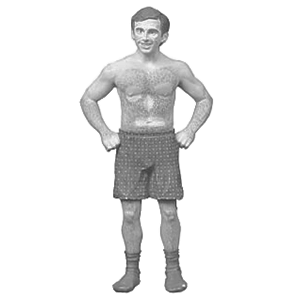
Involuntary celibacy (colloquially ‘incel’) is chronic near-total or total absence in a person’s sexuality of intimate relationships or sexual intercourse that is occurring for reasons other than voluntary celibacy, asexuality, antisexualism, or sexual abstinence. It is the psycho-social opposite of having a sex life.
Incel people, despite being open to sexual intimacy and potential romance with another person and also making active, repeated efforts towards such an end, cannot cause any such end(s) to occur with any significant degree of regularity—or even at all.
read more »
Posted in Health, Love, Sex |
1 Comment »
September 13, 2012
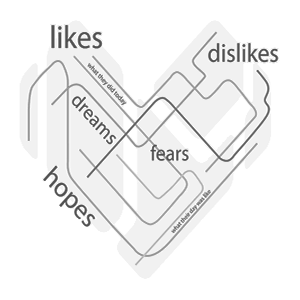
The concept of a lovemap was originated by psychologist and sexologist John Money to assist in a discussion of why people like what they enjoy sexually and erotically. According to Money, it is ‘a developmental representation or template in the mind and in the brain depicting the idealized lover and the idealized program of sexual and erotic activity projected in imagery or actually engaged in with that lover.’
According to Money, the word lovemap was first used in 1980 in an article entitled: ‘Pairbonding and Limerence.’ Money describes the formation of an individual’s lovemap as similar to the acquisition of a native language, in that it bears the mark of his or her own unique individuality, similar to an accent in a spoken language. A lovemap is usually quite specific as to details of the temperament, build, race, color, etc. of the ideal lover. Since its inception, the concept of ‘love maps,’ applied to interpersonal relationships, has found apt acceptance and is frequently referenced in love / relationship / sexual-evolution theory books; as for example in Wilson and McLaughlin’s 2001 ‘The Science of Love.’
read more »
Posted in Health, Love, Sex |
1 Comment »
September 5, 2012
A General Theory of Love is a 2000 book about the science of human emotions and biological psychiatry written by Thomas Lewis, Fari Amini, and Richard Lannon, psychiatry professors at the University of California, San Francisco. It has since been reissued twice, with new editions appearing in 2001 and 2007. The book examines the phenomenon of love and human connection from a combined scientific and cultural perspective.
It attempts to reconcile the language and insights of humanistic inquiry and cultural wisdom (literature, song, poetry, painting, sculpture, dance, and philosophy) with the more recent findings of social science, neuroscience, and evolutionary biology. However, the book has been criticized for its ‘convoluted and opaque’ prose style, as well as its extensive reliance on the model of the triune brain (reptilian, pre-mammalian, and mammalian) as defined by Paul D. MacLean, a model that has been variously categorized as obsolete, imprecise, or unnecessary.
read more »
Posted in Health, Language, Love |
Leave a Comment »
August 27, 2012

The term free love has been used to describe a social movement that rejects marriage, which is seen as a form of social bondage. The Free Love movement’s initial goal was to separate the state from sexual matters such as marriage, birth control, and adultery. It claimed that such issues were the concern of the people involved, and no one else. Much of the free-love tradition is an offshoot of anarchism, and reflects a libertarian philosophy that seeks freedom from state regulation and church interference in personal relationships.
According to this concept, the free unions of adults are legitimate relations which should be respected by all third parties whether they are emotional or sexual relations. In addition, some free-love writing has argued that both men and women have the right to sexual pleasure. In the Victorian era, this was a radical notion. Later, a new theme developed, linking free love with radical social change, and depicting it as a harbinger of a new anti-authoritarian, anti-repressive sensibility.
read more »
Posted in Love, Philosophy, Politics |
Leave a Comment »
July 19, 2012
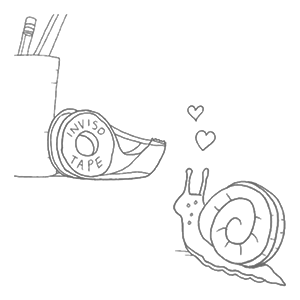
Parataxic [par-uh-tak-sik] distortion is term coined by american psychiatrist Harry S. Sullivan to explain the inclination to skew perceptions of others based on fantasy. The ‘distortion’ is in the perception of others, based not on actual experience with the individual but from a projected fantasy personality. For example: when one falls in love they can create an image of the person as the ‘perfect match’ or ‘soul mate’ only to find out later the person did not match the original perception.
The fantasy personality is created in part from experience and from emotional stress. The stress of forming a new relationship or finding a life mate, where one contemplates reproduction, can be seen as stress, although it is perceived as pleasurable. ‘Falling in love’ can create the atmosphere where parataxic distortion is primarily involved in the perception of the object of affection. It is possible in these situations for chemical influences to play a role in the process.
read more »
Posted in Health, Love, Sex |
1 Comment »



 The Daily Omnivore