April 17, 2012


The Second Summer of Love is a name given to the period in 1988-89 in Britain, during the rise of acid house music and the euphoric explosion of unlicensed MDMA (‘Ecstasy’)-fuelled rave parties. The term generally refers to the summers of both 1988 and 1989, when electronic dance music and MDMA exploded in popularity, culminating in mass free parties and the era of the rave.
LSD was also widely available and popular again. The music of this era fused dance beats with a psychedelic, 1960s flavor, and the dance culture drew parallels with the hedonism and freedom of the ‘Summer of Love’ in San Francisco two decades earlier. Similarities with the Sixties included fashions such as Tie-dye. The smiley logo is synonymous with this period in the UK.
Posted in Drugs, Love, World |
Leave a Comment »
March 15, 2012

Loving More is a national non-profit organization concerned with support, advocacy and polyamory awareness for the polyamorous community. Polyamory is the practice of having more than one intimate relationship at a time with the knowledge and consent of everyone involved. The three most visible projects of Loving More are a magazine, a website and two annual conferences. The organization was originally started as a News Letter ‘PEP Talk’ (Polyfidelity Education Productions) in the fall of 1984 by Ryam Nearing.
In 1991, the organization and group was renamed Loving More. The organization has been running conferences and retreats since the mid-eighties in order to educate and support people in multi-partnered families and relationships. In recent years Loving More has shifted the focus to include a push for polyamory awareness by reaching out to the therapists, doctors, lawyers and media in an effort to educate the public to possibilities beyond monogamy in loving relationships.
Posted in Love, Politics, Sex |
Leave a Comment »
March 15, 2012

Polyamory [poli-am-ory] is the practice, desire, or acceptance of having more than one intimate relationship at a time with the knowledge and consent of everyone involved. It should not be confused with polysexuality, the attraction to multiple genders and/or sexes, or pansexuality, which is attraction to all genders and sexes. The distinction between sex and gender is a concept that distinguishes sex, a natural or biological feature, from gender, the cultural or learned significance of sex. Polyamory, often abbreviated as ‘poly,’ is described as consensual, ethical, or responsible non-monogamy.
The word is sometimes used in a broader sense to refer to sexual or romantic relationships that are not sexually exclusive, though there is disagreement on how broadly it applies; an emphasis on ethics, honesty, and transparency all around is widely regarded as the crucial defining characteristic. The term ‘polyamorous’ can refer to the nature of a relationship at some point in time or to a philosophy or relationship orientation (much like gender or sexual orientation). It is sometimes used as an umbrella term that covers various forms of multiple relationships; polyamorous arrangements are varied, reflecting the choices and philosophies of the individuals involved.
read more »
Posted in Love, Politics, Sex |
Leave a Comment »
January 31, 2012

‘It girl‘ is a term for a young woman who possesses the quality ‘It,’ absolute attraction.’ The early usage of the concept is seen in a story by Rudyard Kipling: ‘It isn’t beauty, so to speak, nor good talk necessarily. It’s just ‘It.” British writer Elinor Glyn lectured: ‘With ‘It’ you win all men if you are a woman and all women if you are a man. ‘It’ can be a quality of the mind as well as a physical attraction.’
The expression reached global attention in 1927, with the film ‘It,’ starring Clara Bow. While ‘it girls’ of today are commonly young females in the worlds of fashion or show-business, the original concept focused on personality. Kipling’s ‘Mrs. Bathurst’ was a middle-aged widow, and Glyn significantly kept both Benito Mussolini and the doorman at the Ambassador hotel on her ‘It men’ list.
read more »
Posted in Language, Love, Sex |
1 Comment »
December 20, 2011

Planetary romance is a type of science fiction or science fantasy story in which the bulk of the action consists of adventures on one or more exotic alien planets, characterized by distinctive physical and cultural backgrounds. Some planetary romances take place against the background of a future culture where travel between worlds by spaceship is commonplace; others, particularly the earliest examples of the genre, do not, and invoke flying carpets, astral projection, or other methods of getting between planets. In either case, it is the planetside adventures which are the focus of the story, not the mode of travel.
As the name of the genre suggests, the planetary romance is an extension of late 19th and early 20th century adventure novels and pulp romances to a planetary setting. The pulp romance (of writers like H. Rider Haggard and Talbot Mundy) featured bold characters in exotic settings and ‘lost worlds’ such as South America, Africa, the Middle or Far East; a variant type took place in real or fictional countries of ancient and medieval times, and eventually contributed to the modern fantasy genre.
read more »
Posted in Art, Language, Love |
Leave a Comment »
November 28, 2011

Love-shyness is a specific type of severe chronic shyness that impairs or prevents intimate relationships. It implies a degree of inhibition and reticence with potential partners that is sufficiently severe to preclude participation in courtship, marriage and family roles.
According to this definition, love-shy people find it difficult if not impossible to be assertive in informal situations involving potential romantic or sexual partners. For example, a heterosexual love-shy man will have trouble initiating conversations with women because of strong feelings of social anxiety.
read more »
Posted in Health, Love |
Leave a Comment »
September 26, 2011
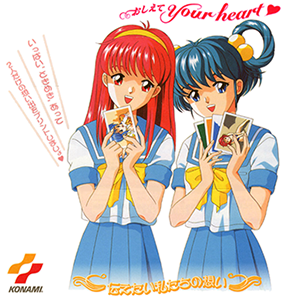
Dating sims (or dating simulations) are a video game subgenre, usually Japanese, with romantic elements. They are also sometimes put under the category of ‘neoromance.’ The most common objective of dating sims is to date, usually choosing from among several characters, and to achieve a romantic relationship. They can involve several technical elements such as a time limit, several statistics such as looks and charm which can be boosted through exercise, or an ‘attraction meter’ which can increase or decrease depending on one’s decisions.
The term dating sim is also often used incorrectly as a synonym for the visual novel genre. While the two genres often share a common visual presentation, dating sims are sometimes considered to be more statistically based than the ‘choose your own adventure’ style of visual novels.
read more »
Posted in Games, Love, Sex |
Leave a Comment »
September 10, 2011

Tsundere [tsoon-dey-ray] is a Japanese character development process that describes a person who is cold and even hostile before gradually showing their warm side. The word is derived from the terms ‘Tsun Tsun,’ meaning to turn away in disgust, and ‘Dere Dere’ meaning to become ‘lovey dovey.’
Originally found in Japanese bishōjo games (or ‘gal games,’ a type of Japanese video game centered on interactions with attractive anime-style girls; a subset of dating simulators), the word is now part of the otaku moe phenomenon (a rarefied pseudo-love for fictional characters).
read more »
Posted in Games, Love, Sex |
Leave a Comment »
April 28, 2011

Quirkyalone is a neologism referring to someone who enjoys being single (but is not opposed to being in a relationship) and generally prefers to be alone rather than dating for the sake of being in a couple. Magazine publisher Sasha Cagen came up with the term on a Brooklyn subway platform on New Year’s Eve, 1999.
International Quirkyalone Day is February 14 and was chosen as an alternative to ‘the marketing barrage’ of Valentine’s Day. It started in 2003 as a ‘celebration of romance, freedom and individuality.’
Posted in Language, Love, Sex |
Leave a Comment »
March 15, 2011

Love Jihad (also known as Romeo Jihad) is an alleged activity under which some young Muslim boys in Southern India reportedly targeted college girls belonging to non-Muslim communities for conversion to Islam by feigning love. A Love Jihad was alleged to be conducted in Kerala and Mangalore in the coastal Karnataka region. According to Kerala Catholic Bishops Council, up to 4,500 girls in Kerala have been targeted, whereas Hindu Janajagruthi Samiti claimed that 30,000 girls have been converted in Karnataka alone.
The practice is said to be popular on college campuses, and it was on one such that in early September 2009 two girls — one Hindu and one Christian — indicated that they had been forced to convert by two Muslim youths. The young men, both of whom were members of the Muslim Popular Front of India’s student organisation Campus Front were subsequently arrested and held without bail.
Posted in Love, Philosophy, War |
Leave a Comment »
February 8, 2011

Oxytocin is a mammalian hormone that acts primarily in the brain. It is best known for roles in female reproduction. It is released in large amounts during labor, and after stimulation of the nipples, facilitating birth and breastfeeding. Recent studies have begun to investigate oxytocin’s role in various behaviors, including orgasm, social recognition, pair bonding, anxiety, and maternal behaviors. For this reason, it is sometimes referred to as the ‘love hormone.’
Posted in Health, Love, Sex |
Leave a Comment »
December 20, 2010

Love is a sculpture by American artist Robert Indiana. It consists of the letters LO (with the O canted sideways) over the letters VE. The image was originally designed as a Christmas card for the Museum of Modern Art in 1964, and first exhibited as a sculpture in New York City in 1970. This original sculpture is made of weathering steel and has been on exhibit at the Indianapolis Museum of Art since 1975.
The LOVE design has been reproduced in a variety of formats. Likewise, the sculpture has been recreated in multiple versions and a variety of colors, and is now on display around the world. While it was first made in English, versions of the sculpture exist in Hebrew, Chinese, Italian and Spanish. The LOVE emblem has been adopted by skateboarders and frequently appears in skateboard magazines and videos. After skateboarding was banned in Philadelphia’s LOVE Park, the emblem was used by organizations opposing the ban.
Posted in Art, Love |
Leave a Comment »



 The Daily Omnivore