July 24, 2013

Material efficiency is a description or metric which expresses the degree in which usage of raw materials, construction projects or physical processes are used or carried out in a manner which consumes, incorporates, or wastes less of a given material compared to previous measures.
Making a usable item out of thinner stock than a prior version increases the material efficiency of the manufacturing process. (The term ‘Material efficiency’ can also signify the degree in which a material can handle a particular load, strain or weight upon it.)
Posted in Money |
Leave a Comment »
July 24, 2013

‘C.R.E.A.M.‘ (‘Cash Rules Everything Around Me’) is a song by the Wu-Tang Clan, from their 1993 studio album, ‘Enter the Wu-Tang (36 Chambers).’
The song was produced by Wu-Tang Clan leader RZA, and samples The Charmels’ 1967 song, ‘As Long As I’ve Got You.’ The track features a verse from Raekwon, a long verse from Inspectah Deck, and the hook performed by Method Man: ‘Cash rules everything around me, C.R.E.A.M./Get the money; dollar, dollar bill, y’all.’
read more »
Posted in Art, Money |
Leave a Comment »
July 17, 2013

Etoy is a European digital art group. Their slogan is: ‘leaving reality behind.’ Etoy routinely experiments with the boundaries of art, such as selling shares of ‘stock’ in the etoy.corporation, a registered company in Switzerland and travelling the world as well as living in ‘etoy.tanks’ (cargo containers).
The group was founded in 1994 and is owned now by hundreds of etoy.shareholders such as international art collectors, the etoy.agents and toywar.soldiers (who protected the etoy.brand during the toywar — a legal fight with an online toy retailer over the etoy.com domain). The etoy.inventors own, control and protect the corporate ‘sculpture.’
read more »
Posted in Art, Money, Technology |
Leave a Comment »
July 16, 2013

Douglas Rushkoff (b. 1961) is an American media theorist, graphic novelist, and documentarian. He is best known for his association with the early cyberpunk culture, and his advocacy of open source solutions to social problems. Rushkoff coined the terms: viral media (or media virus), digital native, and social currency. He has written ten books on media, technology, and culture.
He wrote the first syndicated column on cyberculture for ‘The New York Times Syndicate,’ as well as a regular column for ‘The Guardian of London.’ Rushkoff currently teaches in the Media Studies department at The New School University in Manhattan. He has previously lectured at the ITP at New York University’s Tisch School of the Arts and taught a class called ‘Narrative Lab.’
read more »
Posted in Language, Money, Technology |
Leave a Comment »
June 27, 2013

Pseudorationalism [soo-doh-rash-uh-nl-iz-uhm] was the label given by economist and philosopher Otto Neurath to a school of thought that he was heavily critical of, throughout many of his writings but primarily in his 1913 paper ‘The lost wanderers of Descartes and the auxiliary motive’ and later to a lesser extent in his 1935 ‘Pseudorationalismus der Falsifikation,’ a review of and attack on philosopher of science Karl Popper’s first book, ‘Logik der Forschung’ (‘The Logic of Scientific Discovery’), contrasting this approach with his own view of what rationalism should properly be.
Neurath aimed his criticism at a Cartesian belief that all actions can be subject to rational analysis, saying that: ‘Once reason has gained a certain influence, people generally show a tendency to regard all their actions as reasonable. Ways of action which depend on dark instincts receive reinterpretation or obfuscation.’
read more »
Posted in Money, Philosophy, Science |
Leave a Comment »
June 14, 2013
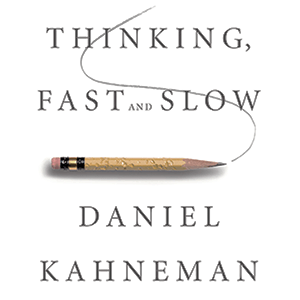
Attribute substitution is a psychological process thought to underlie a number of cognitive biases and perceptual illusions. It occurs when an individual has to make a judgment (of a target attribute) that is computationally complex, and instead substitutes a more easily calculated heuristic (‘rule of thumb’) attribute. This substitution is thought of as taking place in the automatic intuitive judgment system, rather than the more self-aware reflective system.
Hence, when someone tries to answer a difficult question, they may actually answer a related but different question, without realizing that a substitution has taken place. This explains why individuals can be unaware of their own biases, and why biases persist even when the subject is made aware of them. It also explains why human judgments often fail to show regression toward the mean.
read more »
Posted in Health, Money, Science |
Leave a Comment »
June 10, 2013

Chilling Effects is a collaborative archive created by Wendy Seltzer and founded along with several law school clinics and the Electronic Frontier Foundation (a digital rights group) to protect lawful online activity from legal threats.
Its website, ‘Chilling Effects Clearinghouse,’ allows recipients of cease-and-desist notices to submit them to the site and receive information about their legal rights and responsibilities. The archive was founded in 2001 by Internet activists who were concerned that the unregulated private practice of sending cease-and-desist letters seemed to be increasing and was having an unstudied, but potentially significant, ‘chilling effect’ on speech.
read more »
Posted in Money, Politics, Technology |
Leave a Comment »
June 10, 2013

‘Going Clear: Scientology, Hollywood, and the Prison of Belief’ is a 2013 non-fiction book about Scientology written by American journalist Lawrence Wright. The book contains interviews from current and former Scientologists, the history of founder L. Ron Hubbard and current leader David Miscavige, and analysis of the relationships of Tom Cruise and John Travolta to the organization.
In an interview with the ‘New York Times’ Wright said that ‘There are a lot of people out there who were very high up in the church and know a lot about it who have become outspoken…I’m very lucky to come along at a time when a lot of these people are ready to talk.’ Wright also disclosed that he has received ‘innumerable’ letters threatening legal action from lawyers representing the church and celebrities who belong to it.
read more »
Posted in Language, Money, Philosophy |
Leave a Comment »
June 10, 2013

Recruiting Scientologist celebrities and getting them to endorse Scientology to the public at large has always been very important to the Church of Scientology. According to founder L. Ron Hubbard: ‘Celebrities are very Special people and have a very distinct line of dissemination. They have comm[unication] lines that others do not have and many medias [sic] to get their dissemination through.’
Scientology has had a written program governing celebrity recruitment since at least 1955, when Hubbard created ‘Project Celebrity,’ offering rewards to Scientologists who recruited targeted celebrities. Early interested parties included former silent-screen star Gloria Swanson and jazz pianist Dave Brubeck. A Scientology policy letter of 1976 states that ‘rehabilitation of celebrities who are just beyond or just approaching their prime’ enables the ‘rapid dissemination’ of Scientology.
read more »
Posted in Money, Philosophy |
1 Comment »
June 10, 2013

Celebrity Centres are Church of Scientology facilities that are open to the public but serve mostly artists and celebrities and other ‘professionals, leaders and promising new-comers in the fields of the arts, sports, management and government,’ as ‘those are the people who are sculpting the present into the future.’ The Celebrity Centre International was established in Hollywood, California, in 1969 by Yvonne Gillham, a Sea Org member who worked with L. Ron Hubbard. Since then, other centres have been established in New York, London, Paris and a number of other cities across the world.
The Church often quotes L. Ron Hubbard saying that, ‘A culture is only as great as its dreams and its dreams are dreamed by artists,’ citing this as the reason that Celebrity Centres were established — to create a good environment for ‘artists.’ Critics of Scientology point to Hubbard’s launch of ‘Project Celebrity’ in 1955 to recruit celebrities into the church, and that the centres were established as an extension of this initial purpose. The church denies the existence of policy to actively recruit high-ranking celebrities.
Posted in Health, Money, Philosophy |
Leave a Comment »
June 6, 2013


In economics and decision theory, loss aversion refers to people’s tendency to strongly prefer avoiding losses to acquiring gains. Most studies suggest that losses are twice as powerful, psychologically, as gains. The concept was first demonstrated by psychologists Amos Tversky and Daniel Kahneman. John List, Chairman of the University of Chicagos’ department of economics has said: ‘It’s a deeply ingrained behavioral trait. .. that all human beings have — this underlying phenomenon that ‘I really, really dislike losses, and I will do all I can to avoid losing something.’
Loss aversion leads to risk aversion when people evaluate an outcome comprising similar gains and losses; since people prefer avoiding losses to making gains. Loss aversion may also explain sunk cost effects, where people justify increased investment in a decision, based on the cumulative prior investment, despite new evidence suggesting that the cost, starting today, of continuing the decision outweighs the expected benefit.
read more »
Posted in Money, Science |
Leave a Comment »
June 6, 2013

In behavioral economics, the endowment effect (also known as divestiture aversion) is the hypothesis that a person’s willingness to accept (WTA) compensation for a good is greater than their willingness to pay (WTP) for it once their property right to it has been established. People will pay more to retain something they own than to obtain something owned by someone else—even when there is no cause for attachment, or even if the item was only obtained minutes ago. This is due to the fact that once you own the item, foregoing it feels like a loss, and humans are loss-averse.
The endowment effect contradicts the Coase theorem (a theory of economic efficiency), and was described as inconsistent with standard economic theory which asserts that a person’s willingness to pay (WTP) for a good should be equal to their willingness to accept (WTA) compensation to be deprived of the good, a hypothesis which underlies consumer theory and indifference curves.
read more »
Posted in Money, Politics, Science |
1 Comment »



