October 11, 2024

Slop is low-quality media—including writing and images—made using generative artificial intelligence technology. Coined in the 2020s, the term has a derogatory connotation akin to ‘spam.’ It has been variously defined as ‘digital clutter,’ ‘filler content produced by AI tools that prioritize speed and quantity over substance and quality,’ and ‘shoddy or unwanted AI content in social media, art, books and, increasingly, in search results.’ Jonathan Gilmore, a professor of philosophy at the City University of New York, describes the ‘incredibly banal, realistic style’ of AI slop as being ‘very easy to process.’
After Hurricane Helene, an AI-generated image of a girl holding a puppy while sitting in a boat floating on flooded waters circulated among Republicans, who used as evidence of failures or the Biden administration to respond to the disaster. U.S. Senator Mike Lee posted the image of the girl on social media before later deleting it. The image apparently originated on the Trump-centered Internet forum Patriots.win.
read more »
Posted in Language, Money, Technology |
Leave a Comment »
September 29, 2024

Tariff engineering refers to design and manufacturing decisions made primarily so that the manufactured good is classified at a lower rate for tariffs than it would have been absent those decisions. It is a loophole whereby an importer pays a lower tariff by changing the intended import such that the importer has a lesser tariff burden.
In contrast to tariff evasion, tariff engineering configures the design, material, or construction to legally achieve the desired classification rather than illegally misclassifying the product or good. For tariff engineering to be legal, the good being imported must be a ‘commercial reality,’ which means any tariff engineering must be a ‘genuine step in the manufacturing process’ or have a commercial use or identity as imported.
read more »
Posted in Money, Technology, World |
Leave a Comment »
April 19, 2024

The Kia Challenge is a viral TikTok trend to which a series of motor vehicle thefts is attributed, targeting Kia and Hyundai vehicles in the U.S. manufactured between 2011 and 2021. The trend, which began in October 2022, has led to eight fatalities, according to the National Highway Traffic Safety Administration.
Until 2011, most Kia vehicles were manufactured with immobilizers—electronic security devices that prevent the engine from being started unless a proper key is inserted—a system present in most Hyundai vehicles until 2016. In Kia Sportage models manufactured in 2010, the immobilizer system comprised a transponder in the ignition key, an antenna coil in the key cylinder, and a SMARTRA unit. Kia vehicles manufactured from 2011 to 2021 and Hyundai vehicles manufactured from 2016 to 2021 that use a steel key, in comparison to a key fob and a push-button start mechanism, lack immobilizers.
read more »
Posted in Money, Politics, Technology |
1 Comment »
March 11, 2024

The Sloot Digital Coding System is an alleged data sharing technique that its inventor claimed could store a complete digital movie file in 8 kilobytes of data — violating Shannon’s source coding theorem (which establishes the statistical limits to data compression) by many orders of magnitude. The alleged technique was developed in 1995 by Romke Jan Bernhard Sloot (1945-1999), a Dutch electronics engineer.
In 1999, just days before the conclusion of a contract to sell his invention, Sloot died suddenly of a heart attack. The source code was never recovered, and the technique and claim have never been reproduced or verified.
read more »
Posted in Money, Technology |
Leave a Comment »
February 22, 2024
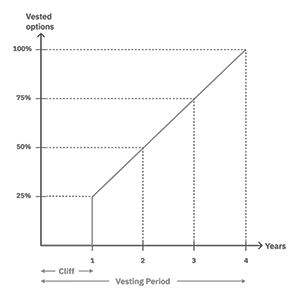
FYIFV (Fuck You, I’m Fully Vested) is a piece of early Microsoft jargon that has become an urban legend: the claim that employees whose stock options were fully vested (that is, could be exercised) would occasionally wear T-shirts or buttons with the initials FYIFV to indicate they were sufficiently financially independent to give their honest opinions and leave any time they wished.
In internal usage at Microsoft, it was meant metaphorically to describe intransigent co-workers. In press usage and popular culture, it was used to imply a predatory business culture reaching even to the programmers. Despite many third hand reports of Microsoft employees wearing FYIFV buttons or shirts, there is only one report of an actual FYIFV T-shirt, worn on the wearer’s last day at the company.
read more »
Posted in Humor, Money |
Leave a Comment »
February 13, 2024

In urban planning, Brusselization is ‘the indiscriminate and careless introduction of modern high-rise buildings into gentrified neighborhoods’ and has become a byword for ‘haphazard urban development and redevelopment.’
The notion applies to anywhere whose development follows the pattern of the uncontrolled development of Brussels in the 1960s and 1970s, that resulted from a lack of zoning regulations and the city authorities’ laissez-faire approach to city planning.
read more »
Posted in Money, Politics, World |
Leave a Comment »
January 6, 2024

EleutherAI is a grass-roots non-profit artificial intelligence (AI) research group. The group, considered an open-source version of OpenAI, was formed in a Discord server in July 2020 to organize a replication of GPT-3. In early 2023, it formally incorporated as the EleutherAI Foundation, a non-profit research institute. EleutherAI began as a Discord server on July 7, 2020 under the tentative name ‘LibreAI’ before rebranding to ‘EleutherAI’ later that month, in reference to eleutheria, an ancient greek term for liberty.
On December 30, 2020, EleutherAI released The Pile, a curated dataset of diverse text for training large language models.
read more »
Posted in Money, Politics, Technology |
Leave a Comment »
December 13, 2023
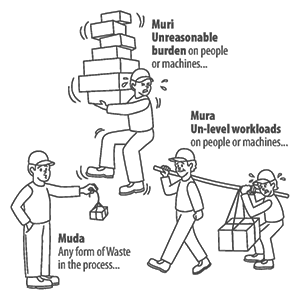
Muda [moo-duh] is a Japanese word meaning ‘futility,’ ‘uselessness,’ or ‘wastefulness,’ and is a key concept in lean process thinking such as in the Toyota Production System (TPS), denoting one of three types of deviation from optimal allocation of resources. The other types are known by the Japanese terms ‘mura’ (‘unevenness’) and ‘muri’ (‘overload’). Waste in this context refers to the wasting of time or resources rather than wasteful by-products.
From an end-customer’s point of view, value-added work is any activity that produces goods or provides a service for which a customer is willing to pay; muda is any constraint or impediment that causes waste to occur.
read more »
Posted in Money, Technology, World |
Leave a Comment »
July 9, 2023

Muntzing is reducing the components inside an electronic appliance to the minimum required for it to function in most operating conditions, reducing design margins above minimum requirements toward zero.
The term is named after Earl “Madman” Muntz, a car and electronics salesman, who was not formally educated or trained in any science or engineering discipline. Muntz built a low part TV in the 1950s.
read more »
Posted in Language, Money, Technology |
Leave a Comment »
May 11, 2023

Plate smashing is a Greek custom involving the intentional smashing of plates or glasses during celebratory occasions. While it occurs more rarely today, it continues to be seen on certain occasions, such as weddings, although plaster plates are more likely to be used. The custom probably derives from an ancient practice of ritually ‘killing’ plates on mourning occasions, as a means of dealing with loss.
Breaking plates may also be related to the ancient practice of conspicuous consumption, a display of one’s wealth, as plates or glasses are thrown into a fireplace following a banquet instead of being washed and reused. 1969, the autocratic military dictatorship of Georgios Papadopoulos, banned plate smashing. Another modern variation on the custom is for diners at small Greek restaurants or tavernas to buy trays of flowers that they can throw at singers and each other.
Posted in Money, World |
Leave a Comment »
April 25, 2023
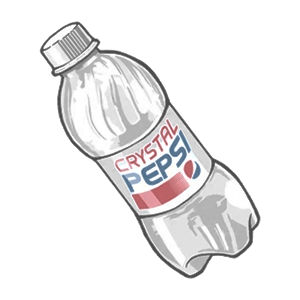
The clear craze was a marketing fad from the late 1980s to early 2000s, often equating transparency with purity. Inspired by Ivory’s ’99 and 44/100 percent pure’ campaign for bath soap, and by low-calorie or ‘light’ beverages, sodas were redesigned in the 1980s and 1990s as being free of artificial dyes, such as the caffeine-free and preservative-free Crystal Pepsi. Personal hygiene products were then relaunched as clear dye-free gels, and many electronics had transparent cases.
Gillette released versions of its existing deodorants and shaving creams in a clear gel form, which have continued indefinitely. Through the 1990s, the clear trend included transparent watches, staplers, calculators, handheld gaming devices such as the Nintendo Game Boy, and computers such as Apple’s iMac G3.
read more »
Posted in Money, Technology |
Leave a Comment »
April 16, 2023

Philanthrocapitalism or philanthropic capitalism is a way of doing philanthropy, which mirrors the way that business is done in the for-profit world. It may involve venture philanthropy that actively invests in social programs to pursue specific philanthropic goals that would yield return on investment over the long term, or in a more passive form whereby ‘social investors’ benefit from investing in socially-responsible programs.
The term was coined by Matthew Bishop and Michael Green in their book ‘Philanthrocapitalism: How the Rich Can Save The World.’ The book was endorsed by Bill Clinton, who wrote in its foreword that this concept drives the Clinton Foundation. The shift in implementing business models in charity is not a new concept – John D. Rockefeller and Andrew Carnegie sought to apply their business strategies in their philanthropy in the 20th century. Since then, a significant increase in charity spending by other organizations such as the Bill & Melinda Gates Foundation and Chan Zuckerberg Initiative, both described as examples of philanthrocapitalism, has been noted.
read more »
Posted in Money, Politics |
Leave a Comment »



