May 13, 2013

Countersignaling is the behavior where agents with the highest level of a given property invest less into proving it than individuals with a medium level of the same property. This concept is primarily useful for analyzing human behavior and thus relevant to economics, sociology and psychology; there is no known animal behavior which conforms to the predictions of the countersignaling model.
Many of the things – such as toughness, cooperativeness or fertility – that people and animals want to know about each other are not directly observable. Instead, observable indicators of these unobservable properties must be used to communicate them to others. These are signals. Signaling theory deals with predicting the level of effort that individuals, the signalers, should invest to communicate their properties to other individuals, the receivers, and how these receivers interpret the signals.
read more »
Posted in Language, Money, Science |
Leave a Comment »
April 30, 2013

Disneyfication is a term which describes the transformation of something, usually society at large, to resemble The Walt Disney Company’s theme parks.
The latter term appears in Sharon Zukin’s book, ‘The Cultures of Cities’ (1996), and was popularized by Alan Bryman (Professor of Organizational and Social Research at the University of Leicester) in a 2004 book, ‘The Disneyization of Society.’ Disneyfication of urban space is explored in sociologist Jeff Ferrell’s ‘Tearing Down the Streets: Adventures in Urban Anarchy.’
read more »
Posted in Money, World |
Leave a Comment »
April 30, 2013

McDonaldization is a term used by sociologist George Ritzer in his book ‘The McDonaldization of Society’ (1993). He explains it occurs when a culture possesses the characteristics of a fast-food restaurant.
McDonaldization is a reconceptualization of rationalization (moving from an ad-hoc system into one that is based on a set of published rules). Where German political economist Max Weber used the model of the bureaucracy to represent the direction of this change in society, Ritzer sees the fast-food restaurant as having become a more representative contemporary paradigm.
read more »
Posted in Food, Money, World |
2 Comments »
April 30, 2013

Outside the United States, Americanization is a term for the influence the United States has on the culture of other countries, such as their popular culture, cuisine, technology, business practices, or political techniques.
The term has been used since at least 1907. Within the US, it refers to the process of acculturation by immigrants or annexed populations (e.g. the Californios) to American customs and values.
read more »
Posted in Money, Politics, World |
Leave a Comment »
April 29, 2013

The Red Delicious is a clone of apple cultigen, now comprising more than 50 cultivars, that was recognized in Madison County, Iowa in 1880. As new cultivars with improved color and earlier harvestability have replaced the original cultivar in commercial orchards, the taste and texture of the harvested commodity have deteriorated, and many customers have begun to reject the Red Delicious at markets.
Apple expert, Roger Yepsen notes some of the Red’s less desirable qualities: ‘The skin is thick and bitter and has to be chewed vigorously… this apple ranks close to the bottom when cooked… sold year round, so shop with skepticism. Delicious retains its cheerful good looks long after its flavor has departed.’
read more »
Posted in Food, Money, Science |
Leave a Comment »
April 29, 2013

First World privilege, similar to white privilege and male privilege, is the unearned advantages accrued by an individual by virtue of being a national of a First World country.
The concept is important for those considering advantages gained, due to institutional beliefs, prejudice and legal barriers, because of one’s nationality rather than one’s race or sex. Countries included in the first world class include Australia, Britain, Canada, New Zealand, United States, Japan and Western Europe.
read more »
Posted in Money, Politics, World |
Leave a Comment »
April 29, 2013

Reverse discrimination is discrimination against members of a dominant or majority group or in favor of members of a minority or historically disadvantaged group. Groups may be defined in terms of race, gender, ethnicity, or other factors.
This discrimination may seek to redress social inequalities where minority groups have been denied access to the same privileges of the majority group. In such cases it is intended to remove discrimination that minority groups may already face. Reverse discrimination may also be used to highlight the discrimination inherent in affirmative action programs.
read more »
Posted in Money, Politics, Sex |
Leave a Comment »
April 21, 2013
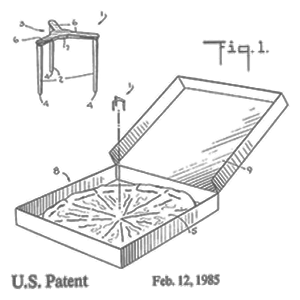
A pizza saver is a device used to prevent the top of a food container, such as a pizza box or cake box, from collapsing in at the center and touching the food inside. A pizza saver is made of plastic and has three (sometimes four) legs. They are often white, and the common practice is to place one pizza saver in the center of the pizza before the box lid is closed for delivery.
The pizza saver is not re-used and is thrown away or recycled by the patron, although some people have found secondary uses for them such as egg holders when turned upside down.
read more »
Posted in Food, Money, Technology |
Leave a Comment »
April 18, 2013
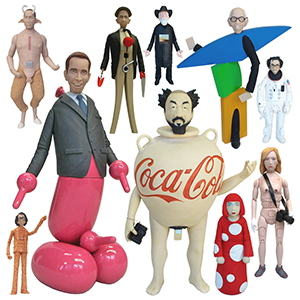
Michael Leavitt (b. 1977) is a visual artist based in Seattle, described as “the best caricature sculptor in the city.’ The ‘über-allround-cool-creator’ is most widely known for his ‘Art Army’ series of handmade action figures depicting visual artists, musicians, and entertainers. Through his company, Intuition Kitchen Productions, Leavitt is a ‘jack-of-all-trades’ responsible for a wide variety of conceptual art projects and performance artworks.
From a disinterest in convention, Leavitt proclaims, ‘I’d be afraid not to try other mediums.’ Growing up in the Pacific Northwest, Leavitt was influenced by the wood-craft and engineering of Native American, Scandinavian, and industrial manufacturing in the region. His parents practiced education, graphic design, and environmentalism by trade, formulating Leavitt’s early interests in both art and sociology.
read more »
Posted in Art, Humor, Money |
Leave a Comment »
April 16, 2013
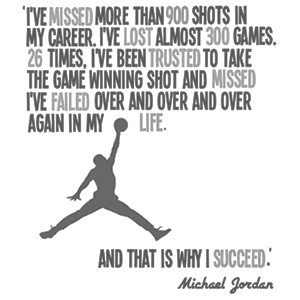
Failure is the state or condition of not meeting a desirable or intended objective, and may be viewed as the opposite of success. Product failure ranges from failure to sell the product to fracture of the product, in the worst cases leading to personal injury, the province of forensic engineering. Former IBM CEO Thomas J. Watson is attributed with saying ‘If you want to succeed, double your failure rate.’ ‘
Wired Magazine’ editor Kevin Kelly likewise explains that a great deal can be learned from things going unexpectedly, and that part of science’s success comes from keeping blunders ‘small, manageable, constant, and trackable.’ He uses the example of engineers and programmers who push systems to their limits, breaking them to learn about them. Kelly also warns against creating a culture (e.g. school system) that punishes failure harshly, because this inhibits a creative process, and risks teaching people not to communicate important failures with others (e.g. Null results).
read more »
Posted in Language, Money, Science |
Leave a Comment »
April 11, 2013
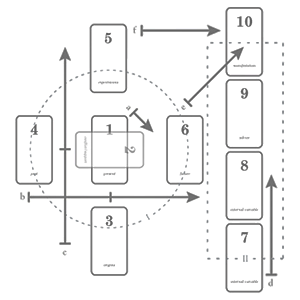
Fortune-telling is the practice of predicting information about a person’s life. The scope of fortune-telling is in principle identical with the practice of divination (‘to foresee, to be inspired by a god’).
The difference is that divination is the term used for predictions considered part of a religious ritual, invoking deities or spirits, while the term fortune-telling implies a less serious or formal setting, even one of popular culture, where belief in occult workings behind the prediction is less prominent than the concept of suggestion, spiritual or practical advisory or affirmation. Historically, fortune-telling grows out of folkloristic reception of Renaissance magic, specifically associated with Gypsies.
read more »
Posted in Money, Philosophy, Politics |
1 Comment »
April 9, 2013

In psychology-related slang, control freak is a derogatory term for a person who attempts to dictate how everything around them is done. The phrase was first used in the late 1960s — an era when great stress was laid on the principle of ‘doing one’s own thing’ and letting others do the same.
Control freaks are often perfectionists defending themselves against their own inner vulnerabilities in the belief that if they are not in total control they risk exposing themselves once more to childhood angst. Such persons manipulate and pressure others to change so as to avoid having to change themselves, and use power over others to escape an inner emptiness. When a control freak’s pattern is broken, ‘the Controller is left with a terrible feeling of powerlessness … But feeling their pain and fear brings them back to themselves.’
read more »
Posted in Health, Money |
1 Comment »


 The Daily Omnivore