May 22, 2013

Transcreation is a term used chiefly by advertising and marketing professionals to refer to the process of adapting a message from one language to another, while maintaining its intent, style, tone and context. A successfully transcreated message evokes the same emotions and carries the same implications in the target language as it does in the source language.
Increasingly, transcreation is used in global marketing and advertising campaigns as advertisers seek to transcend the boundaries of culture and language. It also takes account of images which are used within a creative message, ensuring that they are suitable for the target local market.
read more »
Posted in Language, Money, World |
Leave a Comment »
May 21, 2013

From 1955 through 1962, the TWA Moonliner was part of the first futuristic exhibit located in Disneyland’s ‘Tomorrowland.’ It was also an early example of modern product placement advertising by TWA’s Howard Hughes teaming up with Walt Disney.
At 76 feet (23 m) tall, it was the tallest structure in the theme park, 8 feet (2.4 m) taller than the Sleeping Beauty Castle. Adjoining the rocket was the ‘Flight to the Moon’ attraction, which later became ‘Mission To Mars’ in 1975.
read more »
Posted in Money, Technology |
Leave a Comment »
May 20, 2013

‘Captive Audience: the Telecom Industry and Monopoly Power in the New Gilded Age’ is an American non-fiction book by legal expert Susan P. Crawford. It describes high-speed internet access in the United States as essential (like electricity) but currently too slow and too expensive. To ensure national competitiveness ‘most Americans should have access to reasonably priced 1-Gb symmetric fiber-to-the-home networks.’
Crawford explains why the United States should revise national policy to increase competition in a market currently dominated by Comcast, Verizon Wireless, AT&T, and Time Warner Cable. Meanwhile towns and cities should consider setting up local networks after the example of pioneers such as Lafayette, Louisiana’s LUSFiber and Chattanooga, Tennessee’s EPB.
Posted in Language, Money, Technology |
2 Comments »
May 20, 2013

Michael Moss was awarded the Pulitzer Prize for explanatory reporting in 2010, and was a finalist for the prize in 2006 and 1999. He is also the recipient of a Loeb Award and an Overseas Press Club citation.
Before coming to ‘The New Times,’ he was a reporter for ‘The Wall Street Journal,’ ‘New York Newsday,’ and ‘The Atlanta Journal-Constitution.’ He has been an adjunct professor at the Columbia School of Journalism and currently lives in Brooklyn with his wife and two sons.
Posted in Food, Health, Money |
1 Comment »
May 17, 2013

When a person receives unfair treatment or alienation due to a social stigma, the effects can be detrimental. Social stigmas are defined as any aspect of an individual’s identity that is devalued in a social context. These stigmas can be categorized as visible or invisible, depending on whether the stigma is readily apparent to others. Visible stigmas refer to characteristics such as race, age, gender, physical disabilities, or deformities; whereas invisible stigmas refer to characteristics such sexual orientation, gender identity, religious affiliation, early pregnancy, certain diseases, or mental illnesses.
When individuals possess invisible stigmas, they must decide whether or not to reveal their association with a devalued group to others. This decision can be an incredibly difficult one, as revealing one’s invisible stigma can have both positive and negative consequences depending on several situational factors. In contrast, a visible stigma requires immediate action to diminish communication tension and acknowledge a deviation from the norm. People possessing visible stigmas often use compensatory strategies to reduce potential interpersonal discrimination that they may face.
read more »
Posted in Health, Money, Politics |
Leave a Comment »
May 13, 2013
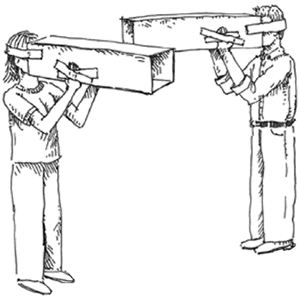
The selective exposure theory is a concept in media and communication research that refers to individuals’ tendency to favor information that reinforces pre-existing views while avoiding contradictory information. In this theory people tend to select specific aspects of exposed information based on their perspective, beliefs, attitudes and decisions.
People can determine the information exposed to them and select favorable evidence, while ignoring the unfavorable. This theory has been explored using the cognitive dissonance theory, which suggests information consumers strive for results of cognitive equilibrium (consistent rather than conflicting thoughts). In order to attain this equilibrium, individuals may either reinterpret the information they are exposed to or select information that are consonant with their view.
read more »
Posted in Language, Money, Science |
1 Comment »
May 13, 2013

Countersignaling is the behavior where agents with the highest level of a given property invest less into proving it than individuals with a medium level of the same property. This concept is primarily useful for analyzing human behavior and thus relevant to economics, sociology and psychology; there is no known animal behavior which conforms to the predictions of the countersignaling model.
Many of the things – such as toughness, cooperativeness or fertility – that people and animals want to know about each other are not directly observable. Instead, observable indicators of these unobservable properties must be used to communicate them to others. These are signals. Signaling theory deals with predicting the level of effort that individuals, the signalers, should invest to communicate their properties to other individuals, the receivers, and how these receivers interpret the signals.
read more »
Posted in Language, Money, Science |
Leave a Comment »
April 30, 2013

Disneyfication is a term which describes the transformation of something, usually society at large, to resemble The Walt Disney Company’s theme parks.
The latter term appears in Sharon Zukin’s book, ‘The Cultures of Cities’ (1996), and was popularized by Alan Bryman (Professor of Organizational and Social Research at the University of Leicester) in a 2004 book, ‘The Disneyization of Society.’ Disneyfication of urban space is explored in sociologist Jeff Ferrell’s ‘Tearing Down the Streets: Adventures in Urban Anarchy.’
read more »
Posted in Money, World |
Leave a Comment »
April 30, 2013

McDonaldization is a term used by sociologist George Ritzer in his book ‘The McDonaldization of Society’ (1993). He explains it occurs when a culture possesses the characteristics of a fast-food restaurant.
McDonaldization is a reconceptualization of rationalization (moving from an ad-hoc system into one that is based on a set of published rules). Where German political economist Max Weber used the model of the bureaucracy to represent the direction of this change in society, Ritzer sees the fast-food restaurant as having become a more representative contemporary paradigm.
read more »
Posted in Food, Money, World |
2 Comments »
April 30, 2013

Outside the United States, Americanization is a term for the influence the United States has on the culture of other countries, such as their popular culture, cuisine, technology, business practices, or political techniques.
The term has been used since at least 1907. Within the US, it refers to the process of acculturation by immigrants or annexed populations (e.g. the Californios) to American customs and values.
read more »
Posted in Money, Politics, World |
Leave a Comment »
April 29, 2013

The Red Delicious is a clone of apple cultigen, now comprising more than 50 cultivars, that was recognized in Madison County, Iowa in 1880. As new cultivars with improved color and earlier harvestability have replaced the original cultivar in commercial orchards, the taste and texture of the harvested commodity have deteriorated, and many customers have begun to reject the Red Delicious at markets.
Apple expert, Roger Yepsen notes some of the Red’s less desirable qualities: ‘The skin is thick and bitter and has to be chewed vigorously… this apple ranks close to the bottom when cooked… sold year round, so shop with skepticism. Delicious retains its cheerful good looks long after its flavor has departed.’
read more »
Posted in Food, Money, Science |
Leave a Comment »
April 29, 2013

First World privilege, similar to white privilege and male privilege, is the unearned advantages accrued by an individual by virtue of being a national of a First World country.
The concept is important for those considering advantages gained, due to institutional beliefs, prejudice and legal barriers, because of one’s nationality rather than one’s race or sex. Countries included in the first world class include Australia, Britain, Canada, New Zealand, United States, Japan and Western Europe.
read more »
Posted in Money, Politics, World |
Leave a Comment »



