November 10, 2014
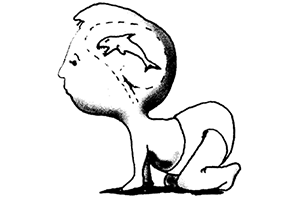
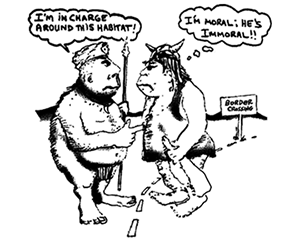
‘Prometheus Rising‘ is a book by Robert Anton Wilson first published in 1983. It is a guide book of ‘how to get from here to there,’ an amalgam of psychonaut Timothy Leary’s 8-circuit model of consciousness, spiritualist Georges Gurdjieff’s self-observation exercises, Polish semiotician Alfred Korzybski’s general semantics, occultist Aleister Crowley’s magical theorems, Sociobiology (the study of the evolutionary bases of behavior), Yoga, relativity, and quantum mechanics among other approaches to understanding the world around us. Wilson describes it as an ‘owner’s manual for the human brain.’
The book, which examines many aspects of social mind control and mental imprinting, provides mind exercises at the end of every chapter, with the goal of giving the reader more control over how one’s mind works. Wilson also discusses the effect of certain psychoactive substances and how these affect the brain, tantric breathing techniques, and other methods and holistic approaches to expanding consciousness. The book’s take on transactional analysis became the main seed thought for ‘The Sekhmet Hypothesis’ (suggesting a link between the emergence of youth culture archetypes in relation to the 11 year solar cycle), specifically the idea of applying the life scripts to pop cultural trends.
Posted in Art, Language, Philosophy |
Leave a Comment »
November 9, 2014
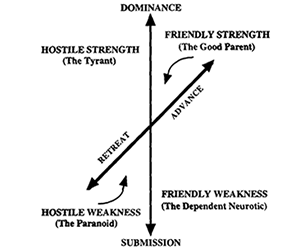
The Sekhmet Hypothesis was first published in 1995 by author Iain Spence. It suggested a possible link between the emergence of youth culture archetypes in relation to the 11 year solar cycles. The hypothesis was published again in 1997 in ‘Towards 2012’ and covered in 1999 in ‘Sleazenation’ magazine. Spence eventually abandoned the idea as not based in scientific fact, pointing to Strauss-Howe generational theory as a better model of social change.
The origins of the hypothesis can be traced back to philosopher Robert Anton Wilson’s book, ‘Prometheus Rising,’ in which he makes a singular correlation between the archetype of the flower child with the mood of friendly weakness. Spence extended the comment into a study of various youth archetypes and linked in their behavior to transactional analysis (a theory of human interaction). The idea of linking pop culture to the solar cycles had been influenced from remarks made by modern occultist Peter J. Carroll, in his book, ‘Psychonaut.’ Sekhmet is the Egyptian goddess of the sun.
read more »
Posted in Art, Language, Philosophy |
Leave a Comment »
November 3, 2014

Near-death experiences (NDE) are associated with several common phenomena such as feelings of detachment from the body, levitation, serenity, security, warmth, dissolution, and bright light. These sensations are usually reported after an individual has been pronounced clinically dead or has been very close to death. With recent developments in cardiac resuscitation techniques, the number of reported NDEs has increased. According to a 1992 Gallup poll, approximately eight million Americans claim to have had a near-death experience. Popular interest in the topic was initially sparked by psychiatrist Raymond Moody’s 1975 book ‘Life After Life,’ in which he interviewed 150 people who had undergone NDEs.
In 1981, the International Association for Near-Death Studies (IANDS) was founded and the following year began publishing the ‘Journal of Near-Death Studies,’ the only peer-reviewed journal in the field. Research from neuroscience considers the NDE to be a hallucination resulting from one or more of several conditions including cerebral anoxia (insufficient oxygen to the brain), hypercarbia (elevated carbon dioxide in the blood), or damage to the temporal lobes (which are responsible for giving meaning to events). Spiritual thinkers and an parapsychologists have long pointed to NDEs as evidence for an afterlife and mind-body dualism.
read more »
Posted in Death, Health, Philosophy |
Leave a Comment »
October 31, 2014

Muditā [moo-dee-tah] means ‘joy’ in sanskrit, especially sympathetic or vicarious joy. it is the pleasure that comes from delighting in other people’s well-being rather than begrudging it. The traditional paradigmatic example of this mind-state is the attitude of a parent observing a growing child’s successes, but it is not to be confounded with pride as the person feeling mudita must not have any interest or direct income from the accomplishments of the other. Its antonym is the German word ‘schadenfreude’ (‘pleasure derived from the misfortunes of others’).
Many Buddhist teachers interpret joy more broadly as an inner spring of infinite joy that is available to everyone at all times, regardless of circumstances. The more deeply one drinks of this spring, the more secure one becomes in one’s own abundant happiness, and the easier it then becomes to relish the joy of other people as well. Joy is also traditionally regarded as the most difficult to cultivate of the four immeasurables (the ‘four sublime attitudes’). To show joy is to celebrate happiness and achievement in others even when we are facing tragedy ourselves.
Posted in Language, Philosophy, World |
Leave a Comment »
October 26, 2014


The red pill and its counterpart, the blue pill, are popular culture symbols representing the choice between embracing the sometimes painful truth of reality (red pill) and the blissful ignorance of illusion (blue pill).
The concept was popularized by the 1999 film ‘The Matrix,’ in which the protagonist is offered the choice of remaining in the fabricated reality of a computer simulation, living the ‘ignorance of illusion,’ or the freedom to live the ‘truth of reality’ even though it is a harsher, more difficult life.
read more »
Posted in Art, Philosophy |
Leave a Comment »
September 29, 2014

‘Under the Banner of Heaven: A Story of Violent Faith’ is a 2003 investigative nonfiction book by Jon Krakauer. It is a juxtaposition of two stories: the origin and evolution of The Church of Jesus Christ of Latter-day Saints (LDS Church), and a modern double murder committed in the name of God by brothers Ron and Dan Lafferty, who subscribed to a fundamentalist version of Mormonism.
The title is drawn from an 1880 address by John Taylor, the third president of the LDS Church, defending the practice of plural marriage: ‘God is greater than the United States, and when the Government conflicts with heaven, we will be ranged under the banner of heaven against the Government. The United States says we cannot marry more than one wife. God says different…’
read more »
Posted in Language, Philosophy, Politics |
Leave a Comment »
September 23, 2014
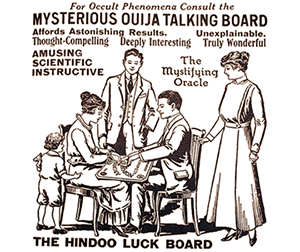

The ideomotor [id-ee-uh-moh-ter] effect is a psychological phenomenon wherein a subject makes motions unconsciously; for example, the body produces tears in response to powerful emotions without the person consciously deciding to cry. As in involuntary responses to pain, the body sometimes reacts reflexively to ideas alone without the person consciously deciding to take action.
The effects of automatic writing (an alleged psychic ability allowing a person to produce written words without consciously writing), dowsing (a type of divination employed in attempts to locate ground water without the use of scientific tools), facilitated communication (a process by which a person supports the hand or arm of a communicatively impaired individual while using a keyboard), and Ouija boards have been attributed to the phenomenon. Mystics have often attributed these effects to paranormal or supernatural force. Many subjects are unconvinced that their actions are originating solely from within themselves.
read more »
Posted in Health, Philosophy, Science |
Leave a Comment »
September 22, 2014
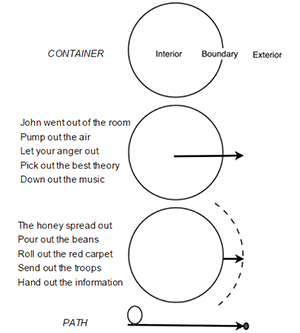
Embodied Cognition is a theory stating that the nature of the human mind is largely determined by the form of the human body. Philosophers, psychologists, cognitive scientists, and artificial intelligence researchers who study the ’embodied mind’ argue that all aspects of cognition are shaped by the body, such as high level mental constructs (e.g. concepts, categories) and performance on various intellectual tasks (e.g. reasoning, judgment). These mental processes are limited by physical ones, such as the motor and perceptual systems, the body’s interactions with the environment (situatedness), and the ontological assumptions about the world that are built into the body and the brain.
In social psychology, embodiment is relevant to studies of social interaction and decision-making. According to embodied cognition, the motor system influences our cognition, just as the mind influences bodily actions. For example, when participants hold a pencil in their teeth engaging the muscles of a smile, they comprehend pleasant sentences faster than unpleasant ones, while holding a pencil between their nose and upper lip to engage the muscles of a frown has the reverse effect.
read more »
Posted in Philosophy, Science |
Leave a Comment »
September 5, 2014
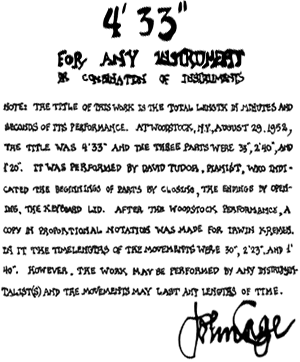
Silence is the lack of audible sound or presence of sounds of very low intensity. By analogy, the term also refers to an absence of communication, including in media other than speech. Silence is also used as ‘total communication,’ in reference to nonverbal communication and spiritual connection. It is an important factor in many cultural spectacles, as in rituals, both positive and negative. For example, in a Christian Methodist faith organization quiet reflection during a sermon might mean indicate assent, while in a Southern Baptist church, silence might mean disagreement with what is being said, or perhaps disconnectedness from the congregated community. A common way to remember a tragic incident is a commemorative moment of silence.
In discourse analysis, speakers use brief absences of speech to mark the boundaries of prosodic units (segments of speech that occurs with a single pitch and rhythm contour). Silence in speech can be hesitation, stutters, self-correction—or deliberate slowing of speech to clarify or aid processing of ideas. These are short silences; longer pauses in language occur in interactive roles, turn-taking, or reactive tokens (short utterance that indicate a listener is following a conversation).
read more »
Posted in Language, Philosophy, Science |
Leave a Comment »
July 29, 2014

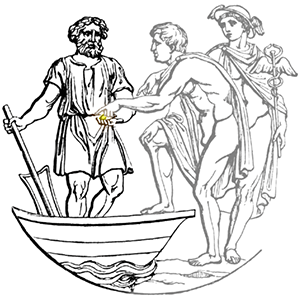
A psychopomp [sahy-koh-pomp] (from the Greek word ‘psuchopompos,’ literally meaning the ‘guide of souls’) are creatures, spirits, angels, or deities in many religions whose responsibility is to escort newly deceased souls to the afterlife. Their role is not to judge the deceased, but simply provide safe passage. Frequently depicted on funerary art, psychopomps have been associated at different times and in different cultures with horses, deer (harts) dogs, and several birds, such as whip-poor-wills, ravens, crows, owls, sparrows, cuckoos.
In Jungian psychology, which stresses the importance of the symbolic in human life, the psychopomp is a mediator between the unconscious and conscious realms. It is symbolically personified in dreams as a wise man or woman, or sometimes as a helpful animal. In many cultures, the shaman (medicine man) also fulfills the role of the psychopomp. This may include not only accompanying the soul of the dead, but also vice versa: to help at birth, to introduce the newborn child’s soul to the world. This also accounts for the contemporary title of ‘midwife to the dying,’ or ‘End of Life Doula’ which is another form of psychopomp work.
Posted in Death, Philosophy |
Leave a Comment »
July 28, 2014
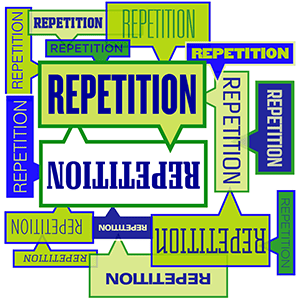
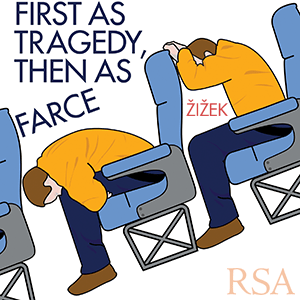
Historic recurrence is the repetition of similar events in history. The concept has been used to analyze the overall history of the world (e.g., the rise and fall of empires), repetitive patterns in the history of a given polity, and generally to any two specific events which bear a striking similarity. Professor of religious history Garry W. Trompf, in his book ‘The Idea of Historical Recurrence in Western Thought,’ traces historically recurring patterns of political thought and behavior in the west since antiquity. Historic recurrences can sometimes induce a sense of ‘convergence,’ ‘resonance,’ or déjà vu.
In the extreme, the concept assumes the form of the doctrine of Eternal Return (the belief that universe has been recurring, and will continue to recur, in a self-similar form an infinite number of times across infinite time or space), found in Indian philosophy and in ancient Egypt and was subsequently taken up by the Pythagoreans and Stoics (with the decline of antiquity and the spread of Christianity, the concept fell into disuse in the Western world, with the exception of existentialist philosopher Friedrich Nietzsche, who connected the thought to many of his other concepts, including ‘amor fati,’ love of one’s fate).
read more »
Posted in Philosophy, Politics, World |
Leave a Comment »
July 18, 2014
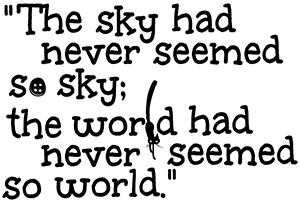
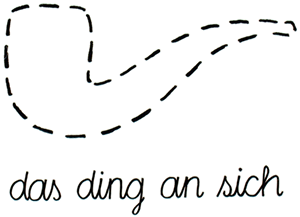
Haecceity [hek-see-i-tee] (from the Latin ‘haecceitas’: ‘thisness’) is a term from medieval philosophy first coined by thirteenth century Scottish theologian Duns Scotus which denotes the discrete qualities, properties or characteristics of a thing which make it a particular thing. Haecceity is a person or object’s ‘thisness,’ the individualizing difference between, for example, the concept ‘a man’ and the concept ‘Socrates’ (a specific person).
American philosopher Charles Sanders Peirce later used the term as a non-descriptive reference to an individual. It may also be defined in some dictionaries as simply the ‘essence’ of a thing, or as a simple synonym for quiddity (‘whatness’) or hypokeimenon (‘underlying thing’). However, such a definition deprives the term of its subtle distinctiveness and utility. Whereas haecceity refers to aspects of a thing which make it a particular thing, quiddity refers to the universal qualities of a thing, or the aspects shares with other things (which is relevant to taxonomy, the science of classification).
read more »
Posted in Language, Philosophy |
Leave a Comment »



 The Daily Omnivore