October 31, 2013

‘The Yule Log‘ is a TV program which is broadcast traditionally on Christmas Eve or Christmas morning, originally by NYC television station WPIX but now by many other Tribune Company-owned television stations, including WGN America. A radio simulcast of the musical portion was broadcast by associated station WPIX-FM (now WFAN-FM) until 1988. The program, which has been two to four hours in duration (without commercial interruption), is a film loop of a yule log burning in a fireplace, with a traditional soundtrack of classic Christmas music.
The concept was created in 1966 by Fred M. Thrower, President and CEO of WPIX, Inc. Inspired by an animated Coca-Cola commercial a year earlier that showed Santa Claus at a fireplace, he envisioned this program as a televised Christmas gift to New Yorkers who lived in apartments and homes without fireplaces. This also provided time for employees of the television station to stay home with their families, instead of working for the usual morning news program.
read more »
Posted in Humor, Philosophy, Technology |
Leave a Comment »
October 16, 2013
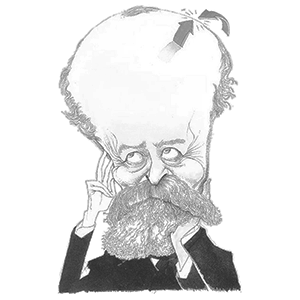
‘The Will to Believe‘ is a lecture by American philosopher and psychologist William James, first published in 1896, which defends, in certain cases, the adoption of a belief without prior evidence of its truth. In particular, James is concerned in this lecture about defending the rationality of religious faith even lacking sufficient evidence of religious truth.
James’ argument hinges on the idea that access to the evidence for whether or not certain beliefs are true depends crucially upon first adopting those beliefs without evidence. For example, it can be rational to have unsupported faith in one’s own ability to accomplish tasks that require confidence. Importantly, James points out that this is the case even for pursuing scientific inquiry. James then argues that like belief in one’s own ability to accomplish a difficult task, religious faith can also be rational even if one at the time lacks evidence for the truth of one’s religious belief.
read more »
Posted in Language, Philosophy |
Leave a Comment »
October 7, 2013
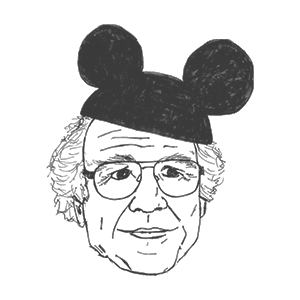
Rick Roderick (1949–2002) was an American professor of philosophy, best known for his lectures for The Teaching Company. Roderick was born in Abilene, Texas, son of (by his own description a ‘con-man’ and a ‘beautician.’
He taught at several universities, where he was much revered by many students for a Socratic style combined with a brash and often humorous approach. His breakthrough into wider circles came with his engagement with The Teaching Company where he recorded several memorable lecture series. Rick Roderick died in 2002 from a congestive heart condition.
Posted in Education, Philosophy |
Leave a Comment »
September 30, 2013

Logical reasoning is the process of using evidence and reason to arrive at a conclusion. Broadly there are two main types of logical reasoning, deductive (general to specific) and inductive (specific to general).
In deduction, a general rule is applied to a particular case: ‘When it rains, things outside get wet. The grass is outside, therefore: when it rains, the grass gets wet.’ Mathematical logic and philosophical logic are commonly associated with this style of reasoning.
read more »
Posted in Language, Philosophy |
Leave a Comment »
September 28, 2013
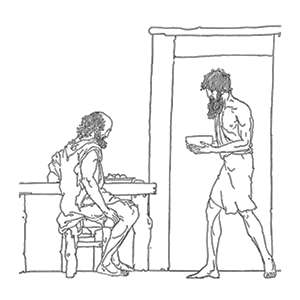
Xenia [zee-nee-uh] (Greek: ‘guest-friendship’) is the ancient Greek concept of hospitality, the generosity and courtesy shown to those who are far from home and/or associates of the person bestowing guest-friendship. The rituals of hospitality created and expressed a reciprocal relationship between guest and host expressed in both material benefits (such as the giving of gifts to each party) as well as non-material ones (such as protection, shelter, favors, or certain normative rights).
The Greek god Zeus is sometimes called Zeus Xenios in his role as a protector of travelers. He thus embodied the religious obligation to be hospitable to travelers. Theoxeny or theoxenia is a theme in Greek mythology in which humans demonstrate their virtue or piety by extending hospitality to a humble stranger (xenos), who turns out to be a disguised deity (theos) with the capacity to bestow rewards. These stories caution mortals that any guest should be treated as if potentially a disguised divinity and help establish the idea of xenia as a fundamental Greek custom.
read more »
Posted in Philosophy, World |
Leave a Comment »
September 25, 2013
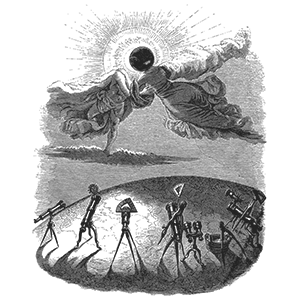
Ronald Dworkin (1931 – 2013) was an American philosopher and scholar of constitutional law. His theory of law as integrity, in which judges interpret the law in terms of consistent and communal moral principles, especially justice and fairness, is among the most influential contemporary theories about the nature of law.
Dworkin advocated a ‘moral reading’ of the United States Constitution, and an interpretivist approach to law and morality. He was a frequent commentator on contemporary political and legal issues, particularly those concerning the Supreme Court of the United States, often in the pages of ‘The New York Review of Books.’
read more »
Posted in Philosophy, Politics |
Leave a Comment »
September 20, 2013

A parody religion or mock religion is an imitation belief system that challenges spiritual convictions of others, often through humor, satire, and/or burlesque (literary ridicule). They are frequently created to address specific religions, sects, gurus, cults, and or new religious movements, but may also be a parody of no particular religion, instead parodying the concept of religious belief itself. In some parody religions, emphasis is on making fun and being a convenient excuse for pleasant social interaction among like-minded, e.g. the Church of the SubGenius. Other parody religions target a specific religion, sect, cult, or new religious movement.
Several religions that are classified as parody religions have a number of relatively serious followers who embrace the perceived absurdity of these religions as spiritually significant, a decidedly postmodern approach to religion. For instance, in Discordianism (begun in 1965), it may be hard to tell if even these ‘serious’ followers are not just taking part in an even bigger joke. This joke, in turn, may be part of a greater path to enlightenment, and so on ad infinitum.
read more »
Posted in Humor, Philosophy |
Leave a Comment »
September 10, 2013

Unitarian [yoo-ni-tair-ee-uhn] Universalism [yoo-nuh-vur-suh-liz-uhm] (UUism or Unitarianism) is a syncretistic, theologically liberal religion characterized by a, ‘free and responsible search for truth and meaning.’ Unitarian Universalists do not share a creed, but are unified by their shared search for spiritual growth and by the understanding that an individual’s theology is a result of that search and not a result of obedience to an authoritarian requirement.
Unitarian Universalists draw from all major world religions, and have a wide range of beliefs and practices. Members might describe themselves as humanist, agnostic, deist, atheist, pagan, Christian, Muslim, monotheist, pantheist, polytheist, or use no label at all.
read more »
Posted in Philosophy |
3 Comments »
September 7, 2013

Sacred cow is an idiom, a figurative reference to sacred cows in some religions. It is based on the popular understanding of the elevated place of cows in Hinduism and appears to have emerged in America in the late 19th century. A literal sacred cow or sacred bull is an actual cow or bull that is treated with sincere reverence. A figurative sacred cow is something else that is considered immune from question or criticism, especially unreasonably so.
There is an element of paradox in the concept of reverence for a sacred cow, as illustrated in a comment about the novelist V. S. Naipaul: ‘[He] has the ability to distinguish the death of an ordinary ox, which, being of concern to no one, may be put quickly out of its agony, from that of a sacred cow, which must be solicitously guarded so that it can die its agonizing death without any interference. ‘Irreverence is our only sacred cow’ is the motto of ‘The Realist,’ a pioneering magazine of social-political-religious criticism and satire.
Posted in Language, Philosophy, World |
Leave a Comment »
September 7, 2013

Fictionalism [fik-shuhn-ahl-izuhm] is the view in philosophy according to which statements that appear to be descriptions of the world should not be construed as such, but should instead be understood as cases of ‘make believer,’ of pretending to treat something as literally true (a ‘useful fiction’).
Two important strands of fictionalism are modal fictionalism developed by Princeton philosopher Gideon Rosen, which states that possible worlds, regardless of whether they exist or not, may be a part of a useful discourse, and mathematical fictionalism advocated by NYU philosopher Hartry Field, which states that talk of numbers and other mathematical objects is nothing more than a convenience for doing science.
Posted in Philosophy |
Leave a Comment »
September 5, 2013
In historiography (the study of historical methods) and the philosophy of history, progress (from Latin ‘progressus,’ ‘an advance’) is the idea that the world can become increasingly better in terms of science, technology, modernization, liberty, democracy, quality of life, etc.
Although progress is often associated with the Western notion of change in a straight, linear fashion, alternative conceptions exist, such as the cyclic theory of eternal return (the belief that the universe has been recurring, and will continue to recur, in a self-similar form an infinite number of times across infinite time or space), or the ‘spiral-shaped’ dialectic progress of Hegel, Marx, et al.
read more »
Posted in Philosophy, Science, Technology |
Leave a Comment »
September 4, 2013

The ‘Stoned Ape‘ theory of human evolution was proposed by American psychonaut Terence Mckenna in his book ‘Food of the Gods’ to explain the rapid development of the human neocortex.
McKenna proposed that the transformation from humans’ early ancestors Homo erectus to the species Homo sapiens mainly had to do with the addition of the mushroom Psilocybe cubensis in its diet – an event which according to his theory took place about 100,000 BCE. One of the effects that comes about from the ingestion of low doses is improved visual acuity. According to McKenna, this would infer an evolutionary advantage to early human hunters.
read more »
Posted in Drugs, Philosophy, Science |
2 Comments »


 The Daily Omnivore