May 1, 2013
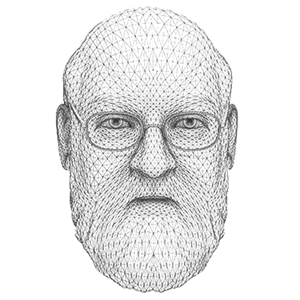
An intuition pump is a thought experiment structured to elicit intuitive answers about a problem. The term was coined by Daniel Dennett. In ‘Consciousness Explained,’ he uses the term pejoratively to describe John Searle’s ‘Chinese room’ thought experiment, characterizing it as designed to elicit intuitive but incorrect answers by formulating the description in such a way that important implications of the experiment would be difficult to imagine and tend to be ignored.
Searle’s experiment supposes that there is a program that gives a computer the ability to carry on an intelligent conversation in written Chinese. If the program is given to someone who speaks only English to execute the instructions of the program by hand, then in theory, the English speaker would also be able to carry on a conversation in written Chinese. However, the English speaker would not be able to understand the conversation.
read more »
Posted in Language, Philosophy, Science |
Leave a Comment »
May 1, 2013
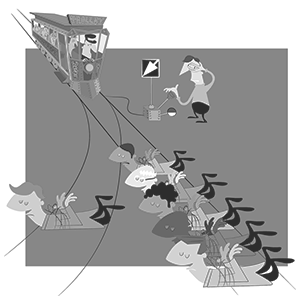
The trolley problem is a thought experiment in ethics, first introduced by British philosopher Philippa Foot in 1967, but also extensively analyzed by philosophers Judith Jarvis Thomson, Peter Unger, and Frances Kamm as recently as 1996. Outside of the domain of traditional philosophical discussion, the trolley problem has been a significant feature in the fields of cognitive science and, more recently, of neuroethics. It has also been a topic on various TV shows dealing with human psychology.
The general form of the problem is this: Person A can take an action which would benefit many people, but in doing so, person B would be unfairly harmed. Under what circumstances would it be morally just for Person A to violate Person B’s rights in order to benefit the group?
read more »
Posted in Death, Health, Philosophy |
2 Comments »
April 30, 2013

Cultural imperialism is defined as the cultural aspects of imperialism. Imperialism, here, is referring to the creation and maintenance of unequal relationships between civilizations favoring the more powerful civilization. Therefore, it can be defined as the practice of promoting and imposing a culture, usually of politically powerful nations over less potent societies. It is the cultural hegemony of those industrialized or economically influential countries, which determine general cultural values and standardize civilizations throughout the world.
Many scholars employ the term, especially those in the fields of history, cultural studies, and postcolonial theory. It is usually used in a pejorative sense, often in conjunction with a call to reject such influence. Cultural imperialism can take various forms, such as an attitude, a formal policy, military action, so long as it reinforces cultural hegemony.
read more »
Posted in Philosophy, Politics, World |
3 Comments »
April 30, 2013

Narconon is a Scientology front group that offers purported drug rehabilitation treatment and anti-drug lectures. Both programs promote the ideology of L. Ron Hubbard. Narconon is headquartered in Hollywood and operates several dozen residential centers worldwide, chiefly in the United States and Western Europe. The rehab program has been described as ‘medically unsafe,’ ‘quackery,’ and ‘medical fraud,’ while academic and medical experts have dismissed the educational program as containing ‘factual errors in basic concepts such as physical and mental effects, addiction and even spelling.’
In turn, Narconon has claimed that mainstream medicine is biased against it, and that ‘people who endorse so-called controlled drug use cannot be trusted to review a program advocating totally drug-free living.’ Narconon has said that criticism of its program is ‘bigoted,’ and that its critics are ‘in favor of drug abuse … they are either using drugs or selling drugs,’ while Scientology head David Miscavige attributes criticism to Scientology’s ‘war’ with ‘the mental health field.’
read more »
Posted in Drugs, Philosophy, Politics |
Leave a Comment »
April 26, 2013

An argument from ignorance, also known as ‘argumentum ad ignorantiam’ or ‘appeal to ignorance’ (where ‘ignorance’ stands for: ‘lack of evidence to the contrary’), is an inference that a proposition is false based on the absence of evidence.
For example, a man sitting in a warehouse with a tin roof can assume that it is not raining if he doesn’t hear rain drops without looking outside for any evidence of rain. Here ignorance about a particular form of evidence for rain (the noise) is used to assume a lack of rain; but the conclusion may fail if it is raining so softly that no noise is heard by the man, or if his hearing is impaired, etc.
read more »
Posted in Language, Philosophy, Politics |
Leave a Comment »
April 25, 2013
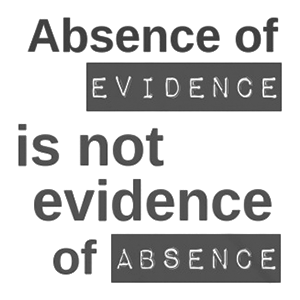
Evidence of absence is evidence of any kind that suggests something is missing or that it does not exist. For example, suppose a baker never fails to put newly finished pies on her windowsill; therefore, if there is no pie on the windowsill, no newly finished pies exist.
Per the traditional aphorism, ‘absence of evidence is not evidence of absence,’ positive evidence of this kind is distinct from a lack of evidence or ignorance of that which should have been found already, had it existed. In this regard American philosopher Irving Copi writes: ‘In some circumstances it can be safely assumed that if a certain event had occurred, evidence of it could be discovered by qualified investigators. In such circumstances it is perfectly reasonable to take the absence of proof of its occurrence as positive proof of its non-occurrence.
read more »
Posted in Language, Philosophy, Science |
Leave a Comment »
April 24, 2013

Bullshit (also bullcrap) is a common English expletive which may be shortened to the euphemism bull or the initialism BS. In British English, ‘bollocks’ is a comparable expletive, although bullshit is commonly used in British English. It is a slang profanity term meaning either (literally) bovine excrement or, more commonly, ‘nonsense,’ especially in a rebuking response to communication or actions viewed as deceiving, misleading, disingenuous, or false. As with many expletives, the term can be used as an interjection or as many other parts of speech, and can carry a wide variety of meanings.
It can be used either as a noun or as a verb. While the word is generally used in a deprecating sense, it may imply a measure of respect for language skills, or frivolity, among various other benign usages. In philosophy, Harry Frankfurt, among others, analyzed the concept of bullshit as related to but distinct from lying. Outside of the philosophical and discursive studies, the everyday phrase bullshit conveys a measure of dissatisfaction with something or someone, but does not generally describe any role of truth in the matter.
read more »
Posted in Humor, Language, Philosophy |
Leave a Comment »
April 24, 2013
‘Being and Nothingness: An Essay on Phenomenological Ontology’ is a 1943 book by philosopher Jean-Paul Sartre. Its main purpose is to assert the individual’s existence as prior to the individual’s essence. Sartre’s overriding concern was to demonstrate that free will exists.
While a prisoner of war in 1940 and 1941, Sartre read Martin Heidegger’s ‘Being and Time,’ an ontological investigation through the lens and method of Husserlian phenomenology (Husserl was Heidegger’s teacher). Reading ‘Being and Time’ initiated Sartre’s own inquiry leading to the publication in 1943 of ‘Being and Nothingnes’s whose subtitle is ‘A Phenomenological Essay on Ontology.’
read more »
Posted in Language, Philosophy |
1 Comment »
April 24, 2013

Bad faith is a philosophical concept used by existentialists Jean-Paul Sartre and Simone de Beauvoir to describe the phenomenon where a human being under pressure from societal forces adopts false values and disowns his/her innate freedom to act authentically. It is closely related to the concepts of self-deception and ressentiment (an assignment of blame for one’s frustration).
A critical claim in existentialist thought is that individuals are always free to make choices and guide their lives towards their own chosen goal or ‘project.’ The claim holds that individuals cannot escape this freedom, even in overwhelming circumstances. For instance, even an empire’s colonized victims possess choices: to submit to rule, to negotiate, to act in complicity, to commit suicide, to resist nonviolently, or to counter-attack.
read more »
Posted in Health, Philosophy |
Leave a Comment »
April 22, 2013
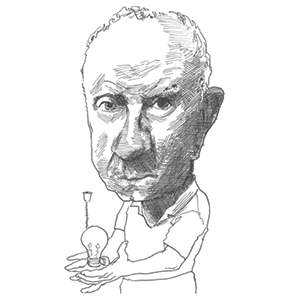
In philosophy of science and philosophy of mind, cognitive closure is the proposition that human minds are constitutionally incapable of solving certain perennial philosophical problems.
Neurobiologist Owen Flanagan calls this position ‘anti-constructive naturalism’ or the ‘new mysterianism’ and the primary advocate of the hypothesis, Colin McGinn, calls it ‘transcendental naturalism’ because it acknowledges the possibility that solutions might fall within the grasp of an intelligent non-human of some kind. According to McGinn, such philosophical questions include the mind-body problem, identity of the self, foundations of meaning, free will, and knowledge, both a priori and empirical.
read more »
Posted in Philosophy, Science |
1 Comment »
April 22, 2013


New mysterianism is a philosophical position proposing that the hard problem of consciousness (explaining how and why we have qualia or phenomenal experiences — how sensations acquire characteristics, such as colors and tastes) cannot be resolved by humans. Neurobiologist Owen Flanagan noted in his 1991 book ‘Science of the Mind’ that some modern thinkers have suggested that consciousness may never be completely explained. Flanagan called them ‘the new mysterians’ after the rock group Question Mark and the Mysterians.
But the new mysterianism is a postmodern position designed to drive a railroad spike through the heart of scientism. The term has been extended by some writers to encompass the wider philosophical position that humans do not have the intellectual ability to solve (or comprehend the answers to) many hard problems, not just the problem of consciousness, at a scientific level. This position is also known as anti-constructive naturalism.
read more »
Posted in Philosophy |
1 Comment »
April 22, 2013
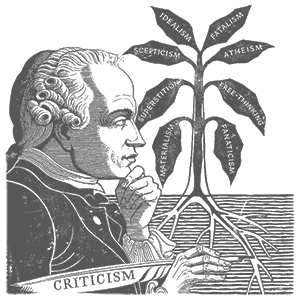
Hypokeimenon [hahy-puh-kay-muh-non], later called ‘material substratum,’ is a term in metaphysics which literally means the ‘underlying thing’ (‘subiectum’ in Latin). To search for the hypokeimenon is to search for that substance which persists in a thing going through change— its basic essence.
According to Aristotle’s definition (in ‘Categories’), hypokeimenon is something which can be predicated by other things, but cannot be a predicate of others. The existence of a material substratum was posited by English philosopher John Locke, with conceptual similarities to Jewish-Dutch rationalist Baruch Spinoza’s ‘substance,’ and German philosopher Immanuel Kant’s concept of the ‘noumenon’ (a purely mental entity).
read more »
Posted in Philosophy |
Leave a Comment »


 The Daily Omnivore