November 20, 2012
A cargo cult is a religious practice that has appeared in many traditional pre-industrial tribal societies in the wake of interaction with technologically advanced cultures. The cults focus on obtaining the material wealth (the ‘cargo’) of the advanced culture through magic and religious rituals and practices.
Cult members believe that the wealth was intended for them by their deities and ancestors. Cargo cults developed primarily in remote parts of New Guinea and other Melanesian and Micronesian societies in the southwest Pacific Ocean, beginning with the first significant arrivals of Westerners in the 19th century.
read more »
Posted in Philosophy, Technology, World |
Leave a Comment »
November 19, 2012
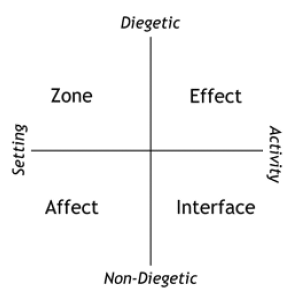
Diegesis [dahy-uh-jee-sis] is a style of storytelling in fiction which presents an interior view of a world and is: that world itself experienced by the characters in situations and events of the narrative; telling, recounting, as opposed to showing, enacting. In diegesis the narrator tells the story. The narrator presents to the audience or the implied readers the actions, and perhaps thoughts, of the characters.
Diegesis (‘narration’) and ‘mimesis’ (‘imitation’) have been contrasted since Plato’s and Aristotle’s times. Mimesis shows rather than tells, by means of action that is enacted. Diegesis, however, is the telling of the story by a narrator. The narrator may speak as a particular character or may be the invisible narrator or even the all-knowing narrator who speaks from above in the form of commenting on the action or the characters.
read more »
Posted in Art, Language, Philosophy |
1 Comment »
November 19, 2012
Alterity [all-ter-eh-tee] is a philosophical term meaning ‘otherness,’ strictly being in the sense of the other of two. In the phenomenological tradition it is usually understood as the entity in contrast to which an identity is constructed, and it implies the ability to distinguish between self and not-self, and consequently to assume the existence of an alternative viewpoint. The concept was established by French philosopher Emmanuel Lévinas in a series of essays, collected under the title ‘Alterity and Transcendence.’
The term is also deployed outside of philosophy, notably in anthropology by scholars such as Nicholas Dirks, Johannes Fabian, Michael Taussig, and Pauline Turner Strong to refer to the construction of ‘cultural others.’ The term has gained further use in seemingly somewhat remote disciplines, e.g. historical musicology where it is effectively employed by John Michael Cooper in a study of Goethe and Mendelssohn.
Posted in Language, Philosophy, World |
1 Comment »
November 19, 2012
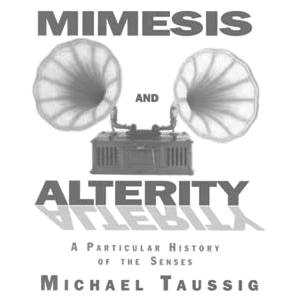
Mimesis [my-mee-sis] (‘to immitate’) is a critical and philosophical term that carries a wide range of meanings, which include imitation, representation, mimicry, Dionysian imitatio (an influential literary method of imitation, receptivity, nonsensuous similarity, the act of resembling, the act of expression, and the presentation of the self.
In ancient Greece, mimesis was an idea that governed the creation of works of art, in particular, with correspondence to the physical world understood as a model for beauty, truth, and the good. Plato contrasted ‘mimesis,’ or ‘imitation,’ with ‘diegesis,’ or ‘narrative.’ After Plato, the meaning of mimesis eventually shifted toward a specifically literary function in ancient Greek society, and its use has changed and been reinterpreted many times since then.
read more »
Posted in Art, Philosophy |
Leave a Comment »
November 19, 2012
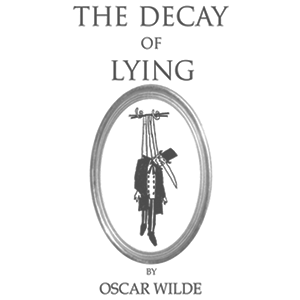
Anti-mimesis [my-mee-sis] is a philosophical position that holds the direct opposite of mimesis (the belief that art imitates life). Its most notable proponent is Oscar Wilde, who held in his 1889 essay ‘The Decay of Lying’ that ‘Life imitates Art far more than Art imitates Life.’
In the essay, written as a Platonic dialogue, Wilde holds that such anti-mimesis ‘results not merely from Life’s imitative instinct, but from the fact that the self-conscious aim of Life is to find expression, and that Art offers it certain beautiful forms through which it may realize that energy.’
read more »
Posted in Art, Philosophy |
Leave a Comment »
November 17, 2012

Chronological snobbery, a term coined by friends C. S. Lewis and philosopher Owen Barfield, is a logical fallacy describing the erroneous argument that the thinking, art, or science of an earlier time is inherently inferior when compared to that of the present. As Barfield explains it, it is the belief that ‘intellectually, humanity languished for countless generations in the most childish errors on all sorts of crucial subjects, until it was redeemed by some simple scientific dictum of the last century.’
The subject came up between them when Barfield had converted to Anthroposophy (a philosophy popularized in the early 1900s that teaches that through inner development a person can better know the spiritual world) and was persuading Lewis (an atheist at that time) to join him.
read more »
Posted in Art, Language, Philosophy |
Leave a Comment »
November 17, 2012
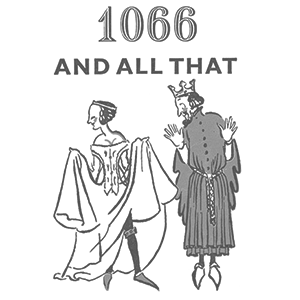
Presentism [prez-ent-iz-uhm] is a mode of literary or historical analysis in which present-day ideas and perspectives are anachronistically introduced into depictions or interpretations of the past. Some modern historians seek to avoid presentism in their work because they believe it creates a distorted understanding of their subject matter.
The practice of presentism is a common fallacy in historical writings. Historian David Hackett Fischer identifies presentism as a fallacy also known as the ‘fallacy of nunc pro tunc’ (‘now for then,’ a court ruling applied retroactively to correct an earlier ruling). He has written that the ‘classic example’ of presentism was the so-called ‘Whig history,’ in which certain eighteenth- and nineteenth-century British historians wrote history in a way that used the past to validate their own political beliefs.
read more »
Posted in Education, Language, Philosophy |
Leave a Comment »
November 17, 2012
Sex-positive feminism is a movement that began in the early 1980s to promote sexual freedom as an essential component of women’s freedom. Some became involved in the sex-positive feminist movement in response to efforts by anti-pornography feminists, such as Catharine MacKinnon and Andrea Dworkin, to put pornography at the center of a feminist explanation of women’s oppression.
This period of intense debate and acrimony between sex-positive and anti-pornography feminists during the early 1980s is often referred to as the ‘Feminist Sex Wars.’ Other less academic sex-positive feminists became involved not in opposition to other feminists but in direct response to what they saw as patriarchal control of sexuality.
read more »
Posted in Philosophy, Politics, Sex |
2 Comments »
November 15, 2012
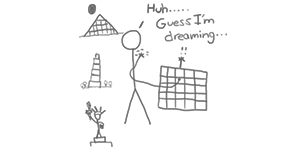

A lucid dream is any dream in which one is aware that one is dreaming. The term was coined by the Dutch psychiatrist and writer Frederik van Eeden (1860–1932). In a lucid dream, the dreamer may be able to exert some degree of control over their participation within the dream or be able to manipulate their imaginary experiences in the dream environment. Lucid dreams can be realistic and vivid.
It is shown that there are higher amounts of beta waves (normally associated with waking consciousness) experienced by lucid dreamers, hence there is an increased amount of activity in the parietal lobes making lucid dreaming a conscious process.
read more »
Posted in Philosophy, Science |
Leave a Comment »
November 15, 2012


An entheogen [en-theo-gen] (‘generating the divine within’) is a psychoactive substance used in a religious, shamanic, or spiritual context. Historically, entheogens were mostly derived from plant sources and have been used in a variety of traditional religious contexts.
Entheogens can supplement many diverse practices for healing, transcendence, and revelation, including: meditation, psychonautics, art projects, and psychedelic therapy. Entheogens have been used in a ritualized context for thousands of years. Examples of traditional entheogens include: peyote, psilocybin mushrooms, uncured tobacco, cannabis, ayahuasca, salvia, iboga, morning glory, and Amanita muscaria mushrooms.
read more »
Posted in Drugs, Philosophy, World |
Leave a Comment »
November 14, 2012
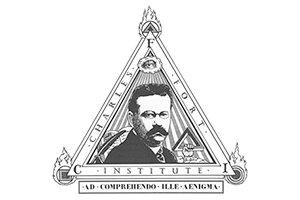

Charles Fort (1874 – 1932) was an American writer and researcher into anomalous phenomena (e.g. UFOs, ghosts, telepathy).
Today, the terms Fortean and Forteana are used to characterize various such phenomena.
read more »
Posted in Humor, Philosophy, Science |
Leave a Comment »
November 13, 2012
Out-of-place artifact (OOPArt) is a term coined by American naturalist and cryptozoologist Ivan T. Sanderson for an object of historical, archaeological, or paleontological interest found in a very unusual or seemingly impossible context that could challenge conventional historical chronology.
The term ‘out-of-place artifact’ is rarely used by mainstream historians or scientists. Its use is largely confined to cryptozoologists (who study big foot, the loch ness monster, and other cryptids), proponents of ancient astronaut theories, Young Earth creationists, and paranormal enthusiasts.
read more »
Posted in Philosophy, Science, Technology |
Leave a Comment »


 The Daily Omnivore