November 13, 2012

The Morning of the Magicians, first published as ‘Le Matin des magiciens’ was written by Louis Pauwels and Jacques Bergier in 1960, it became a bestseller, first in French, then translated into English in 1963 as ‘The Dawn of Magic.’ A German edition was published with the title ‘Aufbruch ins dritte Jahrtausend’ (‘Departure into the third Millennium’).
In a generalized and wide ranging overview of the occult, the book speculates on a variety of Forteana (anomalous phenomena), mysticism, and conspiracy theories such as secret societies, ancient prophesies, alchemical transmutation, a giant race that once ruled the Earth, and the Nazca Lines. It also includes speculations such as Nazi occultism and supernatural phenomena conspiracy theory that the Vril Society and the Thule Society were the philosophical precursors to the NSDAP Nazi party.
read more »
Posted in Philosophy |
1 Comment »
November 13, 2012

According to ancient astronaut theories, intelligent extraterrestrial beings visited Earth during the origins or development of human cultures, technologies, and/or religions. Some of these theories propose that deities from most – if not all – religions are actually extraterrestrials, and their technologies were taken as evidence of their divine status. Ancient astronaut theories have been widely used as a plot device in science fiction (e.g. ‘2001: A Space Odyssey,’ ‘Stargate’).
Such theories have not received support within the scientific community, and have received little or no attention in peer reviewed studies from scientific journals.
read more »
Posted in Art, Philosophy, Science |
Leave a Comment »
November 13, 2012

The uncanny valley is a hypothesis regarding the field of robotics. The theory holds that when robots and other facsimiles of humans look and act almost like actual humans, it causes a response of revulsion among human observers.
The ‘valley’ in question is a dip in a proposed graph of the positivity of human reaction as a function of a robot’s lifelikeness. People are not as affected in an emotional way by an object if it is easy to tell it is not human. After a certain point, they start to feel emotionally about it, but feel bad emotions because it is so nonhuman. As it gets closer to looking human, they start to feel more positive emotions towards it.
read more »
Posted in Philosophy, Technology |
Leave a Comment »
November 12, 2012

Russell’s teapot, sometimes called the celestial teapot or cosmic teapot, is an analogy first coined by the philosopher Bertrand Russell to illustrate that the philosophic burden of proof lies upon a person making scientifically unfalsifiable claims rather than shifting the burden of proof to others, specifically in the case of religion.
Russell wrote that if he claims that a teapot orbits the Sun somewhere in space between the Earth and Mars, it is nonsensical for him to expect others to believe him on the grounds that they cannot prove him wrong. Russell’s teapot is still referred to in discussions concerning the existence of God.
read more »
Posted in Humor, Philosophy |
Leave a Comment »
November 12, 2012
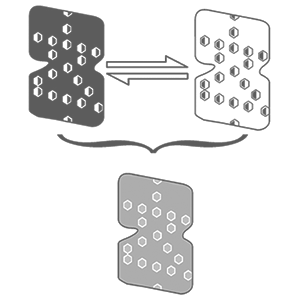
The quantum mind hypothesis proposes that classical mechanics cannot explain consciousness, while quantum mechanical phenomena, such as quantum entanglement (two particles acting in unison) and superposition (physical systems exist partly in all their particular, theoretically possible states, but, when measured, give a result corresponding to only one of the possible configurations [decoherence]), may play an important part in the brain’s function, and could form the basis of an explanation of consciousness.
However, physicist Victor Stenger characterized quantum consciousness as a ‘myth’ having ‘no scientific basis’ that ‘should take its place along with gods, unicorns and dragons.’ The main argument against the quantum mind proposition is that quantum states in the brain would decohere before they reached a spatial or temporal scale at which they could be useful for neural processing. This argument was elaborated by the physicist, Max Tegmark. Based on his calculations, Tegmark concluded that quantum systems in the brain decohere quickly and cannot control brain function.
read more »
Posted in Health, Philosophy, Science |
Leave a Comment »
November 12, 2012
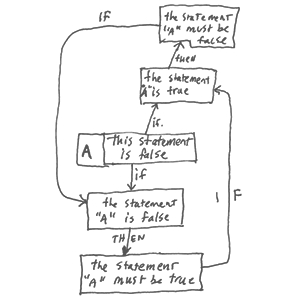
Gödel’s [ger-del] incompleteness theorems is the name given to two theorems, proved by Kurt Gödel in 1931. They are about limitations in all but the most trivial formal systems for arithmetic of mathematical interest. The theorems are very important for the philosophy of mathematics.
The idea behind the theorems is that some mathematical systems are not complete. Most people think they show that any attempt to find a complete and consistent set of axioms for all of mathematics (e.g. Hilbert’s program) is impossible.
read more »
Posted in Philosophy, Science |
1 Comment »
November 10, 2012
Teleology [tel-ee-ol-uh-jee] is a philosophical idea that things have goals or causes. It is the ‘view that developments are due to the purpose or design which is served by them.’ An example would be Aristotle’s view of nature, later adopted by the Catholic Church. The word ‘teleological’ comes from the Ancient Greek ‘telos,’ which means ‘end’ or ‘purpose.’ A simpler example would be a tool such as the clock, which is designed by man to tell the time. Whether or not an entity (man or god) is needed to cause teleology to happen is one of the most important questions.
All cultures we know of have creation stories in their religions. However, much of science operates on the principle that the natural world is self-organizing. This applies particularly to astronomy and biology, which were once explained as the action of a deity, and are now seen as natural and automatically self-organizing. Cybernetics is the basic science of self-organizing systems. The general issue of whether the original sense of teleology applies to the natural world is still a matter of controversy between religion and science.
read more »
Posted in Philosophy, Science |
1 Comment »
November 8, 2012
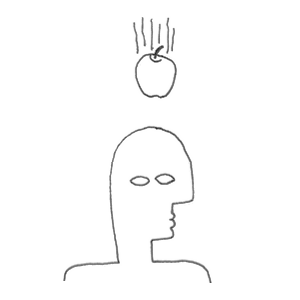
Naïve physics or folk physics is the untrained human perception of basic physical phenomena. In the field of artificial intelligence the study of naïve physics is a part of the effort to formalize the common knowledge of human beings. Many ideas of folk physics are simplifications, misunderstandings, or misperceptions of well understood phenomena, incapable of giving useful predictions of detailed experiments, or simply are contradicted by more thorough observations.
They may sometimes be true, be true in certain limited cases, be true as a good first approximation to a more complex effect, or predict the same effect but misunderstand the underlying mechanism. Naïve physics can also be defined an intuitive understanding all humans have about objects in the physical world. Cognitive psychologists are delving deeper into these phenomena with promising results. Psychological studies indicate that certain notions of the physical world are innate in all of us.
read more »
Posted in Philosophy, Science, Technology |
1 Comment »
November 7, 2012

The sign of the horns is a hand gesture with a variety of meanings and uses in various cultures. It is formed by extending the index and little fingers while holding the middle and ring fingers down with the thumb. When confronted with unfortunate events, or simply when these are mentioned, the sign of the horns may be given to ward off bad luck. It is a more vulgar equivalent of ‘knocking on wood.’
One can also ‘touch iron’ (‘tocca ferro’) or touch one’s nose. Males in some countries may grab their testicles, which is considered very vulgar. In Peru one says ‘contra’ (‘against’). In the Dominican Republic the expression is ‘zafa,’ said against curses. All of these gestures are meant to conjure supernatural protection. However, the sign of horns is used in Brazil, Cuba, Italy, Portugal, Spain and Uruguay to indicate a man whose wife is unfaithful.
read more »
Posted in Humor, Philosophy, World |
Leave a Comment »
November 5, 2012

The moralistic fallacy is in essence the reverse of the naturalistic fallacy (defining the term ‘good’ in terms of one or more natural properties). The moralistic fallacy is the formal fallacy of assuming that what is desirable is found or inherent in nature. It presumes that what ought to be—something deemed preferable—corresponds with what is or what naturally occurs. What should be moral is assumed a priori to also be naturally occurring.
Cognitive scientist Steven Pinker writes that ‘The naturalistic fallacy is the idea that what is found in nature is good. It was the basis for Social Darwinism, the belief that helping the poor and sick would get in the way of evolution, which depends on the survival of the fittest. Today, biologists denounce the Naturalistic Fallacy because they want to describe the natural world honestly, without people deriving morals about how we ought to behave — as in: If birds and beasts engage in adultery, infanticide, cannibalism, it must be OK.’
read more »
Posted in Philosophy, Politics, Science |
1 Comment »
November 5, 2012

The phrase ‘naturalistic fallacy‘ refers to the claim that what is natural is inherently good or right, and that what is unnatural is bad or wrong (‘appeal to nature’). It is the converse of the ‘moralistic fallacy,’ the notion that what is good or right is natural and inherent. The naturalistic fallacy is related to (and even confused with) Hume’s ‘is–ought problem,’ which examines the difference between descriptive statements (about what is) and prescriptive or normative statements (about what ought to be).
Another usage of ‘naturalistic fallacy’ was described by British philosopher G. E. Moore in his 1903 book ‘Principia Ethica.’ Moore stated that a naturalistic fallacy is committed whenever a philosopher attempts to prove a claim about ethics by appealing to a definition of the term ‘good’ in terms of one or more natural properties (such as ‘pleasant,’ ‘more evolved,’ ‘desired,’ etc.).
read more »
Posted in Language, Philosophy, Science |
Leave a Comment »
November 5, 2012

An appeal to nature is a logical fallacy used in arguments or rhetorical tactics in which a phenomenon is described as desirable merely because it is natural, or undesirable merely because it is unnatural, it is related but not identical to the naturalistic fallacy, as the latter considers defining ‘good’ in ethics in terms of any natural properties (even if not merely for being natural) as a fallacy.
The Fallacy of appeal to nature depends on a positive view about the nature, e.g. good, desirable..etc. as a foundation of the reasoning of the argument. To appeal to nature in an argument is to argue from a premise or premises claimed to be implied by the concept of nature.
read more »
Posted in Money, Philosophy |
Leave a Comment »


 The Daily Omnivore