September 24, 2012

Freethought is a philosophical viewpoint that holds opinions should be formed on the basis of logic, reason, and empiricism and not authority, tradition, or other dogmas.
The pansy is the long-established and enduring symbol of freethought, its usage inaugurated in the literature of the American Secular Union in the late 1800s. The reasoning lies in both the flower’s name and appearance. The pansy derives its name from the French word ‘pensée,’ which means ‘thought;’ it was so named because the flower resembles a human face, and in mid to late summer it nods forward as if deep in thought.
read more »
Posted in Philosophy, Science, World |
Leave a Comment »
September 24, 2012


Secular morality is the aspect of philosophy that deals with morality outside of religious traditions. Modern examples include humanism, freethinking, and most versions of consequentialism. Additional philosophies with ancient roots include those such as Skepticism, which professes that ‘man is the measure of all things.’
Harvard Humanist Chaplain Greg M. Epstein also states that, ‘much of ancient Far Eastern thought is deeply concerned with human goodness without placing much if any stock in the importance of gods or spirits.’ Other philosophers have proposed various ideas about how to determine right and wrong actions. An example is Immanuel Kant’s categorical imperative: ‘The idea that actions can only be considered moral if they could be imitated by anyone else and produce good results.’
read more »
Posted in Philosophy, Science, World |
Leave a Comment »
September 24, 2012

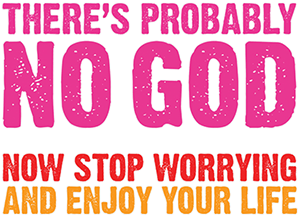
The Atheist Bus Campaign aims to place ‘peaceful and upbeat’ messages about atheism on transport media in Britain, in response to evangelical Christian advertising. It was created by comedy writer Ariane Sherine and launched in 2008, with official support from the British Humanist Association and Richard Dawkins. The campaign’s original goal was to raise £5,500 to run 30 buses across London for four weeks early in 2009 with the slogan: ‘There’s probably no God. Now stop worrying and enjoy your life.’
Richard Dawkins, author of ‘The God Delusion,’ agreed to match all donations up to a maximum of £5,500, providing a total of £11,000 if the full amount were to be raised. The campaign closed in April 2009, having raised a total of £153,516.51. The first buses started running on in January 2009 – 800 are running around the whole of the UK and it is also planned to place 1,000 adverts on the London Underground featuring quotations from famous atheists. Subsequently, two large LCD screens were placed on Oxford Street, central London.
read more »
Posted in Money, Philosophy, World |
Leave a Comment »
September 24, 2012
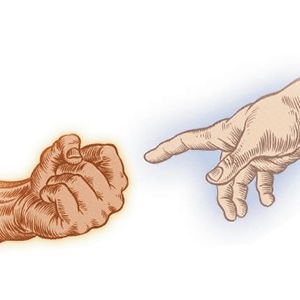
Misotheism [miss-oh-thee-iz-uhm] is the ‘hatred of God(s).’ In some varieties of polytheism, it was considered possible to inflict punishment on gods by ceasing to worship them. Thus, Hrafnkell, protagonist of the eponymous Icelandic saga set in the 10th century, as his temple to Freyr is burnt and he is enslaved states that ‘I think it is folly to have faith in gods,’ never performing another sacrifice.
German mythologist Jacob Grimm in his ‘Teutonic Mythology’ observes that: ‘It is remarkable that Old Norse legend occasionally mentions certain men who, turning away in utter disgust and doubt from the heathen faith, placed their reliance on their own strength and virtue.’ ‘…in themselves they trusted.” In monotheism, the sentiment arises in the context of ‘theodicy’ (the problem of evil, the Euthyphro dilemma). A famous literary expression of misotheistic sentiment is Goethe’s ‘Prometheus,’ composed in the 1770s.
read more »
Posted in Language, Philosophy, World |
Leave a Comment »
September 24, 2012

New Atheism is the name given to the ideas promoted by a collection of 21st-century atheist writers who have advocated the view that ‘religion should not simply be tolerated but should be countered, criticized, and exposed by rational argument wherever its influence arises.’
The term is commonly associated with individuals such as Richard Dawkins, Daniel Dennett, Sam Harris, and Christopher Hitchens (together called ‘the Four Horsemen of New Atheism’ in a 2007 debate they held on their criticisms of religion, a name that has stuck) and Victor J. Stenger. Several best-selling books by these authors, published between 2004 and 2007, form the basis for much of the discussion of New Atheism.
read more »
Posted in Language, Philosophy, Science |
Leave a Comment »
September 20, 2012
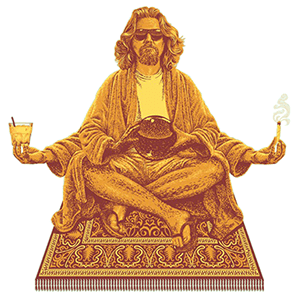
Dudeism has sometimes been referred to as a ‘mock religion,’ though its founder and many adherents regard it as ‘real.’ Its stated primary objective is to promote a philosophy and lifestyle consistent with the original form of Chinese Taoism, outlined in ‘Tao and Laozi’ (6th century BCE), blended with concepts by the Ancient Greek philosopher Epicurus (341-270 BCE), and personified by the modern day character ‘The Dude’ (Jeff Bridges) in the Coen Brothers’ 1998 film ‘The Big Lebowski.’
Founded in 2005 by Oliver Benjamin, a journalist based in Thailand, Dudeism’s official organizational name is ‘The Church of the Latter-Day Dude.’ At least 160,000 ‘Dudeist Priests’ have been ordained.
read more »
Posted in Humor, Philosophy |
Leave a Comment »
September 20, 2012
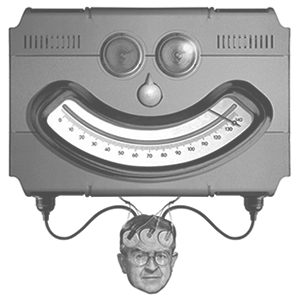
Positive psychology is a recent branch of psychology whose purpose was summed up in 1998 by psychologists Martin Seligman and Mihaly Csikszentmihalyi: ‘We believe that a psychology of positive human functioning will arise, which achieves a scientific understanding and effective interventions to build thriving individuals, families, and communities.’ Positive psychologists seek ‘to find and nurture genius and talent’, and ‘to make normal life more fulfilling,’ not simply to treat mental illness.
The field is intended to complement, not to replace traditional psychology. It does not seek to deny the importance of studying how things go wrong, but rather to emphasize the importance of using the scientific method to determine how things go right. This field brings attention to the possibility that focusing only on the disorder itself would result in a partial concept of the patient’s condition.
read more »
Posted in Health, Philosophy, Science |
1 Comment »
September 19, 2012
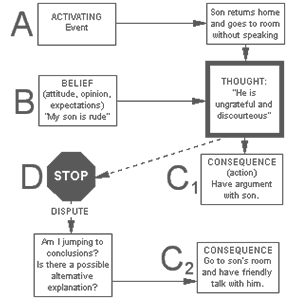
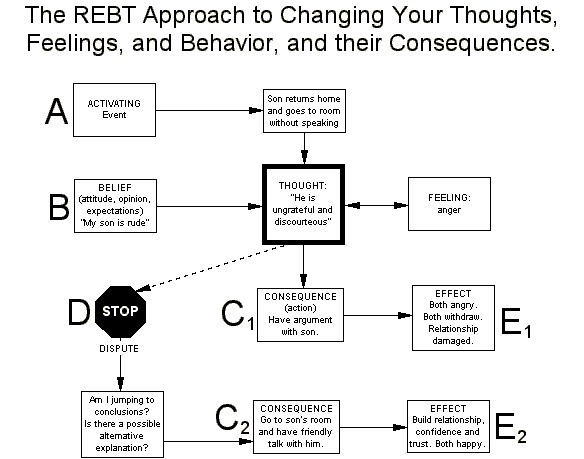
Rational Emotive Behavior Therapy (REBT), previously called rational therapy, is a form psychotherapy created and developed by the American psychologist Albert Ellis who was inspired by many of the teachings of Asian, Greek, Roman, and modern philosophers. REBT is one form of cognitive behavior therapy (CBT) and was first expounded by Ellis in the mid-1950s; development continued until his death in 2007.
Originally called ‘rational therapy,’ its appellation was revised to ‘rational emotive therapy’ in 1959, then to its current appellation in 1992. REBT was one of the first of the cognitive behavior therapies, as it was predicated in articles Ellis first published in 1956, nearly a decade before Aaron Beck first set forth his cognitive therapy.
read more »
Posted in Health, Philosophy |
2 Comments »
September 18, 2012

Religion and happiness have been studied by a number of researchers. The science of positive psychology has identified many components of happiness, and religion seems adapted to satisfy many of them. Some research suggests that both non-religious and religious meaning systems can be quite effective when it comes to managing death anxiety, and that the latter have a few additional advantages. There is extensive research suggesting that religious people are happier and less stressed.
There are a number of mechanisms through which religion may make a person happier, including social contact and support that result from religious pursuits, the mental activity that comes with optimism and volunteering, learned coping strategies that enhance one’s ability to deal with stress, and psychological factors such as ‘reason for being.’ It may also be that religious people engage in behaviors related to good health, such as less substance abuse) since the use of psychotropic substances is sometimes considered abuse. On the other hand, Rastafarians and others use cannabis as a religious sacrament.
read more »
Posted in Death, Health, Philosophy |
Leave a Comment »
September 18, 2012

Eudaimonia [yew-day-mo-nee-uh] is a Greek word commonly translated as ‘happiness’ or ‘welfare’; however, ‘human flourishing’ has been proposed as a more accurate translation. It is a central concept in Aristotelian ethics and political philosophy, along with the terms ‘aretē’ (‘virtue’ or ‘excellence’) and ‘phronesis’ (‘practical or ethical wisdom’).
In Aristotle’s works, eudaimonia was (based on older Greek tradition) used as the term for the highest human good, and so it is the aim of practical philosophy, including ethics and political philosophy, to consider (and also experience) what it really is, and how it can be achieved.
read more »
Posted in Health, Language, Philosophy |
Leave a Comment »
September 18, 2012

Discrimination against atheists (sometimes called atheophobia) includes the persecution and discrimination faced by atheists and those labeled as atheists in the past and in the current era. Differing definitions of atheism historically and culturally mean those discriminated against might not be considered truly atheist by modern Western standards. In constitutional democracies, legal discrimination against atheists is uncommon, but some atheists and atheist groups, particularly those in the United States, have protested laws, regulations and institutions they view as being discriminatory.
In some Islamic countries, atheists face discrimination including lack of legal status or even a death sentence in the case of apostasy. Atheism in its modern sense did not exist before the end of the seventeenth century. However, as governmental authority rested on the notion of divine right, it was threatened by those who denied the existence of the local god. Philosophers such as Plato argued that atheism (as we understand it today) was a danger to society and should be punished as a crime. Those labeled as atheist, which included early Christians and Muslims, were as a result targeted for legal persecution.
read more »
Posted in Philosophy, Politics, World |
Leave a Comment »
September 18, 2012

Cultural bias is the phenomenon of interpreting and judging phenomena by standards inherent to one’s own culture. The phenomenon is sometimes considered a problem central to social and human sciences, such as economics, psychology, anthropology, and sociology.
Some practitioners of the aforementioned fields have attempted to develop methods and theories to compensate for or a culture make assumptions about conventions, including conventions of language, notation, proof and evidence. They are then accused of mistaking these assumptions for laws of logic or nature. Numerous such biases exist, concerning cultural norms for color, location of body parts, mate selection, concepts of justice, linguistic and logical validity, acceptability of evidence, and taboos.
read more »
Posted in Philosophy, Politics, World |
Leave a Comment »


 The Daily Omnivore